Bird Dog Rules for Quail Hunting
For many of us, a quail hunt just doesn't feel complete without the company and skill of a well-trained bird dog. The thought of watching your canine companion work the scent, go on point, and retrieve a downed bird adds an immeasurable layer to the experience. However, Arizona's diverse habitats and specific regulations can leave hunters wondering about the exact rules for bringing their furry hunting partners along. This guide will clarify the ins and outs of legally and ethically hunting quail with your bird dog in Arizona, helping you navigate the rules and maximize your time afield.
General Regulations for Hunting with Dogs in Arizona
Before diving into the specifics of quail hunting, it’s important to understand Arizona’s broader framework regarding the use of dogs in the field. The Arizona Game and Fish Department (AZGFD) has clear distinctions based on game species, and respecting these general guidelines is paramount to being a responsible hunter and dog owner.
Species-Specific Permissions and Prohibitions
Arizona law is quite specific about which animals can be hunted with the aid of a dog. For big game animals like deer, elk, or javelina, the use of dogs for pursuing or taking them is generally prohibited. This is a crucial distinction that prevents harassment and ensures fair chase principles are upheld for these larger, often more sensitive, species. There are exceptions, of course, such as using dogs for retrieving already wounded big game, or specific regulated hunts like mountain lion and bear, where dogs are explicitly allowed under strict permit conditions. You’ll find details about these nuances within the Arizona Game and Fish hunting regulations each year.
However, when it comes to small game, and particularly upland birds like quail, the rules shift considerably. Bird dogs are not just permitted; they are widely accepted and even encouraged, recognized for their valuable role in locating, flushing, and retrieving birds, minimizing loss and enhancing the hunting experience. This acceptance stems from the traditional methods of upland bird hunting and the understanding of how well-trained dogs contribute to ethical hunting practices.
Understanding "Under Control" Requirements
Regardless of the species being hunted, any dog brought into the field must remain "under the immediate control" of its handler. This isn't just a suggestion; it's a legal requirement. What constitutes "immediate control" can be a little subjective, but generally, it means your dog responds reliably and promptly to voice commands, whistle commands, or hand signals. This control is essential for preventing your dog from chasing non-target wildlife, disturbing other hunters, or venturing into areas where hunting is prohibited.
For bird dog enthusiasts, this means extensive off-leash training is a must. A dog that consistently breaks point, chases deer, or can’t be recalled effectively is not under proper control and could lead to citations or, more importantly, ethical compromises. In Arizona's vast and open landscapes, particularly when hunting Gambel's Quail Across the Desert or Scaled Quail on Arizona Grassland, a dog that ranges too far or ignores commands can quickly become lost or encounter hazards, not to mention interfere with other hunters who might be glassing for different game.
Specific Rules for Quail Hunting with Bird Dogs
Now that we’ve covered the general ground rules, let’s focus on what you really need to know for your Arizona quail hunts with your best four-legged partner. The good news is that Arizona is very dog-friendly when it comes to upland birds, but there are still specifics to keep in mind to ensure a legal and enjoyable outing.
Explicit Permission for Bird Dogs
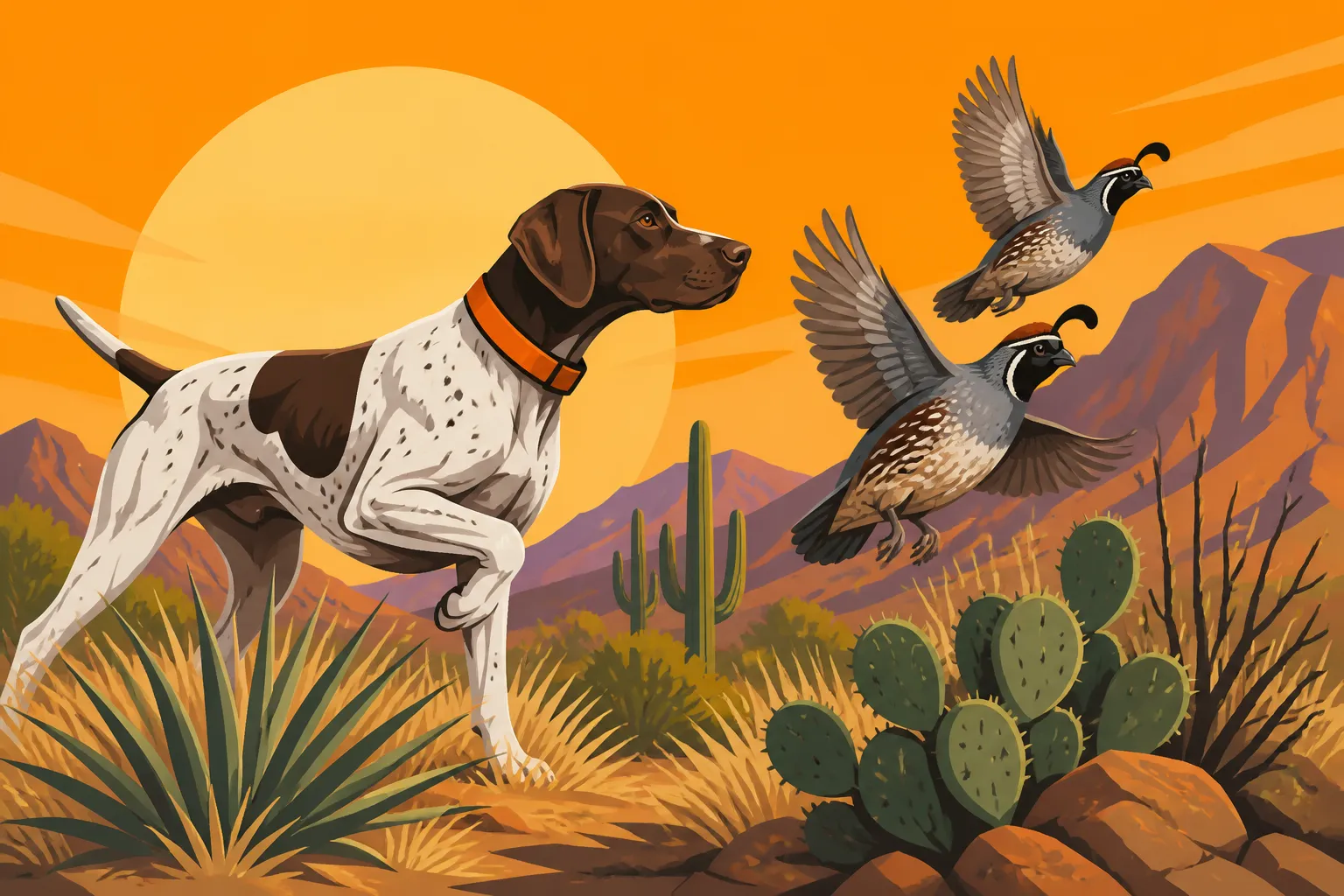
Arizona's hunting regulations explicitly permit the use of dogs for hunting quail, dove, and other migratory game birds and small game species. This is a relief for many of us who consider a quail hunt incomplete without a good dog. Your retriever, pointer, or setter is a vital part of the team, helping you locate coveys of Mearns Quail in the Southern Oaks or Gambel's quail that might otherwise be missed in the thick desert scrub or rolling grasslands.
The allowance for bird dogs is a nod to the long-standing tradition of upland bird hunting, where dogs play a crucial role in conservation by minimizing crippling losses and ensuring that downed birds are recovered. Without a good dog, many birds that fall in dense cover would simply be lost, which goes against the principles of ethical hunting. So, rest assured, your dog is welcome and valued in the Arizona quail fields.
Maintaining Control While on Scent and Point
While your dog is explicitly allowed, the "under immediate control" rule becomes even more critical during the actual hunt. Picture this: your dog is working a hot scent, tail wagging furiously, nose to the ground. This is exactly what they’re bred for! However, you must still be able to direct them away from areas you shouldn't be, recall them if a covey flushes wild and out of range, or stop them from pursuing a rabbit or coyote that bursts from cover.
This requires advanced training, often referred to as "steadiness." A truly steady dog will hold point until commanded to flush, and then remain steady to wing and shot, only retrieving when instructed. While not strictly mandated by law, a steady dog significantly enhances safety, reduces the chance of losing birds, and prevents your dog from chasing non-target animals. A dog that busts through brush without heed to your commands isn't just annoying; it can be dangerous if another hunter is in the vicinity or if the dog strays into a road or dangerous terrain.
Retrieval and Ethical Recovery
One of the most valuable contributions of a bird dog is their ability to retrieve downed birds. In the often-dense and thorny cover of Arizona's quail country, a fallen bird can easily disappear without a diligent retriever. This is where your dog earns its keep and truly aids in ethical hunting. The regulations encourage the recovery of all legally taken game, and a dog's keen nose and instinct make this possible even in the toughest conditions.
Ensure your dog is trained for a soft mouth, meaning they retrieve the bird gently without damaging the meat. Force fetching is a common training method to achieve this reliable and gentle retrieval. The goal is to bring the bird directly to hand, allowing you to quickly secure your harvest and continue the hunt. This commitment to ethical recovery is a cornerstone of responsible hunting, and your bird dog is an invaluable tool in upholding it.
Ethical Considerations and Best Practices for Dog Handlers
Beyond the written regulations, there’s an unwritten code of ethics and best practices that responsible bird dog handlers follow. These considerations are especially important in Arizona, where diverse ecosystems and varying levels of hunting pressure demand extra care and awareness.
Respecting Other Hunters and Wildlife
A well-behaved bird dog is a joy, but an out-of-control dog can quickly ruin another hunter's day or disturb wildlife not intended for harvest. Always be mindful of other hunters, especially when hunting public lands. If you see another hunter, consider leashing your dog or ensuring they are close at heel to avoid interfering with their pursuit, whether they're hunting quail, deer, or just enjoying nature. A quick, friendly wave and acknowledging their presence goes a long way.
Furthermore, teach your dog to leave non-target wildlife alone. While chasing a rabbit might seem harmless, it can push deer or javelina out of an area, potentially disrupting another hunter's stalk or simply causing undue stress to the animals. This is where your consistent "leave it" command and recall training come into play, especially if you're hunting in areas where multiple species overlap. Using tools like GoHunt to scout your unit can also help you identify high-traffic areas for different species, allowing you to plan your hunt routes accordingly.
Dog Health and Safety in the Arizona Desert
The Arizona desert is beautiful, but it's also tough, and your bird dog is especially vulnerable to its hazards. Heat is a major concern, particularly during early When Arizona Quail Season Opens in October or even into November on warmer days. Dogs don’t sweat like humans and can quickly overheat. Always carry ample Water You Must Carry on a Day Hunt for both yourself and your dog, and offer it frequently. Watch for signs of overheating, such as excessive panting, lethargy, or stumbling. Early morning and late afternoon hunts are often best to avoid the midday sun. It's a good idea to refresh yourself on Heat Management on an Arizona Early Season Hunt strategies for yourself and apply them to your dog's well-being too.
Cactus, thorns, and rocky terrain are constant threats to paw pads. Invest in high-quality dog boots if your dog will be covering a lot of ground in rocky or cactus-laden areas. Even with boots, inspect your dog's paws regularly for thorns, cuts, or abrasions. Consider how you'd protect your own feet by Choosing Boots for Rocky Desert Ground for yourself, and apply similar logic for your dog's paws.
Perhaps the most significant threat in the Arizona desert is rattlesnakes. Snake avoidance training, often done with live but defanged snakes, can be a lifesaver. Even with training, always be vigilant. Carry a snakebite kit, know the nearest veterinary emergency clinic, and consider getting your dog vaccinated against rattlesnake venom (though this doesn't prevent a bite, it can reduce the severity). Knowing Snake Awareness on an August Archery Hunt is critical for any hunter, and even more so for those with dogs.
Using Technology to Enhance Your Hunt
Modern hunting tools can significantly enhance your bird dog's safety and your overall hunting success. GPS collars, like those from Garmin, allow you to track your dog's location and movement in real-time. This is invaluable in dense cover or wide-open spaces where a dog can quickly go out of sight. Many GPS systems also allow you to set virtual boundaries or receive alerts if your dog stops moving, which could indicate a point or a problem.
E-scouting applications, such as GoHunt, are not just for big game. They can help you identify potential quail habitat, locate water sources (which concentrate birds), and plan routes that minimize exposure to extreme terrain or dense cactus patches. By understanding the topography and vegetation layers before you even leave home, you can make more informed decisions about where to release your dog and what to expect on the ground. This kind of preparation, akin to Reading an Arizona Unit Before You Ever Walk It, can save both you and your dog from unnecessary exhaustion or danger.
Training and Preparing Your Bird Dog for Arizona's Unique Quail Habitat
Hunting Arizona quail, whether it's the explosive coveys of Gambel's, the elusive Mearns, or the running Scaled quail, presents unique challenges for bird dogs. The habitat is unlike many other regions, demanding specific training and conditioning.
Conditioning for Desert Terrain and Heat
Arizona's quail country often consists of vast expanses of rocky, undulating desert punctuated by washes, mesquite thickets, and stands of palo verde and cholla cactus. This is tough country to cover, both for hunters and their dogs. Physical conditioning is non-negotiable. Begin a conditioning program for your dog well before the season opens, gradually increasing the duration and intensity of their exercise. Think long walks, jogs, and even short hikes on similar terrain to what you'll encounter.
The heat, as mentioned, is a major factor. Acclimating your dog to warmer temperatures (within safe limits) can help, but nothing replaces vigilance and proper hydration. Early morning training sessions can mimic hunt conditions without the midday heat, building stamina and heat tolerance. Remember, a dog that's not conditioned will tire quickly, perform poorly, and be at a higher risk for injury or heatstroke.
Specific Training for Arizona Quail
Each of Arizona's quail species, Where to Find Gambel's Quail, Mearns, and Scaled, have slightly different behaviors that influence how your dog should work.
- Gambel's Quail: These are the most common and often hold tight in thick cover. Your dog needs to be able to penetrate dense brush and hold a solid point. They are also notorious for running, so a dog that can quickly pin a running covey or follow a scent trail effectively is invaluable. Training in thorny cover will make your dog more comfortable and efficient.
- Mearns Quail: Found in the oak-grassland foothills, Mearns often hold incredibly tight, sometimes almost letting you step on them before flushing. A dog that works close and methodically, with a cautious point, is ideal here. Overly wide-ranging dogs might blow past these birds.
- Scaled Quail: Often called "blue quail," these birds are legendary runners. They prefer open grasslands and are experts at leading a dog (and hunter) on a merry chase. For Scaled quail, a dog that understands how to cut off running birds or work the edges of cover where they might finally hold can be very effective.
Regardless of the species, emphasize steadiness to wing and shot. These birds can flush wildly, and an excited dog might break and chase, leading to lost opportunities or unsafe situations. Drills that involve flushing birds (from coveys you've identified through scouting with tools like GoHunt) and then making your dog hold steady before retrieving are excellent preparation.
Integrating Snake Avoidance Training
Snake avoidance training is perhaps the single most important safety measure for a bird dog in Arizona. Many trainers offer clinics that use live, muzzled rattlesnakes and electronic collars to teach dogs to avoid the sight, sound, and scent of snakes. This training, while initially unpleasant for the dog, can save its life. The investment in this training is minimal compared to the cost and trauma of a snakebite.
Even after training, remain vigilant. Continually reinforce the "leave it" command when encountering non-game animals or anything potentially dangerous. Your dog relies on you for protection and guidance in the field, and proactive safety measures are part of being a responsible handler.
In conclusion, hunting quail in Arizona with your bird dog is an incredibly rewarding experience, offering a blend of tradition, challenge, and companionship. By understanding and adhering to the regulations, practicing ethical hunting behaviors, prioritizing your dog’s health and safety, and preparing them specifically for Arizona’s unique habitat, you’ll create lasting memories in the desert and high country.
Disclaimer
The information provided in this guide is for general informational purposes only and does not constitute legal advice. Hunting regulations can change annually, and interpretations may vary. It is always the hunter's responsibility to consult the most current Arizona Game and Fish Department hunting regulations booklet or website for precise and up-to-date legal requirements before heading afield.