The All-In Cost of an Arizona OTC Archery Deer Hunt
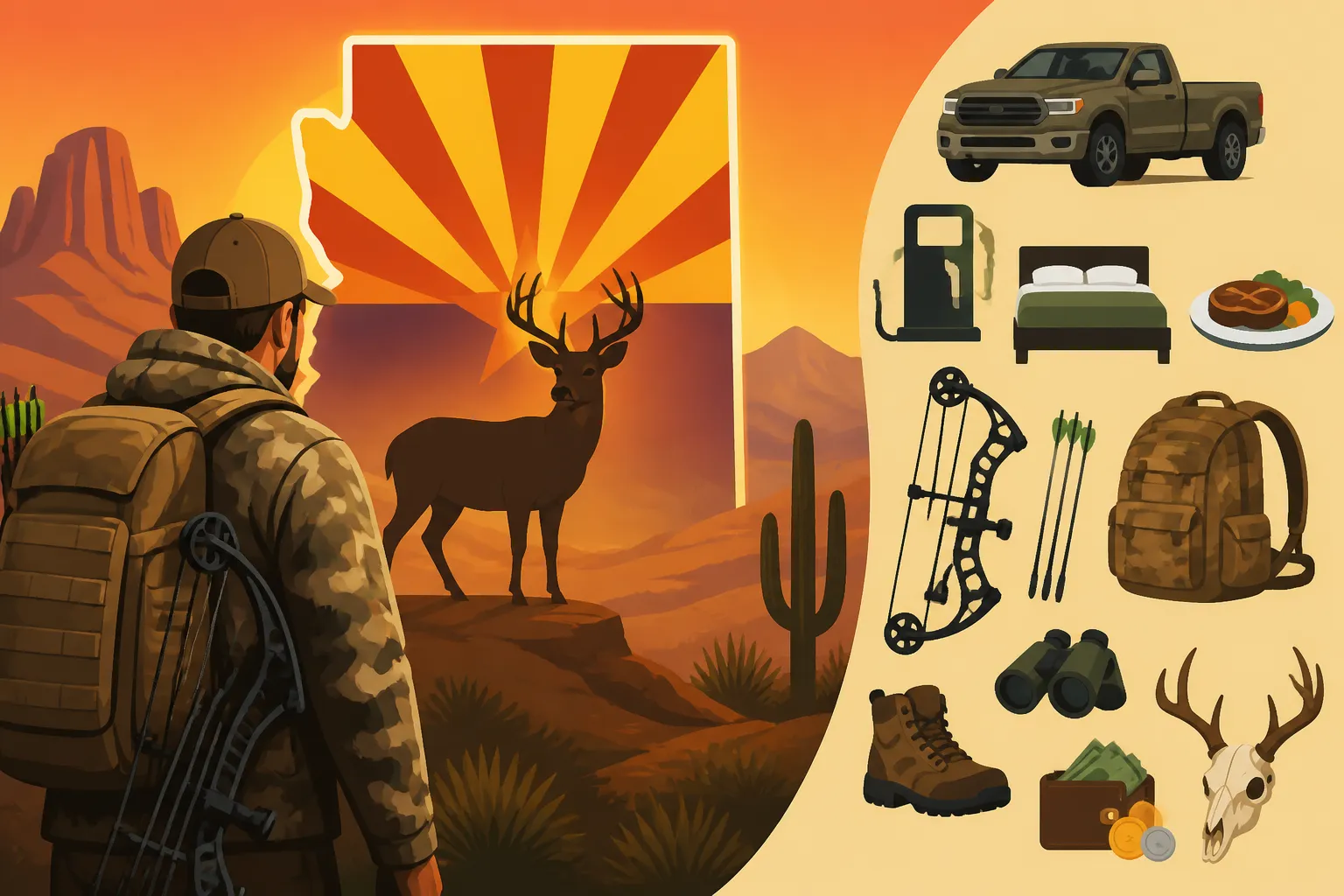
If you're dreaming of an Arizona archery deer hunt, especially one of those accessible over-the-counter (OTC) tags, you're not alone. The allure of chasing Coues or mule deer through the diverse landscapes of the Grand Canyon State is strong, but many hunters get caught off guard by the total financial commitment. It's not just the license and tag; it's a whole ecosystem of expenses that, when added up, can significantly impact your wallet. This guide is here to unravel the all-in cost of an Arizona OTC archery deer hunt, breaking down every major category so you can plan your adventure without unwelcome surprises.
Understanding the Baseline: License and Tag Fees
The very first step to any hunting adventure in Arizona involves securing the necessary permits, and these come in two primary forms for a nonresident looking to pursue an OTC archery deer: the general hunting license and the specific deer tag. It's easy to overlook that these are separate charges, and understanding them is crucial for your initial budget.
The Nonresident Hunting License
Before you can even think about buying a deer tag, you absolutely need a valid Arizona hunting license. For nonresidents, this is a mandatory foundational expense. Think of it as your membership card to hunt any legal game species in the state, provided you have the appropriate tags or permits for those species. As of 2024, a nonresident adult hunting license in Arizona typically runs around $160.00. This license is generally valid for one year from the date of purchase, so make sure it covers the full duration of your planned hunt. It’s not just a piece of paper; it’s your legal right to be in the field pursuing game, and without it, any deer tag you might possess is null and void. Don't cheap out on this or assume it's included elsewhere; it's the gateway to your Arizona hunting experience.
The OTC Archery Deer Tag Itself
Once your hunting license is secured, you can then purchase the specific tag for an over-the-counter archery deer hunt. The beauty of an OTC tag, as its name suggests, is that you don't have to enter a draw or accumulate bonus points for it. You simply walk into an authorized license dealer, visit the Arizona Game and Fish Department website, or use a mobile app to purchase it. For a nonresident, this archery deer tag itself currently costs $300.00. This tag specifically allows you to hunt deer (either Coues or mule deer, depending on the unit regulations and your target species) during the designated archery-only seasons. The Arizona Game and Fish Department (AZGFD) offers a very generous How to Hunt Arizona's Five-Month OTC Archery Deer Season, which means these tags are available for purchase for extended periods. It’s important to remember that this $300 is in addition to the $160 hunting license fee. So, right out of the gate, you're looking at a minimum of $460 just for the privilege of stepping foot in the field with a bow during the OTC season.
The Essential Gear Investment for an Arizona Archery Hunt
Beyond the fundamental licenses and tags, the equipment you bring to an Arizona archery deer hunt will be one of your most significant financial outlays. The unique challenges of hunting in the desert and high-desert regions demand specific gear, and while you don't need the absolute top-of-the-line everything, cutting too many corners can directly impact your success and safety.
Bowhunting Setup: The Non-Negotiables
Your bow setup is, naturally, the core of an archery hunt. The cost here can vary wildly depending on whether you're starting from scratch or already have a seasoned setup. A new compound bow can range anywhere from $400 for an entry-level package to well over $1,500 for a flagship model from brands like Hoyt, Bowtech, or Mathews. Then there are the accessories: a quality sight ($100-$400), a reliable arrow rest ($50-$200), a quiver ($30-$150), and a release aid ($50-$150).
Arrows are another ongoing expense. You’ll want a dozen good carbon arrows, fletched and cut to your specifications, which can easily run $100-$200 per dozen. And let's not forget broadheads. Arizona has specific regulations: Why Arizona Requires Broadheads Wider Than 7/8 Inch. This means you need broadheads that meet or exceed that minimum width. Quality fixed-blade or mechanical broadheads can cost $30-$60 for a pack of three. If you're new to bowhunting or upgrading, you'll also need a bow case ($50-$200) and possibly a rangefinder ($100-$500) for accurate shot placement. Factor in tune-ups or adjustments at a pro shop, which might be $20-$50 per visit. Remember, Arizona also requires Arizona's 30-Pound Minimum for Vertical Bows for big game, so ensure your bow is set up correctly and safely.
Optics: Your Eyes in the Desert
Arizona's vast, open country, especially when pursuing elusive Coues deer, makes quality optics an absolute necessity, not a luxury. Without good glass, you might as well be hunting blind. Why Arizona Coues Hunting Is a Glassing Game underscores this reality. You'll spend countless hours behind your binoculars and spotting scope, meticulously picking apart distant hillsides and washes.
- Binoculars: A good pair of 10x or 12x binoculars is your primary tool. Entry-level models from brands like Vortex, Leupold, or Maven start around $200-$400, but mid-range options (which offer significantly better clarity and low-light performance) are often in the $600-$1,500 range. Top-tier binos from Swarovski or Leica can easily exceed $2,000.
- Spotting Scope: For identifying antler size and making crucial decisions on Coues deer from extreme distances, a spotting scope is invaluable. A decent spotting scope and tripod setup will set you back anywhere from $500 to $2,000+. You don't necessarily need the highest magnification, but clarity and a stable tripod are non-negotiable.
- Tripod: A sturdy, lightweight tripod is essential for both your binoculars (with an adapter) and your spotting scope. Expect to pay $100-$300 for a quality hunting tripod that won't wobble in the desert wind.
This category alone can easily add $500 to $2,500+ to your total cost, but it's an investment that pays dividends in scouting efficiency and successful stalks.
Footwear and Clothing for Desert Conditions
Hunting in Arizona means dealing with incredible temperature swings and notoriously rugged, thorny terrain. Your footwear and clothing choices are not just about comfort; they're about survival and endurance.
- Boots: Good quality, comfortable hiking boots are paramount. They need to be durable, provide excellent ankle support, and have aggressive outsoles to handle loose rock, cactus, and steep inclines. Expect to spend $150-$300 on a reliable pair from brands like Kenetrek, Lowa, or Salomon. Remember, breaking them in before your hunt is critical to avoid blisters.
- Clothing: Layering is key in Arizona. Early morning temperatures can be freezing, while midday sun can push temperatures into the 90s, even in October. You'll need moisture-wicking base layers, insulating mid-layers (fleece or synthetic puffy jacket), and a quiet, durable outer shell that can withstand thorns and protect against wind. Camouflage patterns appropriate for the desert (like Kuiu Verde, Sitka Subalpine, or Kryptek Highlander) are popular, but solid earth tones work just as well. Expect to spend $300-$800+ for a decent layering system. Don't forget a wide-brimmed hat, gloves, and quality socks to prevent blisters.
- Backpack: A comfortable daypack (20-40 liters) is essential for carrying water, snacks, extra layers, first-aid, and field dressing supplies. A good pack designed for hunting will cost $100-$300. If you're planning multi-day spike camps, a larger pack (50-80 liters) would be needed, ranging from $300-$700+.
Navigation and Communication Tools
While Arizona is beautiful, it's also vast and unforgiving. Getting lost is a real danger, and cell service is often non-existent in the remote areas where deer thrive.
- GPS/Mapping Apps: A reliable GPS device or a robust mapping app on your smartphone is non-negotiable. Apps like onX Hunt, BaseMap, or GoHunt provide invaluable topographic maps, public land boundaries, and satellite imagery. A yearly subscription to one of these apps usually costs $30-$100. Always download offline maps before heading into the field.
- Satellite Communicator: For emergency situations or just letting loved ones know you’re safe, a satellite communicator (e.g., Garmin inReach, Zoleo, or Spot X) is a vital safety item. These devices typically cost $200-$500, plus a monthly or annual subscription plan (starting around $15/month). This isn't just a convenience; it's a potential lifesaver in areas without cell service.
- Headlamp: You'll be walking in the dark, whether scouting before dawn or packing out after sunset. A reliable headlamp with extra batteries is a must, costing $30-$80.
Logistics and Hidden Costs: Travel, Food, and Lodging
Beyond the gear, the practicalities of getting to your hunting area, staying there, and taking care of your harvest add another layer of significant expense to your Arizona OTC archery deer hunt. These are the costs that often get underestimated and can quickly balloon your budget if not planned carefully.
Travel Expenses to and Within Arizona
Unless you live in Arizona, you’ll have significant travel costs.
- Flights/Fuel: If you're flying in, expect round-trip airfare to Phoenix (PHX) or Tucson (TUS) to be anywhere from $300-$800+, depending on your origin and how far in advance you book. Once you land, you'll need a rental vehicle suitable for rough terrain, or ideally, bring your own truck or SUV equipped for the backcountry. If driving, factor in fuel costs for potentially hundreds or even a thousand miles of driving, both to Arizona and then within your hunting unit. With gas prices fluctuating, this could easily be $200-$800+.
- Vehicle Maintenance: Arizona's backcountry roads can be brutal on vehicles. Factor in the "cost" of potential flat tires, minor repairs, or simply increased wear and tear on your personal vehicle. Having good tires (AT or MT) is a must, and a spare tire, jack, and basic repair kit are non-negotiable. Timing a Summer Scouting Trip Around Storms can make road conditions even more challenging, turning dirt roads into muddy quagmires.
Camp Setup and Food for Extended Stays
Most OTC archery deer hunters opt for camping on public land to save on lodging costs and to be closer to their hunting areas. This comes with its own set of expenses.
- Camping Gear: If you don't already own it, you'll need a good tent ($100-$500), a comfortable sleeping bag rated for the expected temperatures ($100-$400), and a sleeping pad ($50-$200). Camp chairs, a stove, cooking pots, and other camp essentials can easily add another $200-$500.
- Food and Water: For a typical 5-7 day hunt, grocery costs for meals, snacks, and drinks can be $100-$200 per person. More importantly, water is a critical consideration in the desert. You'll need to haul in all your drinking and cooking water. Figure on at least 1-2 gallons per person per day for drinking, plus extra for cooking and cleaning. This can mean investing in large water jugs (Aqua-Tainers, Reliance) and having the capacity to transport them. Water You Must Carry on a Day Hunt highlights the daily needs in arid environments.
- Lodging Alternatives: If camping isn't your style, hotels or motels in nearby towns (if available) can run $80-$200 per night, quickly adding $400-$1,400+ to a week-long hunt.
Meat Processing and Taxidermy
The successful culmination of your hunt brings with it the final set of costs.
- Field Care Supplies: You'll need game bags ($30-$60), a good knife and sharpener ($50-$150), and perhaps a small bone saw. Coolers and ice are absolutely critical, especially during warmer archery seasons. Field Dressing in Desert Heat is a serious consideration, and you might need multiple large coolers and hundreds of pounds of ice over a few days to properly cool your animal. This can cost $50-$200 for coolers and $5-$10 per bag of ice, potentially adding up quickly.
- Meat Processor: Unless you're skilled at butchering a deer yourself, you'll take your animal to a local processor. Deer processing fees generally range from $150-$300, depending on the services you request (e.g., custom cuts, sausage making).
- Taxidermy: If you harvest a trophy and wish to have it mounted, taxidermy is a significant expense. A shoulder mount for a deer typically costs $700-$1,500+. Consider also the cost of shipping antlers or a cape if you live out of state.
Preparing for the Unexpected and Maximizing Your Investment
Hunting in Arizona, especially on an OTC archery deer hunt, isn't just about showing up with a bow and a tag. It requires diligent preparation, physical conditioning, and a buffer for the inevitable unforeseen circumstances. These aspects, while not always direct monetary costs, certainly contribute to the overall investment of your hunt and dramatically impact your success and enjoyment.
Scouting and E-Scouting Tools
The old adage "luck favors the prepared" rings especially true in Arizona's vast and challenging terrain. Pre-season scouting, both boots-on-the-ground and digital, is paramount.
- E-Scouting Subscriptions: Investing in premium mapping software like GoHunt (which provides detailed unit information, and although OTC doesn't involve draw odds, their mapping features are exceptional for terrain analysis) or onX Hunt is a small but mighty expense. A yearly subscription typically costs between $30-$100, and it grants you access to satellite imagery, topo maps, private/public land overlays, and historical burn data. This allows you to identify potential bedding areas, water sources, and travel corridors from the comfort of your home. E-Scouting an Arizona Unit Before the Season is a crucial step that can save you countless hours and gallons of gas in the field.
- Physical Scouting Trips: If possible, making one or two short scouting trips to your chosen unit before the season opens is invaluable. This allows you to confirm e-scouting observations, learn access points, locate water, and get a feel for the terrain. While these trips won't involve a tag, they will incur travel, food, and possibly lodging costs, adding another $200-$1,000+ depending on duration and distance.
Physical Fitness and Training
This might not seem like a direct "cost" in dollars, but the price of not being physically prepared for an Arizona hunt can be immense, leading to missed opportunities, exhaustion, injury, or even dangerous situations.
- Gym Membership/Training: If you need to get in shape, a gym membership or specialized training program could cost $30-$100 per month. Even if you train at home, investing in good running shoes, weights, or a backpack to train with can be an expense.
- Time Commitment: The "cost" of your time spent training is real. For many, it requires dedicating hours each week to hiking with a weighted pack, cardiovascular workouts, and strength training. Preparing Physically for a Desert Hunt means being ready to cover miles over rugged terrain, often at elevation, under varying temperatures. The fitter you are, the more ground you can cover, the more comfortably you can hunt, and the safer you'll be.
Contingency Funds and Emergency Preparedness
Every seasoned hunter knows that things can and do go wrong. Having a contingency fund and a plan for emergencies is not just wise; it’s essential.
- Unexpected Vehicle Issues: A flat tire, a dead battery, or hitting a sharp rock on a rough road can quickly turn a hunting trip into a nightmare. Having an extra $200-$500 set aside for emergency vehicle repairs or towing services is a smart move.
- Weather Extremes: Arizona weather can be unpredictable. Unexpected heavy rains can make roads impassable, trapping you or forcing you to extend your stay in a hotel. Late-season cold snaps can require additional gear purchases.
- First Aid and Survival Gear: A comprehensive first aid kit ($50-$150), a robust survival kit (fire starters, signaling mirror, water filter, emergency blanket) ($50-$200), and a satellite communicator (mentioned earlier) are vital. Knowing how to use them is even more important. Some hunters use mapping apps like GoHunt to pre-plan emergency egress routes.
- Flexibility: The "cost" of being inflexible with your schedule can be a missed opportunity. If the weather turns, or you need an extra day to recover an animal, having that buffer built into your schedule and budget is priceless.
It's clear that an Arizona OTC archery deer hunt is an investment, not just a purchase. By meticulously planning for these various categories, you can embark on your adventure with confidence and a much clearer picture of the real financial commitment.
Estimated All-In Cost for a Nonresident Arizona OTC Archery Deer Hunt (7 Days)
Here's a breakdown to give you a clearer picture of the potential costs for a nonresident, assuming you own some basic camping gear and are driving to Arizona:
| Category | Low End (Budget-Minded) | Mid Range (Quality Focused) | High End (Premium Gear/Services) |
|---|---|---|---|
| Licenses & Tags | |||
| Nonresident Hunting License | $160 | $160 | $160 |
| OTC Archery Deer Tag | $300 | $300 | $300 |
| Subtotal (Licenses & Tags) | $460 | $460 | $460 |
| Gear Investment | |||
| Bow Setup (if starting new) | $600 | $1,200 | $2,500+ |
| Optics (Binos, Spotting Scope, Tripod) | $500 | $1,500 | $3,500+ |
| Footwear & Clothing | $400 | $800 | $1,500+ |
| Navigation/Comm. (GPS/App, Sat Comm.) | $250 | $500 | $1,000+ |
| Daypack/Backpack | $100 | $250 | $500+ |
| Subtotal (Gear) | $1,850 | $4,250 | $9,000+ |
| Logistics & Hidden Costs (7-Day Hunt) | |||
| Travel (Fuel/Flights, Vehicle wear) | $400 | $800 | $1,500+ |
| Camping Gear (if starting new) | $300 | $600 | $1,200+ |
| Food & Water | $150 | $250 | $350 |
| Ice & Coolers | $70 | $150 | $250 |
| Meat Processing | $150 | $250 | $300 |
| Taxidermy (if applicable) | $0 | $700 | $1,500+ |
| Contingency Fund | $200 | $500 | $1,000 |
| Subtotal (Logistics) | $1,270 | $3,250 | $6,100+ |
| TOTAL ESTIMATED ALL-IN COST | $3,580 | $7,960 | $15,560+ |
Note: This table assumes purchasing new gear for the first time in the "Low End" and "Mid Range" for the bow setup and camping gear. If you already own most of this essential gear, those specific costs would be significantly reduced or eliminated from your total hunt cost.
Disclaimer
The information provided in this guide is for general informational purposes only and does not constitute legal advice. Hunting regulations and costs in Arizona are subject to change by the Arizona Game and Fish Department. It is the responsibility of every hunter to review the most current regulations directly from the AZGFD website or official publications before planning and undertaking any hunting activity. We recommend verifying all fees, dates, and rules to ensure compliance.