Where Arizona Pronghorn Concentrate
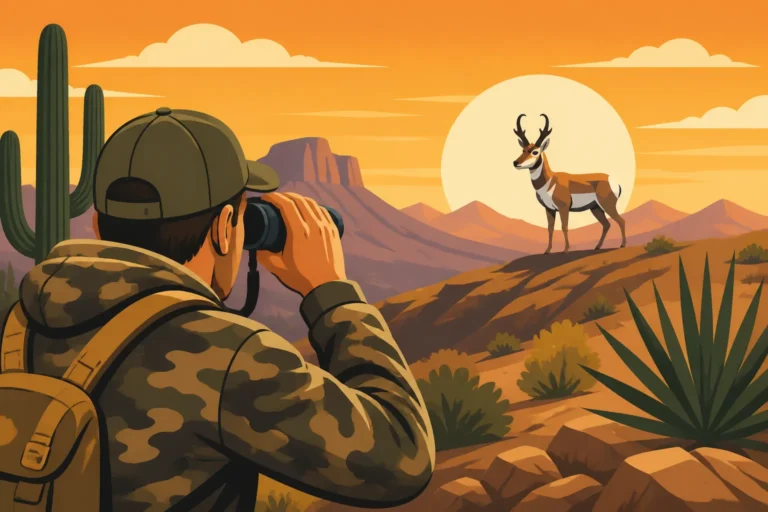
Trying to locate pronghorn in Arizona can feel like looking for a needle in a haystack spread across thousands of acres of wide-open country. Their incredible eyesight and preference for vast, unobstructed views make them notoriously challenging to find, let alone approach. This comprehensive guide will break down exactly where these magnificent animals tend to concentrate across Arizona, helping you narrow your focus and increase your odds of a successful hunt.
Understanding Arizona Pronghorn Habitat Preferences
Pronghorn are truly creatures of the open plains and grasslands, and understanding their specific habitat needs is the first step to figuring out where to find them in Arizona. Unlike deer or elk that often utilize timber for cover, pronghorn thrive in environments where they can see for miles in every direction, relying on their incredible speed and vision to evade predators.
The Importance of Expansive Grasslands and Sagebrush
When we talk about ideal pronghorn habitat, we're really talking about vast expanses of short- and mid-grass prairies, often interspersed with sagebrush, chamise, and other low-growing browse. These areas provide both the visibility they crave and the diverse forage they need. In Arizona, these types of landscapes are typically found on the high plateaus and plains of the northern and central parts of the state, as well as some of the wider, flatter valleys in the southeast. They need a mix of grasses for grazing and forbs or shrubs for browsing, which provide essential nutrients and moisture, especially during the drier months.
One of the biggest frustrations for hunters is how quickly pronghorn can move from one food source to another across an open landscape. They aren't tied to specific ridges or timber blocks like elk, making their movements less predictable. They'll often feed through a basin for a few hours, then move over a rise to another, seemingly identical, feeding ground kilometers away.
Water Sources and Pronghorn Movements
Water, as with all desert big game, is a critical factor influencing where pronghorn concentrate, especially during Arizona's hot, dry seasons. While pronghorn are incredibly adapted to arid environments and can derive a good deal of moisture from their forage, they still require regular access to water sources. These can be natural springs, man-made stock tanks, or even ephemeral puddles after a monsoon rain.
During the scorching summer and early fall archery seasons, you'll often find pronghorn herds keying in on these crucial water points. This can be both a blessing and a curse for hunters; while it concentrates the animals, it also concentrates hunting pressure. Knowing the location of every stock tank, well, and guzzler in a unit is paramount for success, and resources like those found on GoHunt can be invaluable for pinpointing these vital spots on detailed satellite maps. It's not uncommon to see several herds take turns watering at a single, prominent tank over the course of a day.
Key Regions for Arizona Pronghorn
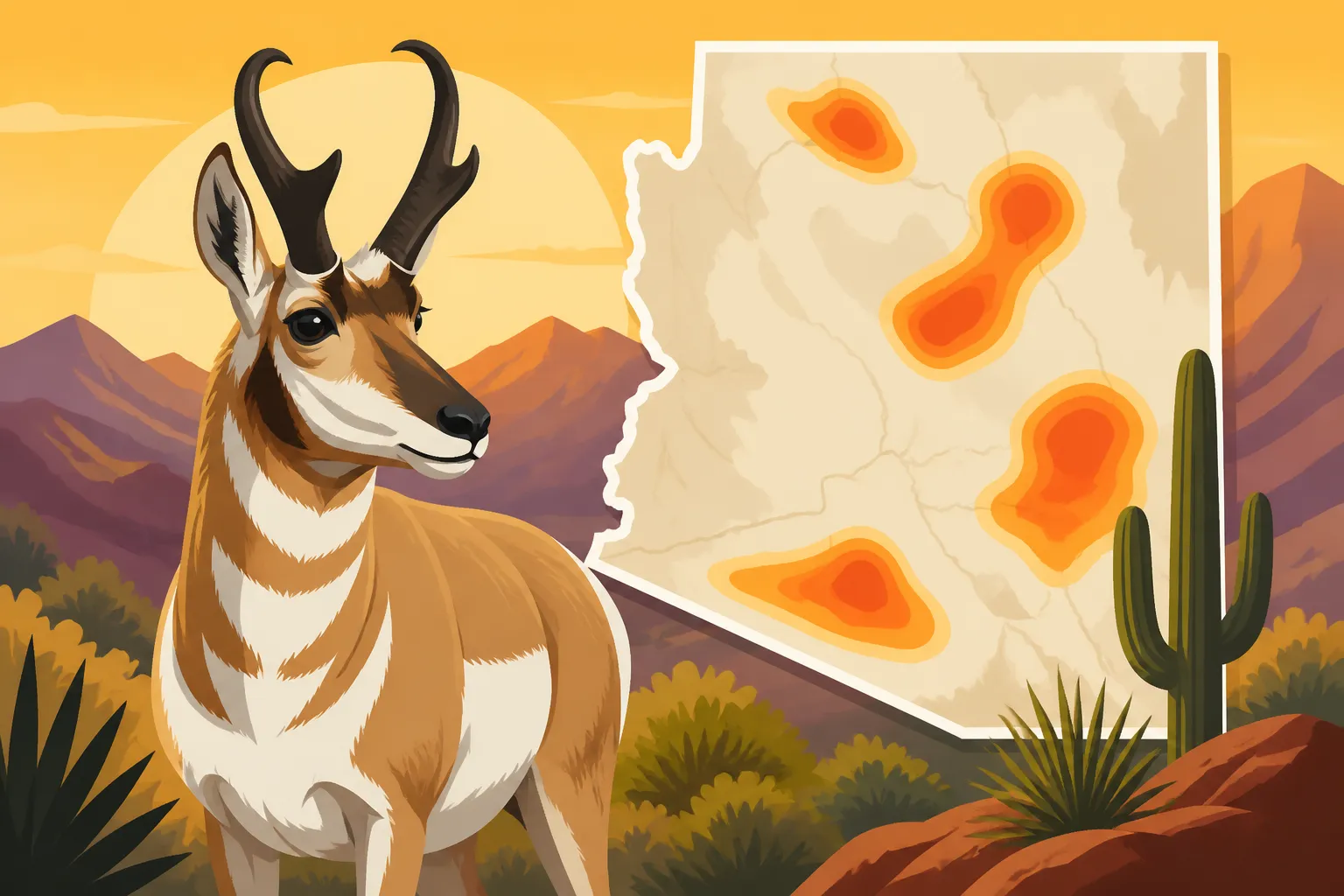
Arizona is a vast state with incredible habitat diversity, but when it comes to pronghorn, certain regions consistently stand out as their preferred domains. These areas share common characteristics: open topography, suitable forage, and often, a history of good herd management.
The Northern Arizona Grasslands
Without a doubt, the northern grasslands of Arizona are the state's premier pronghorn country. This expansive region includes areas like the Anderson Mesa, the Kaibab Plateau fringes, and the high plains surrounding Flagstaff and Williams. These are classic sagebrush-steppe environments with rolling hills and wide-open vistas that pronghorn absolutely adore. The elevation here is generally higher, offering cooler temperatures than the desert floor, which also contributes to richer forage.
Units such as 5A, 6A, and 10 are often mentioned when discussing quality pronghorn hunting in this part of the state, though drawing a tag in these units can be notoriously difficult due to their popularity and trophy potential. The sheer scale of these grasslands means that while pronghorn are present, finding them requires extensive glassing and covering a lot of ground. Hunters who spend time in this region know that a good spotting scope and binoculars are your best friends. Understanding the nuances of Optics Power for Arizona's Long Desert Sightlines can make or break your hunt in these vast landscapes.
Central Arizona Basins
Moving south, we find other significant pronghorn concentrations in the elevated basins of central Arizona. Areas around Prescott and east towards Payson, particularly units like 19B and 20A, hold healthy populations. These basins are typically intermountain valleys, characterized by grasslands, open juniper, and chaparral. While perhaps not as vast as the northern plains, they still offer the necessary open terrain and forage for pronghorn to thrive.
The topography here can be a bit more broken, with more hills and draws, which can offer some opportunities for stalking but also make initial spotting more challenging. These areas often experience higher summer monsoon activity, which can green up the forage quickly, but also make road access tricky. Knowing the nuances of Arizona Pronghorn Season Timing for these specific units can inform your hunt planning, as forage quality and water availability fluctuate throughout the year.
Southeastern Plains and Valleys
While less renowned than the northern units, southeastern Arizona also supports pronghorn populations, particularly in the broad, open valleys and plains nestled between the "Sky Island" mountain ranges. Units like 29 and 36B/C, especially in the areas west of Willcox, offer pockets of good pronghorn habitat. These areas are generally lower in elevation and can be much hotter, but they still provide the critical components: open grasslands and scattered mesquite or scrub.
Hunting in these southeastern areas often means dealing with intense heat during early seasons and being incredibly mindful of water sources. The pronghorn here are just as wary as their northern cousins, and the openness of the terrain provides little cover for approach. Success often hinges on finding isolated herds that haven't been pressured as heavily and capitalizing on brief windows of opportunity, perhaps early in the morning or late in the evening near a water source.
Factors Influencing Pronghorn Distribution Annually
Even within these recognized strongholds, the precise location of pronghorn can shift from year to year, and even day to day, based on a variety of environmental factors. Understanding these dynamics is crucial for adapting your strategy and not just relying on last year's scouting notes.
Rainfall and Forage Availability
Arizona is a desert state, and rainfall dictates nearly everything related to wildlife. Good monsoon rains in the summer and consistent winter moisture can lead to an explosion of grasses and forbs, spreading forage across a much wider area. In such years, pronghorn may be more dispersed, as they don't have to concentrate as heavily around prime feeding grounds. Conversely, during drought years, forage becomes scarce, and pronghorn will often consolidate into smaller, more specific areas where food is still available, making them easier to locate but also potentially increasing competition among hunters.
This annual variability makes preseason scouting absolutely vital. Relying solely on historical data, while useful for general area selection, won't account for the current year's conditions. Utilizing satellite imagery and mapping tools from platforms like GoHunt that allow you to track green-ups and water levels can give you a significant advantage in understanding where the best forage currently exists. This is why E-Scouting an Arizona Unit Before the Season has become such an indispensable tool for serious hunters.
Human Pressure and Disturbance
Pronghorn, despite their speed and vigilance, are sensitive to human disturbance. Areas with heavy road traffic, extensive cattle grazing, or frequent recreational use can push them into more remote or less accessible parts of a unit. While they often graze in proximity to roads, constant pressure will make them more wary and difficult to approach. This is particularly true during hunting season.
During the hunt, pronghorn learn quickly. If a herd is spooked from a water source or a favored basin by other hunters, they might abandon that area for several days, moving kilometers away to find peace. This necessitates a strategy that includes finding areas with less pressure, often requiring more effort to access. This means delving into rugged backcountry or areas with limited road systems. Sometimes, the reward is finding a band of unsuspecting pronghorn that haven't been educated by constant human presence.
Seasonal Shifts and the Rut
Pronghorn movements also change with the seasons, especially as they approach the rut. Typically, the pronghorn rut in Arizona begins in late August and extends through September, peaking around early September. During this time, bucks become highly active, establishing territories and gathering harems of does. This behavior can make them more visible but also more unpredictable.
Prior to the rut, bucks might be found in bachelor groups, often in slightly more secluded areas. As the rut heats up, they'll become focused on does, and you'll find them concentrating wherever the does are. Often, these are prime feeding areas or near reliable water. Bucks will be busy chasing, posturing, and challenging rivals, which can make them slightly less observant of distant threats, though their inherent wariness never truly disappears. Keep an eye out for these behaviors to signify the peak of the rut in your chosen unit.
Scouting and Hunting Pronghorn Hotspots
Finding where pronghorn concentrate is one thing; actually hunting them effectively is another. It requires meticulous scouting, patience, and often, specialized gear.
Effective Glassing Strategies
Because pronghorn inhabit such open country, glassing is not just a technique; it's the primary method of locating animals. You can't still hunt pronghorn through thick timber like you might for a Coues deer. You need to get high, settle in, and literally pick apart the landscape with your optics. A quality pair of 10x or 12x binoculars are essential, but a good spotting scope (20-60x or even 25-75x) is an absolute game-changer for identifying bucks and judging their size from extreme distances.
Start your glassing sessions early in the morning, right at first light, and continue into the late morning, and then again from mid-afternoon until dark. Pronghorn are often most active during these cooler periods. Focus your initial scans on known feeding areas, open rises, and around water sources. Once you spot a group, take your time to evaluate them. Are there any mature bucks? What direction are they moving? How is the wind blowing? These are all critical questions to answer before you even consider a stalk. If you're struggling to locate them, remember that why Arizona pronghorn concentrate is often tied to these very factors.
Reading the Landscape for Success
Beyond just spotting animals, learning to "read" the pronghorn country itself can give you a significant edge. Look for subtle changes in topography that might offer a pocket of slightly better forage, a small depression for bedding, or a hidden wash that could provide a route for a stalk. Pronghorn will often bed down in shallow depressions or behind low rises to gain a slight break from the wind or the sun, all while maintaining their visual advantage.
Consider the prevailing wind direction; pronghorn often feed and bed facing into the wind to detect scent, or with the wind at their back to detect threats from behind. Using mapping applications with topography overlays, like those from GoHunt, can help you identify these subtle landscape features before you even step foot in the unit. Pre-scouting maps to identify potential stalking routes along washes, low ridges, or even through scattered junipers is paramount for getting within range of these sharp-eyed animals. You'll want to avoid any terrain that would expose you for long periods, as even at great distances, a pronghorn can detect a human figure.
Stalking Challenges and Techniques
Once you've located a buck you want to pursue, the real challenge begins: the stalk. Pronghorn country typically offers very little cover, making a close approach extremely difficult. This is where patience, slow movement, and utilizing every scrap of available cover become crucial. Crawling, sometimes for hundreds of yards, is not uncommon. A good set of knee pads and tough pants are invaluable.
Always play the wind. Pronghorn have an excellent sense of smell, and if they catch your scent, the game is over. Approach slowly, using terrain features like washes, dips, and low vegetation to break up your outline. Remember to keep your movements smooth and deliberate. If you have a partner, one hunter can stay back and glass, guiding the other hunter into position. This collaborative approach can significantly improve your chances, as the spotter can help navigate terrain and keep an eye on the pronghorn's behavior. Learning How Far to Stalk a Bedded Coues Buck can offer transferable insights into the delicate art of closing the distance on any wary big game in open country.
Arizona Pronghorn Management and Conservation
The healthy pronghorn populations we enjoy in Arizona today are a testament to ongoing conservation efforts. The Arizona Game and Fish Department (AZGFD) actively manages pronghorn through scientific research, habitat improvement projects, and regulated hunting seasons.
Herd Health and Population Monitoring
AZGFD biologists regularly conduct aerial surveys to monitor pronghorn populations, assess herd health, and estimate buck-to-doe ratios and fawn recruitment. This data is critical for setting appropriate tag numbers each year, ensuring sustainable hunting opportunities while allowing populations to remain robust. Habitat enhancement projects, such as fence modifications to allow for pronghorn movement (they prefer to go under fences rather than jump over them) and water source development, are also ongoing to support these unique animals.
The success of these programs relies heavily on accurate data. Hunters play a role too, through mandatory harvest reporting, which contributes to the overall picture of pronghorn health. These efforts are particularly vital in fragmented habitats, where human development can pose challenges to pronghorn migratory routes and access to essential resources.
Draw Odds and Tag Allocation
Getting an Arizona pronghorn tag is often one of the most challenging draws in the state. Units with strong populations and a history of producing large bucks typically require many bonus points to draw, especially for nonresidents who face a The Nonresident Tag Cap in Arizona limiting their tag allocation to 10%. This reflects the high demand and the quality of the hunting experience.
However, even with difficult odds, persistence in applying is key to building those bonus points. Platforms like GoHunt provide detailed Arizona Pronghorn Draw Odds broken down by unit and point levels, allowing hunters to strategize their applications effectively. While it might take years to accumulate enough points for a premier unit, applying consistently ensures you're always in the running and contributing to your bonus point total. For some, even applying for a point-only option each year is a way to stay invested in future opportunities for these incredible animals.
Disclaimer
Please note that hunting regulations, season dates, and unit boundaries can change. Always consult the official Arizona Game and Fish Department regulations booklet for the most current and accurate information before planning any hunt. This guide is for informational purposes only and does not replace official sources.