Arizona Mountain Lion Harvest Guidelines
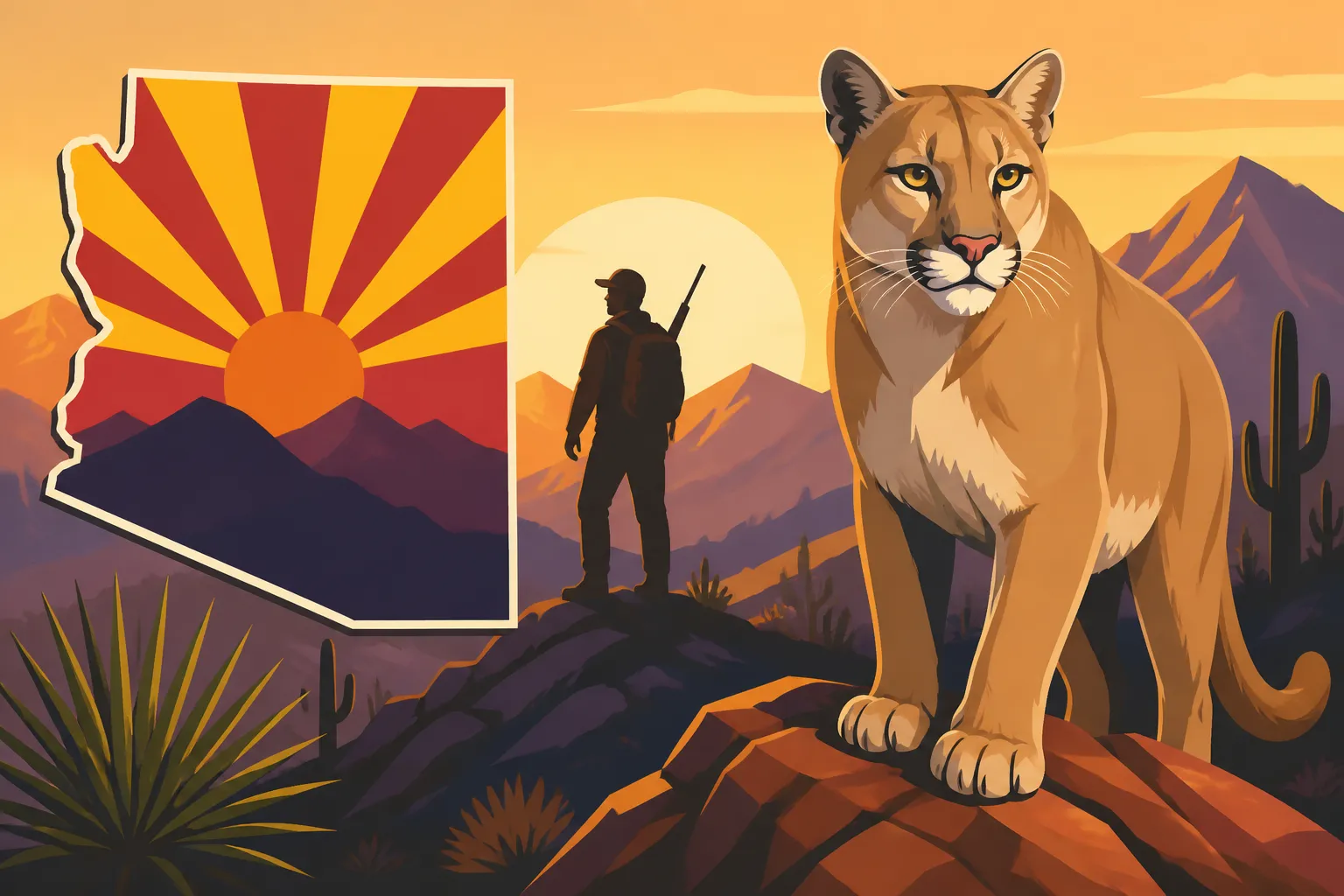
Hunting mountain lions in Arizona is an experience unlike almost any other, blending extreme physical challenge with the thrill of pursuing one of the desert and mountain's most elusive predators. But let's be real, the regulations surrounding mountain lion harvest, especially with those dynamic unit closures and critical reporting requirements, can feel like navigating a complex maze. It’s a lot to keep track of, and missing a detail can quickly turn an exciting hunt into a frustrating, even illegal, situation. This guide is here to walk you through Arizona's mountain lion harvest guidelines, ensuring you understand the ins and outs of ethical and legal hunting.
Understanding Arizona's Unique Mountain Lion Management
Arizona's approach to mountain lion management is quite distinct from many other big game species. It's not a simple tag-and-go system, and for good reason. Mountain lions play a critical role as apex predators in the ecosystem, and their populations need careful stewardship. This often means regulations that can change on a dime, requiring hunters to be constantly aware.
Why Mountain Lions Are Managed Differently
Unlike deer or elk, which typically have fixed season dates and bag limits, mountain lion hunting in Arizona often operates under a different paradigm: harvest quotas. This system is designed to allow for adaptive management, meaning the Arizona Game and Fish Department (AZGFD) can respond quickly to population fluctuations, habitat changes, or specific needs within a given unit. It’s not about limiting opportunity, but rather ensuring the long-term health and stability of the lion population while still providing hunting opportunities. The challenge for us as hunters is staying on top of these dynamic rules, which can feel like chasing a moving target.
The Concept of Harvest Thresholds
At the heart of Arizona's mountain lion management are what we call "harvest thresholds" or quotas. These aren't just arbitrary numbers; they are scientifically determined limits for the number of mountain lions that can be harvested in specific game management units or regions before that unit is closed to hunting. These thresholds are often set with consideration for the local lion population density, prey availability, and even factors like female harvest rates, which are particularly crucial for population sustainability. It means that while a season might be open year-round, the actual hunting window in a specific area could be very short if the quota is met quickly. It certainly keeps you on your toes!
Statewide and Unit-Specific Quotas
Arizona employs both statewide and individual unit harvest quotas for mountain lions. While there might be a general statewide harvest objective, it's the unit-specific quotas that truly dictate where and when you can hunt. For instance, a unit with a healthy, robust lion population might have a higher quota than a unit where lions are less numerous or where a specific conservation objective is in place. These quotas are often further broken down by sex, with lower limits for female lions to protect breeding populations.
It’s crucial to know your specific hunt unit and its individual quota before you even think about heading out. Relying solely on the statewide overview could lead to disappointment or, worse, a violation. This is where modern tools become incredibly valuable, helping you keep tabs on active closures. Understanding Arizona Mountain Lion Harvest Limits by Unit is paramount for any hunter seriously pursuing these cats.
General Seasons and Legal Hunting Methods for Lions
The allure of mountain lion hunting often comes from its year-round potential and the diverse methods allowed. However, "year-round" doesn't mean "unrestricted," especially given those fluctuating harvest quotas we just discussed.
Year-Round Opportunity and Season Structure
Arizona is unique in offering a generally year-round season for mountain lions, meaning there isn't a strict opening and closing date like with deer or elk. This provides incredible flexibility, allowing hunters to target lions when other seasons are closed, or to piggyback a lion hunt onto another big game pursuit. However, this flexibility comes with the caveat of those harvest thresholds. The season in any given unit is effectively open until its specific quota is met, at which point it closes immediately.
This means you can’t just assume because it’s August or January that a particular unit is open. You have to actively check. This dynamic schedule also means that if you’re planning a hunt, you need to be prepared for it to potentially end without warning. Many hunters find themselves doing extensive E-Scouting an Arizona Unit Before the Season to identify promising areas that might have quotas still available.
Legal Weapons and Equipment for Lion Hunting
Arizona allows a variety of legal weapons for mountain lion hunting, giving hunters options based on their preference and hunting style. Generally, rifles, handguns, shotguns (with slugs or buckshot), and archery equipment are all permissible. There aren't specific caliber restrictions for rifles or handguns for lion, but common sense and ethical hunting dictate using a firearm powerful enough to ensure a clean, humane kill. Many hunters opt for cartridges suitable for deer-sized game.
For bowhunters, the standard archery regulations apply, including minimum draw weights and broadhead requirements. For instance, you'll want to ensure you're using Why Arizona Requires Broadheads Wider Than 7/8 Inch for ethical harvest. Electronic calls are legal for mountain lion hunting, which can be a valuable tool, especially if you're not utilizing hounds. Night hunting for mountain lions is generally not permitted, aligning with Arizona Legal Shooting Hours for Big Game, which typically restrict hunting to daylight hours.
Where Mountain Lions Can Be Hunted Public vs. Private
Mountain lions are found across much of Arizona, from the vast stretches of desert to the rugged mountain ranges. This means opportunities exist on a variety of land types. Much of the hunting occurs on public lands managed by the Bureau of Land Management (BLM) and the U.S. Forest Service. For these areas, generally, BLM and Forest Ground Across Arizona Needs No Permit beyond your valid Arizona hunting license.
However, Arizona also has extensive State Trust Land, which is not automatically open for hunting. While your hunting license does act as your recreational access permit for general hunting on State Trust Land, it's always wise to be absolutely sure of your boundaries. You can learn more about this by researching Arizona State Trust Land Needs a Permit, and Your License Counts. Private land hunting is also an option, but this always requires express permission from the landowner. Trespassing is a serious offense, so always know where you stand. Access can be a real challenge in Arizona, especially when you're pursuing an animal as wide-ranging as a mountain lion, so understanding land ownership maps is crucial.
Deciphering Harvest Limits and Unit Closures
This is arguably the most critical and often most confusing aspect of mountain lion hunting in Arizona. The dynamic nature of unit closures demands constant vigilance from hunters.
Understanding Unit-Specific Harvest Limits
Every year, AZGFD publishes the specific harvest limits for each game management unit (GMU). These limits are not static; they can and do change based on current population assessments and management objectives. Some units might have a total quota of just one or two lions, while others, particularly larger or more remote units, might allow for a dozen or more. These limits are often further categorized by sex, for example, a unit might allow for "2 lions, not to exceed 1 female." This ensures that enough breeding females remain in the population.
It's up to you as the hunter to be aware of these limits for the specific unit you intend to hunt. Before you even pack your truck, you should have a solid understanding of the current quota for your chosen unit. This information is readily available on the AZGFD website and through various hunting resources. This is where proactive research really pays off.
How Unit Closures Are Announced
Once a unit's harvest limit is met, that unit is immediately closed to mountain lion hunting. This is not a gradual process; it's instant. AZGFD announces these closures through several channels, but the primary and most immediate method is typically through its website. They maintain a real-time (or near real-time) list of units that have met their quota and are now closed. They also often use a dedicated hotline or email notification system that hunters can subscribe to.
The onus is entirely on the hunter to check for closures before and during their hunt. You cannot claim ignorance if you harvest a lion in a closed unit. Imagine the frustration of successfully harvesting a lion only to find out the unit closed an hour before your shot. It's a real possibility and one that reinforces the need for diligent monitoring. For any serious lion hunter, understanding Mountain Lion Reporting Requirements in Arizona also ties directly into this system.
Monitoring Real-Time Harvest Data
Staying current with harvest data is paramount. Many hunters use the AZGFD website, which updates regularly with the number of lions harvested per unit. Some dedicated hunting apps and services, like those offered by GoHunt, also provide real-time updates and notifications for unit closures, making it incredibly convenient to stay informed in the field. This is not a luxury; it's a necessity for ethical and legal lion hunting in Arizona.
Let's say you're planning a hunt in Unit 22. You check the AZGFD website before you leave and see the quota is 5 total lions, with no more than 2 females. You drive out, hike in, and maybe spend a day or two scouting. Before you commit to the actual hunt, or even during it, you should re-check the website or your GoHunt app. If you see that 4 lions have already been reported from Unit 22, and one of those was a female, your strategy might shift dramatically, or you might realize you need to move to a different unit if the female quota is about to be hit. This constant monitoring prevents heartbreak and ensures you're always operating within the law.
Here’s a simplified example of how harvest data might be presented, though always check the official AZGFD sources for the most current and accurate information:
| Game Management Unit (GMU) | Total Lion Quota | Female Lion Quota | Lions Harvested (YTD) | Females Harvested (YTD) | Status |
|---|---|---|---|---|---|
| 1 | 8 | 3 | 2 | 1 | Open |
| 5B | 5 | 2 | 5 | 2 | Closed |
| 22 | 10 | 4 | 7 | 3 | Open |
| 35A | 3 | 1 | 3 | 1 | Closed |
| 37 | 6 | 2 | 1 | 0 | Open |
This table illustrates how quickly a unit can close once its quota is reached. Hunters must interpret this data with care, especially with the "not to exceed" female quotas.
The Critical Importance of Mountain Lion Reporting
Harvesting a mountain lion in Arizona isn't the end of your responsibilities; in fact, it's just the beginning of a crucial administrative process. The reporting requirements are strict, mandatory, and designed to ensure the integrity of the harvest quota system and aid in biological data collection.
Mandatory Reporting Within 48 Hours
Once you've successfully harvested a mountain lion, you are legally obligated to report it to the Arizona Game and Fish Department within 48 hours. This isn't just a suggestion; it's a hard and fast rule. This timely reporting is absolutely essential for the department to update harvest totals and, if necessary, close units to prevent overharvest.
The process typically involves contacting a regional AZGFD office, often via phone. They will ask for specific details about your hunt, including the date and time of kill, the specific unit, and your license/tag information. They will then provide instructions for the next critical step: the physical inspection. Missing this 48-hour window can lead to serious legal repercussions, including fines and the loss of hunting privileges. It’s a detail you simply cannot afford to overlook after the excitement of a successful hunt.
Physical Inspection Requirements
After reporting your harvest, you will be required to present the mountain lion carcass, or at least the hide with proof of sex naturally attached, for physical inspection by an AZGFD official. This inspection serves several vital purposes. First, it verifies the species and ensures compliance with regulations. Second, and perhaps most importantly for management, it allows biologists to collect crucial biological data, such as age, sex verification, and general health assessments. They will often remove a tooth for aging the animal.
During this inspection, the department will apply a permanent seal or tag to the hide, signifying that it has been legally reported and inspected. This tag must remain attached to the hide until it is processed or mounted by a taxidermist. These inspections are typically done at AZGFD regional offices, but arrangements can sometimes be made for field inspections depending on your location and the officer's availability. This aspect of the hunt is a non-negotiable step that all ethical and legal lion hunters must complete.
Penalties for Non-Compliance
The state of Arizona takes its big game reporting requirements seriously, and mountain lion regulations are no exception. Failing to report a mountain lion harvest within the 48-hour window, or failing to present the animal for inspection, can result in significant penalties. These can include substantial fines, confiscation of the harvested animal, and the suspension of your hunting license for a period of time.
These penalties are in place to uphold the integrity of the state's wildlife management system. Imagine if multiple hunters failed to report; the quota system would break down, potentially leading to overharvest and harm to the lion population. So, while the reporting process might seem like an extra step after a demanding hunt, it's a vital part of responsible hunting and conservation. Understanding the nuances of Mountain Lion Reporting Requirements in Arizona is not just good practice, it's the law.
Special Considerations for Hunting with Hounds
For many, the quintessential mountain lion hunt involves a pack of well-trained hounds. It's an age-old tradition that offers a unique and exhilarating experience, but it also comes with its own set of specific regulations and ethical considerations.
Hound Hunting Regulations and Licensing
Hunting mountain lions with the aid of dogs is a legal and popular method in Arizona, but it requires adherence to specific rules. First and foremost, anyone engaging in hound hunting must possess the proper licenses. In addition to a general hunting license and mountain lion tag, there may be specific requirements for dog handlers or for the dogs themselves. Arizona Game and Fish has clear guidelines on the number of dogs allowed per hunter, how dogs must be managed, and restrictions on when and where they can be used.
For example, dogs must be kept under control, and typically cannot be used to harass or pursue non-target wildlife. There are also rules regarding the use of GPS collars and communication devices. Understanding Hound Rules for Mountain Lion Hunting is absolutely essential if you plan to utilize this method. These regulations are designed to ensure fair chase, prevent conflicts with other hunters or landowners, and promote the welfare of the dogs. It's a specialized skill that requires dedication and a deep understanding of animal behavior, both canine and feline.
Ethical Pursuit and Baying Practices
The ethical responsibility when hunting with hounds is paramount. A skilled hound hunter understands the art of the chase and knows when to call off a pursuit, especially if the lion is not treed or bayed effectively, or if conditions are not safe for a harvest. Once a lion is treed or bayed on the ground, hunters have a responsibility to approach cautiously and ensure a safe, ethical shot. This means positioning oneself for a clean kill shot and avoiding unnecessary stress to the animal.
Many veteran hound hunters will tell you that the true sport lies in the chase itself and the skill of their dogs, not just the harvest. They prioritize the welfare of their dogs and the quarry. If a lion is in a precarious position or presents an unsafe shot, an ethical hunter will often choose to let it go. This respect for the animal and the hunt is a cornerstone of responsible hound hunting. When you're Hunting Lions Behind a Pack of Hounds, the experience is often more about the journey than just the destination.
Avoiding Conflicts with Other Wildlife
While hounds are trained to pursue mountain lions, there's always a possibility of them encountering other wildlife during a chase. Responsible hound hunters take every precaution to minimize these conflicts. This includes training dogs to focus solely on cat scent, being aware of areas where other big game might be concentrated, and using GPS collars to monitor and retrieve dogs quickly if they get off track.
Imagine your hounds inadvertently pushing deer or elk, or worse, getting into a conflict with a bear. These scenarios are precisely what the regulations aim to prevent. Hunters must be prepared to intervene and call their dogs off if they stray onto non-target species or private property. It's a constant balancing act between allowing the dogs to work and maintaining control, a challenge that adds another layer of complexity to this demanding form of hunting.
Ethical Hunting Practices and Conservation in Lion Country
Mountain lions are majestic creatures, and hunting them comes with a profound responsibility. Ethical practices and a commitment to conservation are not just buzzwords; they are fundamental to ensuring the future of this species and the hunting heritage we cherish.
Respecting the Animal and the Landscape
Any successful mountain lion hunt begins and ends with respect. Respect for the animal means striving for a quick, humane kill. It means understanding the cat's behavior and choosing your moment carefully. If you're using hounds, it means ensuring the dogs are not causing undue stress. Respect for the landscape involves adhering to all public land use regulations, including Motorized Travel Rules on Arizona Public Land, leaving no trace, and being mindful of other users.
Hunting in Arizona often means venturing into rugged, remote terrain. This wilderness is home not only to lions but to countless other species and is a cherished resource for hikers, campers, and nature enthusiasts. Our actions as hunters reflect on the entire hunting community, so it's critical to be ambassadors for ethical outdoor behavior. This includes proper field dressing and packing out all refuse. Field Dressing in Desert Heat takes on particular importance when dealing with a large animal far from the truck.
The Role of Hunters in Lion Conservation
Hunters play a direct and significant role in mountain lion conservation in Arizona. The revenue generated from hunting licenses and tags directly funds the Arizona Game and Fish Department's wildlife management and conservation efforts, including those for mountain lions. Beyond funding, hunters provide critical data through their mandatory reporting and physical inspections, allowing biologists to monitor populations, assess health, and make informed management decisions.
Furthermore, ethical hunting helps maintain healthy prey populations by reducing predation pressure in certain areas, and it can also help mitigate human-wildlife conflicts in areas where lion populations might be encroaching on urban or rural communities. It's a complex ecological balance, and regulated hunting, far from being detrimental, is a tool for maintaining that balance. The detailed guidelines we follow, including harvest quotas and reporting, are all designed with the long-term health of the species in mind.
Safety First: Preparing for a Lion Hunt
Mountain lion hunting is inherently physically demanding and often takes you into some of Arizona's most remote and rugged country. Prioritizing safety is non-negotiable. This means thorough physical preparation, because chasing hounds or still-hunting through steep, rocky canyons for miles is no joke. Researching Preparing Physically for a Desert Hunt is time well spent.
It also means being prepared for all environmental conditions. Arizona's weather can be unpredictable, from scorching desert heat to unexpected snow in higher elevations. Carry adequate water, navigation tools, a first-aid kit, and emergency communication devices. Tell someone your hunt plan and stick to it. If you're hunting with a partner, maintain communication and always know each other's location. The thrill of the chase should never overshadow the importance of getting home safely.
Disclaimer
Please be aware that hunting regulations, seasons, and bag limits can change. It is always your responsibility to consult the most current Arizona Game and Fish Department regulations before engaging in any hunting activity. This content is for informational purposes only and should not be considered legal advice.