Field Judging a Mule Deer Buck Quickly
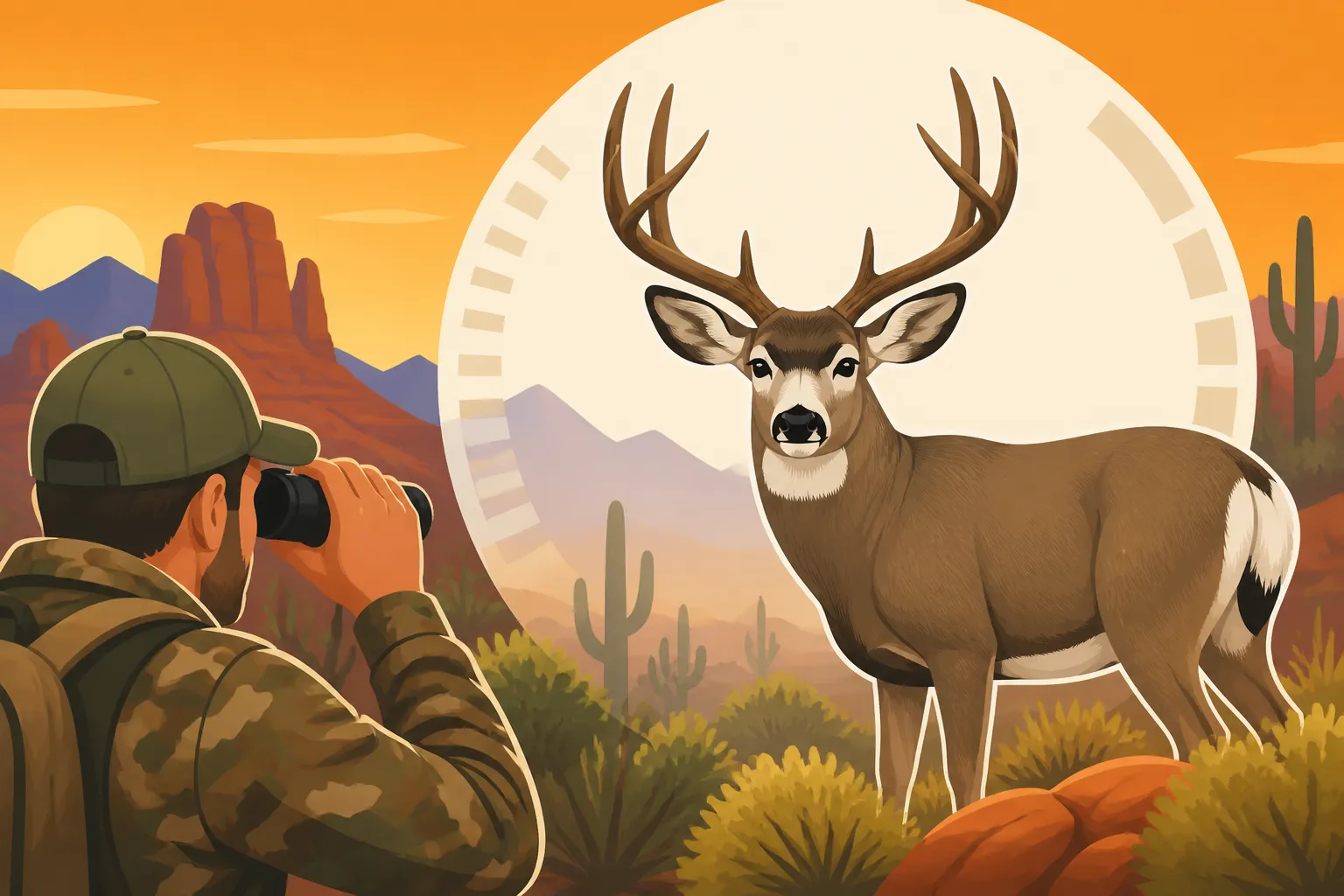
We've all been there: that heart-pounding moment when a magnificent mule deer buck steps into a clearing, but it's only for a few precious seconds. In Arizona's vast and rugged landscapes, judging a buck quickly can be the difference between a successful, ethical shot and letting a great animal walk, or worse, making a mistake. It’s a skill that veteran hunters spend years honing, and it often feels like there’s never enough time. This guide is here to break down the techniques you need to make fast, accurate decisions in the field, ensuring you're confident when the moment of truth arrives.
Understanding Mule Deer Antler Basics for Quick Assessment
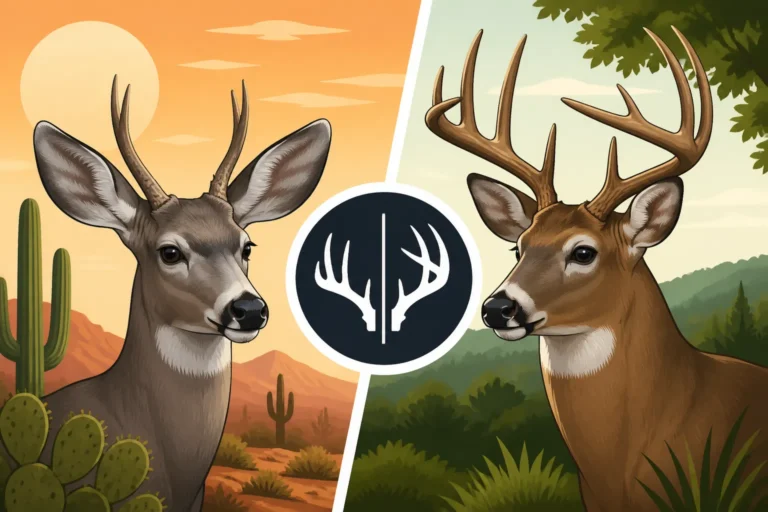
Before you can quickly judge a mule deer buck, you really need to understand the fundamentals of their antler growth and structure. Unlike whitetail deer, which tend to have a main beam with tines branching off it, mule deer typically grow antlers that fork and re-fork. This characteristic "forked horn" appearance is their signature. Knowing what to look for—and what not to mistake—is your first step in rapid field evaluation.
The Forked Structure and Its Significance
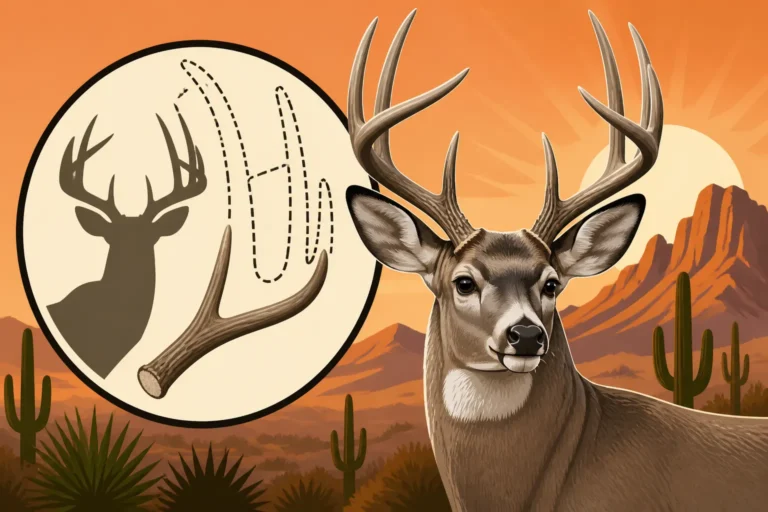
Mule deer antlers are known for their distinctive bifurcated growth pattern, meaning they split into two, and then those splits often split again. A "typical" mule deer will have two main beams, and each beam will fork into two points, often referred to as a "primary fork," and then each of those points might fork again, creating "secondary forks." This is where the common classification of a "4×4" or "3×3" comes from, referring to the number of points on one side, excluding the brow tines. Some bucks might have impressive brow tines, while others have none, so focusing too heavily on them can sometimes lead to misjudging the overall frame.
When you're trying to quickly size up a buck, your eyes should immediately go to this forking pattern. Is it a clean 3×3 with good length on each fork? Or is it a wider 4×4 with shorter points? Understanding this basic structure helps you categorize the buck in your mind almost instantly. Don't get caught up in counting every single small sticker; focus on the main, recognizable points and the overall symmetry or asymmetry. A truly big mule deer often has deep, well-defined forks that extend significantly.
Mass, Tine Length, and Spread: The Scoring Pillars
Three primary components make up the bulk of a mule deer's antler score: mass (circumference), tine length, and spread (width). Learning to estimate these quickly in the field is crucial. Mass refers to the thickness of the antlers, particularly the main beams, from the base all the way up. Tine length is pretty self-explanatory – how long are those points sticking up? Spread is the widest point of the antlers, usually measured from outside edge to outside edge.
A buck with great mass will look heavy and dark at the bases, often carrying that thickness well up the main beams. Long tines stand out, almost piercing the sky. And spread, well, that's often the easiest to spot, as it determines how wide the buck looks compared to its ears or body. A good rule of thumb for spread is that an average mule deer's ears, when alert and straight up, are roughly 20-22 inches wide. If the antlers extend significantly beyond the ears, you know you've got a buck with impressive width. If they're inside the ears, it's likely a narrower animal. Combining these three elements, even with a quick glance, starts to paint a picture of the buck's potential.
Estimating Antler Dimensions in the Field Under Pressure
The pressure is on. That buck might only be visible for a few moments, or it might be moving. This is where your ability to make rapid estimates comes into play. It’s not about perfection; it’s about getting "close enough" to decide if it’s the buck you want to pursue.
Using Natural Reference Points for Spread and Tine Length
One of the most effective quick-judging techniques is to use the buck's own body as a reference. As mentioned, the ear-tip-to-ear-tip measurement on an alert mule deer is typically around 20-22 inches. Use this as your baseline. Does the main spread of the antlers exceed the ears by a considerable margin? Is it roughly ear width? Or are the antlers tucked in tight, inside the ears? This visual trick can instantly give you an idea of the buck's width, which is often a major factor for hunters.
| Antler Dimension | Quick Field Reference | Notes for Estimation |
|---|---|---|
| Spread | Ear-tip to ear-tip (approx. 20-22 inches) | Does the antler spread go significantly outside the ears? Inside? Equal? |
| Main Beam Length | Length of the head/neck, shoulder width | Estimate how many "head lengths" long the main beams are. |
| Tine Length | Eye-to-ear distance, nose length | Are the tines longer than its ear? Half the length? |
| Mass (Circumference) | Diameter of the eye, diameter of the leg | Do the bases look as thick as its leg or thicker? Are they thicker than its eye? |
For tine length, think about familiar lengths. Is a tine as long as the buck's ear? Half the length of its face? These might seem rough, but in those critical seconds, they provide valuable mental benchmarks. For instance, a mule deer ear is usually around 8-10 inches. If you see tines that are clearly longer than an ear, you're looking at some seriously good points. If they're stubby and less than half an ear's length, it’s a younger buck or one with less impressive genetics. Practice this on deer you don't intend to shoot to build your mental library of comparisons.
Assessing Mass and Character Points
Mass is often the hardest to judge quickly, but it’s a critical component of a big buck. Look at the bases of the antlers where they meet the skull. Do they look thick and heavy, like they could fill your fist? Or are they spindly and narrow? As the main beams extend, do they carry that mass well, or do they thin out dramatically after the first fork? Bucks that carry mass well are often older, more mature animals.
Beyond the standard forks, look for "character" or "non-typical" points, though typically these are a bonus in a "typical" scoring system. These might be small stickers, kickers, or even drop tines. While not always a focus for a quick field judge trying to categorize a typical buck, if a buck has an obvious drop tine or a host of gnarly, unique points, it can instantly elevate its status as a trophy for many hunters. When Glassing Arizona's Sky Islands for Coues Deer, a different species but similar challenge, hunters train their eyes for these unique characteristics, and it's no different for muleys on the plateaus.
Rapid Decision Making: The "Shoot or Don't Shoot" Moment
The clock is ticking. You’ve got a buck in your sights, and you need to make a call. This is where all your practice and understanding come together.
The "Three-Second Rule" and Body Size Cues
Many experienced hunters operate on a "three-second rule" when a buck steps out: in those initial moments, you decide if it’s an animal you want to put a tag on. This isn't literal, of course; sometimes you get more time, sometimes less. But it underscores the need for instant assessment. You don't have time to second-guess or over-analyze every inch. You're looking for an overall impression that aligns with your hunting goals.
A key indicator of a mature buck, regardless of antler size, is its body. Older bucks tend to have thicker necks, deeper chests, and more developed shoulders than younger animals. Think of the difference between a high school football player and a seasoned linebacker. A younger buck, even with a decent rack, will often appear more "leggy" and slender-bodied. An older buck will look stockier, heavier, and more powerful in its build. This can be particularly helpful when you're glassing for deer on the White Mountains Elk Country, where you might see deer and elk in the same general area, offering a quick comparison of scale. If the body screams "mature," it might be worth taking a longer look at the antlers. If the body looks young, even with decent antlers, it's likely still got more growing to do.
Training Your Eye and Using Technology
The best way to get better at quickly judging bucks is to practice, practice, practice. Spend time behind your optics, even if you don't have a tag in your pocket. Watch deer, both bucks and does. Estimate their size, their antler dimensions, and then confirm or adjust your mental calibration. Many hunters use hunting apps like GoHunt to e-scout units before the season, familiarizing themselves with the terrain where mule deer range on the plateaus and the typical size of bucks taken from those areas. This kind of preparation can give you a mental edge in the field.
Beyond simple practice, invest in quality optics. A clear, powerful pair of binoculars and a good spotting scope can make all the difference, especially when you're trying to judge an Arizona Coues Buck at Distance, where fine details disappear quickly. Using a rangefinder isn't just for bullet drop; knowing the exact distance to the animal can also help with judging scale. A buck at 400 yards looks much smaller than the same buck at 100 yards, and your brain needs that data point to adjust its perception. Don't forget to practice with your rangefinder alongside your optics.
Mastering the Nuances of Mule Deer Judging in Arizona
Arizona offers diverse mule deer hunting opportunities, from the high plateaus of the north to the rugged desert mountains. Each environment presents its own challenges and characteristics when it comes to judging these magnificent animals.
Regional Variations and What to Expect
The mule deer found across Northern Arizona, particularly in areas like the Kaibab Plateau, are often renowned for their impressive body size and antler growth. These deer benefit from better forage and more consistent moisture. When you're in these areas, your expectations for what constitutes a "big" buck might be higher, and you'll be looking for truly massive spreads and long, heavy tines. Here, a "good" buck might be one that easily exceeds ear width and carries significant mass. Consider reading about the Kaibab Plateau Mule Deer Quality to calibrate your expectations for that specific area.
In contrast, some of the more arid, lower-elevation desert units might produce bucks with smaller body sizes and racks that don't quite reach the same proportions. Here, a buck with decent mass and a clean 3×3 or 4×4 frame, even if it's not exceptionally wide, might be considered a trophy. It’s all about adjusting your expectations to the specific habitat and genetics of the area you’re hunting. Understanding these regional differences, often gleaned from research on GoHunt or by pouring over harvest reports and population trends, is a crucial part of effective field judging.
The Impact of Age and Genetics on Antler Development
Ultimately, the biggest factor in antler size is the age of the buck, followed by genetics and nutrition. A young buck, even one with good genetics, simply hasn't had enough years to maximize its antler growth. They might have a decent frame, but often lack the mass and tine length of a truly mature animal. Learning to differentiate between a 2.5-year-old buck with potential and a fully mature 5.5-year-old or older buck that has reached its peak is essential. The body size cues discussed earlier are paramount here.
By studying deer movement patterns and understanding When the Mule Deer Rut Actually Starts, you might also encounter bucks at different stages of their antler cycle or body condition, which can sometimes influence your perception. The point is, don't just judge the antlers in isolation. Look at the whole animal, consider the unit you're in, and remember that a truly big buck is often big all over. E-Scouting an Arizona Unit Before the Season can help you understand the typical size class of deer for that specific area, giving you a baseline for what's considered mature.
The Ethical Considerations of the Quick Decision
Beyond scoring, the most important aspect of field judging is ensuring an ethical harvest. If you can't confidently identify the animal as the one you're looking for, or if you can't make a clean, ethical shot, then you simply don't take it. There's no trophy worth a questionable shot or a misidentified animal. When you're making that quick decision, always prioritize clarity and confidence. If there's any doubt, let the buck walk. Learning to assess the target and background thoroughly, even under time constraints, is part of being a responsible hunter. Remember, the goal is not just to judge the antlers, but to make a sound decision for the animal and for yourself.
Disclaimer
This article is for general informational purposes only and does not constitute professional advice. Laws, prices and regulations vary by location and change over time. Consult a qualified professional for guidance on your specific situation.