Gould’s Turkey in Southern Arizona
Hunting Gould's turkey in Southern Arizona is often seen as a bucket-list endeavor, a quest for a truly special bird in some of the most stunning, yet unforgiving, landscapes. Many hunters feel a deep frustration with the sheer difficulty of drawing a tag, let alone finding these elusive birds once they are fortunate enough to hit the field. This guide aims to demystify the process, offering a comprehensive look into understanding, pursuing, and, hopefully, harvesting a Gould's turkey in the Sky Islands of Arizona.
Understanding the Elusive Gould's Turkey
The Gould's turkey ( Meleagris gallopavo mexicana ) isn't just another turkey; it's a distinct subspecies with a captivating history and a unique set of behaviors that make it a true challenge for any hunter. Unlike their more numerous cousins, the Merriam's, these birds call a very specific part of the American Southwest home, and their presence in Arizona is a testament to dedicated conservation efforts.
Gould's Distinctive Characteristics
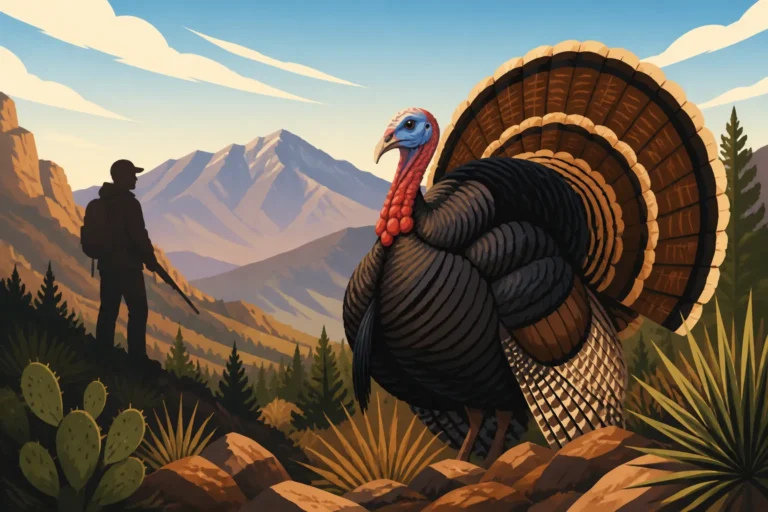
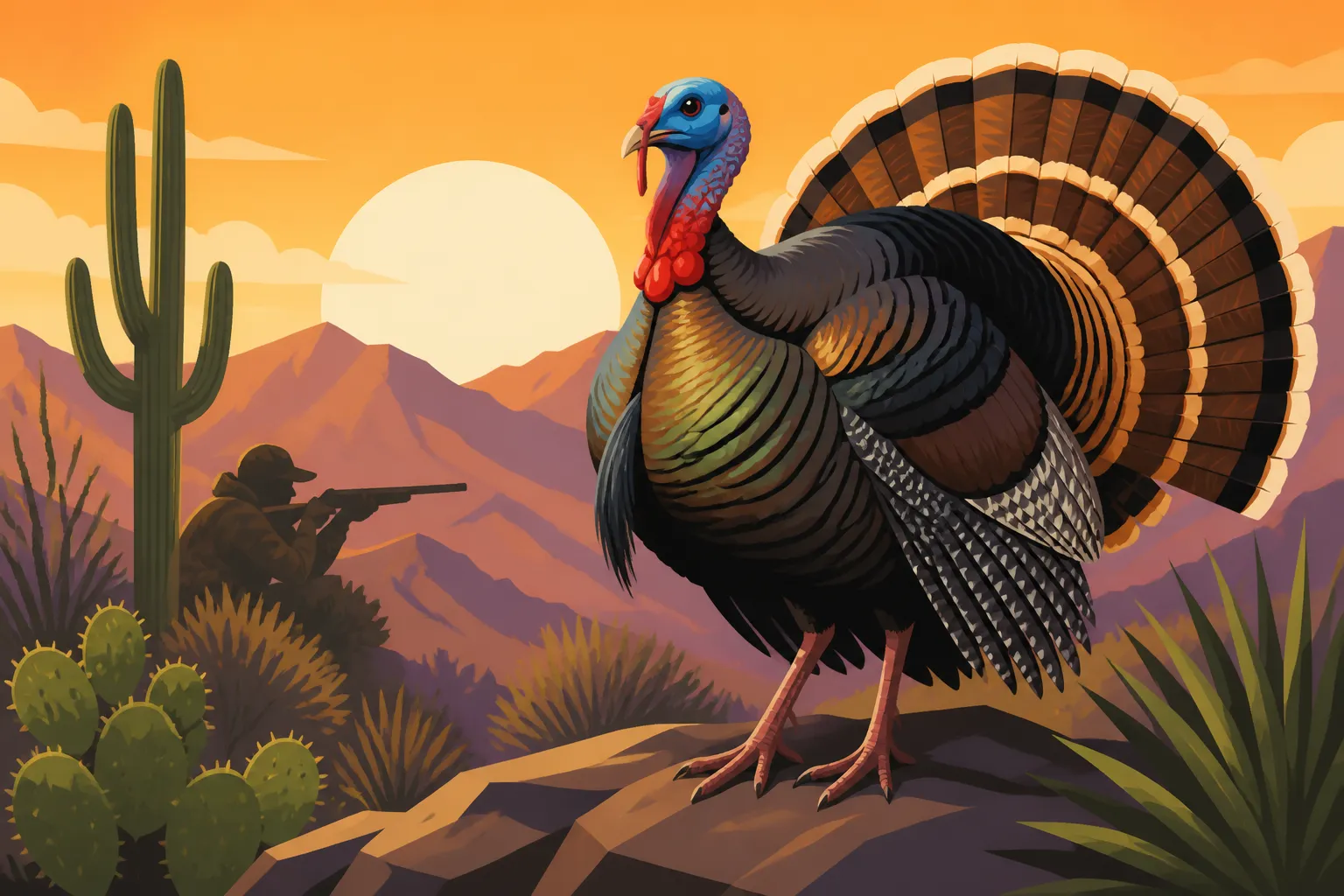
If you're used to seeing Merriam's turkeys strutting through the ponderosa pines, a Gould's will immediately strike you as different. They are generally larger, darker-bodied, and sport much longer legs. Their tail feathers are tipped with creamy white or buff, not the pristine white of the Merriam's. The rump feathers also tend to be a more deep, rich copper-bronze rather than the lighter, iridescent bronze often seen on Merriam's. It's a subtle but noticeable difference in coloration that helps them blend into their distinct habitat. Gould's Turkey in Southern Arizona These birds also have a reputation for being incredibly wary, perhaps a trait honed by living in open, steep terrain where danger is often spotted from a distance. Their gobble can also sound a bit different, sometimes deeper and more guttural than what you might hear further north on the Mogollon Rim.
They are a majestic bird, often weighing in heavier than their Merriam's counterparts. For a hunter, seeing one of these magnificent birds is often reward enough, regardless of whether a shot is taken. Their long, powerful legs are built for navigating the steep, rocky canyons and hillsides they inhabit, making them adept at disappearing quickly when disturbed. This physical prowess is something to consider when you're planning your own hunt, as you'll likely be traversing similar challenging terrain.
Habitat Preferences in Southern Arizona
Gould's turkeys are almost exclusively found in the "Sky Island" mountain ranges of southeastern Arizona. Think of places like the Huachuca Mountains, Santa Rita Mountains, or the Chiricahua Mountains. These ranges are isolated forested peaks rising dramatically from the surrounding desert lowlands, creating unique ecosystems that are cooler and wetter than the arid basins below. Hunting the Santa Rita Mountains They thrive in ponderosa pine, oak, and juniper woodlands at higher elevations, typically between 4,500 and 10,000 feet.
The key to their habitat is the mix of mature timber for roosting, open grassy areas for feeding, and plenty of water sources. Unlike some other turkey subspecies that might tolerate more varied habitats, Gould's are pretty specific. They need those steep, timbered slopes for cover and roosting, but they'll often venture into clearings and oak draws to forage for acorns, seeds, and insects. Understanding this preference is crucial for scouting. You won't find them in the saguaro forests of the Sonoran Desert, but rather in the cooler, pine-studded highlands that feel like a completely different world.
Population and Distribution
The Gould's turkey population in Arizona faced severe declines in the early 20th century due to overhunting and habitat loss, to the point where they were thought to be extirpated from the state. Thankfully, through incredible conservation efforts, including trapping and transferring birds from healthy populations in Mexico, these magnificent turkeys have made a remarkable comeback. Today, Arizona is one of only two states in the U.S. (the other being New Mexico) where you can legally hunt free-ranging Gould's turkeys.
Despite their recovery, the populations are still relatively small compared to other turkey subspecies. This limited distribution and population size are the primary reasons why tags are so incredibly difficult to come by. The conservation focus remains strong, ensuring sustainable hunting opportunities while prioritizing the long-term health of the species. It's a true success story, and being part of a Gould's hunt means you're participating in a carefully managed program designed to protect these unique birds for future generations.
Securing a Gould's Turkey Tag in Arizona
Getting a Gould's turkey tag in Arizona is less about luck and more about patience and a strategic approach to the draw. It's not an over-the-counter affair; these are highly coveted tags that require foresight and persistence.
The Draw Process and Odds
Gould's turkey tags are strictly allocated through the Arizona Game and Fish Department's (AZGFD) permit-tag draw. This means you have to apply for a specific hunt unit and season, and then hope your name is drawn from a hat, so to speak. The application period usually occurs in the fall, typically in October, for the spring hunts of the following year. It's a process many hunters are familiar with for species like elk and deer. The Arizona Elk and Antelope Application Deadline The critical takeaway here is that the odds are extremely low. We're talking about a handful of tags for an entire state for a specific hunt.
Many hunters will go years, even decades, without drawing a Gould's tag. This reality can be tough to swallow, especially when you're dreaming of chasing these birds through the Sky Islands. The system is designed to give preference to those who have applied consistently over time through bonus points, which we'll discuss next. Patience is not just a virtue in hunting; it's a necessity when it comes to drawing a Gould's tag. You absolutely need to be aware of the exact application deadlines; missing them means you're out of the running for another year.
Maximizing Your Application Strategy
Given the challenging odds, a smart application strategy is your best friend. The most important factor is accumulating bonus points. Every year you apply for a turkey tag (including Gould's) and are unsuccessful, you earn a bonus point. These points increase your odds in subsequent draws, as your application is essentially entered more times into the random draw. For example, if you have 5 bonus points, your name will be entered 6 times (your current application plus 5 points). Three Ways to Earn an Arizona Bonus Point It's a system that rewards persistence, even if it feels like a slow burn.
Many experienced applicants use resources like GoHunt to analyze draw statistics and understand which units might offer slightly better odds, or how many points it historically takes to draw. While no system guarantees a tag, using such tools can help you make informed decisions about where to focus your efforts. Another strategy is applying as part of a group. While group applications average the points of all members, it can increase your overall chance of one person in the group drawing, especially if some members have a high number of points. Just remember, if one person in the group draws, everyone draws for that hunt.
Over-the-Counter Tags and Special Permits
Here's the blunt truth about Gould's turkey tags: there are no over-the-counter (OTC) options. Period. Unlike some other turkey subspecies in Arizona, which might have general OTC seasons in certain units, Gould's are strictly permit-only. This is a crucial distinction and reinforces the need to participate in the draw. Anyone suggesting an OTC Gould's hunt in Arizona is either misinformed or referring to something entirely different.
However, there are very rare instances of special big game license tags or conservation tags, which might be auctioned off by conservation groups. These tags are usually extremely expensive, often fetching tens of thousands of dollars, and are typically acquired by wealthy individuals or groups looking to contribute significantly to conservation. While these tags offer a bypass to the draw, they are not a realistic option for the vast majority of hunters. For the average hunter, the only path to a Gould's tag is through the annual permit draw, so stay focused on that bonus point accumulation and diligent application process.
Strategies for Hunting Gould's Turkey
Once you've beaten the odds and drawn that coveted Gould's tag, the real work begins. These are not your average farm-country turkeys. Their habitat, coupled with their inherent wariness, demands a specific approach.
Locating and Scouting Prime Areas
Preseason scouting is absolutely paramount for a Gould's hunt, perhaps more so than for any other turkey species in Arizona. Their habitat in the Sky Islands is vast, rugged, and often remote. Simply showing up on opening morning without a plan is a recipe for frustration. Start with maps and satellite imagery, utilizing tools that allow you to analyze terrain features, identify potential roosting sites (tall, mature pines on steep slopes), feeding areas (oak flats, grassy clearings), and crucial water sources. E-Scouting an Arizona Unit Before the Season Many hunters find services like GoHunt invaluable for this initial digital scouting, helping them narrow down areas to explore on the ground.
When you're actually out scouting, look for fresh sign: tracks in dusty roads or near water, droppings, and shed feathers. Listen for gobbles at dawn and dusk. Drive forest roads slowly, stopping frequently to listen. These birds can be incredibly vocal, but they also have huge home ranges, so you might cover miles without hearing anything. Identifying reliable water sources, especially during dry periods, is a massive advantage as turkeys need water daily. Don't be afraid to put some serious miles on your boots during scouting trips; the more you learn about the specific canyons and ridges in your unit, the better your chances will be when the season opens.
Calling Techniques for Gould's
While Gould's turkeys are still turkeys, their calling behavior can sometimes be a bit different from their Merriam's cousins. They are often less responsive to aggressive calling, especially in areas with high hunting pressure. Soft, subtle calls often work better. Start with quiet tree yelps and soft clucks at dawn, trying to pinpoint their roost. Once you've located a bird, try to get fairly close, then set up and use minimal calling. A few soft yelps, clucks, or purrs can often be enough to pique their curiosity without spooking them.
One common mistake is over-calling. These birds are savvy, and loud, continuous calling can often send them running in the opposite direction, especially if they've encountered hunters before. Patience is key. Set up in a good position with clear shooting lanes and wait them out. Often, they will circle wide, using the terrain to their advantage, so ensure your setup covers various approach angles. Sometimes, the most effective call is no call at all, letting their natural curiosity bring them in once they've heard a few soft sounds. Practice various calls – box calls, slate calls, and mouth calls – to be versatile in the field, as different situations might call for different sounds.
Stealth and Mountain Hunting Tactics
Hunting Gould's in the Sky Islands is a physically demanding endeavor. The terrain is steep, rocky, and often covered in dense oak brush or thorny catclaw acacia. This isn't flat-ground hunting. You'll need to be prepared for vertical climbs, careful descents, and navigating through thick cover. Stealth is absolutely critical. Reading Wind on a Sky Island Stalk Sound travels far in these canyons, and a misplaced step on loose rock or a loud rustle through brush can alert a bird a long way off.
Many successful Gould's hunters rely on a combination of spot-and-stalk and ambush tactics. Glassing from a high point at dawn or dusk to locate birds is a popular strategy. Once spotted, a careful, deliberate stalk using terrain features for cover is necessary to get into calling or shooting range. Often, turkeys will be moving uphill or along a contour, so anticipating their travel path is vital. Be prepared to sit for extended periods, especially if you've heard a bird gobbling and are waiting for it to come to you. You might need to make multiple moves throughout the day, always mindful of the wind and thermal currents that can carry your scent or sound.
Essential Gear and Logistics for a Southern Arizona Gould's Hunt
Preparing for a Gould's turkey hunt in Southern Arizona goes beyond just your shotgun and calls. The unique environment demands specific gear and careful logistical planning to ensure both success and safety.
Optics and Their Importance
In the vast, open, and often steep landscapes of the Sky Islands, good optics are not just helpful; they are absolutely essential. Forget the notion of simply walking through the woods and flushing birds. Gould's turkeys are often spotted at great distances, and you'll rely heavily on your binoculars and spotting scope to locate them from a vantage point. A high-quality pair of 10x or 12x binoculars is a must for scanning hillsides and identifying distant birds or fresh sign. Optics Power for Arizona's Long Desert Sightlines
Even more critical might be a spotting scope on a sturdy tripod. This allows you to pick apart distant slopes, confirm what you're seeing, and even watch bird movements from afar without disturbing them. You’ll be able to tell if that dark spot under the oak is a turkey, a rock, or a javelina. Being able to glass from a distance saves you countless miles of walking through unproductive territory, which is especially important in such physically demanding terrain. Don't skimp on glass; it's one of your most valuable tools for this particular hunt.
Footwear, Water, and Navigation
The rugged terrain of the Sky Islands demands robust and comfortable footwear. Invest in quality hiking boots with excellent ankle support and durable soles. You'll be climbing steep, rocky hillsides, traversing loose scree, and pushing through thorny brush. Blisters or a rolled ankle can quickly end a hunt, or worse, put you in a dangerous situation miles from your vehicle. Break in your boots well before the hunt.
Water is another non-negotiable item. Even in the relatively cooler elevations of the Sky Islands, Southern Arizona is an arid environment. You must carry more water than you think you'll need, especially if you're planning an all-day stalk or a long hike into a remote canyon. Water sources might be scarce, seasonal, or contaminated. Water You Must Carry on a Day Hunt Plan for at least a gallon per person per day, and consider carrying a water filter as a backup. For navigation, don't rely solely on your phone. A reliable GPS unit or a downloaded mapping app on a device like a Garmin InReach, combined with paper maps and a compass, is crucial. Cell service is often nonexistent in these remote areas, and getting lost in unfamiliar canyons can be disorienting and dangerous.
Physical Preparation and Safety
Hunting Gould's turkeys is a serious physical challenge. If you're not accustomed to hiking in steep, high-elevation terrain, you need to start training well in advance. Incorporate stair climbing, weighted pack hikes, and general cardio into your routine. The better your physical conditioning, the more enjoyable and effective your hunt will be. You'll be able to cover more ground, remain stealthier, and maintain focus longer.
Safety is paramount. Beyond the physical demands, be aware of the local wildlife. Rattlesnakes are common in Southern Arizona, especially in warmer weather, so keep an eye on where you step and place your hands. Heat Management on an Arizona Early Season Hunt Carry a well-stocked first-aid kit, and consider a satellite communication device for emergencies, as cell service will likely be spotty to non-existent. Inform someone of your hunting plans, including your route and expected return time. The Sky Islands are beautiful but unforgiving, and being prepared for anything is the best way to ensure a safe and successful adventure.
Disclaimer
This article is for general informational purposes only and does not constitute professional advice. Laws, prices and regulations vary by location and change over time. Consult a qualified professional for guidance on your specific situation.