Carcass Transport Rules After a CWD Detection
It's disheartening, isn't it, when you've finally connected with an animal you've worked so hard for, and then the worry starts to creep in about getting your harvest home legally. Transporting a deer, elk, or other big game animal after a successful hunt in Arizona can already feel like a logistical puzzle, especially when you consider field dressing, cooling, and tagging requirements. Now, add the very real, very serious concern of Chronic Wasting Disease (CWD), and suddenly, those rules about how you move your animal become even more critical, and frankly, a bit more stressful. This guide is here to walk you through Arizona's carcass transport rules, specifically focusing on what you need to know if CWD is detected in your hunting unit, so you can hunt smart and stay compliant.
The Serious Concern of Chronic Wasting Disease in Arizona
Let's just be honest, no hunter wants to hear the words "Chronic Wasting Disease" associated with their hunting grounds. It's a scary thought, not just for the health of the animals we cherish, but also for the future of our hunting opportunities. CWD is a neurological disease that affects cervids – that's deer, elk, and moose – and is always fatal. It's caused by abnormal proteins called prions that slowly attack the brain, spinal cord, and other tissues. Animals infected with CWD might appear emaciated, stumble, drool excessively, or show unusual behavior. The insidious thing about it is that these prions can persist in the environment for years, making it incredibly challenging to contain once it takes hold.
For Arizona hunters, the presence of CWD in neighboring states means we are constantly on alert. Our game managers are doing incredible work with How Chronic Wasting Disease Testing Works to monitor for the disease, but it's a shared responsibility. The reason these carcass transport rules are so strict, particularly if CWD is detected, is to prevent further spread of these resilient prions. Imagine successfully harvesting a beautiful elk, only to find out you've taken it from a CWD-positive area, and now you can't just throw the whole thing in the back of your truck and head home. That's a frustrating scenario, but understanding the rules ahead of time empowers you to make informed decisions in the field.
General Carcass Transport Rules in Arizona
Before we dive into the specific nuances of CWD-related restrictions, it's crucial to understand the baseline rules for transporting any big game animal in Arizona. These are the regulations that apply regardless of CWD status and are designed to ensure ethical hunting, proper identification, and traceability. Think of these as your foundational knowledge before adding the CWD layer of complexity.
First and foremost, immediately after harvesting an animal, your tag must be properly affixed. This isn't just a suggestion; it's a legal requirement that helps prevent poaching and ensures that each animal taken corresponds to a valid permit. You can find detailed instructions on How Soon You Must Tag a Downed Animal in Arizona's regulations. That tag needs to stay with the animal until it reaches its final destination, whether that's your freezer or a processor.
Another critical aspect, especially for species where antler points or other physical characteristics determine legality, is the "evidence of sex" requirement. For many big game species, a portion of the head or hide must remain with the carcass until it reaches your home or a meat processor. This allows game and fish personnel to verify that the animal you harvested was legal for your tag. Knowing Evidence of Sex Requirements on a Carcass for your specific species and hunt is non-negotiable. Typically, this means leaving the skull plate with antlers attached, or for antlerless animals, a portion of the head or hide that clearly identifies the sex. This is a common point of confusion for new hunters, and honestly, even veterans can mix it up if they're not careful.
When it comes to the physical act of transport, Arizona allows you to transport whole carcasses or portions of an animal, provided all tagging and evidence of sex requirements are met. This means if you're hunting an easy-access area, you can load your animal whole and head straight to a processor or home. However, as many of us know, hunting isn't always that convenient. Often, you're boning out an animal in the field, packing it out on your back, or loading quarters onto an ATV. In these scenarios, the critical thing is that each separate package of meat, if it's no longer recognizable as a part of the original animal, must also be marked with your tag number and license number. This maintains that chain of custody and legality from the moment the animal hits the ground until it's ready for the dinner table. It’s a lot to keep track of, but it’s all about maintaining the integrity of the hunt.
Carcass Transport Rules After a CWD Detection
Now, let's talk about the specific rules that kick in if a CWD detection occurs in an Arizona unit. This is where things get significantly more restrictive, and for good reason. The goal is to prevent the physical movement of potentially infected tissues out of a defined CWD management zone. Imagine a scenario where a hunter harvests an animal, brings the whole carcass home, and then disposes of the skeletal remains, brain, and spinal cord in their local landfill or backyard. If that animal was CWD-positive, those prions could then contaminate new areas, creating a localized reservoir for the disease.
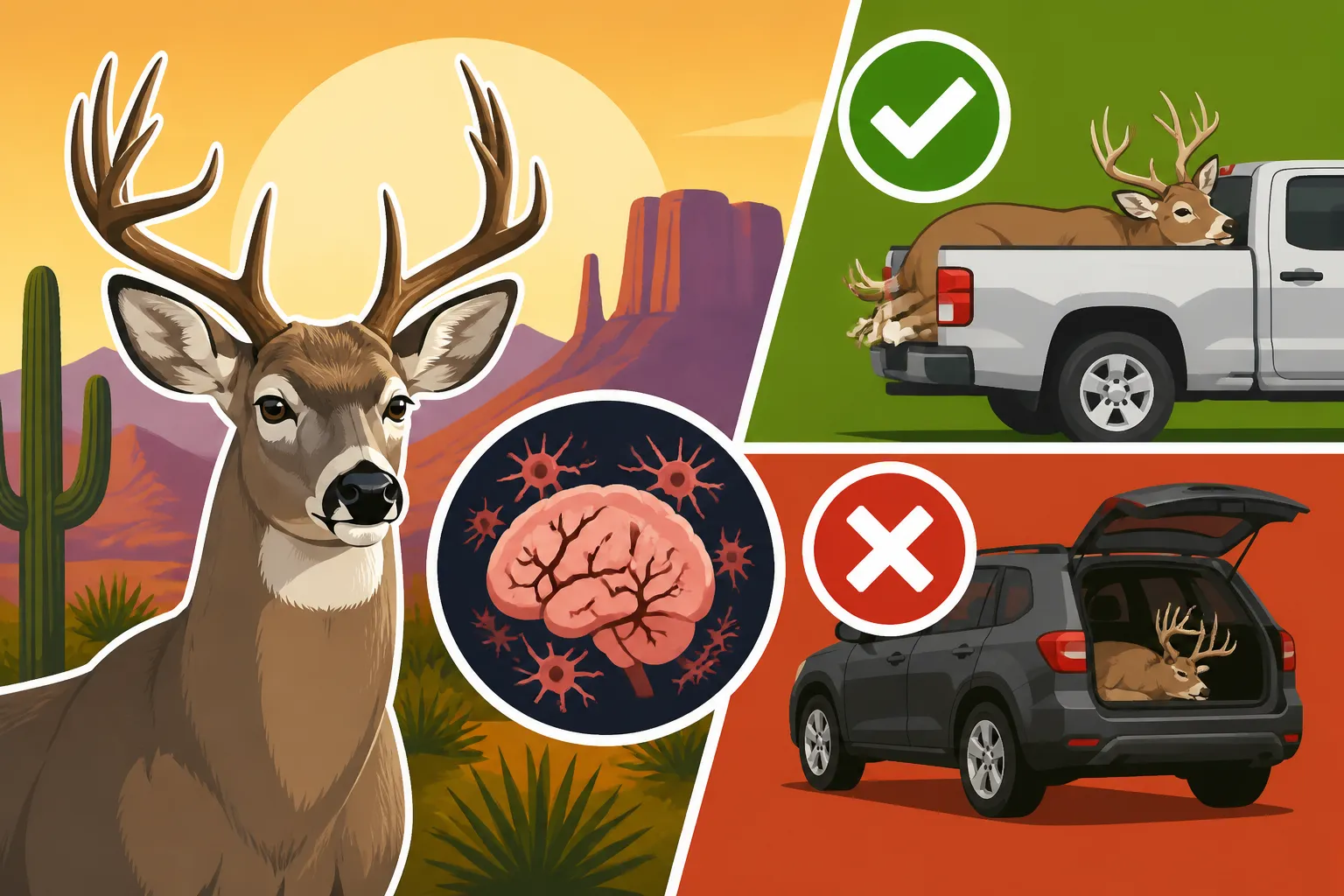
The fundamental rule when hunting in an area designated as CWD-positive or a CWD management zone is this: no whole carcasses may be transported out of that zone. This is a critical departure from general transport rules, and it places the onus on the hunter to conduct extensive field processing. The rationale is that the prions are most concentrated in the brain, spinal cord, lymph nodes, and spleen. By removing these high-risk tissues at the site of harvest, or at least within the CWD zone, the risk of spreading the disease is dramatically reduced.
So, what can you transport out of a CWD management zone? You're generally allowed to take out the following:
- Boned-out meat: This is meat that has been completely separated from the bone, spinal cord, and brain tissue. Basically, pure muscle.
- Cleaned skull plates with antlers attached: These must be free of all brain tissue, hide, and any other soft tissue. Often, boiling or pressure washing is recommended.
- Capes or hides: These must be completely free of brain matter, connective tissue, and blood.
- Quartered carcasses with no brain or spinal cord material attached: This means the head and spinal column must be removed.
- Teeth for age determination.
- Finished taxidermy mounts.
It's a lot to remember, and it definitely adds an extra layer of work, often under less-than-ideal field conditions. However, this is our collective effort to protect Arizona's deer and elk herds. The Arizona Game and Fish Department will clearly define these CWD management zones if they are established, and it is every hunter's responsibility to know if they are hunting in one. Resources like the Arizona Game and Fish website and hunting apps, or even premium hunting information providers like GoHunt, are invaluable for checking Where Arizona CWD Sampling Stations Are and staying current on any CWD zone declarations.
Here's a quick look at the distinctions:
| Carcass Part Category | Transport Allowed (General Zones) | Transport Allowed (CWD Detection Zone) |
|---|---|---|
| Whole Carcass | Yes (with tag/sex evidence) | NO |
| Boned-Out Meat | Yes (with tag info) | Yes (with tag info) |
| Skull Plate/Antlers | Yes (with tag/sex evidence) | Yes (cleaned, no soft tissue) |
| Hide/Cape | Yes (with tag info) | Yes (cleaned, no soft tissue/brain) |
| Spinal Column | Yes (with tag/sex evidence) | NO |
| Head (whole) | Yes (with tag/sex evidence) | NO (unless for CWD testing) |
| Taxidermy Mount | Yes | Yes (after professional preparation) |
Understanding these rules is not just about avoiding a citation; it's about being a responsible steward of our wildlife. The minor inconvenience of field processing is a small price to pay to protect our herds from a devastating disease.
Practical Steps and Best Practices for Arizona Hunters
Navigating hunting regulations can feel like a full-time job, but when it comes to CWD, preparation is truly your best friend. Here are some practical steps and best practices to ensure you're ready, even if you find yourself hunting in a CWD-affected unit.
First, pre-hunt planning is absolutely critical. Before you even pack your truck, check the current Arizona Game and Fish Department regulations for any declared CWD management zones. These zones can change, so don't rely on last year's information. Websites and mapping tools like those provided by GoHunt can often overlay these zones on your unit maps, giving you a clear visual of any potential restrictions in your hunting area. Knowing this information beforehand means you can pack the right gear and mentally prepare for any necessary field processing. This is also where E-Scouting an Arizona Unit Before the Season really pays off.
If you are hunting in or near a CWD-designated area, or even if you're just concerned about potential future detections, get comfortable with extensive field dressing. This means being prepared to bone out an entire animal at the kill site. It's a lot more work than simply gutting and quartering, but it's essential if whole carcass transport is prohibited. Practice boning out a deer or elk in your backyard if you've never done it; familiarity under pressure will save you a lot of grief. Make sure you have sharp knives, a game bag for every piece of boned-out meat, and a way to keep everything clean and cool. This is especially true if you're facing Field Dressing in Desert Heat.
For those planning to do a taxidermy mount, the rules for heads and capes are particularly important. If your animal comes from a CWD zone, the skull must be thoroughly cleaned of all brain matter and soft tissue. This often involves boiling, scraping, or even sending it to a qualified taxidermist or skull cleaner within the CWD zone before transport. You cannot transport a raw skull or a cape with significant tissue attached out of the zone. Discussing these requirements with your taxidermist before your hunt is a smart move, so you know exactly what they need from you.
Finally, always be prepared to participate in CWD sampling efforts. Arizona Game and Fish may establish voluntary or mandatory check stations, or simply ask for hunter cooperation in collecting tissue samples (typically lymph nodes or a portion of the brainstem) from harvested animals, particularly in new surveillance areas. This information is vital for detecting and monitoring the spread of the disease. Again, keeping an eye on official Arizona Game and Fish communications and leveraging resources like GoHunt can keep you informed about where and when these sampling stations might be active. Getting your head around Preparing Physically for a Desert Hunt also involves mentally preparing for these eventualities.
The reality of CWD is that it adds a layer of responsibility to our hunts. While no one enjoys extra rules, these measures are designed to protect the very wildlife we cherish. By staying informed, being prepared for extensive field processing, and adhering to transport regulations, we can all do our part to keep Arizona's wild places healthy for generations to come.
Disclaimer
This article is for general informational purposes only and does not constitute professional advice. Laws, prices and regulations vary by location and change over time. Consult a qualified professional for guidance on your specific situation.