Arizona State Trust Land Needs a Permit, and Your License Counts
There's often a lot of head-scratching when it comes to figuring out where you can actually hunt in Arizona, especially when you start looking at those big blocks of what's called "State Trust Land" on your maps. Many hunters worry about needing a separate, special permit just to step foot on these vast tracts of ground, adding another layer of bureaucracy to an already complex draw system. This guide is here to clear up that confusion, explaining exactly what Arizona State Trust Land is, why your hunting license often acts as your access permit, and how to navigate these critical areas ethically and legally for your next hunting adventure.
Understanding Arizona State Trust Land
Arizona is a truly unique state, not just for its stunning landscapes, but also for how its land is managed. Unlike federal lands, which are managed for public recreation, State Trust Land operates under a different mandate entirely. Getting a handle on this distinction is crucial for any hunter hoping to responsibly use these areas.
What Exactly is State Trust Land?
Imagine land that was set aside at statehood, not for parks or public recreation in the traditional sense, but to generate revenue. That's precisely what Arizona State Trust Land is. When Arizona became a state in 1912, the federal government granted millions of acres of land to a trust. The specific purpose of this trust was—and remains—to financially support various public institutions, primarily schools, universities, and other state beneficiaries. Every time someone leases a parcel, extracts resources, or buys a piece of this land, the revenue generated goes directly into funding these beneficiaries. This core principle means that while the land looks like public land on a map, its management priorities are fundamentally different from, say, a National Forest or BLM property. It's not managed for general public recreation but for income generation.
The Arizona State Land Department is the agency tasked with managing this incredible asset. They oversee leases for ranching, agriculture, mineral extraction, commercial development, and even recreational permits. For hunters, this translates into a unique opportunity—access to vast landscapes that might otherwise be private, but under a specific set of rules designed to protect the revenue-generating activities happening on the land. Understanding this underlying mission helps clarify why certain regulations exist, such as the need to respect ongoing operations or potential temporary closures, which we'll dive into later. It’s a delicate balance, allowing hunters and other recreational users access while ensuring the land continues to serve its primary financial purpose for the state's schools.
The Sheer Scale of Arizona's Trust Land
When you're looking at a hunting unit map, especially in the southern or central parts of Arizona, you'll inevitably notice vast swathes colored in to denote State Trust Land. We're not talking about small, isolated parcels here; Arizona holds approximately 9.2 million acres of State Trust Land. To put that in perspective, that's roughly 13% of the entire state's land area. That's a significant chunk of real estate, and much of it holds prime habitat for everything from Coues deer and javelina to desert bighorn sheep.
These millions of acres aren't always contiguous. They can be found in large blocks, checkerboarded with private land, or interspersed with federal lands like National Forests or Bureau of Land Management (BLM) property. This sprawling distribution means that State Trust Land often forms critical corridors for wildlife movement, provides access to otherwise landlocked areas, and makes up a substantial portion of many popular hunting units. For hunters, overlooking or misunderstanding the access rules for State Trust Land would mean missing out on an immense amount of potential hunting ground. It's truly an integral part of the public access puzzle in Arizona, offering diverse terrain from saguaro-studded deserts to rolling grasslands and juniper breaks. Properly utilizing this land is key to unlocking some of the state's best hunting opportunities, particularly in units where federal public land might be less abundant.
Why Your Hunting License Acts as a Permit
This is where the big "aha!" moment often happens for hunters. Many people assume they need a separate, specific permit from the Arizona State Land Department (ASLD) to access State Trust Land, just as they might for certain other recreational activities. However, for the specific act of hunting, the Arizona Game and Fish Department (AZGFD) has a long-standing agreement with the ASLD. Under this agreement, your valid Arizona hunting license acts as your permit to legally access State Trust Land for the purpose of hunting or scouting related to hunting.
This means you typically do not need to purchase an additional State Trust Land recreational permit if your sole purpose for being on the land is hunting, trapping, or scouting in season or pre-season. It's a fantastic benefit for hunters, simplifying access and reducing an additional cost or administrative hurdle. The thinking behind this is that hunters already contribute to wildlife management and land conservation through their license and tag fees, which indirectly benefits the land itself. However, it's absolutely critical to understand the nuance here: your hunting license covers you for hunting-related activities. If you're going out to hike, birdwatch, mountain bike, or simply target practice without a hunt tag for an open season, you will need a separate recreational permit from the ASLD. This distinction is vital to avoid a potential citation and to respect the agreement that grants hunters this special privilege.
Navigating the Permit Requirements for Hunting and Beyond
While your hunting license is a powerful tool for accessing State Trust Land, it's not a blanket pass for all activities. Understanding the specific situations when your license is enough, and when you need additional permits, is essential for staying legal and respectful of the land's primary purpose.
When a Hunting License Covers Your Access
As we touched on, a valid Arizona hunting license is your golden ticket for hunting-related access on State Trust Land. This covers a broad range of activities directly associated with pursuing game. For instance, if you've drawn an elk tag for a unit with significant Trust Land, your hunting license covers your access during the official season. The same goes for the incredibly popular Arizona's Over-the-Counter Archery Deer Tag Explained, allowing you to walk those desert washes or climb the foothills for Coues deer, provided you have your license and appropriate tag.
But it's not just about the actual act of pulling the trigger or releasing an arrow. Your hunting license also extends to crucial pre-season activities like scouting. If you're out weeks or even months before the season, glassing hillsides, looking for water sources, or trying to pattern game, your hunting license typically covers this access. This is incredibly valuable, as effective scouting is often the difference between a successful hunt and coming home empty-handed in Arizona's challenging terrain. You can be on the ground, using tools like E-Scouting an Arizona Unit Before the Season in conjunction with physical boots-on-the-ground reconnaissance, all under the umbrella of your hunting license. Just remember, the intent matters. If you're clearly engaged in hunting or scouting, you're usually good to go.
Recreational Permits: When You Need More Than a Hunting License
This is where many people get tripped up. The Arizona State Land Department offers various recreational permits, and these are required for activities that fall outside the scope of "hunting, trapping, or scouting related to hunting." So, if you're planning a weekend camping trip with the family, taking your ATV for a joyride, engaging in target shooting for practice (not specifically hunting), or simply hiking for fitness, you will need a separate, non-hunting recreational permit from the ASLD.
These permits are typically affordable and can often be purchased online directly from the Arizona State Land Department's website. They are usually valid for a year, covering a range of non-hunting outdoor activities. For example, if you want to set up a base camp on State Trust Land for a multi-day hunt, but your spouse and kids are coming along and won't be actively hunting or scouting, they would need recreational permits. Likewise, if you decide to spend a day photographing wildlife, even if it's in a hunting unit you plan to apply for, that activity isn't directly "hunting or scouting related to hunting," so a recreational permit would be necessary. Always err on the side of caution: if your primary activity isn't directly about pursuing game, get the recreational permit. It’s a small price to pay for legal access and supporting the trust's beneficiaries.
Off-Highway Vehicle OHV Decals and Trust Land
Arizona is a fantastic state for outdoor enthusiasts who rely on off-highway vehicles (OHVs) to access remote areas, and State Trust Land is no exception. However, simply having a hunting license or a recreational permit doesn't automatically grant you unlimited motorized access. The rules around OHV use are specific and require careful attention. If you plan to operate any OHV—be it an ATV, UTV, dirt bike, or even certain four-wheel drive vehicles modified for off-road use—on State Trust Land (or any public land in Arizona), it must be properly registered and display a valid Arizona OHV decal.
This decal, which can be purchased through the Arizona Department of Transportation (ADOT), signifies that your vehicle meets the state's requirements for off-highway use and that you've contributed to the fund that maintains OHV trails and public land access. Furthermore, and this is crucial, OHV use on State Trust Land is generally restricted to existing roads and trails. You cannot simply drive off-road wherever you please. While some areas might have extensive networks of primitive roads, it's essential to stay on designated routes to prevent habitat damage, erosion, and conflicts with agricultural lessees. Always consult maps, like those available through onX Hunt, which often show designated roads and trails, and adhere to any posted signage. Violating OHV rules can result in significant fines and damage the reputation of all outdoor users, so responsible operation is paramount.
| Permit Type | Activity Covered | Required For | Notes |
|---|---|---|---|
| Hunting License | Hunting, Trapping, Scouting (related to hunting) | Any hunter, trapper, or scout on Trust Land for game | Your primary activity must be hunting-related. |
| Recreational Permit | Camping, Hiking, Biking, Target Shooting (non-hunt) | General recreation on Trust Land (non-hunting activities) | Required for non-hunters in a hunting party too. Usually annual. |
| OHV Decal | Off-Highway Vehicle Operation | Any motorized vehicle used off-highway on Trust Land | Vehicle must be registered and display decal. Stay on designated routes. |
The Unique Relationship Between Trust Land and Lessees
One of the most significant differences between State Trust Land and other public lands, like National Forests or BLM ground, is the presence of active leases. These leases—primarily for ranching and agriculture—mean that while you, as a hunter, might have legal access, you are sharing the landscape with ongoing commercial operations. Understanding and respecting these activities is not just good etiquette; it's a legal and ethical obligation.
Agricultural and Grazing Leases: Understanding Priority
Vast expanses of Arizona State Trust Land are leased out for cattle grazing or agriculture. These are not merely symbolic leases; they represent legitimate businesses operating under legal contracts with the state. When you step onto Trust Land, you're likely stepping into someone's pasture or near their cultivated fields. The primary purpose of these leases is to generate revenue for the state's beneficiaries, and the lessees have a legal right to conduct their operations without interference. This means that while your hunting license grants you access, the lessee's activities generally take priority.
This priority doesn't mean they can arbitrarily deny you access if you have a valid hunting license. However, it does mean you must be mindful of their livestock, equipment, and daily routines. Imagine a rancher moving cattle through a pasture, or farmers working their crops; your presence should not disrupt these operations. It’s a common courtesy, but also a legal expectation, to give way to active ranching activities. This is particularly important around critical infrastructure like stock tanks, fences, and working corrals. Disrupting livestock or damaging property can not only lead to an unpleasant confrontation but also legal consequences, potentially jeopardizing the continued access hunters enjoy.
Temporary Closures and Restricted Access by Lessees
While your hunting license grants general access, there are situations where lessees of State Trust Land can temporarily restrict or manage access. These aren't arbitrary closures but typically occur for specific operational reasons that protect their business or ensure safety. For instance, a rancher might temporarily close a specific road or area if they are actively working cattle, conducting controlled burns, or engaged in other intensive agricultural activities that pose a risk to the public or their operations. Similarly, during certain periods, such as calving season, access to highly sensitive areas might be limited to prevent disturbance to vulnerable livestock.
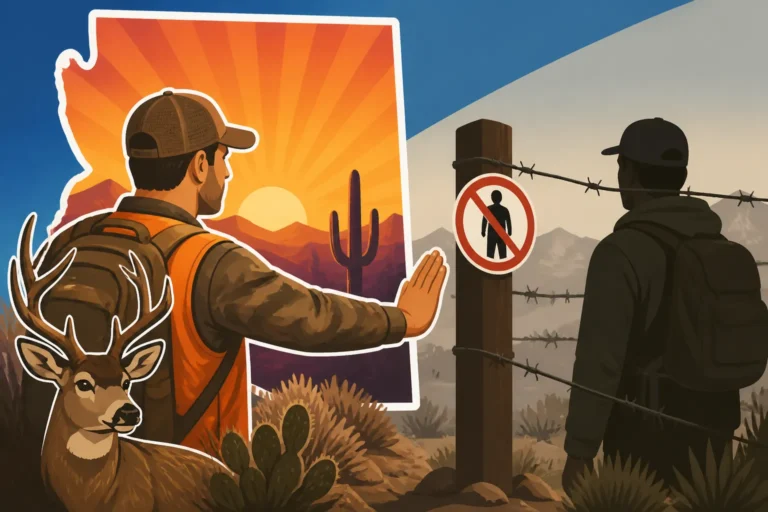
These closures are usually clearly marked with signage, and it is imperative that hunters respect them. Ignoring "No Entry" or "Temporarily Closed" signs, even if you have a valid hunting license, is a serious violation. It undermines the trust between the ASLD, lessees, and the hunting community. Before heading out, it's always a good practice to check with the Arizona State Land Department or the Arizona Game and Fish Department websites for any known closures or restrictions in the unit you plan to hunt. While comprehensive, real-time updates might not always be available for every single lease operation, being proactive can save you a wasted trip or, worse, a citation. Remember, part of the privilege of accessing this land is showing respect for those who lease and work it year-round.
Respecting Private Operations on Trust Land
Navigating State Trust Land requires a heightened sense of awareness and respect for private operations. Unlike a national forest where you might only encounter other recreational users, Trust Land means sharing the landscape with ranchers, farmers, miners, and sometimes even developers. This means fences, gates, water lines, and equipment are all part of the working landscape, and they are private property.
Always assume that if a gate is closed, it should remain closed after you pass through, regardless of whether there's a lock. If it's open, leave it open. Never cut fences, drive through cultivated fields, or interfere with any livestock, irrigation systems, or machinery. Water sources, such as windmills and stock tanks, are particularly critical in Arizona's arid environment. These are often developed and maintained by lessees and are essential for their livestock. While game animals also rely on these water sources, you must be extremely careful not to damage the infrastructure or harass livestock watering there. Hunting a Stock Tank During Early Archery is a fantastic strategy, but it must be done with extreme care and respect for the landowner's infrastructure. Any damage or disrespectful behavior reflects poorly on all hunters and could lead to more restrictive access in the future. Remember, it's a shared resource, and responsible stewardship ensures continued access for everyone.
Finding and Identifying State Trust Land in the Field
Knowing the rules is one thing; successfully applying them in the vast, often unmarked landscapes of Arizona is another. Identifying State Trust Land boundaries in the field can be challenging, but with the right tools and practices, you can navigate with confidence.
Essential Tools for Navigating Trust Land Boundaries
In today's hunting world, digital mapping tools are absolutely indispensable, especially when dealing with complex land ownership patterns like those in Arizona. Relying solely on paper maps, while still a good backup, simply isn't enough anymore. GPS-enabled apps like onX Hunt have revolutionized how hunters understand land ownership. These apps provide detailed, color-coded maps that clearly delineate federal land (like BLM or National Forest), private property, and crucially, Arizona State Trust Land. They often show parcel lines, landowner names (where public record), and even roads and trails.
When preparing for a hunt, I spend hours poring over these maps on my computer and phone. I zoom in, identify blocks of State Trust Land within my chosen unit, and look for potential access points. This allows me to see precisely where a canyon or ridge crosses from private to Trust Land, or from Trust Land to National Forest. The accuracy and detail provided by these modern mapping solutions mean you can navigate in real-time, knowing exactly which piece of ground you're standing on. Having this information literally in your pocket prevents accidental trespass and ensures you're always legal. It’s an investment that pays dividends in peace of mind and access to more hunting ground.
Recognizing Boundary Markers and Signage
While digital maps are phenomenal, physical boundary markers and signage are your primary on-the-ground confirmation. Unfortunately, State Trust Land isn't always as clearly marked as, say, a National Park boundary. You won't find the large, official signs every few hundred yards that proclaim "Arizona State Trust Land." Instead, you'll need to look for more subtle clues.
Often, changes in fencing style can indicate a boundary shift, though this isn't always reliable. Look for old wooden fence posts giving way to newer wire, or vice-versa. Sometimes, you'll see small, weathered yellow or orange posts with "State Land" written on them, or simply a number indicating a section corner. On occasion, larger, more official signs might be present at major access points or where Trust Land borders private property or a road. It's also important to be aware of "No Trespassing" signs. These typically indicate private property, which you must respect. However, sometimes these signs can be on State Trust Land where a private lessee has a specific right to restrict access, such as around a ranch headquarters or active agricultural operation. Always cross-reference any physical signs with your digital mapping app. If your map shows you're on Trust Land but you see "No Trespassing," take a moment to understand the context. Is it clearly marking a private inholding, or a restricted operational area? When in doubt, it's always best to assume it's private or restricted and find an alternative route.
Best Practices for Confirming Public Access
Even with the best maps and keen eyes for signage, there can be ambiguity. The best practice for confirming public access to State Trust Land involves a multi-layered approach. First, always consult your digital mapping application, like onX Hunt, which offers land ownership layers that are regularly updated. This is your primary source of truth in the field. Second, cross-reference this with the official maps and regulations provided by the Arizona Game and Fish Department and the Arizona State Land Department. The AZGFD often publishes maps for hunting units that show various land ownership types, which can be useful for planning before you even get out there.
A great resource for comprehensive unit information, including detailed land ownership breakdowns and access issues, can also be found through services like GoHunt. These platforms often compile data that can help you understand the nuances of a particular unit, including the percentage of State Trust Land and common access points. Finally, don't be afraid to utilize local knowledge. Talk to AZGFD biologists or game wardens, other seasoned hunters, or even local ranchers (with respect, of course). They often have invaluable, real-world insights into access points, common restrictions, or areas that are frequently misidentified. By combining digital tools, official resources, and local wisdom, you can maximize your confidence that you are legally and ethically accessing Arizona State Trust Land.
Ethical Considerations and Responsibilities on Trust Land
Accessing Arizona's State Trust Land for hunting is a privilege, not a right, and it comes with significant responsibilities. Given the unique nature of these lands—managed for revenue and often actively leased—ethical conduct is paramount to ensuring continued access for all.
Pack It In, Pack It Out: Leave No Trace Principles
The foundational principle of ethical outdoor recreation, "Leave No Trace," is especially critical on State Trust Land. This means everything you bring onto the land, you must take back out with you, and then some. This isn't just about large pieces of trash; it includes spent casings, bottle caps, food wrappers, flagging tape, and even biodegradable items like apple cores, which can take a long time to decompose in arid environments and can attract unwanted wildlife.
Think about the sheer volume of hunters and other recreational users who utilize these 9.2 million acres. If every person left even a small amount of litter, the cumulative impact would be devastating. Beyond aesthetics, trash can harm wildlife, contaminate water sources, and create an eyesore for lessees who depend on the land for their livelihood. Part of being a responsible hunter is to leave the area cleaner than you found it. I always carry an extra trash bag in my pack, ready to collect not just my own waste, but anything else I might encounter. It's a small effort that makes a huge difference in preserving the quality of these lands for wildlife and future generations of outdoor enthusiasts.
Water Sources and Wildlife: Ethical Use and Disturbance
In Arizona's arid environment, water is life. This is especially true on State Trust Land, where natural water sources are scarce and man-made developments like stock tanks and windmills are critical for both livestock and wildlife. As hunters, we often seek out these water sources because they concentrate game. However, this also means we have a profound ethical responsibility to manage our presence around them carefully. Water Sources and Ethics in Arizona Desert Hunting is a topic that can't be stressed enough.
First and foremost, do not damage any water infrastructure. Fences, pipelines, troughs, and windmills are often private property, painstakingly maintained by lessees. Damage can be incredibly costly and disruptive to their operations. Second, minimize your disturbance to wildlife at water sources. While it's tempting to set up directly on a tank, constant human presence can deter animals from accessing vital water. Consider setting up a reasonable distance away, using optics to watch, and approaching only when necessary. If you see livestock watering, give them ample space and do not interfere. Remember, these water points are shared resources; their continued availability for both game and domestic animals depends on our responsible and respectful use.
Fire Restrictions and Camping Regulations
Arizona, with its often-dry climate and abundant vegetation, is highly susceptible to wildfires. This means strict fire restrictions are a regular occurrence, especially during hotter, drier months. On State Trust Land, it is absolutely crucial to be aware of and adhere to all current fire restrictions. These restrictions can range from no open fires at all to specific prohibitions on charcoal grills or even smoking outside of vehicles. Ignoring these rules can lead to devastating consequences, massive fines, and even criminal charges.
Camping on State Trust Land also has specific regulations. While dispersed camping is generally allowed for short durations with a recreational permit (or a hunting license if camping is part of your hunting activity), it's not a free-for-all. Look for signs indicating prohibitions or limits on camping in specific areas. Always choose a campsite that leaves minimal impact, away from water sources, roads, and active ranching operations. Do not leave behind any temporary structures or fire rings. It's about respecting the land and ensuring that your presence doesn't negatively impact the environment or the ongoing activities of lessees. Always check the current fire restrictions from both the Arizona State Land Department and the Arizona Game and Fish Department before heading into the field.
Comparing State Trust Land to Other Public Access Areas
Arizona is blessed with a diverse mosaic of land ownership, and understanding the nuances between State Trust Land, federal lands, and private property is crucial for legal and effective hunting. Each type of land comes with its own set of rules and expectations.
State Trust Land vs. BLM and National Forest Ground
For hunters, the most frequently encountered public lands in Arizona, besides State Trust Land, are those managed by the Bureau of Land Management (BLM) and the U.S. Forest Service (USFS), which oversees National Forests. While all three offer public access, their mandates and, consequently, their rules and typical conditions, differ significantly.
BLM Land is generally managed for multiple uses, including grazing, mineral extraction, and recreation. It often comprises vast, open, and rugged desert or grassland areas. Access to BLM is typically very open, and in most cases, you do not need a permit beyond your hunting license for hunting activities. Do You Need a Permit to Hunt BLM Ground? is a common question, and the answer is usually no. Dispersed camping is often allowed for extended periods (typically up to 14 days), and OHV use is permitted on designated routes. BLM land can feel very wild and remote, offering true backcountry experiences.
National Forest Land is managed for a broader range of uses, including timber, grazing, water quality, and extensive recreation. Arizona's National Forests (like the Coconino, Tonto, Apache-Sitgreaves, and Kaibab) are typically higher elevation, timbered areas, offering a different hunting experience than the deserts. Like BLM, your hunting license covers access for hunting. National Forest Access Across Arizona is generally excellent, though seasonal road closures due to snow or mud are common in the higher elevations. Dispersed camping is widely allowed, often with similar time limits to BLM. Fire restrictions can be very stringent, especially during dry seasons.
State Trust Land, as we've discussed, is managed for revenue generation to support state beneficiaries. While your hunting license allows access for hunting, the presence of active leases (ranching, agriculture) means a stronger emphasis on respecting private operations. Recreational permits are required for non-hunting activities. Camping might be more restricted, and OHV use is often limited to existing routes, with a greater potential for temporary closures by lessees. The key takeaway is that while federal lands are managed for the public benefit of recreation (among other things), Trust Land is managed for financial benefit, and public access for hunting is a conditional privilege. This distinction dictates a more cautious and respectful approach on Trust Land.
Private Land Boundaries and Encroachment Risks
Arizona's landscape is a patchwork of public and private ownership, and failing to correctly identify these boundaries is a leading cause of accidental trespass. Private land can take many forms: large ranches, smaller homesteads, agricultural fields, or even undeveloped parcels. Unlike federal or state lands, access to private property is strictly by permission only.
The most crucial tool for avoiding trespass is an accurate land ownership map, like those found on Using onX Layers for Arizona Public Land. These apps clearly show property lines and often include landowner information. In the field, look for physical clues such as fences, gates, "No Trespassing" signs, or even changes in vegetation or land use (e.g., irrigated fields suddenly appearing in the desert). However, don't rely solely on fences; some private lands might be unfenced, and conversely, some fences might be on public land. It's essential to confirm with your map. Accidental trespass can lead to confrontations, citations, fines, and even forfeiture of harvested game. Always be absolutely certain of your location before you step foot on any ground that looks questionable. If a boundary is unclear, assume it's private and find another route. Building relationships with landowners, where possible, can sometimes open up new hunting opportunities, but never assume access without explicit permission.
Tribal Lands and Reservation Rules
Another significant land category in Arizona, and one that absolutely demands respect and specific understanding, is tribal land. Arizona is home to numerous Native American tribes, and their reservations comprise millions of acres across the state. These lands are sovereign nations, and their hunting regulations and access rules are entirely separate from state or federal laws.
You cannot, under any circumstances, hunt on tribal lands with an Arizona state hunting license or tags. Accessing tribal lands for hunting requires a specific permit and license issued by the individual tribe, and these permits are often significantly more expensive and limited than state permits. Many tribes manage their game populations independently and offer unique hunting opportunities, often with very high success rates for trophy animals. For example, the White Mountain Apache Tribe and the San Carlos Apache Tribe are well-known for their trophy elk and mule deer hunts, but these are managed and sold directly by the tribes themselves. It is imperative to research specific tribal regulations and purchase the appropriate permits before ever considering hunting on their lands. Attempting to hunt on tribal land without proper authorization is a serious offense, often met with severe penalties, including fines, confiscation of equipment, and even jail time. Always identify tribal boundaries on your map and respect them without question.
Planning Your Hunt on Arizona State Trust Land
Successfully hunting Arizona State Trust Land isn't just about knowing the rules; it's about meticulous planning that integrates land ownership into every aspect of your strategy. With the right approach, these areas can unlock incredible opportunities.
Researching Your Unit: Identifying Trust Land Opportunities
Before you even apply for a tag, or if you're planning an over-the-counter archery deer or javelina hunt, thorough research into your chosen Game Management Unit (GMU) is non-negotiable. This research needs to extend beyond just looking at the terrain and historical harvest data; it must deeply consider the land ownership patterns. Reading an Arizona Hunt Permit Application Data can give insights into success, but knowing where those successful hunts happen on the ground is key.
Start by obtaining detailed maps of your unit. Digital mapping platforms like onX Hunt and comprehensive hunting intel platforms like GoHunt are invaluable here. They allow you to overlay land ownership boundaries directly onto topographic maps and satellite imagery. Look for units where State Trust Land comprises a significant percentage of the total area, especially if those blocks are contiguous and offer good access. Identify key features on Trust Land: major washes, prominent ridges, potential bedding areas, and of course, those vital water sources. Remember, How Arizona Numbers Its Game Management Units impacts how boundaries are drawn, so understand your specific unit's layout. Sometimes, Trust Land might provide the only access to otherwise landlocked federal land, making it doubly important. Understanding these opportunities during your planning phase can mean the difference between drawing a tag in a unit you can actually hunt versus one that's mostly inaccessible private ground.
Access Points and Route Planning
Once you've identified promising blocks of State Trust Land within your unit, the next critical step is to figure out how you're going to get there. Legal access points are paramount. This means using your maps to locate public roads, county roads, or designated two-track trails that lead onto Trust Land. Do not assume that every road or two-track shown on a map is a legal public access route, especially if it crosses private land before reaching Trust Land.
Always look for official access points. Sometimes, a county road will pass through a corner of private property but legally grant access to public lands beyond. However, driving across unposted or unfenced private property, even to access public land, is trespass unless you have explicit permission. Plan your routes in advance, marking potential parking spots where you can leave your vehicle without blocking gates or private driveways. Consider the condition of the roads; many primitive roads on Trust Land can become impassable during wet weather or might require a high-clearance 4×4 vehicle. Remember, OHV rules apply, so stick to established routes. Reading an Arizona Unit Boundary Before You Apply involves not just drawing lines, but identifying realistic ways to get your boots on the ground where the game is. Having multiple access plans can save a hunt if your primary route becomes unexpectedly blocked or restricted.
Contingency Planning for Restricted Areas
Despite your best efforts in planning, you might encounter unexpected restrictions or changes in the field. This is particularly true on State Trust Land, where active lessee operations can sometimes lead to temporary closures or modified access. Therefore, building contingency plans into your hunt strategy is absolutely essential.
Before you leave, identify alternative hunting areas within your unit that also have good access to Trust Land or other public ground. If your primary access road is closed due to ranching operations, or if a stock tank you planned to sit is now surrounded by cattle, you need a backup plan ready to go. This might mean having a secondary area scouted, or at least identified on your map, that you can pivot to. It’s also wise to research contact information for the local Arizona Game and Fish Department office or even the Arizona State Land Department in case you encounter a situation where you need clarification on access. Having multiple options, being flexible, and being prepared to adapt to changing conditions will significantly increase your chances of a successful and stress-free hunt on Arizona State Trust Land. Remember, the game animals don't care about our plans; sometimes, being able to shift gears quickly is the best strategy.
Disclaimer
This article is for general informational purposes only and does not constitute professional advice. Laws, prices and regulations vary by location and change over time. Consult a qualified professional for guidance on your specific situation.