The Arizona Strip and Its Access Problem
The Arizona Strip. Just uttering those two words often conjures images of colossal mule deer bucks for any hunter who has spent time dreaming about Western big game. But alongside that dream often comes a knot of anxiety: how do you even get into that fabled country, let alone hunt it? This guide aims to peel back the layers of mystique and frustration surrounding access to the Arizona Strip, helping you understand its unique challenges and how to prepare for them.
What is the Arizona Strip, Anyway?
Before we dive into the nitty-gritty of getting there, let's clearly define what "The Arizona Strip" actually refers to. It's more than just a vague concept; it's a geographically distinct and federally managed region known for its rugged beauty and legendary wildlife.
Defining the "Strip" Geographically
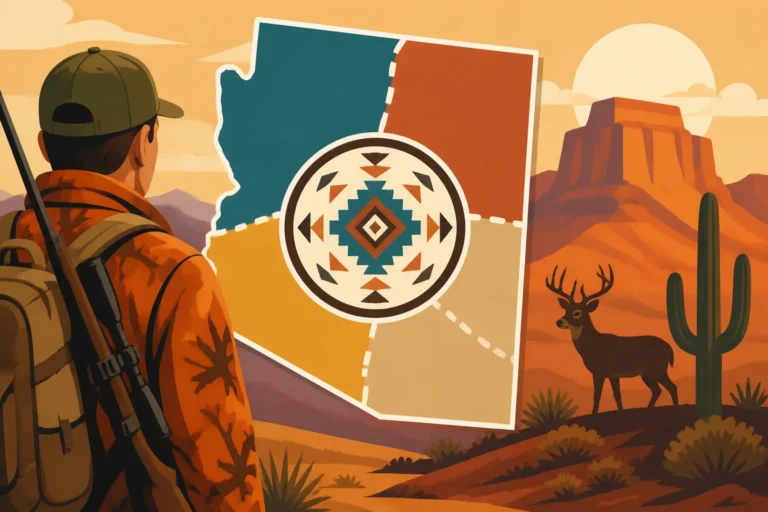
Geographically, the Arizona Strip is a vast, remote, and breathtaking expanse of high desert, mesas, and canyons nestled in the extreme northwestern corner of Arizona. Its northern boundary is the Utah state line, and to the west, it stretches towards Nevada. The true, dramatic southern boundary is the Grand Canyon itself, a natural barrier that carves off this isolated territory from the rest of Arizona. To the southwest, the Virgin River drainage defines another natural edge. This isolation, primarily due to the Grand Canyon acting as a massive impassable moat, is precisely what has historically contributed to its unique wildlife populations and, consequently, its challenging access. When people talk about hunting the Arizona Strip, they're typically referring to the Game Management Units 13A, 13B, and parts of Units 12A and 12B, though the "Strip" generally refers to all the land north of the Grand Canyon.
The Reputation for Giant Mule Deer
For decades, if not longer, the Arizona Strip has held a near-mythical status among mule deer hunters. It's often whispered about in hushed tones as the place to find truly monumental bucks. This reputation isn't just hyperbole; it's rooted in a combination of factors. The habitat, characterized by vast expanses of sagebrush, pinyon-juniper, and scattered ponderosa pine at higher elevations, provides an ideal environment for mule deer to grow old and large. The genetics of the deer in this region are exceptional, and coupled with limited hunting pressure (due to challenging access and extremely tough draw odds), these bucks have the opportunity to reach their full potential. This unique combination creates what many consider to be world-class trophy hunting opportunities, making the arduous journey and long wait for a tag seem worthwhile. Hunters seeking information on The Arizona Strip Mule Deer Reputation will find a deep dive into what makes these animals so special.
Why Access to the Arizona Strip is Such a Challenge
So, you've heard the legends and seen the pictures. Now, the practical reality sets in: how do you actually reach this promised land? The answer is usually, "with difficulty." The challenges are multi-faceted, stemming from both the natural lay of the land and the complex patchwork of land ownership.
Geographic Barriers
The Arizona Strip is not for the faint of heart or the poorly prepared. Its very geography is designed to deter casual visitors. Imagine vast, unpaved tracts of land, dissected by countless washes, dry streambeds, and deep canyons that are often impassable without the right vehicle and considerable skill. Much of the terrain is a rugged, unforgiving mix of rocky badlands, steep mesas, and red dirt roads that turn into impassable soup with even a moderate rain shower. There are very few paved roads, and those that exist often only serve as arteries to more remote, unmaintained tracks. This remoteness means long drives, slow travel, and a constant need for self-sufficiency. If you break down out here, help could be hours, or even days, away.
Beyond the challenges of driving, the sheer scale of the landscape means that even once you've gained access to a general area, getting to specific hunting spots can involve significant hiking and difficult navigation. The elevation changes, though not always as dramatic as the high mountains of Arizona, are often subtle yet demanding, leading to expansive views punctuated by unexpected drops into steep drainages.
Land Ownership Checkerboards
Perhaps one of the most significant headaches for hunters on the Arizona Strip is the complex tapestry of land ownership. It’s not just one big chunk of public land. Instead, it’s a mosaic of different jurisdictions, each with its own rules and access considerations. You'll find vast tracts of Bureau of Land Management (BLM) land, intermingled with parcels of Kaibab National Forest, Arizona State Trust Land, and crucial, often infuriating, private inholdings.
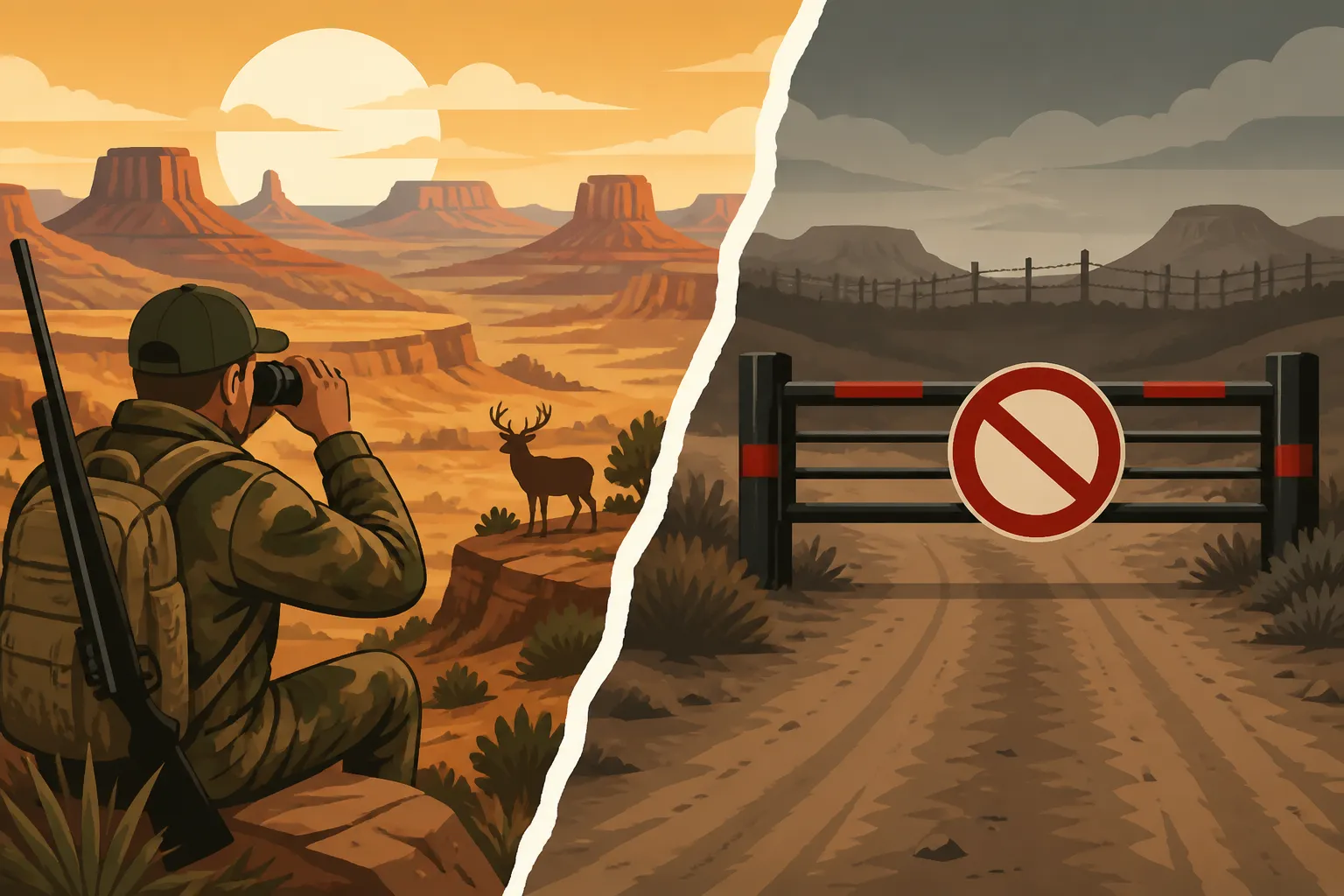
This checkerboard pattern creates a situation where perfectly good public hunting ground can be "landlocked" by private property, or by State Trust Land where access is technically open but practically difficult if not impossible without crossing private land first. Sometimes, a well-used public road will suddenly become a private driveway with no warning, forcing hunters to backtrack or find alternative routes that may add hours to their journey. Without clear understanding and navigation tools, stumbling onto private property is a real risk, not just ethically but legally. This complex ownership dynamic is why understanding Reading a Land Ownership Layer Correctly is absolutely critical for any hunter planning a Strip hunt.
Navigating Public and Private Lands on the Strip
Given the patchwork nature of land ownership, a successful hunt on the Arizona Strip hinges significantly on your ability to accurately identify and respect property boundaries. Missteps here can lead to legal trouble, ruined hunts, and a damaged reputation for hunters as a whole.
Understanding BLM and Forest Service Ground
The vast majority of the Arizona Strip is managed by federal agencies: the Bureau of Land Management (BLM) and the U.S. Forest Service (specifically, the Kaibab National Forest). Generally speaking, these lands are open to public hunting, camping, and other recreational activities. This is where most of the hunting takes place. However, "open" doesn't mean "easy." Within these federal lands, there are often designated wilderness areas where motorized travel is strictly prohibited, requiring foot or horseback access only. There are also specific rules regarding vehicle travel on established roads and trails, often outlined in Motor Vehicle Use Maps (MVUMs). Understanding these maps and sticking to designated routes is paramount, not only for environmental protection but to avoid fines and potential vehicle recovery nightmares. You’ll want to be intimately familiar with Motor Vehicle Use Maps for Forest Ground before you head out.
While public, these lands often lack any amenities like water, restrooms, or even cell service. Hunters are expected to be fully self-sufficient and practice Leave No Trace principles rigorously.
The Role of Arizona State Trust Land
Another significant component of the land ownership puzzle on the Strip is Arizona State Trust Land. Arizona holds millions of acres of State Trust Land, which is managed by the Arizona State Land Department (ASLD) to generate revenue for specific state beneficiaries, such as public schools. The good news for hunters is that, unlike many other states, your valid Arizona hunting license typically serves as your permit to access State Trust Land for hunting purposes. This is a huge convenience, as it means one less permit to purchase for most hunting activities.
However, there's a crucial caveat: while your hunting license grants access, agricultural or grazing lessees on State Trust Land do have priority for their operations. This means they can, and sometimes do, temporarily restrict access to certain areas for cattle operations or other agricultural purposes. It's rare to encounter outright closure for hunting, but it's a possibility. More commonly, gates will be encountered—these must be left as you found them (open gates open, closed gates closed) to respect ranching operations. For a deeper understanding of the specifics, make sure you know Do You Need a Permit for Arizona State Trust Land?. It's also vital to be aware of Why Arizona Lessees Can Restrict Trust Land Access, as this can impact your planning.
Identifying Private Inholdings
Perhaps the trickiest part of navigating the Arizona Strip is identifying and avoiding private land inholdings. These are parcels of privately owned land that are completely surrounded by public land, often without clear fencing or signage. A dirt two-track that feels like a public road could suddenly cross into private property, and without proper awareness, you could inadvertently trespass. The consequences of trespassing, even accidentally, can range from a stern warning to a hefty fine or even losing your hunting privileges.
This is where modern mapping technology becomes absolutely indispensable. Tools like onX Hunt have revolutionized land navigation by overlaying property boundaries onto satellite imagery and topographical maps, clearly differentiating between public, private, and State Trust lands. Before setting foot out of your vehicle, or even planning your route, using an app like onX Hunt is non-negotiable. It allows you to visualize the land ownership mosaic in real-time, helping you to make informed decisions about your route and preventing accidental trespass. Using onX Layers for Arizona Public Land offers more specific guidance on how to leverage these tools effectively.
| Land Type | General Access for Hunters | Key Considerations |
|---|---|---|
| BLM Land | Open with valid hunting license | Vast, remote, stick to designated roads (MVUMs) |
| National Forest | Open with valid hunting license | Designated wilderness areas, MVUMs, seasonal closures |
| State Trust Land | Hunting license = permit | Lessees have priority, leave gates as found |
| Private Inholdings | Strictly no access | Avoid at all costs, use mapping apps to identify |
Tools and Strategies for Accessing the Arizona Strip
With the complexities of the Strip laid bare, it's clear that successful access requires more than just a sense of adventure. It demands careful planning, the right tools, and a healthy dose of self-reliance.
Digital Mapping for the Win
In today's hunting world, digital mapping applications are no longer a luxury, especially on the Arizona Strip; they are an absolute necessity. Products like onX Hunt are game-changers here. They provide detailed topographic maps, satellite imagery, and, most importantly, clearly defined land ownership boundaries. This allows you to see at a glance whether the ridge you're planning to glass from is public or private, or if the two-track you're following will lead you into a private ranch.
Beyond land ownership, these apps also often display Forest Service roads, trails, wilderness boundaries, and even points of interest like water sources or previous elk sightings. You can download maps for offline use, which is critical because cell service is practically non-existent across much of the Strip. Being able to mark waypoints, track your movement, and instantly identify land status can literally make or break your hunt, and prevent a very expensive trespassing ticket. Think of it as your most important piece of gear next to your rifle or bow.
Physical Maps and Scouting
While digital mapping is powerful, never underestimate the value of traditional physical maps as a backup. Paper topographic maps (1:24,000 scale) and Forest Service Motor Vehicle Use Maps (MVUMs) are invaluable. MVUMs specifically detail which roads are open to motorized vehicles, which are seasonal, and which are closed entirely. This information is often more current and accurate on a printed MVUM than what you might find on some digital layers. Always carry a compass and know how to use it, especially if your digital device fails due to battery or signal loss.
Pre-hunt scouting, if at all possible, is another strategy that pays dividends. Driving the main access roads and some of the more important two-tracks before the season starts can give you a vital lay of the land, help you identify potential bottlenecks, and confirm road conditions. This can save precious hunting time and frustration once the season is actually open. However, given the vast distances involved for many hunters, e-scouting through satellite imagery and topographical maps becomes an essential proxy. Learning E-Scouting an Arizona Unit Before the Season can provide you with many of the insights you'd typically gain from an in-person visit.
Vehicle and Gear Considerations
Accessing the remote corners of the Arizona Strip absolutely requires the right vehicle. A high-clearance 4×4 truck or SUV is not just recommended, it's often mandatory. Many roads are unmaintained, rocky, rutted, or sandy. A stock pickup might get you to the edge of the good hunting, but a truly capable 4×4 will expand your options significantly.
Beyond the vehicle itself, consider your gear. Bring multiple full-sized spare tires, a tire repair kit, a high-quality jack, and tools for basic field repairs. Extra fuel is non-negotiable; gas stations are few and far between, and you'll burn through more fuel than you expect navigating slow, rough roads. Water, and lots of it, is critical for survival in this arid environment. Pack enough for several days, for both drinking and emergency vehicle needs. A reliable first-aid kit, emergency communication devices (satellite phone or inReach/Spot device), and adequate recovery gear (winch, recovery straps, shovel) are also essential. Remember, you are often truly alone out here, miles from any immediate help.
Preparing for Your Arizona Strip Hunt Beyond Access
Securing access is just one piece of the Arizona Strip puzzle. Once you've figured out how to get there, you still need to plan for the hunt itself, which involves specific strategies for drawing a tag and ensuring overall self-sufficiency.
Draw Odds and Application Strategy
The brutal truth about hunting the Arizona Strip is that tags are incredibly difficult to draw. This is due to the limited number of permits issued for these trophy units and the immense popularity among resident and non-resident hunters alike. Many hunters apply for decades before ever drawing a coveted Strip tag. This makes understanding Arizona's bonus point system and draw odds absolutely critical for anyone hoping to hunt here. You'll want to consistently apply to accrue bonus points, as these increase your chances, albeit slowly.
Services like GoHunt offer invaluable data and analysis for draw odds, helping you strategize your application each year. They often break down draw success rates by point totals, weapon choice, and specific hunt codes, allowing you to make the most informed decision possible with your application. While nothing guarantees a tag, a smart application strategy is your best bet for eventually putting your name in the hat for one of these incredible hunts. Delve deeper into Checking Arizona Draw Odds Before You Apply to refine your approach.
Logistics and Self-Sufficiency
The Arizona Strip is defined by its remoteness and lack of infrastructure. This means that once you commit to a hunt here, you are largely on your own. Every single item you need, from food and water to shelter and emergency supplies, must be brought in with you. There are no convenience stores, very few established campgrounds with amenities, and often no reliable cell service for communication. This environment demands extreme self-sufficiency.
Planning your logistics means carefully calculating your fuel, water, and food requirements, adding a significant buffer for unexpected delays or extra days afield. Think about where you will camp, how you will manage your trash, and what your emergency plan will be if something goes wrong. Field dressing and meat care in potentially warm desert conditions also requires a solid plan, including enough ice and coolers. Water You Must Carry on a Day Hunt is a good starting point for understanding just how much H2O you'll need. Preparing your body is just as important as preparing your gear; understanding Preparing Physically for a Desert Hunt will ensure you can tackle the demanding terrain.
Ethical Hunting and Leave No Trace
Hunting any wild landscape comes with a responsibility to uphold ethical standards and minimize your impact, but this is especially true in a fragile and remote ecosystem like the Arizona Strip. The "Leave No Trace" principles are paramount: pack out everything you pack in, dispose of waste properly, respect wildlife, and minimize the impact of fires and camping.
This also extends to vehicle use; stick to established roads and trails, avoiding driving off-road to protect delicate desert soils and vegetation. Respecting private property boundaries and adhering to all game laws are fundamental to maintaining a positive image for hunters and ensuring continued access to these public lands. The quality of the hunting experience on the Strip, for future generations, depends on the responsible actions of those who venture there today.
Disclaimer
This article is for general informational purposes only and does not constitute professional advice. Laws, prices and regulations vary by location and change over time. Consult a qualified professional for guidance on your specific situation.