Trespass Law on Posted Arizona Property
Navigating the diverse landscapes of Arizona for hunting can be an incredible adventure, but one of the biggest headaches and potential pitfalls many of us face is the confusing patchwork of public and private land. There’s nothing quite like the stomach-dropping realization that you might have inadvertently stepped onto private property, potentially jeopardizing your hunt, your reputation, and even facing legal trouble. This guide is here to untangle the complexities of Arizona’s trespass laws on posted property, offering clear, actionable advice to help you stay on the right side of the law and enjoy your time afield without worry.
Understanding Arizona's Land Ownership Landscape
Arizona's terrain is stunning, but it's also a complex quilt of different land designations. Hunters need to understand this mosaic to avoid unintended trespass, which can quickly turn a great day outdoors into a legal nightmare. It’s not always as simple as a fence line, especially when you’re out in remote areas or dense scrub.
The Patchwork Nature of Arizona Land
When you look at a map of Arizona, especially a detailed land ownership map, you quickly realize it's far from a monolithic block of "public" or "private." We have vast expanses of federal lands managed by agencies like the Bureau of Land Management (BLM) and the U.S. Forest Service, which generally offer open access for hunting. Then there's State Trust Land, which is public but has its own specific rules and often private leases overlaying it. And, of course, countless acres of privately owned property, ranging from small ranchettes to massive cattle operations.
This mix means that what looks like continuous open country on a topographic map might actually involve several changes in land status within a single mile. You could be on BLM land, then cross a corner of private property, then find yourself on State Trust Land, all without a clear physical boundary like a fence or change in vegetation. This is where the real challenge lies, and it’s why a casual approach to land navigation can lead to big problems. Understanding that each land type comes with its own set of rules is the first step toward responsible hunting.
The Importance of Knowing Your Boundaries
For hunters, knowing exactly where you are and what land you’re on isn't just a good idea; it's absolutely crucial. Trespassing, even accidentally, can result in fines, confiscation of game or equipment, and the loss of hunting privileges. Beyond the legal consequences, it damages the reputation of hunters as a whole and erodes the trust between landowners and the outdoor community. No one wants to be "that guy" who made a landowner angry.
This is precisely where modern technology becomes an invaluable tool. Digital mapping applications, like onX Hunt, have revolutionized how hunters navigate these complex landscapes. These apps overlay land ownership information directly onto detailed maps, often in real-time on your phone or GPS device. They can show you not only public versus private land but also which private parcels are owned by whom, tribal lands, and even State Trust Land boundaries. Relying solely on paper maps, while still valuable for backup, simply isn't enough anymore for pinpoint accuracy in many of Arizona's checkerboard units. You can learn more about Using onX Layers for Arizona Public Land to really dial in your navigation.
Arizona's Trespass Laws: What Every Hunter Needs to Know
The state of Arizona takes trespass seriously, and it's important for every hunter to understand the nuances of the law. Ignorance is rarely an acceptable defense when you’re facing a game and fish officer or a sheriff's deputy.
Posted Property and "No Trespassing" Signs
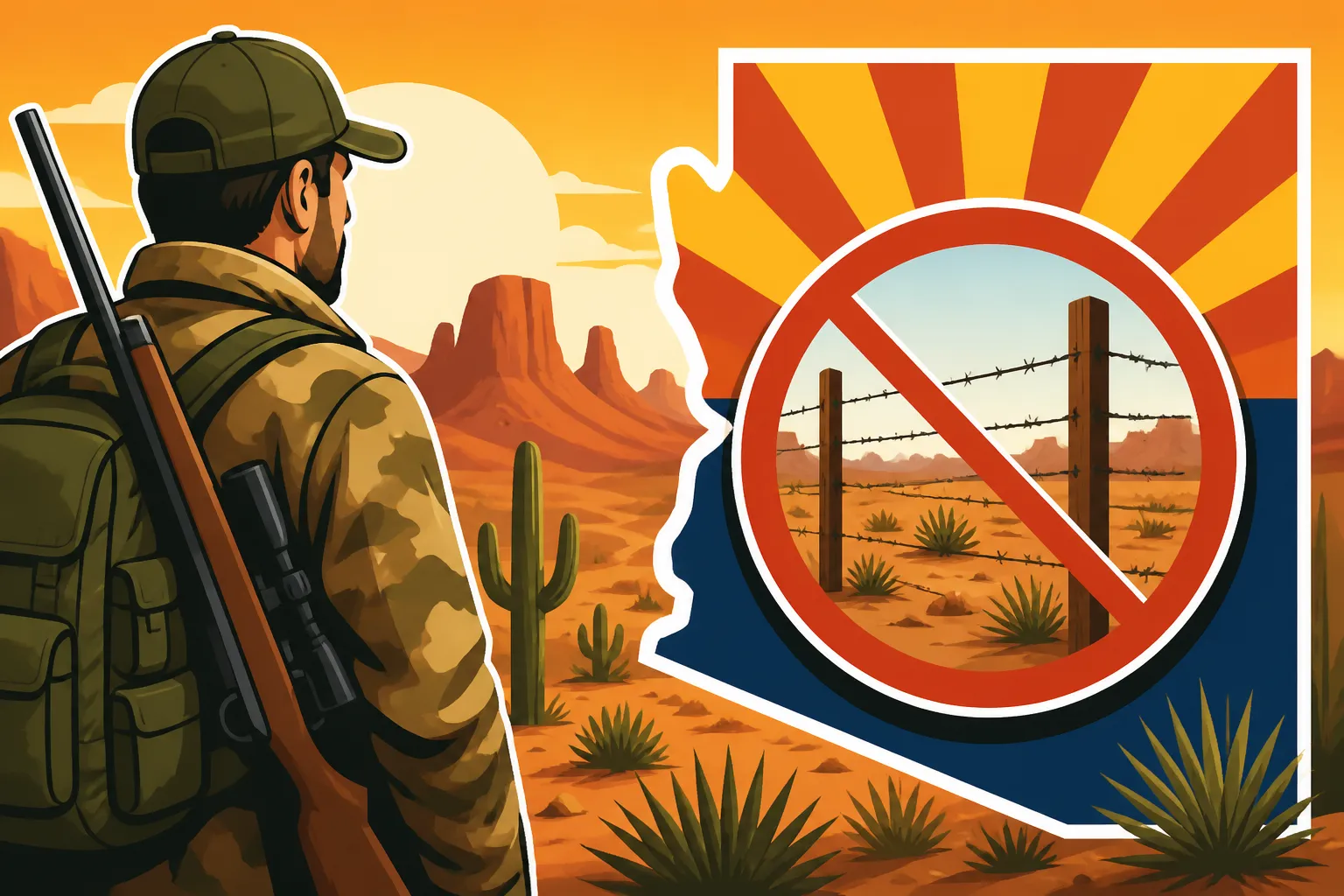
In Arizona, private land does not always need to be fenced to be considered "posted." While fences certainly help delineate boundaries, property can be legally posted against trespass simply by placing signs at reasonable intervals along the boundary, usually no more than every quarter mile, and at all roads, trails, or other points of entry. These "No Trespassing" signs serve as explicit notice that entry is forbidden without permission.
It’s not enough to simply avoid areas that look private; you must actively ensure the land you're on isn't legally posted. This means being vigilant, constantly checking your location, and looking for those critical signs. Even if you've hunted a particular area for years, land ownership can change, and new signs can go up. A property that was once open may suddenly become closed, and it's the hunter's responsibility to stay informed. A good E-scouting session, detailed in E-Scouting an Arizona Unit Before the Season, can help identify these boundaries before you ever leave home.
Implied vs. Express Permission
This is a critical distinction in trespass law. "Implied permission" means that circumstances suggest you have permission, even if it wasn't explicitly stated. In hunting, this is a dangerous assumption to make. For example, if a gate is open, you might assume you can enter, but that’s not implied permission. It could be open for livestock, or simply accidentally left ajar. Never assume.
"Express permission," on the other hand, means you have clear, direct, and verifiable permission from the landowner or their authorized agent to be on their property. This should ideally be in writing, such as a signed permission slip, an email, or even a text message exchange. Verbal permission is better than none, but if there's ever a dispute, written proof is much stronger. This is particularly important if you are trying to retrieve game that has crossed onto private land. Without prior permission, even retrieving a downed animal can constitute trespass. Getting Landowner Permission in Arizona often requires proactive communication well before hunting season.
Consequences of Trespassing
The legal ramifications of trespassing in Arizona can range from a civil infraction to a misdemeanor, depending on the specifics of the case, such as whether damage was done, if the property was clearly posted, or if you were warned previously. Penalties often include substantial fines. Beyond monetary penalties, an individual found guilty of criminal trespass can face imprisonment, forfeiture of hunting equipment (like your rifle or bow), and the loss of their hunting license or privileges for a period of time.
Consider a scenario: you’ve spent thousands of dollars on an Arizona elk tag and countless hours scouting. You're walking a ridge line, following what you think is a game trail on public land, and suddenly find yourself in a cattle pasture with "No Trespassing" signs every 100 yards. A rancher spots you, calls the Arizona Game and Fish Department, and you're cited. Not only do you face fines and potential loss of your license, but your entire hunt is over. The reputational damage within the local community can also be long-lasting. It’s simply not worth the risk.
Practical Strategies for Avoiding Trespass in the Field
Being a responsible hunter means proactively preventing trespass. It requires diligence, preparation, and a healthy dose of caution.
Using Technology to Your Advantage
As mentioned, digital mapping tools are your best friend. Apps like onX Hunt and GoHunt provide detailed land ownership maps right on your smartphone or GPS device. They show you public and private boundaries, sometimes even parcel information, and allow you to mark your current location. Many even offer a "line-of-sight" feature, letting you see where your current position is in relation to a boundary.
Before you head out, download offline maps for your hunting unit, as cell service can be spotty or nonexistent in many remote Arizona hunting areas. Familiarize yourself with how the app displays boundaries and how to use its tracking features. During your hunt, check your location frequently, especially when approaching potential boundaries or crossing washes that might obscure physical markers. A quick glance at your phone can confirm you’re still on public ground, preventing a potentially costly mistake. Learn more about Reading a Land Ownership Layer Correctly in your mapping app.
Scouting and Pre-Hunt Planning
Avoiding trespass starts long before you ever set foot in the field. Thorough pre-hunt planning is essential. Utilize online mapping resources (like onX Hunt or GoHunt's desktop versions) to identify public access points, private property boundaries, and potential travel corridors that stay on public land. Scouting a Unit From Satellite Imagery can reveal fences, roads, and trails that indicate property lines.
Spend time studying the land ownership overlays for your specific hunting unit. Mark potential areas of concern or complex boundaries on your map. If you're hunting near a known private ranch, try to identify alternate routes that keep you clearly on public land. If you anticipate needing to cross private land to access a public parcel, or if there's a good chance an animal might cross onto private land, make the effort to contact the landowner before the season starts. A polite request, explained thoroughly and well in advance, can often secure the permission you need, or at least help you understand where you absolutely cannot go.
When in Doubt, Stay Out
This simple rule is arguably the most important. If you are ever unsure about the land ownership of an area, or if you don't have explicit permission to be there, do not enter. It's far better to err on the side of caution, relocate, or backtrack than to risk a trespass violation.
This principle extends to situations where boundaries might be ambiguous. Perhaps a fence is down, or a "No Trespassing" sign is weathered and hard to read. If there's any ambiguity, assume it's private and avoid it. Pushing the boundary, even slightly, is a gamble that rarely pays off. Respect for landowners and the law is paramount for the future of hunting access.
Navigating Arizona State Trust Land and Private Leases
Arizona's State Trust Land presents a unique challenge for hunters, as it's publicly owned but managed with specific rules, often complicated by private leases.
The Nuances of State Trust Land Access
Arizona State Trust Land comprises millions of acres across the state, managed to generate revenue for specific beneficiaries, primarily public education. The good news for hunters is that your valid Arizona hunting license typically serves as your permit to access State Trust Land for hunting purposes. Arizona State Trust Land Needs a Permit, and Your License Counts is a helpful resource to understand this.
However, here’s where it gets tricky: much of this land is leased out for agricultural or grazing purposes. While your hunting license grants you access, these lessees often have priority use and, critically, can restrict access for recreational activities if it interferes with their operations. For example, a rancher might have specific pastures where they don't want hunters during calving season, or they might have an active cattle drive in progress. This doesn't mean the land is suddenly "private," but it does mean your access might be temporarily restricted. This is Why Arizona Lessees Can Restrict Trust Land Access is a point of contention and confusion for many. Always be respectful of livestock and ranching infrastructure like gates and fences.
Respecting Agricultural and Ranching Operations
When hunting on or near State Trust Land that is actively leased, or even near private ranches, an extra layer of awareness is required. Ranchers and farmers often rely on unwritten agreements and neighborly conduct. Driving through a field, leaving gates open, or disturbing livestock can quickly sour relationships and lead to stricter enforcement of trespass laws.
Always close gates behind you, even if you found them open. Stay on existing roads and trails where possible, and avoid driving off-road unless absolutely necessary and legally permitted. If you encounter livestock, give them a wide berth and avoid spooking them. Remember, these properties are often someone's livelihood, and disrespecting their operations can have real consequences, not just for you but for other hunters who may seek access in the future. Building good relationships with local landowners can sometimes open doors, but it always starts with demonstrating respect for their property and operations.
| Land Type | General Access Rule for Hunting | Permit/License Needed | Key Considerations |
|---|---|---|---|
| BLM Land | Generally open to hunting, dispersed camping often allowed. | Arizona Hunting License | Few restrictions beyond general hunting regulations. Respect "no vehicle" signs and wilderness areas. BLM and Forest Ground Across Arizona Needs No Permit. |
| National Forest Land | Generally open to hunting, dispersed camping often allowed. | Arizona Hunting License | Similar to BLM, but pay attention to specific forest closures, motorized vehicle use maps, and wilderness area rules. |
| State Trust Land | Open to hunting with a valid hunting license. | Arizona Hunting License | Crucial nuance: While your hunting license acts as a permit, lessees (ranchers, farmers) may restrict access to prevent interference with their operations. Always close gates. Do not damage property. Check for specific temporary closures. Arizona Holds 9.2 Million Acres of State Trust Land. |
| Private Land | Strictly forbidden without express, verifiable permission. | None (Permission Required) | Always assume land is private unless proven public. "No Trespassing" signs are common. Get permission in writing if possible. Trespassing can lead to fines, equipment forfeiture, and loss of hunting privileges. |
| Tribal Lands | Requires separate tribal permits and licenses. | Tribal Permits | Not typically covered by state hunting licenses. Access is managed independently by each tribe. These lands are legally distinct and require prior research and specific permits from the respective tribal nation. |
| National Parks/Monuments | Hunting is generally prohibited. | None (Prohibited) | Designated as wildlife refuges. Even tracking game into these areas can be problematic. Always verify boundaries carefully. |
Staying informed and making conscious decisions about where you hunt is your best defense against inadvertently breaking the law and creating conflicts. The onus is always on the hunter to know their location.
Disclaimer
This article is for general informational purposes only and does not constitute professional advice. Laws, prices and regulations vary by location and change over time. Consult a qualified professional for guidance on your specific situation.