Where Private Ground Dominates in Arizona
It's easy to look at a vast map of Arizona and mistakenly assume it's all wide-open public land, a hunter's paradise waiting to be explored. However, for those of us who spend our seasons chasing game across the state, we quickly learn that the reality on the ground is far more nuanced. There are significant portions of Arizona where private land reigns supreme, creating unique challenges and opportunities for hunters. This guide will help you understand where these private strongholds exist, why they're so prevalent, and how to ethically navigate them to make your Arizona hunting dreams a reality.
Understanding Arizona's Land Ownership Mosaic
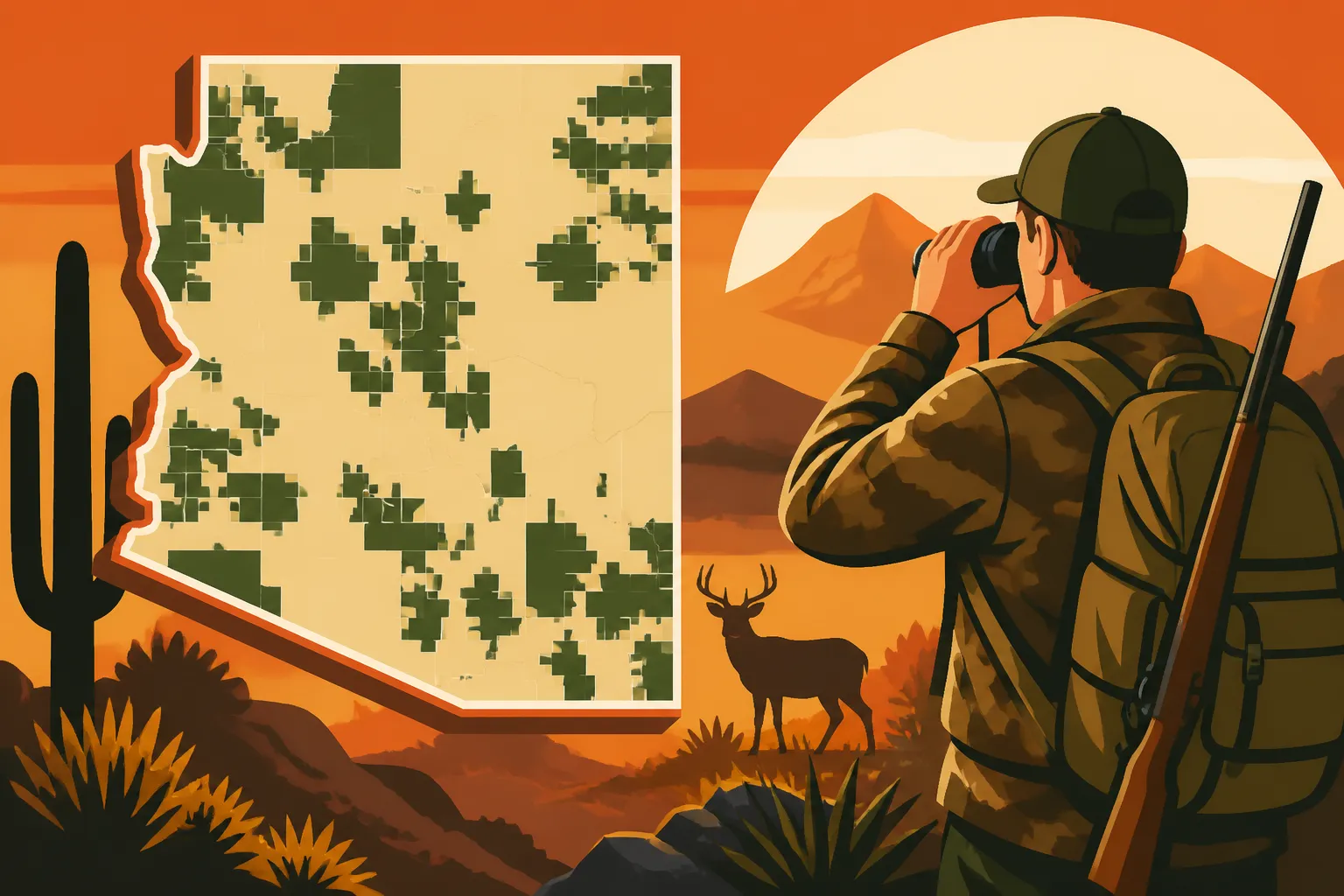
Arizona's land ownership is a complex quilt, stitched together with federal, state, tribal, and private lands. While federal lands like National Forests and BLM ground make up a substantial portion of the state, giving the impression of endless access, private holdings are strategically located and often encompass crucial wildlife habitat, particularly around water sources and fertile ground. This mosaic can be a huge headache if you're not prepared.
The Reality of Public vs. Private in Arizona
Many hunters envision Arizona as a state dominated by vast, unbroken stretches of public land, perfect for a do-it-yourself adventure. And while much of the state is public, the critical point often missed is where that private land sits. Private parcels aren't just isolated islands; they frequently control access to public land, checkerboard prime habitat, or encompass the most productive agricultural areas that attract game. This means that even in units with a high percentage of public land, actually getting to and through it can be impossible without crossing private property, or those public parcels might be less attractive to game because the better feed and water are on the private side. Reading a Land Ownership Layer Correctly on a mapping app becomes absolutely vital here.
The frustrations can mount quickly. You might scout a promising canyon on a satellite map, only to find when you get boots on the ground that the only way to reach it is across a farmer's irrigated field or through a rancher's posted pasture. This isn't just an inconvenience; it can mean the difference between a successful hunt and a wasted trip, or worse, an accidental trespass. It highlights why understanding the actual land ownership on a micro-level, not just a macro-level, is paramount for any hunter in Arizona.
Where the "Checkerboard" Pattern Emerges
The term "checkerboard" is often used to describe land ownership patterns where public and private parcels alternate in a grid-like fashion. This pattern is particularly common in areas historically settled by railroads or land grants, where alternating sections were given to private entities to fund infrastructure development. While not as prevalent as in some other Western states, Arizona does have its share of these fragmented areas, especially at the interfaces of mountain ranges and valley floors.
Hunting in checkerboard country requires meticulous planning. A game trail might weave in and out of private land every few hundred yards, making it nearly impossible to follow without constantly checking your GPS. This can be incredibly frustrating when you're trying to make a stalk on a bedded deer or elk. Furthermore, these parcels are often owned by different individuals or companies, meaning gaining permission might involve contacting multiple parties, each with their own rules or reluctance. It's an issue that requires patience, respect, and reliable mapping technology to avoid trouble.
Specific Regions Dominated by Private Holdings
While public land abounds in Arizona's higher elevations and vast deserts, specific geographical areas and types of terrain are overwhelmingly private. Knowing these regions beforehand can help you either focus your efforts on gaining access or pivot your hunting plans to more accessible public lands.
Southern Arizona's Ranching Country
Head south of Tucson, into areas like the San Rafael Valley or the grasslands stretching towards the Mexican border, and you'll quickly discover a landscape dominated by historic cattle ranches. These ranches, many of which have been in families for generations, cover immense tracts of rolling hills, mesquite-dotted flats, and oak-studded canyons. While beautiful and often holding fantastic populations of Coues Deer in the Southeastern Sky Islands, javelina, and quail, nearly all of this land is private.
Access here is almost exclusively through explicit landowner permission. These ranchers are often busy, protective of their property, and sometimes wary of strangers. The key to hunting these areas lies in building relationships and demonstrating respect for their land and livelihood. Without permission, you might find yourself glassing a prime piece of habitat from afar, knowing full well you can't step foot on it. Hunters often find themselves driving for miles on paved or dirt roads that are bordered by fences on both sides, with "No Trespassing" signs serving as a constant reminder of the private nature of the land.
Agricultural Valleys and Irrigated Croplands
Arizona's fertile river valleys, like those fed by the Gila, Verde, or Salt Rivers, were the first areas to be extensively settled and developed for agriculture. Today, these valleys are home to vast fields of cotton, alfalfa, pecans, and various row crops. While these areas can be magnets for deer, javelina, and especially waterfowl and upland game birds, almost all of this productive land is private.
Game animals, particularly deer and javelina, are often drawn to the reliable food and water sources found in these agricultural zones. They might bed down in adjacent public lands but consistently feed on the private fields. This creates a challenging scenario where the best hunting opportunities are frequently off-limits unless you've secured permission. Even if a small public parcel exists next to a field, the sheer density of game might be too high on the private side to ignore. These are classic areas where hunters need to knock on doors or work with landowners. Water Sources That Concentrate Arizona Desert Game on these private lands are often what draws the animals in.
Urban and Exurban Sprawl
Arizona's rapidly growing population means that cities like Phoenix, Tucson, Prescott, and Flagstaff are constantly expanding their footprints. As urban and exurban developments push further into what was once open desert or forest, more and more land is converted from public or undeveloped private into residential, commercial, or protected private space. This means large areas immediately surrounding these population centers are essentially off-limits for hunting.
This sprawl doesn't just reduce available hunting land; it also pushes wildlife into smaller, more fragmented habitats, often bordering these human-dominated zones. For hunters, it means longer drives to find truly wild country, and even then, you might encounter development creeping in at the edges of your chosen unit. It's a frustrating reality for many, as traditional hunting grounds become subdivisions or golf courses. This dynamic emphasizes the need for thorough E-Scouting an Arizona Unit Before the Season to identify rapidly changing land use patterns.
Navigating Private Land and Gaining Access
Given the prevalence of private land in critical areas, understanding how to identify it and, more importantly, how to respectfully gain access is a crucial skill for any Arizona hunter.
The Importance of Digital Mapping Tools
In today's hunting landscape, a high-quality digital mapping application is not just a luxury, it's an absolute necessity. Tools like onX Hunt have revolutionized how hunters navigate complex land ownership. These apps provide detailed overlay maps that clearly distinguish between public lands (BLM, National Forest, State Trust Land), private parcels, and tribal lands. They also often show property lines and landowner names, giving you the information you need to avoid trespass and potentially seek permission.
Relying solely on paper maps or general knowledge is a recipe for disaster in many Arizona units. A small private parcel, perhaps just a few acres, could be the key choke point that blocks access to hundreds of acres of prime public land. Using an app, you can pinpoint these boundaries with precision, plan your routes accordingly, and avoid inadvertently stepping onto private ground. Before you even leave home, a thorough E-Scout with one of these tools can save you countless hours and prevent frustrating encounters in the field. Services like GoHunt often integrate similar mapping capabilities and detailed unit information, making them invaluable for research.
Strategies for Seeking Landowner Permission
Gaining permission to hunt private land in Arizona is often a game-changer, especially for species like deer, javelina, or even waterfowl that heavily utilize private agricultural areas. However, it requires a respectful, thoughtful approach.
Here are a few tips:
- Do Your Homework: Before approaching, know who owns the land (your mapping app can help with this), what kind of operation they run (ranching, farming), and be prepared to explain exactly where and what you want to hunt.
- Time It Right: Don't show up during calving season or harvest time. Weekday evenings or weekends are often best, but respect their schedule. Avoid showing up unannounced on opening morning of a popular season.
- Be Presentable and Polite: Dress respectfully, leave your truck clean, and be courteous. A good first impression goes a long way.
- Be Specific and Offer Value: Clearly state your intentions. Offer to help with chores, close gates, or report anything suspicious you might see on their property. Some landowners might appreciate help with predator control if you're targeting coyotes or bobcats.
- Respect "No": If a landowner says no, thank them for their time and move on. Arguing or being pushy will only harm future prospects for you and other hunters.
- Leave No Trace: If granted access, be an exemplary guest. Close all gates, pick up trash (even if it's not yours), drive only on designated roads, and absolutely do not damage property or disturb livestock. Consider leaving a thank-you note or a small token of appreciation after your hunt.
- Start Small: Don't ask to hunt their entire ranch for a month. Perhaps ask for a day, or to hunt a specific corner for javelina. Build trust over time. Getting Landowner Permission in Arizona is a skill that takes practice.
Understanding Trespass Law on Posted Arizona Property
Ignorance of the law is no excuse, especially when it comes to trespassing. In Arizona, stepping onto private land without permission, whether it's fenced, posted with "No Trespassing" signs, or simply clearly delineated as private on your mapping app, can lead to serious legal consequences. Trespass Law on Posted Arizona Property is enforced, and landowners have every right to protect their property.
Penalties can range from fines to confiscation of equipment, and even jail time for repeat offenses. Beyond the legal ramifications, trespassing damages the reputation of all hunters. It reinforces negative stereotypes and makes it harder for everyone else to gain access. Always, always verify your location and obtain explicit permission before entering any land you suspect is private. If you're unsure, err on the side of caution and find another route or another spot.
How Private Land Impacts Hunting Strategy
The presence and extent of private land significantly shape hunting strategies, affecting everything from game movement to how much pressure animals experience.
Pressure and Refuge Areas
Private lands, especially large ranches or agricultural holdings that restrict access, often act as de facto refuge areas for game animals. When public lands are heavily pressured by hunters, animals will often retreat to the safety of adjacent private parcels. This can be a double-edged sword: it means there are often strong populations of game just over the fence, but also that those animals are difficult to reach.
Hunters on public land frequently find themselves watching deer or elk filter back and forth across property lines, especially at dawn and dusk. This dynamic can be incredibly frustrating, but it can also inform your strategy. Understanding where these private refuges are can help you set up on public land adjacent to them, intercepting animals as they move between feeding areas on private ground and bedding areas on public, or vice-versa. It requires patience and a good understanding of animal movement patterns influenced by hunting pressure.
The Role of Outfitters and Lease Agreements
For some private land, especially the most desirable parcels with consistent trophy potential, access may only be available through an outfitter or a lease agreement. Landowners often partner with outfitters to manage hunting access, offering guided hunts at a premium. These outfitters handle all the logistics, from gaining permission to guiding the hunt itself. This can be a viable option for hunters seeking a high-quality experience on proven private ground, though it comes at a significant cost.
Alternatively, some landowners may offer season-long leases for hunting rights. This is more common in states with a stronger leasing culture but does exist in parts of Arizona, particularly for prime agricultural land or specific game species. These agreements can be a way to secure consistent access to quality hunting, but they require a financial commitment and a clear understanding of the terms and conditions. How an Outfitter Opens Private Arizona Ground often involves these types of agreements, providing an avenue for those willing to pay for access.
Here's a quick look at common private land types and their impact:
| Private Land Type | Typical Location | Impact on Hunter | Access Strategy |
|---|---|---|---|
| Cattle Ranches | Southern AZ grasslands, central mesas | Restricted access, game often moves between public/private, vital water sources. | Knock on doors, build relationships, offer help. |
| Agricultural Fields | River valleys, central/western plains | Game (deer, javelina, birds) feed heavily on crops; often highly productive. | Approach farmers, offer to help, respect crops. |
| Rural Residential/Exurban | Outskirts of growing towns | No hunting, pushes game into smaller areas, creates dense human populations. | Avoid these areas, hunt further out on public land. |
| Checkerboard Parcels | Interfaces of public/private lands | Complex navigation, frequent boundary checks, fragmented habitat. | Digital mapping (onX Hunt), multi-landowner contact. |
| Mining Claims/Industrial | Various, often remote | Restricted access for safety/operational reasons, potential for hazardous terrain. | Research specific areas, respect closures. |
Understanding Arizona's land ownership is not just about identifying where you can't hunt; it's about strategizing where you can hunt effectively and ethically. With the right tools, a respectful attitude, and a little persistence, navigating the private land puzzle can actually unlock some incredible hunting opportunities.
Disclaimer
This article is for general informational purposes only and does not constitute professional advice. Laws, prices and regulations vary by location and change over time. Consult a qualified professional for guidance on your specific situation.