Minimum Crossbow Bolt Length in Arizona
It can feel like you need a law degree just to understand all the regulations for hunting, especially when you're dealing with specialized equipment like crossbows or if you’re new to hunting in Arizona. Getting caught up in the details of equipment specifications can be daunting, but misunderstanding them can quickly turn a hopeful hunt into a disappointing one. This guide is here to untangle the specifics of minimum crossbow bolt length in Arizona, ensuring you’re well-prepared and compliant before you ever step foot in the field.
Understanding Arizona's Crossbow Regulations
Navigating hunting regulations can sometimes feel like trying to solve a puzzle with missing pieces, and crossbow rules are no exception. Each state often has its own set of nuances, and Arizona is no different. It's not just about what you can hunt, but how you can hunt, and the tools you use are under close scrutiny to ensure fair chase, safety, and ethical harvest.
Why Regulations Exist for Crossbows
When you look at the sheer power and accuracy modern crossbows offer, it's easy to see why game and fish departments want to ensure they're used responsibly. The regulations, like those for minimum bolt length, aren't there to make your life harder, but rather to promote an ethical hunting experience. The main goal is to ensure that when an animal is hit, it's a quick, humane kill. A bolt that's too short might not fly true, might not carry enough kinetic energy, or might not penetrate deeply enough, leading to wounded game and a frustrating, even heartbreaking, experience for the hunter. We've all been there, agonizing over a shot, and knowing your equipment meets the minimum standards helps ensure you've done your part.
Beyond the ethical considerations, regulations also aim for a degree of consistency across various hunting methods. While crossbows offer advantages, the rules strive to balance that with the traditions and challenges inherent in archery hunting. It’s a delicate dance, and these rules are constantly reviewed and adjusted, which can certainly add to the confusion for hunters trying to keep up with the latest requirements. Understanding the "why" behind these rules often makes them a little easier to digest and adhere to.
General Overview of Crossbow Use in Arizona
Arizona's stance on crossbows has seen some shifts over the years, which is a common source of confusion for hunters, both resident and nonresident. Historically, crossbows had a more defined role in certain seasons, particularly for those with specific physical limitations who held a CHAMP (Challenged Hunter Access/Mobility Permit). However, the landscape has changed, and it continues to evolve.
As of January 1, 2023, Arizona made a significant change regarding crossbows, ultimately leading to them being excluded from archery-only seasons for big game starting in 2026. This was a big topic of discussion among the hunting community, and it's something every crossbow hunter needs to be aware of. While this might feel like a hurdle, it's crucial to remember that crossbows remain a perfectly legal and effective tool for many other hunts in Arizona. We'll delve deeper into the specific seasons where crossbows are still permitted, but for now, understand that while their role has narrowed for archery-only big game, they are far from being completely phased out. For those curious about the specifics of these changes, it's worth reading up on What Changed for Arizona Crossbows on January 1.
The Specifics of Minimum Bolt Length in Arizona
Okay, let's get down to brass tacks, because this is where the rubber meets the road. When you're standing in the archery shop or scrolling through online retailers, you'll see a dizzying array of crossbow bolts. But for hunting big game in Arizona, there’s one non-negotiable measurement you need to keep in mind: length.
The Mandated Minimum Length
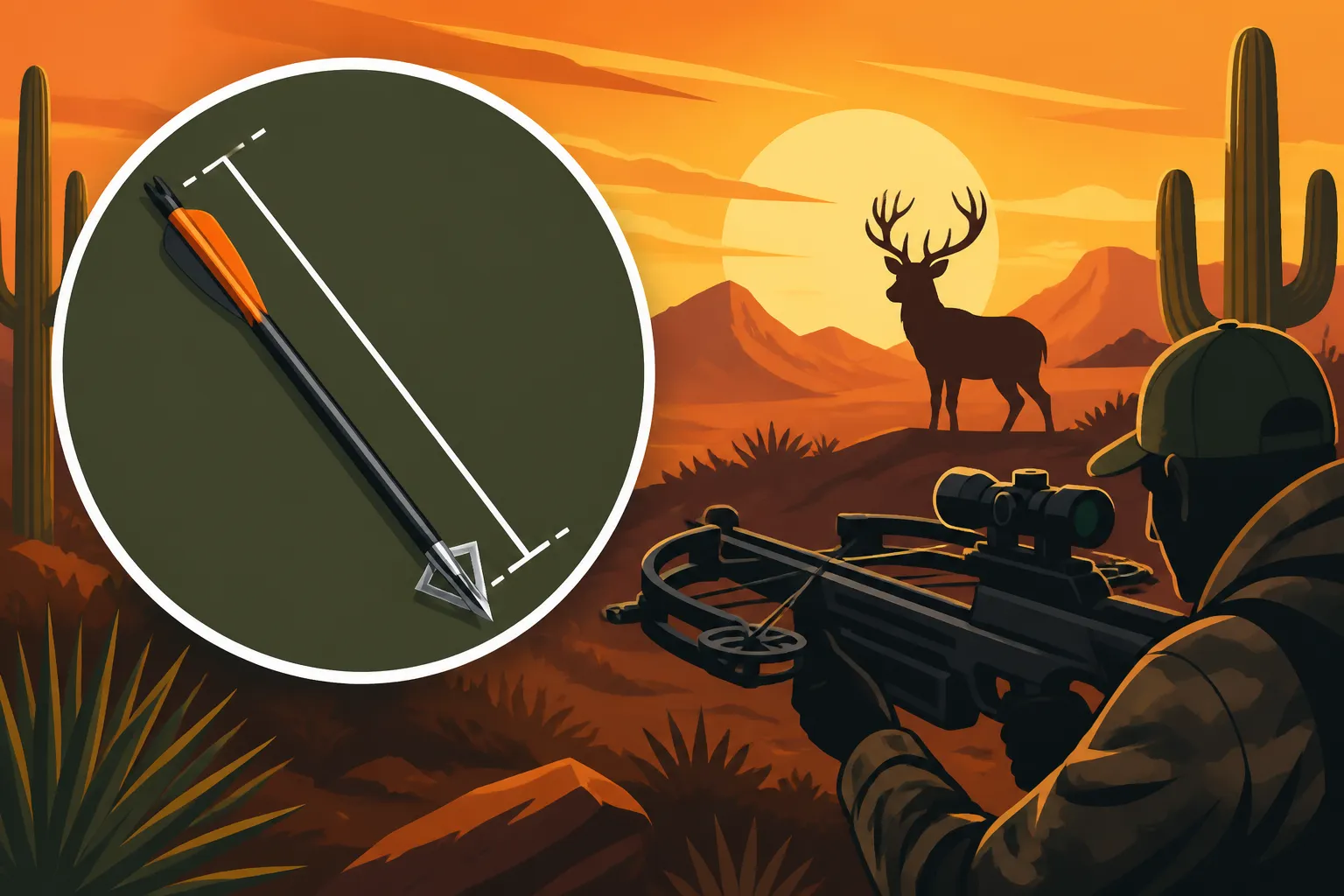
For any big game hunt in Arizona, your crossbow bolts must be a minimum of 16 inches in length. This isn't a suggestion; it's a hard and fast rule. When we talk about "bolt length," we're specifically referring to the shaft itself, measured from the valley of the nock (where the string rests) to the tip of the insert, excluding the broadhead or field point. It’s important to make this distinction, as some hunters mistakenly measure to the tip of their broadhead, which could lead to non-compliance if their shaft length is actually too short.
This regulation applies uniformly across all big game species in Arizona, whether you're chasing elk in the high country, mule deer on the plateaus, or javelina in the desert. There are no exceptions for specific species or units. So, if you're planning on hunting any of Arizona's magnificent big game animals with a crossbow, that 16-inch minimum needs to be burned into your memory. It’s a simple rule, but one that’s absolutely essential to follow to ensure legality and, more importantly, an ethical hunt.
Why 16 Inches? The Rationale Behind the Rule
You might wonder, why 16 inches specifically? It seems like a somewhat arbitrary number if you don't understand the physics behind it. The length of a crossbow bolt directly impacts several critical factors: stability, kinetic energy, and penetration. Shorter bolts, while sometimes lighter, can be less stable in flight, especially at longer distances or in windy conditions. This can lead to erratic flight paths, decreased accuracy, and a higher chance of a poor hit.
Longer bolts, generally speaking, tend to offer better stability out of the gate, which contributes to a more consistent and predictable trajectory. This enhanced stability helps the bolt maintain its energy and penetrate effectively once it reaches the target. When you combine the velocity of a modern crossbow with a stable, appropriately weighted bolt, you create enough kinetic energy and momentum to push that broadhead through hide, muscle, and bone for a clean pass-through. A bolt that's too short might flex more, lose energy faster, or simply not have the mass required to deliver the necessary punch, potentially compromising your ability to achieve a quick, humane kill. These regulations are all about giving the hunter the best chance at a responsible harvest.
Practical Implications for Hunters
Understanding the rule is one thing, but actually putting it into practice in the real world is where many hunters face challenges. With so many options out there, choosing the right equipment can feel overwhelming. Let’s talk about how to make sure you’re always on the right side of the regulation.
Choosing the Right Bolts for Your Hunt
When you're shopping for crossbow bolts, you'll encounter a vast selection of materials, weights, and spine ratings. While carbon bolts are incredibly popular due to their durability and light weight, and aluminum bolts offer a different set of characteristics, the material itself doesn't negate the 16-inch length requirement for big game in Arizona. Always prioritize that minimum length first.
Many manufacturers produce bolts specifically designed for hunting, and most will meet or exceed this 16-inch minimum. However, it's your responsibility as the hunter to double-check the specifications. Don't just assume. Look at the product description, or even better, measure them yourself once you have them in hand. You might find bolts marketed for target shooting or smaller game that fall short, so always verify. Websites and apps like GoHunt can be incredibly helpful resources for researching gear, comparing options, and even cross-referencing state regulations to ensure the bolts you're eyeing will be legal for your Arizona hunt. Taking the time to select the right bolts isn't just about compliance; it's about maximizing your ethical hunting potential.
How to Measure Your Crossbow Bolts Accurately
Measuring a crossbow bolt might seem straightforward, but getting it precisely right is crucial. Remember, we’re measuring from the nock to the end of the shaft, excluding the broadhead or field point. Here’s a simple, step-by-step method to ensure you’re accurate:
- Remove the Point: First, unscrew your broadhead or field point from the bolt. This ensures you're measuring only the shaft and its insert.
- Locate the Nock Valley: Identify the deepest part of the nock groove – the "valley" where your crossbow string sits when loaded. This is your starting point.
- Use a Reliable Measuring Tool: A good quality tape measure or, even better, a metal ruler is ideal for this. Avoid cloth tape measures, as they can stretch and give inaccurate readings.
- Measure to the End of the Shaft: Place the end of your measuring tool at the nock valley. Run the tool along the shaft to the very end of the carbon or aluminum shaft, where the insert for the broadhead is seated. Read the measurement.
- Verify: It's a good idea to measure a couple of bolts from your batch, just to ensure consistency and that they all meet the 16-inch minimum.
Common mistakes often include measuring to the tip of the broadhead, or not being precise about the nock valley starting point. By following these steps, you can confidently confirm that your bolts are legal for your Arizona big game adventure.
Beyond Length: Other Important Crossbow Bolt Considerations
While the 16-inch minimum bolt length is a non-negotiable, it's just one piece of the larger puzzle when it comes to setting up a truly effective and ethical crossbow for hunting in Arizona. There are other regulations and considerations that work in tandem to ensure a responsible harvest.
Minimum Crossbow Draw Weight and Broadhead Requirements
Arizona doesn't just specify the length of your projectile; it also sets standards for the power behind it and the cutting edge at its tip. To hunt big game with a crossbow in Arizona, your weapon must have a minimum draw weight of 125 pounds. This ensures that the crossbow itself is capable of generating enough force to propel the bolt with sufficient kinetic energy for a clean kill. A crossbow with inadequate draw weight simply won't drive a bolt deep enough, regardless of how long the bolt is. It’s all part of the same ethical hunting equation. You can learn more about The 125-Pound Crossbow Draw Weight Arizona Requires to ensure your setup is compliant.
In addition to draw weight, Arizona also has specific requirements for broadheads. For big game, your broadhead must have a minimum cutting width of 7/8 inch. This applies to both fixed-blade and mechanical broadheads. The idea here is to ensure that the broadhead creates a sufficiently large wound channel to quickly incapacitate the animal. A narrow broadhead might not cause enough damage, even with perfect shot placement. So, while you're ensuring your bolts are 16 inches long, you also need to make sure your broadheads meet this critical width requirement. Understanding Why Broadheads Must Exceed Seven-Eighths of an Inch is key to a complete and legal setup.
Bolt Weight, FOC, and Kinetic Energy
Beyond the legal minimums, optimizing your crossbow bolt setup involves understanding bolt weight, FOC (Front of Center), and the resulting kinetic energy. While not explicitly regulated by Arizona Game and Fish, these factors are crucial for maximizing your crossbow's performance and ensuring an ethical shot.
- Bolt Weight: A heavier bolt generally carries more momentum and kinetic energy, leading to better penetration. However, too heavy, and your trajectory will suffer, becoming more like a rainbow. Too light, and you might not get the penetration needed, especially on larger game like elk. Finding that sweet spot where your bolt is heavy enough to penetrate, but light enough to maintain a relatively flat trajectory, is a critical component of tuning your setup.
- Front of Center (FOC): This refers to how much of the bolt's total weight is concentrated towards the front. A higher FOC (typically 12-18% for hunting) can improve accuracy, stabilize the bolt in flight, and aid in penetration. You can adjust FOC by using heavier broadheads or inserts.
- Kinetic Energy (KE): This is the energy of motion, and it's what drives your broadhead through the animal. It's a function of both bolt weight and speed. While faster isn't always better, having enough KE is paramount for big game. Manufacturers often provide charts or calculators to help you estimate KE with different bolt weights and speeds. A well-tuned crossbow, shooting a legal 16-inch bolt with appropriate weight and FOC, will deliver the kinetic energy necessary for a responsible harvest. These aspects, while not legal requirements themselves, are paramount to the ethical hunter.
| Regulation Category | Specific Requirement in Arizona | Notes for Hunters |
|---|---|---|
| Bolt Length | 16 inches minimum | Measured from nock valley to tip of shaft/insert, excluding broadhead. Essential for all big game. |
| Draw Weight | 125 pounds minimum | Applies to the crossbow itself, ensuring sufficient power for kinetic energy and penetration. |
| Broadhead Width | 7/8 inch minimum | Applies to both fixed and mechanical broadheads. Critical for creating an ethical wound channel. |
| Bolt Material | No specific restrictions | Carbon, aluminum, etc., are all permissible as long as other requirements (length, weight, etc.) are met. |
| Mechanical BH | Legal | As long as they meet the 7/8 inch minimum cutting width. |
Navigating Arizona's Hunting Seasons and Crossbow Use
The regulations regarding crossbows in Arizona aren't static, and understanding the recent shifts and where crossbows are currently allowed is just as important as knowing the bolt length requirement. It's easy to get confused when rules change, but staying informed ensures you're hunting legally.
Crossbows in Archery-Only Seasons: A Recent History
One of the most significant changes for crossbow hunters in Arizona in recent years revolves around archery-only seasons. Prior to 2023, crossbows had a place in these seasons, particularly for hunters with a Challenged Hunter Access/Mobility Permit (CHAMP). This permit allowed eligible hunters to use a crossbow during archery-only hunts, providing accessibility for those who might not be able to operate a traditional vertical bow.
However, the Arizona Game and Fish Commission made a decision in 2022 that has shifted this landscape. As of January 1, 2023, there was a transitional period, and by January 1, 2026, crossbows will no longer be legal for use during any archery-only big game season in Arizona, regardless of whether you possess a CHAMP permit or not. This change was met with mixed reactions in the hunting community, but it's a firm regulation that all crossbow hunters must be aware of. If you’ve been relying on a crossbow for your early archery deer or elk hunts, this is a monumental shift. It’s absolutely vital to know When Crossbows Left Archery-Only Seasons to avoid any issues. For those who qualified for a CHAMP permit, it’s important to understand What a CHAMP Permit Allows in the context of these evolving rules.
Where Crossbows Are Still Legal: General and HAM Hunts
Despite the exclusion from archery-only seasons post-2025, crossbows are still very much a legal and effective weapon for many other big game hunts in Arizona. This is great news for crossbow enthusiasts who still want to participate in Arizona’s diverse hunting opportunities.
Crossbows remain fully legal for use during:
- General Season Hunts: This includes most rifle hunts for deer, elk, antelope, and other big game species. If the season explicitly allows for general firearms, you can typically use a crossbow. This offers a wide array of opportunities, especially for non-archery specific tags.
- Muzzleloader Seasons: Often, muzzleloader seasons also permit the use of crossbows. This provides an alternative for hunters who enjoy the challenge of primitive weapons but prefer the handling of a crossbow.
- Handgun, Archery, Muzzleloader (HAM) Seasons: These seasons are specifically designed to allow a broader range of weapon types, and crossbows generally fall under the "Archery" umbrella within a HAM hunt. HAM seasons are quite popular for species like deer and javelina.
It’s always, always, always essential to check the specific hunt regulations and hunt codes in the Arizona Game and Fish Department’s annual hunting regulations booklet. Don't assume. A unit or hunt code might have specific restrictions, so always confirm before you apply or head into the field. Knowing Which Hunts Still Allow a Crossbow and the specifics of Crossbows in Arizona HAM, Muzzleloader and General Hunts will be your best friend in navigating these options.
Ensuring Compliance and Avoiding Issues
With so many rules and changes, staying on top of everything can feel like a full-time job. But ultimately, it’s our responsibility as hunters to ensure we are always compliant. This isn’t just about avoiding penalties; it’s about upholding the integrity of hunting.
Double-Checking Regulations Before Heading Afield
The Arizona Game and Fish Department (AZGFD) is the ultimate authority on hunting regulations in the state. While guides like this one aim to be helpful, the official regulations booklet, available on the AZGFD website, is your primary source of truth. Regulations can change annually, or even mid-season for specific scenarios (like emergency closures or harvest limits), so always make it a habit to check the most current regulations before you apply for a tag and before you head out for your hunt. Don't rely on old handbooks or hearsay.
Many online resources and hunting apps, such as GoHunt, do an excellent job of compiling and updating regulation summaries. These can be incredibly useful as quick reference tools or for preliminary research. However, for absolute certainty, always cross-reference with the official AZGFD document. It’s better to spend an extra 15 minutes reviewing the rules than to face the potential consequences of non-compliance. When you’re planning your hunt, consider leveraging these digital tools, but confirm the critical details with the source.
Consequences of Non-Compliance
Breaking hunting regulations, even unintentionally, can lead to serious consequences that no hunter wants to face. These aren't just minor inconveniences; they can impact your hunting privileges for years to come.
Potential repercussions for using an illegal weapon (like a crossbow bolt that's too short, or a crossbow in a season where it's not permitted) can include:
- Fines: Significant monetary penalties are common, often in the hundreds or even thousands of dollars.
- Loss of License and Hunting Privileges: You could have your hunting license suspended or revoked, meaning you can't hunt in Arizona (and sometimes other states due to interstate compacts) for a set period. This can be devastating for passionate hunters.
- Confiscation of Equipment: Your crossbow, bolts, and even your harvested game animal could be confiscated.
- Criminal Charges: In severe cases, particularly if negligence or intent is perceived, charges beyond civil penalties can be filed.
- Ethical Ramifications: Beyond the legal penalties, there's the profound ethical breach of potentially wounding an animal due to non-compliant equipment or hunting outside the legal framework. This impacts the perception of all hunters.
The bottom line is that the rules exist for a reason – to ensure fair chase, promote wildlife conservation, and maintain ethical standards. Taking the time to understand and adhere to the minimum crossbow bolt length, draw weight, broadhead rules, and season-specific regulations is not just about avoiding trouble; it’s about being a responsible, ethical hunter.
Disclaimer
Please remember that hunting regulations are subject to change. While every effort has been made to provide accurate and up-to-date information in this guide, it is essential that you consult the official Arizona Game and Fish Department (AZGFD) regulations and proclamations directly before participating in any hunting activity. Your hunting license and permit serve as your agreement to abide by all state laws and regulations.