Special Use Permits Arizona Outfitters Must Hold
When you’re planning an Arizona hunting adventure, especially if you’re considering hiring an outfitter, it’s easy to get caught up in the excitement of the chase, the gear lists, and the scouting reports. What often gets overlooked, but is absolutely crucial, is making sure your chosen guide service is operating legally. The frustrating reality is that many hunters don't realize that legitimate outfitters working on public lands in Arizona need specific "special use permits" to operate, and failing to verify this can lead to a world of trouble. This guide will walk you through what these permits are, why they're so vital, and how you can ensure your hunt is fully above board.
The Foundation: What Are Special Use Permits?
Imagine a vast expanse of stunning Arizona public land—towering pines on the Mogollon Rim, or the endless saguaros of the Sonoran Desert. These lands, managed by agencies like the U.S. Forest Service or the Bureau of Land Management (BLM), are for everyone to enjoy. However, when an individual or business starts using these lands for commercial purposes, meaning they are charging money for services rendered, things get a bit more complicated. That's where special use permits come in.
Defining Commercial Operations on Public Land
A special use permit is essentially a formal authorization granted by a federal land management agency that allows for specific activities on public land that go beyond general public recreational use. For an outfitter or guide service, this means they're not just a regular hunter walking around with their friends; they are running a business. This business involves leading clients, often providing transportation, setting up camps, and directing hunts—all for a fee. Because these activities inherently involve a higher level of impact, potential risk, and commercial gain from public resources, the agencies require permits to regulate and manage them.
Think of it like this: anyone can drive a car on a public road, but if you want to start a taxi service or run a commercial tour bus, you need special licenses and permits from the local authorities. The same principle applies to our public lands. Outfitters are utilizing these lands as their place of business, and the permits ensure they do so responsibly, sustainably, and in a way that doesn't negatively impact other users or the resource itself. It's about protecting the natural environment, ensuring public safety, and making sure that commercial operations don't monopolize access or over-stress wildlife populations in specific areas. Without these permits, any guide operating on federal land is essentially running an illegal enterprise, which can have serious repercussions for both the outfitter and their clients.
The Agency's Role in Regulating Access and Activity
The primary goal of the land management agencies, like the U.S. Forest Service and the Bureau of Land Management, is to ensure the health and sustainability of the public lands they oversee. This includes everything from timber management and grazing to recreation and wildlife habitat protection. When it comes to commercial activities like guided hunting, their role becomes critical. They don't just hand out permits like candy; there's usually a rigorous application process. This often involves reviewing an outfitter's business plan, their experience, their safety protocols, and their understanding of ethical hunting practices.
Furthermore, these agencies often have specific stipulations within the permits. An outfitter might be limited to certain units, specific times of the year, or even a maximum number of clients to minimize impact. This careful oversight prevents over-commercialization of prime hunting areas and helps distribute hunting pressure, contributing to overall wildlife management objectives. It also ensures that the outfitter carries adequate liability insurance, protecting both the client and the agency should an accident occur. The permits are a dynamic tool for balancing public access, resource conservation, and the economic benefits that outfitters can bring to local communities. It's not just red tape; it's a vital part of responsible land stewardship and a safeguard for everyone involved in hunting on public land.
Where and Why These Permits Apply in Arizona
Arizona is a state of incredible topographical diversity, from low deserts to high mountain forests, and with that comes a patchwork of public lands managed by various federal agencies. Outfitters often operate across these different landscapes, meaning they need to understand and comply with each agency's specific permit requirements.
Navigating National Forest Service Requirements
Arizona boasts several vast and beautiful National Forests, including the Coconino, Kaibab, Apache-Sitgreaves, Tonto, and Coronado National Forests. These forests are prime hunting grounds for elk, deer, bear, and turkey, attracting many guided hunts. The U.S. Forest Service requires commercial outfitters to obtain a special use permit for any guided activity within their boundaries. These permits are typically issued by individual forest or ranger districts and are tailored to the specific activities proposed by the outfitter.
For instance, an outfitter planning to run elk hunts in the high country of the Apache-Sitgreaves National Forest might need a permit that specifies their operating area, the number of clients they can take, the type of camp facilities they can establish (if any), and even transportation methods, such as utilizing pack stock. These permits are not always easy to get; the Forest Service often limits the number of permits issued in a given area to prevent overcrowding and resource degradation. When looking into guided hunts, you might consider guides who frequently operate in specific areas like Kaibab National Forest Access in Arizona or Coconino National Forest Access in Arizona, as they are likely well-versed in the local permitting requirements. Outfitters must renew these permits periodically and adhere to all terms, ensuring they maintain high standards of operation and environmental stewardship.
Understanding Bureau of Land Management (BLM) Permitting
While National Forests tend to dominate the higher elevations, vast swaths of Arizona's desert and grassland ecosystems fall under the jurisdiction of the Bureau of Land Management (BLM). This land, often characterized by its open, remote nature, is critical habitat for mule deer, Coues deer, javelina, and bighorn sheep. Just like the Forest Service, the BLM has strict requirements for commercial guiding operations. A guide running a Coues deer hunt in the rolling hills of southern Arizona or a javelina hunt across the desert flats would need a BLM special recreation permit.
The BLM's permitting process is similar in principle to the Forest Service's but can have its own nuances due to the different ecosystems and traditional land uses (like cattle grazing) prevalent on BLM lands. Outfitters must submit detailed operating plans, demonstrate financial and technical capability, and often show proof of insurance. These permits help the BLM manage commercial access, prevent damage to sensitive desert environments, and ensure that commercial activities don't unduly interfere with other public land uses. For hunters seeking guides who work these expansive landscapes, understanding BLM Access Rules Across Arizona is paramount. Any reputable outfitter will be transparent about their BLM permits and the areas they are authorized to guide in.
Specifics for Arizona's Diverse Public Hunting Grounds
Beyond the broad categories of Forest Service and BLM lands, Arizona's public hunting opportunities are incredibly diverse. This means that a good outfitter doesn't just hold one generic permit; they might have several, covering different areas and agencies. For example, an outfitter who guides in the White Mountains for elk might need a Forest Service permit for that specific area, while another part of their business might involve guiding desert bighorn hunters on BLM lands near the Colorado River, necessitating a separate BLM permit.
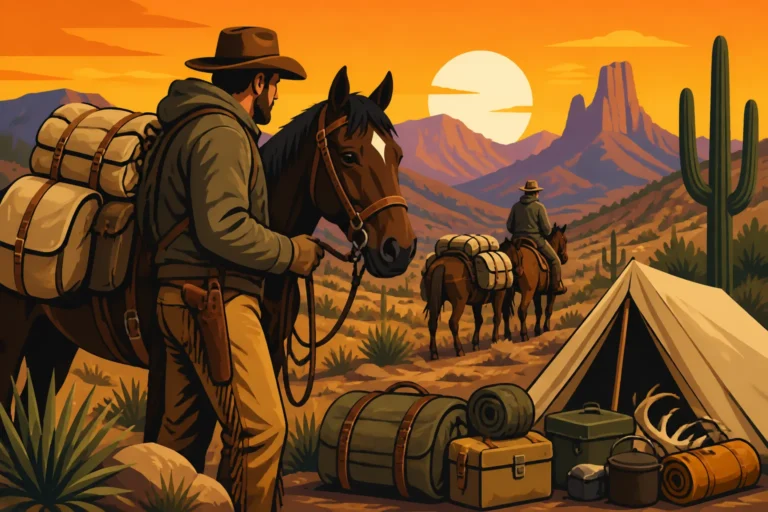
The terms of these permits can also vary significantly. Some permits might allow for permanent camp structures in designated areas, while others might only permit temporary, leave-no-trace spike camps. Outfitters who use pack animals for drop camps or remote hunts will have specific stipulations regarding their use and care of livestock on public land. It's not uncommon for an outfitter to hold permits for multiple Game Management Units (GMUs) across different forests or BLM districts, allowing them to offer a wider range of hunts. This complex web of regulations underscores the importance of a professional outfitter who is not only knowledgeable about hunting but also fully compliant with all land use laws. For a hunter, it’s about knowing that your outfitter has done their homework and secured all necessary permissions, allowing you to focus on the hunt without legal worries.
Why a Hunter Needs to Care About Outfitter Permits
As a hunter, it might seem like the outfitter's permits are their business, not yours. However, this couldn't be further from the truth. The legitimacy of your outfitter directly impacts your hunting experience, your safety, and even your legal standing.
Ensuring a Legal and Ethical Hunting Experience
When you book a hunt with a licensed and permitted outfitter, you're buying peace of mind. These permits signify that the outfitter has met certain standards set by the land management agencies. This often includes proving financial stability, holding adequate insurance, and demonstrating a commitment to responsible land use and ethical hunting practices. An outfitter operating without proper permits is not just skirting regulations; they are often operating outside of any oversight, which can lead to unsafe practices, disregard for environmental impact, and potentially unethical hunting methods.
Imagine arriving at your hunting spot only to find out your guide is operating illegally. Best case, you might be asked to leave by a ranger, costing you your valuable hunting time and money. Worst case, you could inadvertently become involved in a legal infraction simply by being a client of an unpermitted operation. A legal, permitted outfitter contributes to the conservation efforts of these public lands and ensures that their activities align with the long-term health of wildlife populations. This commitment translates directly into an ethical hunting experience for you, where you can be confident that your pursuit of game is conducted respectfully and within the bounds of the law. You can't put a price on that kind of assurance when you're in the field.
How to Verify Your Outfitter's Credentials
This is where you, as the client, need to be proactive. Before you send a deposit or sign a contract, always ask your prospective outfitter for proof of their special use permits. A reputable guide will be happy to provide copies or at least the relevant permit numbers and issuing agencies. They understand that this transparency builds trust and assures clients of their legitimate operation. Don't be shy about asking specific questions like "Do you have a current Forest Service permit for Unit X?" or "Can you provide your BLM permit number for the area we'll be hunting?"
If an outfitter is evasive, deflects your questions, or claims they don't need a permit, that should be a major red flag. You can often cross-reference the information provided by checking with the relevant land management agency's district office. For example, if they claim a permit for the Kaibab National Forest, a quick call to that forest's supervisor's office or a specific ranger district can confirm their active permit status. Using platforms like BookYourHunt or GoHunt, while not direct permit verifiers, can often lead you to more established and vetted outfitters who are likely to have all their ducks in a row. It’s a bit like doing your due diligence before a big investment; Vetting an Arizona Outfitter Before You Send a Deposit is a skill every serious hunter should cultivate. Remember, a legitimate outfitter will welcome your scrutiny because it sets them apart from the less scrupulous operators.
| Permit Type | Issuing Agency | Purpose for Outfitters |
|---|---|---|
| Special Use Permit | U.S. Forest Service (USFS) | Commercial guiding, camping, pack stock operations on NF land |
| Special Recreation Permit | Bureau of Land Management (BLM) | Commercial guiding, camp operations on BLM land |
| Commercial Use Authorization | National Park Service (NPS) | Commercial services within National Parks (less common for hunting) |
| State Trust Land Permit | Arizona State Land Department | Access for commercial activities on Arizona State Trust Land |
The Risks of Unpermitted Operations
Engaging an unpermitted outfitter carries significant risks, not just for the guide but for you, the client. Firstly, there's the legal exposure. If a land management officer discovers an unpermitted commercial operation, the outfitter can face hefty fines, confiscation of equipment, and even criminal charges. As a client, you might not face criminal charges, but you could have your hunt terminated, lose your tag, and be subject to questioning, effectively ruining your experience and wasting your investment. Your hunt may be deemed illegal simply by association.
Beyond legal issues, there's the matter of accountability and safety. Permitted outfitters are typically required to carry liability insurance. If an accident occurs in the backcountry – a fall, an injury, or even a lost hunter – an unpermitted guide likely won't have the necessary insurance to cover medical costs or emergency services. This leaves you, the client, in a very vulnerable position. Furthermore, unpermitted operations often cut corners elsewhere, which could mean unsafe equipment, inexperienced staff, or a lack of proper safety protocols. Your personal safety and financial investment are directly linked to the legitimacy of your outfitter. Always prioritize a guide with the proper credentials; it's a fundamental part of Questions to Ask an Arizona Outfitter before signing on the dotted line.
Beyond the Permit: Other Considerations for Outfitters and Hunters
While special use permits are paramount, the landscape of a professional outfitter's operation involves several other critical elements that directly affect the safety and success of your hunt. A reputable outfitter takes all of these seriously.
Insurance and Liability Protections
A legitimate outfitter understands that operating in the backcountry, guiding clients in rugged terrain, and handling firearms or other hunting equipment comes with inherent risks. That's why carrying comprehensive liability insurance is non-negotiable for permitted operations. This insurance protects both the outfitter and their clients in the event of an accident, injury, or unforeseen incident during the hunt. It covers everything from emergency evacuation costs to medical expenses if a client is injured.
When you're discussing a hunt with an outfitter, it's perfectly reasonable and advisable to inquire about their insurance coverage. A professional outfitter will be transparent and proud to confirm their policies are up-to-date. An outfitter who hesitates or claims insurance isn't necessary is a huge red flag. Without adequate coverage, you are personally exposed to potentially enormous financial burdens should something go wrong. This peace of mind, knowing that contingencies are in place for the unexpected, allows you to truly focus on the hunt itself rather than worrying about what-ifs in a remote wilderness setting. It's an often-overlooked but absolutely crucial component of any professional guided hunting trip.
Seasonal and Area-Specific Restrictions
Even with a special use permit in hand, outfitters are subject to a range of seasonal and area-specific restrictions that they must meticulously adhere to. These restrictions are put in place by land management agencies to protect resources, manage wildlife, and ensure public safety. For example, certain forest roads may have Seasonal Road Closures Across Arizona during wet periods or winter months to prevent damage, or to protect wintering wildlife. An outfitter needs to be intimately familiar with these closures and plan their access routes accordingly.
Similarly, specific areas might have restrictions on campfires during high fire danger seasons, or limitations on where pack stock can be grazed. Outfitters often operate in specific units or areas, and their permits might be tailored to those particular locales. They must also be aware of any temporary closures due to wildfires, floods, or other natural events. For instance, in areas like the Mazatzal Wilderness, there are strict Wilderness Rules Inside Arizona Forests that limit motorized travel and group sizes, which an outfitter must incorporate into their operational plan. A good outfitter doesn't just know where they can hunt, but how and when they can conduct their operations within the parameters set by their permits and the prevailing conditions of the land. This attention to detail reflects their professionalism and commitment to sustainable hunting practices.
Disclaimer
This article is for general informational purposes only and does not constitute professional advice. Laws, prices and regulations vary by location and change over time. Consult a qualified professional for guidance on your specific situation.