Drop Camp Against Semi-Guided Hunts
Deciding how much support you want on an Arizona hunting adventure can be a real head-scratcher. Many hunters dream of the solitude of a wilderness hunt but might not have the time or resources for a full do-it-yourself expedition, leaving them torn between what sounds like a drop camp and a semi-guided experience. This guide will walk you through the distinct realities of both options, helping you understand the pros and cons of each so you can confidently pick the right fit for your next Arizona hunt.
Understanding the Arizona Drop Camp Experience
A drop camp is often seen as the ultimate compromise for hunters who crave a true wilderness experience without owning a full pack string or needing to haul heavy gear deep into remote country. It’s about getting yourself and your essential supplies to a wild, often inaccessible, location where you then become entirely self-sufficient.
What a Drop Camp Truly Provides
Essentially, a drop camp outfitter is your transportation service. They'll get you and your gear – typically via horses, mules, or sometimes even ATVs to a designated trailhead, or by boat if you're on a water-accessed unit – to a pre-arranged camp location, and then they'll pick you up at a specified time. Think of it like a backcountry taxi service. They might provide a basic tent, a cooking stove, and a water source, but beyond that, you’re on your own. You'll bring all your food, personal hunting gear, sleeping arrangements, and know-how for surviving and hunting in the backcountry. It's often set up in areas like the vast Coconino National Forest or the more remote stretches of the Apache-Sitgreaves National Forest where vehicle access is limited.
The beauty of a drop camp lies in its simplicity and the deep immersion it offers. You get to hunt areas that are typically inaccessible to road hunters, often finding less pressured game. There’s a profound satisfaction in successfully navigating a hunt entirely on your own terms once you’re dropped off. This also means you need to be proficient in navigation, field dressing, meat care, and emergency preparedness. You are the guide, the cook, the packer, and the problem-solver.
The Logistics and Expectations of a Drop Camp
Logistically, arranging a drop camp involves careful planning with your chosen outfitter. You’ll discuss your preferred unit, the timing of your hunt, the amount of gear and food you’re bringing, and the precise drop-off and pick-up points. It's crucial to confirm exactly what the outfitter provides (e.g., tent, cots, cooking gear, satellite phone for emergencies) and what you are solely responsible for. The more remote the location, the more critical this communication becomes. Many outfitters operate on specific Forest Service special use permits that dictate where they can set up camps and operate.
Expect to pack light but efficiently. Every ounce you bring has to be transported, so careful gear selection is paramount. You’ll need robust hunting and camping skills, including advanced first aid knowledge, since help could be hours or even a full day away. Water can be a major concern in many Arizona units, so understanding local water sources or planning to haul in sufficient supplies is a must. If you’re hunting in a rugged area like some of the units bordering the Blue Range Primitive Area, knowing how to handle potential wildlife encounters and varying weather conditions, which can swing wildly from warm days to freezing nights, is essential.
Who Benefits Most from a Drop Camp
A drop camp is ideal for experienced hunters or groups of seasoned hunters who:
- Possess Strong Backcountry Skills: They are comfortable with navigation (GPS and map/compass), camping in primitive conditions, field dressing, meat care, and self-sufficiency.
- Desire Solitude and a DIY Feel: They want to escape the crowds and immerse themselves fully in the wild, making all their own decisions about hunting strategy, stalking, and recovery.
- Are Physically Fit: Hauling game out of a drop camp, even with basic outfitter support for the initial drop-off, often involves considerable physical exertion, especially if you get an animal down a good distance from your camp. Consider Physical Conditioning for a Sky Island Hunt for what that level of fitness entails.
- Have a Limited Budget for Guiding: While not cheap, a drop camp is generally less expensive than a fully guided hunt or even many semi-guided options, as you're primarily paying for transportation and basic camp infrastructure.
- Enjoy Planning and Independence: They relish the challenge of planning every aspect of their hunt, from food menus to daily hunting routes.
Diving Into Semi-Guided Hunts in Arizona
Semi-guided hunts offer a hybrid approach, sitting comfortably between the raw independence of a drop camp and the comprehensive support of a fully guided trip. It’s designed for hunters who want some professional assistance and local knowledge but still wish to maintain a significant degree of autonomy in their hunt.
The "Middle Ground" of Semi-Guided Services
A semi-guided hunt typically means the outfitter provides certain amenities or assistance without being physically with you for the entire hunt. This might include:
- Pre-Scouted Areas and Intel: The outfitter often points you towards specific hunting areas they’ve scouted, provides maps with promising spots, or offers daily insights on game movement based on their broader knowledge of the unit. This can be invaluable, especially when trying to pinpoint, say, where Elk Country Along the Mogollon Rim might be holding animals.
- Camp and Meals: They usually provide a comfortable base camp with tents or wall tents, cooking facilities, and often prepare meals, taking a huge logistical burden off your shoulders.
- Game Recovery Assistance: This is a big one. If you down an animal, the outfitter might assist with packing it out to the truck or trailhead, which can be a lifesaver with a heavy elk or mule deer.
- Logistical Support: They might shuttle you to different hunting spots each day, drop you off, and pick you up, or offer suggestions on where to focus your efforts.
You're still doing the actual hunting, stalking, and shooting independently. The outfitter isn't walking beside you, whispering advice, or making calls on specific animals. You retain the thrill of the hunt being your accomplishment, but with a safety net and helpful local expertise.
What to Expect from a Semi-Guided Outfitter
When engaging with a semi-guided outfitter in Arizona, communication is key to setting expectations. You’ll want to clarify what level of scouting they’ve done, how frequently they’ll provide updates or suggestions, and the extent of their support for game retrieval. Some semi-guided outfitters might have you staying in a lodge or cabin, while others will run a comfortable tent camp. Your daily schedule is typically more flexible than a fully guided hunt; you decide when to head out and when to come back, within reason, and you're planning your own stalk.
Many hunters find semi-guided options particularly attractive for species like Coues Deer Are Arizona's Signature Whitetail where extensive glassing is required. An outfitter might set you up in a prime glassing location, perhaps with a spotting scope, point out areas to focus on, and then leave you to find and stalk your buck. They might check in with you periodically via radio or satellite messenger. The quality of pre-scouting and the outfitter's current knowledge of the unit can significantly impact your success, so do your homework by checking references and talking extensively with potential guides. You can often find outfitters offering this service on platforms like BookYourHunt, which allows you to compare what different operators include in their packages.
Ideal Candidates for Semi-Guided Hunts
A semi-guided hunt is a fantastic option for hunters who:
- Have Hunting Experience but Lack Local Knowledge: Maybe you’re an experienced hunter from out of state, but Arizona’s unique terrain and game behavior are new to you. The outfitter's intel can drastically cut down on your learning curve.
- Want Some Backcountry Comforts: The idea of a warm meal and a comfortable camp after a long day of hunting is appealing, but they still want the freedom of hunting on their own terms.
- Appreciate Logistical Support: Especially for physically demanding hunts for large game, having assistance with packing out an animal can make the difference between success and a deeply unpleasant experience.
- Are Confident in Their Hunting Skills: They know how to locate, stalk, and shoot game, but they value the head start and peace of mind that comes with having some professional support.
- Have a Moderate Budget: Semi-guided hunts generally cost more than a drop camp but less than a fully guided trip, making them a good middle-ground investment.
Key Differences and Making Your Choice
Choosing between a drop camp and a semi-guided hunt boils down to balancing independence, support, and cost against your personal skills and preferences.
Cost, Independence, and Support Levels Compared
Let's look at a direct comparison to highlight the key distinctions:
| Feature | Drop Camp | Semi-Guided Hunt |
|---|---|---|
| Cost | Generally lower | Moderate to higher than drop camp |
| Independence | Maximum independence; self-sufficient | High independence, but with logistical support |
| In-Field Support | Minimal to none; transport only | Varies; pre-scouting, intel, game recovery, transport |
| Camp & Meals | You provide all; basic tent might be provided | Often provided; comfortable camp, cooked meals |
| Local Knowledge | You research and rely on your own intel | Outfitter provides significant local intel & guidance |
| Physicality | Must be prepared for full self-extraction | Outfitter may assist with extraction |
| Ideal Hunter | Highly experienced, self-reliant, fit | Experienced, wants some support/intel, moderate budget |
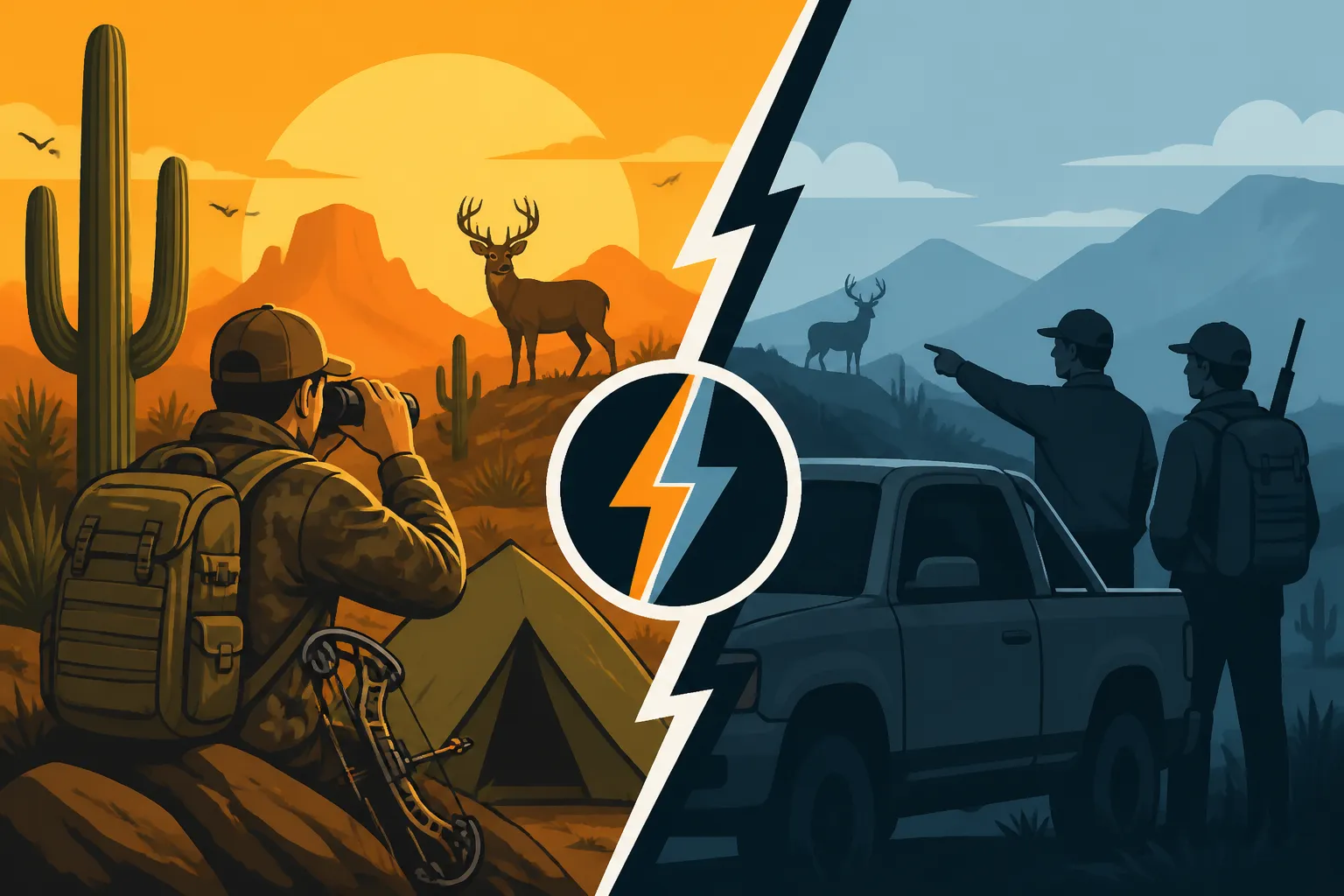
The core difference is the level of involvement from the outfitter beyond simple transportation. With a drop camp, you pay for the ride in and out, and possibly a basic structure. With semi-guided, you're paying for their expertise, local knowledge, and logistical relief. When considering What an Arizona Drop Camp Costs versus What an Arizona Semi-Guided Hunt Means, remember that the value often comes in time saved and reduced stress.
Factors to Consider Before Booking
Before you commit to either option, ask yourself a few critical questions:
- Your Experience Level: Are you truly comfortable navigating remote wilderness, handling emergencies, and processing an animal alone in potentially adverse conditions?
- Physical Condition: Will you be able to pack out a large animal, potentially over rugged terrain, without assistance? This is especially critical for species like elk in steep country.
- Group Dynamic: If hunting with partners, are you all on the same page regarding self-sufficiency? One weak link can compromise the entire trip.
- Budget: What are you willing to spend for the level of comfort and support you desire?
- Time Constraints: If you only have a few days, having an outfitter provide intel can save precious scouting time. E-Scouting an Arizona Unit Before the Season can only take you so far; local knowledge goes deeper.
- Desired Animal and Unit: Some units or species lend themselves better to one approach over another. For example, a trophy elk hunt on the Kaibab Plateau Elk Genetics might warrant more support than a general deer hunt closer to roads.
Researching Outfitters for Both Options
Finding a reputable outfitter is paramount, regardless of whether you choose a drop camp or semi-guided service. Start by looking at licensed outfitters in Arizona. Platforms like BookYourHunt can be a useful starting point, as they often categorize services and provide reviews. Don't stop there, though.
Once you have a few names, deep-dive into their offerings. Ask specific questions about their experience in the units you're interested in, what their typical success rates are (and how they define success), and what exactly is included in their package. Request references, and call them. Ask about the outfitter's communication, their camp setup, and their reliability. For semi-guided operations, inquire about the frequency of intel, how fresh their scouting information is, and their protocols for game recovery. For drop camps, confirm the specific gear they provide and their emergency communication plan. Resources like GoHunt, while primarily focused on drawing odds and unit data, can also provide context for understanding the units an outfitter claims to specialize in, helping you vet their claims.
Practical Considerations for Your Arizona Adventure
No matter your choice, preparing for an Arizona hunt means anticipating a range of conditions and challenges.
Physical Preparation and Gear for Either Hunt
Arizona's diverse terrain, from the high desert to pine-covered mountains, demands serious physical conditioning. Whether you're hauling all your gear into a drop camp or stalking a distant buck on a semi-guided hunt, your body needs to be ready. This isn't a stroll in the park; expect steep climbs, rocky footing, and temperature extremes. Building strength, endurance, and flexibility in the months leading up to your hunt is non-negotiable. Don't forget to practice shooting from realistic field positions while winded.
Your gear list will also be crucial. For a drop camp, you're responsible for everything, from a proper sleep system for cold nights to a reliable water filtration system, cooking setup, and robust first-aid kit. Even with a semi-guided hunt, you're still bringing all your personal hunting equipment: optics, rifle or bow, appropriate layered clothing, and boots suitable for Choosing Boots for Rocky Desert Ground. Consider a satellite communication device for either type of hunt; cell service is spotty at best in many of Arizona's prime hunting areas. Remember that a quality knife, game bags, and knowledge of how to properly field dress and cool meat are essential, especially on an early season hunt where Field Dressing in Desert Heat can spoil an animal quickly.
Navigating the Booking Process and Potential Pitfalls
The booking process for Arizona outfitters, particularly for popular species like elk, often starts well in advance. Many top outfitters book out years ahead. How Far Ahead to Book an Arizona Elk Hunt can give you an idea of the timeline. Be prepared to pay a deposit, which is standard practice. Always, always get a written contract that clearly outlines all inclusions, exclusions, payment schedules, and, crucially, the cancellation and refund policy. This is especially important for semi-guided hunts where there are more variables.
One common pitfall is the "no draw, no hunt" scenario. Many hunters book before they know if they've drawn a tag. Clarify with your outfitter what happens if you don't draw your desired tag. Do they offer a refund, or can you roll your deposit over to the next year or apply it to a different hunt? This information should be explicit in your contract. Another issue can be miscommunication about the level of "guiding" you'll receive. Ensure the outfitter's definition of "semi-guided" matches yours to avoid disappointment in the field. Lastly, confirm the outfitter is properly licensed and insured in Arizona, and that they hold the necessary special use permits for the public lands they operate on. A reputable outfitter will be transparent about all of this.
| Feature | Drop Camp Benefits | Drop Camp Drawbacks | Semi-Guided Benefits | Semi-Guided Drawbacks |
|---|---|---|---|---|
| Independence | Max freedom; full DIY satisfaction | No in-field assistance; full self-reliance needed | Significant independence with support structure | Less "raw" DIY feel than a drop camp |
| Cost | Generally more affordable | Requires significant personal gear investment | Good value for combined services and expertise | More expensive than drop camp; less than fully guided |
| Logistics | Outfitter handles heavy gear transport to remote areas | You manage all camp setup, food, and daily planning | Camp, food, and transport assistance provided | May have less flexibility than full DIY on daily schedule |
| Knowledge | Relies entirely on your own scouting and experience | Can be challenging for unfamiliar units | Access to outfitter's local knowledge and intel | Still requires personal hunting skill and decision-making |
| Physicality | Requires high fitness for self-extraction | No assistance if you're injured or need help with game | Assistance with game recovery can lighten physical load | Still demands good physical condition for hunting |
| Comfort | Primitive camping; no amenities | Can be physically demanding and uncomfortable | Often includes comfortable camp setup and cooked meals | May lack the solitude of a true wilderness drop camp |
| Flexibility | Complete control over daily hunt plan | No option for in-field course correction from guide | Flexibility in hunting approach with informed suggestions | Schedule might be somewhat influenced by outfitter logistics |
Disclaimer
This article is for general informational purposes only and does not constitute professional advice. Laws, prices and regulations vary by location and change over time. Consult a qualified professional for guidance on your specific situation.