Combination Arizona Deer and Javelina Hunts
Arizona offers such incredible diversity for hunters, but let's be real – planning a trip, especially if you're coming from out of state, is a huge investment of time, money, and effort. The last thing you want is to spend all that energy for just one species, only to pack up and head home feeling like you left opportunities on the table. This guide is all about tackling that very challenge, breaking down how to successfully combine deer and javelina hunts into one unforgettable Arizona adventure, making every moment in the field count.
The Appeal of a Combination Hunt in Arizona
There's something uniquely satisfying about putting together a multi-species hunt. It feels like you're truly immersing yourself in the landscape and its wildlife, rather than just ticking one box. For many hunters, especially those traveling a significant distance, a combination hunt simply makes economic and logistical sense. Arizona, with its diverse habitats and varied hunting seasons, offers a fantastic playground for such an endeavor.
Why Deer and Javelina Make a Great Pair
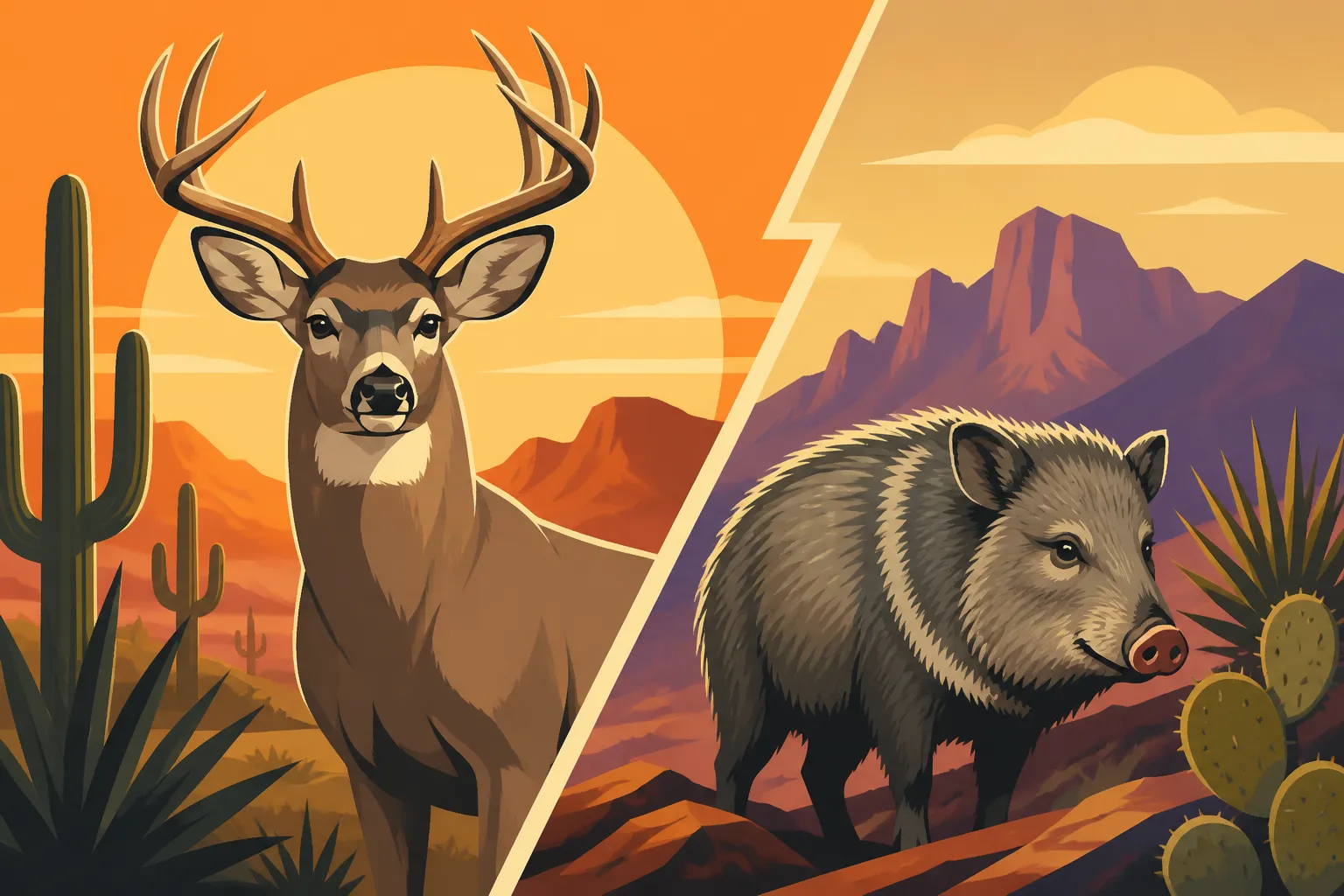
Deer and javelina might seem like an odd couple at first glance, but they actually share a lot of common ground, making them surprisingly compatible for a combined hunt. Both species inhabit many of the same desert and high desert environments, from rolling hills dotted with saguaros and prickly pear to juniper-studded canyons and chaparral flats. This overlap means you can often scout for, and encounter, both animals in the same general areas, reducing the need to constantly relocate your camp or shift your focus entirely.
Think about it: while you're glassing a distant hillside for the tell-tale flicker of a Coues deer ear, you could easily spot a herd of javelina rooting through the brush below. Their habits, while different, often bring them into proximity. Javelina are highly social, moving in herds and often found near water sources and dense cover. Deer, particularly Coues deer, also frequent these areas for browse and security. The opportunity to transition from one target species to another within the same day or even the same glassing session is a huge draw for maximizing your time in the field.
Maximizing Your Time and Investment
Let’s face it, hunting isn't a cheap hobby, and travel adds significantly to the cost. When you factor in gas, lodging, food, licenses, and tags, a single-species hunt can feel a bit restrictive if you have the chance to pursue more. A combination deer and javelina hunt is a brilliant way to stretch your dollars and vacation days. Instead of planning two separate trips, you get to experience the thrill of chasing both animals on one extended outing. This approach inherently offers more hunting opportunities, increasing your chances of success and filling your freezer or securing a hard-earned trophy.
For non-residents especially, making the most of a long journey to Arizona is paramount. You've invested in the journey, so why not invest in the experience? By targeting two species, you effectively double your chances of having a successful hunt, no matter what "success" means to you. Perhaps you draw a coveted deer tag, but the deer prove elusive. Having a javelina tag in your pocket provides a fantastic backup opportunity, keeping you engaged and excited throughout your trip.
Understanding Season Overlaps and Weapon Choices
The key to a successful combination hunt lies in carefully understanding the Arizona hunting regulations, particularly the season dates and legal weapon choices. Arizona has specific windows for its various hunts, and aligning them for deer and javelina is crucial. The most straightforward way to combine these species is often during the archery seasons.
For instance, Arizona offers a fantastic Arizona's Over-the-Counter Archery Deer Tag Explained opportunity, which often overlaps with archery javelina seasons. You can purchase an over-the-counter (OTC) archery deer tag and an OTC archery javelina tag without going through the draw process for these specific seasons. This simplifies planning immensely, as you don't need to worry about drawing a tag for either. When Arizona Archery Javelina Is Open, it frequently aligns with parts of the archery deer seasons, creating perfect synergy. However, if you're aiming for a drawn rifle deer tag, you'll need to check the specific unit regulations closely to see if a javelina season runs concurrently. Different weapons might have different season structures, so a rifle deer hunt may not overlap as cleanly with a general javelina season as archery hunts do. Always refer to the current Arizona Game and Fish Department regulations booklet for exact dates and weapon restrictions for the units you are considering.
Navigating Licenses, Tags, and Draw Cycles
The labyrinthine world of hunting licenses and tags can be a bit intimidating, especially when you're trying to combine species. Arizona has its own unique system, with some tags being available over-the-counter and others requiring participation in a draw. Understanding this system is the bedrock of planning your combination hunt.
Over-the-Counter Javelina Opportunities
One of the biggest advantages of including javelina in your Arizona hunt is their accessibility. Arizona is renowned for Javelina Is Arizona's Most Accessible Big Game, largely due to the fact that tags are often available over-the-counter (OTC) for both archery and general seasons in many units. This means you can simply purchase a javelina tag online or from a licensed dealer without going through the application draw. For a combination hunt, this is a huge relief. It allows you to lock in at least one of your tags without the uncertainty of the draw, making your planning much more concrete.
The OTC archery javelina season, in particular, offers a generous window, often spanning several months. This flexibility is key when trying to align it with a deer hunt. Having that readily available javelina tag makes it incredibly easy to add a second, exciting challenge to your trip, providing more opportunities to be out in the field and experience the unique habitat of Arizona.
Deer Tags: Draw-Only or Archery OTC
Deer hunting in Arizona is a different beast when it comes to tags. While there are some fantastic Arizona Over-the-Counter Archery Deer Pricing opportunities, particularly for Coues deer, most rifle and prime rut archery tags are issued through a lottery draw system. This means you need to apply well in advance, usually months before the season. Arizona Runs Two Draw Cycles, February and June, and deer tags typically fall into the February cycle. If your heart is set on a specific rifle deer hunt, you'll have to play the odds and hope your bonus points come through.
The good news is that if you're flexible, the OTC archery deer season provides an excellent avenue for a combination hunt. This season is often long and covers a vast amount of public land. You might not be hunting during the absolute peak of the rut with an OTC archery tag, but the opportunities are still abundant, especially if you're willing to put in the scouting and effort. It's a great way to ensure you have a deer tag in your pocket alongside your javelina tag without relying on the unpredictable draw.
The Importance of Application Strategy
If you're aiming for a premium drawn deer tag as part of your combination hunt, your application strategy becomes critical. This involves understanding the bonus point system, checking draw odds for specific units, and applying strategically. Many hunters use resources like GoHunt to research unit statistics and develop a solid application plan. This platform provides detailed draw odds, harvest success rates, and public land percentages that can inform your choices.
When applying for deer, you'll want to prioritize units that offer not just good deer numbers, but also a reasonable chance of success for javelina, or at least overlap with good javelina country. It's a delicate balance between drawing a desirable deer tag and ensuring your javelina efforts won't be in vain. Don't be afraid to apply for a "point only" if you're building points for a future dream deer hunt, and then plan to hunt javelina and OTC archery deer during that same year. This allows you to stay active in the Arizona hunting scene while patiently accumulating points for a top-tier draw.
| Species | Tag Type (Common) | Season Overlap (Archery) | Typical Habitat | Key Hunting Method |
|---|---|---|---|---|
| Deer | Draw or OTC Archery | Yes (often good) | Deserts, Sky Islands, Timber | Glassing, Spot & Stalk |
| Javelina | OTC Archery/General | Yes (often good) | Deserts, Chaparral, Canyons | Spot & Stalk, Calling |
Essential Planning and Logistics for Dual Species
Once you've got your tags sorted, the real fun (and challenge) of planning begins. A combination hunt isn't just two separate hunts stapled together; it requires integrated planning to ensure you're efficient and effective in the field. Every decision, from where you set up camp to what gear you pack, should ideally serve both species.
Unit Selection for Both Deer and Javelina
Choosing the right hunting unit is arguably the most critical decision for a successful combination hunt. You need a unit that boasts healthy populations of both deer and javelina, and ideally, offers good public access. While many Arizona units hold both, some are known for one species more than the other. For instance, many of the "Sky Island" units in southern Arizona are fantastic for Coues deer, and often hold abundant javelina populations too. Units in central Arizona with a mix of desert and chaparral can also be excellent choices.
Utilize tools like GoHunt's unit data to cross-reference deer and javelina populations, success rates, and habitat descriptions. Look for areas with diverse terrain that offers both the open country deer prefer for feeding and the dense cover javelina often inhabit. Water sources, whether natural tanks or man-made developments, are magnets for both species, making them prime scouting locations. Think about a unit with varied elevation, allowing you to move between different habitat types as you search for either animal. E-Scouting an Arizona Unit Before the Season is crucial for identifying these prime areas.
Gear Considerations for Varied Terrain and Game
Packing for two species in potentially varied terrain means being smart about your gear. While many items will serve both hunts – optics, camouflage, comfortable boots – there are nuances. For optics, you'll want high-quality binoculars (10x-15x) and a spotting scope (20x-60x) for the extensive glassing often required for Coues deer, but these are equally valuable for picking out javelina herds in distant washes. Optics Power for Arizona's Long Desert Sightlines is a crucial consideration.
Footwear is another critical choice. Arizona's terrain can be brutal on boots, from rocky slopes to thorny brush. Invest in durable, comfortable hiking boots with good ankle support. For clothing, layering is always key in Arizona's desert environment, where temperatures can swing wildly from chilly mornings to hot afternoons. You might also consider specific calls: a javelina call can be incredibly effective, while deer calls are more situational for Coues. Don't forget ample water, navigation tools (GPS, satellite communicator), and a solid first-aid kit for any backcountry adventure.
Scouting and In-Field Strategies
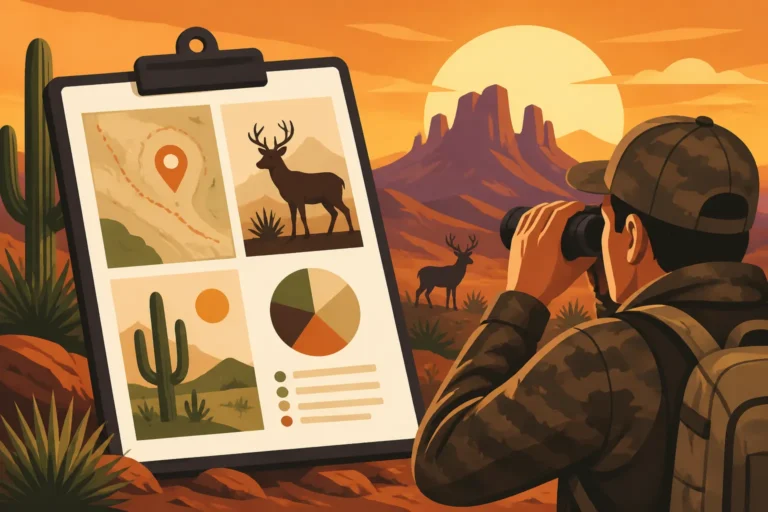
Your scouting strategy for a combination hunt should aim to identify key areas for both species. Before your boots ever hit the ground, spend significant time e-scouting with satellite imagery and topographic maps. Look for water sources, dense bedding areas, feeding grounds, and natural travel corridors. Identify potential glassing points that offer expansive views of diverse habitat. Once you're on the ground, focus your efforts on areas where deer and javelina sign overlaps. Fresh tracks, scat, and active rubs or rooting can tell you a lot about recent activity.
In the field, adaptability is your best friend. Start your mornings glassing for deer on open slopes or feeding areas. If deer aren't showing themselves, shift your focus to thicker pockets, washes, or canyons where javelina might be active. Be prepared to switch gears quickly. If you stumble upon a javelina herd while deer hunting, and you have a tag, take the opportunity! Conversely, if you're pursuing javelina with a call and spot a deer, adjust your approach. Patience is a virtue in Arizona; whether you are trying to pick out a bedded deer or locate a camouflaged javelina herd, slow and methodical movement combined with extensive glassing will often be your most effective strategy. The Grid Glassing Method, Step by Step is an excellent technique for both species. Consider focusing on Hunting a Stock Tank During Early Archery as both species frequent these vital water sources.
Considerations for Self-Guided vs. Outfitter-Assisted Hunts
Deciding whether to go it alone or hire an outfitter is a significant choice, and it's even more complex when planning a combination hunt. Both options have their merits and challenges, and the right choice depends on your experience level, budget, and desired hunting style.
The DIY Combination Hunt Challenge
Undertaking a self-guided combination deer and javelina hunt in Arizona is a rewarding but demanding endeavor. It requires meticulous planning, extensive e-scouting, physical fitness, and a deep understanding of Arizona's regulations and terrain. You'll be responsible for everything: camp setup, navigation, game recovery, and making all the hunting decisions. This can be particularly challenging if you're unfamiliar with the specific unit or hunting both species for the first time.
The biggest challenge for a DIY combination hunt often lies in the learning curve. You're essentially learning two different sets of animal behavior and two sets of optimal hunting tactics simultaneously, all while navigating unfamiliar country. It's not impossible, by any means, and many experienced hunters cherish the freedom and satisfaction of a DIY trip. However, be realistic about your time, resources, and experience. For example, How Close a Bowhunter Needs to Get on Coues is a very different game from calling in a javelina herd. Successfully managing the logistics of both requires significant preparation and flexibility.
How an Outfitter Can Streamline Your Trip
For many, especially non-residents or those with limited time, hiring an experienced Arizona outfitter for a combination hunt can be a game-changer. An outfitter brings local knowledge, pre-scouted areas, and the expertise to put you on both deer and javelina. They handle the logistical headaches, like camp setup, meals, and even game recovery, allowing you to focus purely on the hunt. For example, many reputable outfitters are intimately familiar with Where Javelina Live in the Sonoran Desert and the best units for Best Units to Draw for Coues Deer, or at least the best areas for OTC archery deer.
An outfitter can seamlessly transition from glassing for deer in the morning to calling in javelina in the afternoon. They often have established camps in productive areas and know how to read the terrain and animal behavior to maximize your chances on both species. Services like BookYourHunt can be a great resource for finding and vetting reputable Arizona outfitters who specialize in combination hunts. They provide platforms where you can explore different outfitter packages, compare services, and read reviews, helping you connect with a guide who aligns with your hunting goals. Similarly, GoHunt's "Insider" service sometimes lists recommended outfitters or provides insights that can help in your search.
Researching Outfitters and Resources
If you decide to go the guided route, thorough research is paramount. Start early, as good outfitters book up quickly, especially for prime Arizona seasons. When considering an outfitter for a combination deer and javelina hunt, ask very specific questions. Do they have experience guiding for both species? What is their success rate for combination hunts? What does What a Guided Arizona Coues Deer Hunt Costs typically involve, and how does that compare to their javelina packages? Make sure you understand exactly what's included in the price – licenses, tags, trophy fees, and meat processing are often extra.
Platforms like BookYourHunt allow you to filter by species and region, providing a curated list of outfitters. Beyond online searches, ask for references from past clients and don't hesitate to call them. Read through all contracts carefully, paying close attention to cancellation policies, especially if your hunt relies on drawing a tag. Check their permits and insurance. The goal is to ensure you're working with a professional who can deliver on the promise of an exciting and well-executed combination hunt. A detailed list of Questions Worth Asking Before You Book is invaluable. Always consult the official Reading an Arizona Hunt Regulations Booklet to ensure all operations are within legal bounds.
Disclaimer
This article is for general informational purposes only and does not constitute professional advice. Laws, prices and regulations vary by location and change over time. Consult a qualified professional for guidance on your specific situation.