Glassing Grids for Arizona Coues Deer
Trying to find a Coues deer in Arizona's vast and rugged landscape can feel like searching for a phantom in the desert. Their small size, incredible camouflage, and the sheer scale of the terrain make traditional still-hunting a heartbreaking exercise in futility for many, often leading to endless frustration and empty-handed trips. This guide is dedicated to mastering the art of glassing grids, a systematic approach that transforms how you locate these elusive "gray ghosts" and dramatically improves your chances of success in Arizona's challenging hunting environment.
Why Glassing Is Key for Coues Deer Success
Hunting Coues deer in Arizona is a unique endeavor that demands a specific skillset, and at the very top of that list is proficient glassing. Unlike hunting mule deer or elk in timbered country where still-hunting or tracking might be viable, the open, often sparse landscapes preferred by Coues deer make direct encounters rare. Trying to walk up on these deer without first spotting them from a distance is a recipe for busted stalks and tired legs, a frustration many hunters know all too well.
The Elusive "Gray Ghost"
Coues deer, often affectionately called "gray ghosts," earned their nickname for a reason. They are the smallest subspecies of whitetail deer in North America, with an average mature buck weighing around 100-120 pounds. Their coats are a perfect blend of gray and brown, allowing them to vanish seamlessly into the desert scrub, oak brush, and rocky hillsides they call home. When they stand still, they become virtually invisible, even at relatively close distances. This natural camouflage, combined with their sharp senses and often nocturnal or crepuscular habits, means that actually seeing a Coues deer before it sees you is half the battle. They aren't going to let you stumble upon them; you have to find them first.
They thrive in steep, broken country, often perched high on a ridge or tucked into a shaded canyon wall where they have an elevated view of their surroundings. This behavior reinforces the need for a distant spotting strategy. Furthermore, their small antlers can be incredibly difficult to distinguish from the surrounding brush, adding another layer of challenge to judging and identifying legal bucks. A hunter needs to be able to pick apart every detail from afar, which is where specialized optics and a systematic approach truly shine.
Vast Arizona Terrain Demands Patience
Arizona's Coues deer country is characterized by its immense scale. We're talking about sprawling desert mountains, rolling foothills, and rocky "sky islands" that rise abruptly from the flatlands. Covering this kind of ground on foot is simply not practical or efficient. You could walk for miles, disturbing every animal in your path, only to find yourself no closer to a deer than when you started. The sheer vastness of it all can be overwhelming, making many hunters feel like they're just wandering aimlessly.
This expansive landscape makes glassing not just an advantage, but an absolute necessity. Instead of physically traversing every potential bedding area or feeding ground, a hunter can use optics to methodically scan acres of terrain from a single vantage point. This allows for an incredible amount of country to be observed with minimal disturbance, conserving energy for the actual stalk once a deer is located. It's a strategy that requires patience and discipline, but one that consistently pays off for those willing to put in the time behind the glass. This is truly Why Arizona Coues Hunting Is a Glassing Game.
Understanding the Glassing Grid Method
The glassing grid method is a highly disciplined and effective technique for systematically searching large expanses of terrain for hidden game. It's designed to eliminate the guesswork and ensure that every square foot of a chosen area is thoroughly examined, preventing those frustrating moments where you realize you've scanned the same spot three times while completely missing another. It turns the daunting task of "looking for a deer" into a manageable, step-by-step process.
Defining Your Grid Effectively
The first step in implementing the glassing grid method is to define the area you intend to glass. This isn't about randomly pointing your binoculars at the horizon. Instead, you're mentally, or even physically, drawing a box around a section of hillside, a canyon, or a mountain face. This "grid" needs to be small enough to be thoroughly dissected, yet large enough to be an efficient use of your time. If your grid is too large, you'll feel overwhelmed and likely miss details. Too small, and you'll be constantly repositioning, wasting valuable time.
Consider natural breaks in the landscape: a prominent ridgeline, a distinct rock outcropping, or the edge of a particular type of vegetation. These landmarks become your grid boundaries. When you start, you're not just looking for a deer, you're looking for any deviation from the natural pattern of the landscape within that defined area. This might sound simple, but it requires practice and a keen eye to spot the horizontal line of a deer's back against the vertical lines of brush, or the slight flick of an ear in a sea of shadows. Utilizing E-Scouting an Arizona Unit Before the Season with a tool like GoHunt can significantly help in pre-defining these logical grid sections from the comfort of your home, allowing you to hit the field with a plan.
Systematic Coverage Ensures Nothing Is Missed
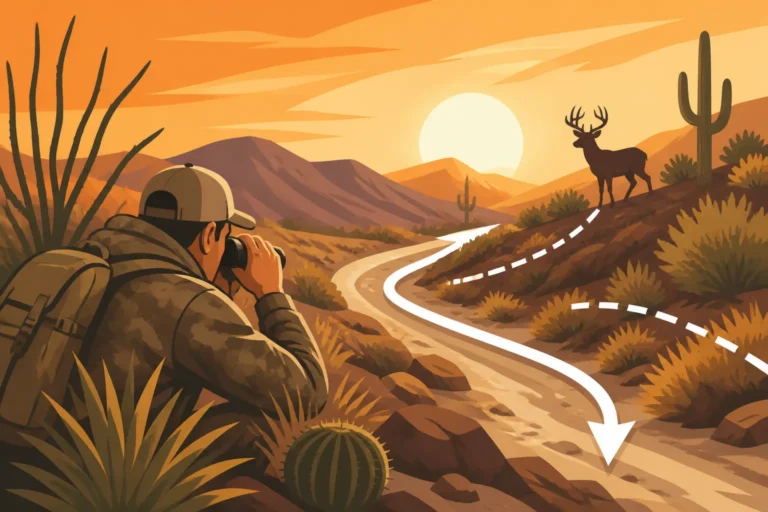
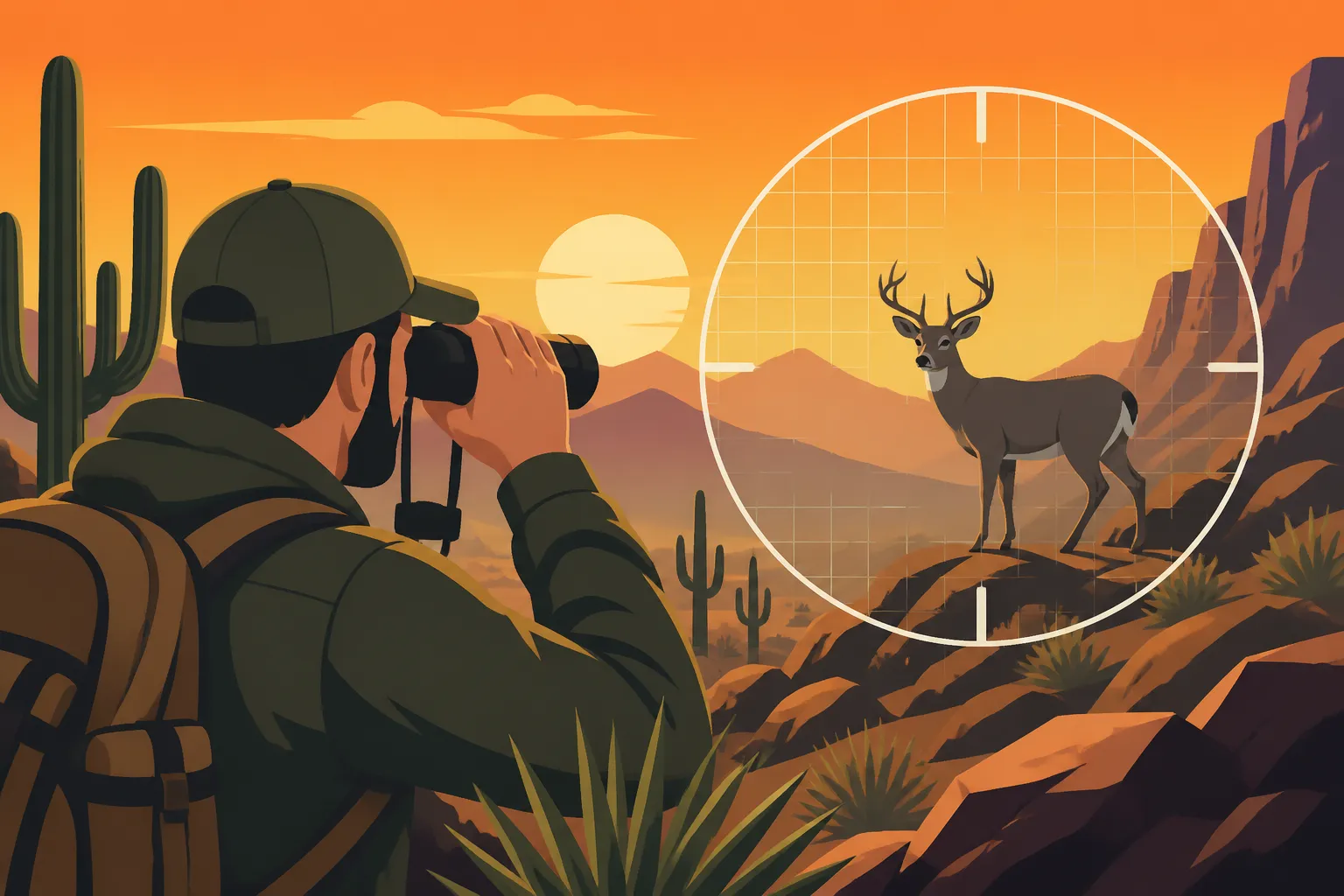
Once your grid is defined, the essence of the method is systematic coverage. You start at one edge of your defined area—let's say the top left corner—and slowly, meticulously, scan horizontally across to the right. Once you reach the right edge, you drop your optics down slightly, overlapping your previous scan line, and then move horizontally back to the left. This "reading a book" or "typewriter" pattern ensures that your eyes traverse every single part of the grid, leaving no stone unturned, metaphorically speaking.
The key to systematic coverage is slowness. Many hunters rush, quickly panning their optics across a hillside, hoping for a flash of movement. But with Coues deer, movement is rare unless they're already spooked. You're looking for stillness, for details that don't belong. This slow, deliberate movement allows your eyes and brain time to process the intricate details of the terrain, to pick out a shadowed form, an antler tine, or a subtle change in texture that indicates the presence of an animal. It's about training your eyes to detect anomaly, not just obvious targets, a skill that significantly increases your efficiency and success rate in the field.
Essential Optics for Arizona Coues Glassing
You simply cannot effectively hunt Coues deer without quality optics. They are not merely an accessory; they are your primary hunting tool. Skimping on glass is one of the biggest mistakes a Coues hunter can make, directly impacting their ability to spot game at the distances required by the terrain. You need clarity, magnification, and stability to truly pick apart the vast Arizona landscape.
Binoculars: Your Primary Scanning Tool
For Coues hunting, a good pair of binoculars is arguably the most crucial piece of gear you own. They're your workhorse for initial scanning and prolonged glassing sessions. While many hunters might lean towards higher magnification, a balance is often best for all-day comfort and stability. Generally, 10x or 12x magnification is considered ideal, such as 10×42 or 12×50 models. The 42mm or 50mm objective lens gathers enough light for bright images, even in low-light conditions at dawn and dusk when Coues deer are most active.
Investing in high-quality binoculars from reputable brands makes a profound difference. The clarity, edge-to-edge sharpness, and light transmission of premium optics reduce eye strain, which is vital when you're spending literally hours behind the glass. Remember, you'll be holding these up for extended periods, so a comfortable ergonomic design and a manageable weight are also important factors. A poor quality binocular will cause eye fatigue, headaches, and ultimately, missed deer because you simply can't look long enough or see clearly enough. To ensure you can stay behind your glass all day, consider a pair with a Binocular Size That Survives an All-Day Session.
Spotting Scopes: For Confirmation and Detail
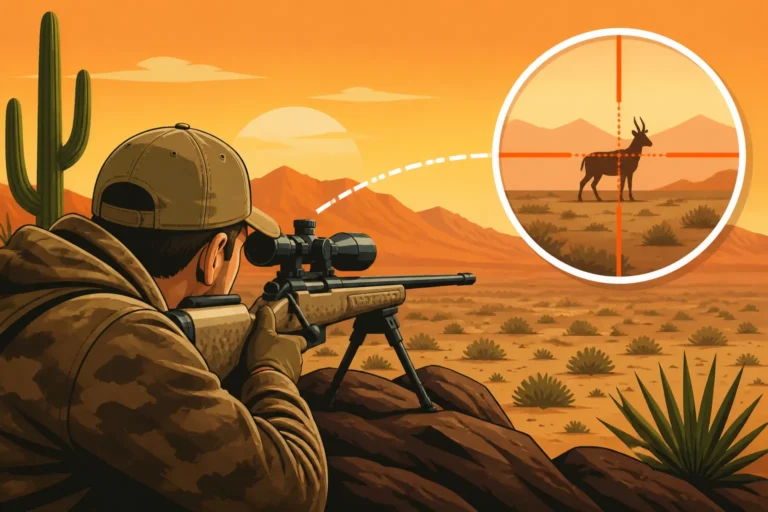
While binoculars are excellent for initial broad scans, a high-power spotting scope is indispensable for confirming what you've found and for picking out fine details, especially when judging antler size at extreme distances. Coues deer are small, and their antlers can blend into the brush, making identification challenging. A spotting scope, typically with magnification ranging from 20x up to 60x or even 80x, allows you to zoom in on a suspected deer and clearly assess its sex, age, and antler characteristics.
Having a spotting scope with a wide magnification range is beneficial for versatility. You can use lower powers to search smaller sections of your grid more thoroughly than binoculars, and then crank up the magnification to scrutinize potential bucks. Angled eyepieces are often preferred by Coues hunters as they allow for more comfortable viewing when set up on a tripod, especially when glassing uphill. It’s the tool that truly answers the question, "Is that a deer, and is it a shooter?" without requiring you to get any closer and risk spooking the animal. This is critical for Judging an Arizona Coues Buck at Distance effectively.
Tripods and Adapters: The Unsung Heroes of Stability
This cannot be stressed enough: a high-quality, stable tripod is just as important as your optics themselves. Trying to hand-hold binoculars or a spotting scope for hours, especially at higher magnifications, will result in shaky images, rapid eye fatigue, and ultimately, missed deer. The slight tremors in your hands, invisible to you, become exaggerated through your optics, blurring details and making it impossible to truly pick apart the distant landscape.
A sturdy tripod, paired with a reliable panning head and a binocular adapter, eliminates these micro-movements, allowing you to hold your optics perfectly still for indefinite periods. This stability is what allows you to distinguish a branch from a deer's leg, or a rock from a patch of hide. Carbon fiber tripods are popular for their lighter weight, a significant advantage when packing into remote Arizona locations. Look for a tripod that can extend to a comfortable standing height and collapse compactly for transport. A solid Tripod Setup for Glassing From a Ridge allows for steady, extended observation, making the grid method truly effective.
Setting Up Your Glassing Position
Finding the right glassing position is paramount to the success of the grid method. It’s not just about finding a place to sit; it's about optimizing your view, your comfort, and your ability to remain undetected for hours on end. A poorly chosen spot can negate the advantage of even the best optics and the most disciplined glassing technique, leading to frustration and wasted effort.
Finding the High Ground for Unobstructed Views
When hunting Coues deer, elevation is your friend. You want to gain a vantage point that offers a sweeping, unobstructed view of the surrounding terrain, particularly the hillsides, draws, and saddles where deer are likely to travel, feed, or bed. Look for prominent ridges, isolated peaks, or high points along canyon rims that allow you to see into multiple drainage systems or cover extensive swaths of country. The goal is to maximize your field of view from a single location, reducing the need to constantly move and set up new spots.
As you approach your chosen glassing perch, always consider your entrance and exit. Move slowly and deliberately, using terrain features to mask your approach. The last thing you want is to bump deer on your way to your glassing spot, ruining your chances before you've even begun. Remember, the best time to be in position is well before first light, allowing you to catch deer moving from feeding areas to bedding grounds, or vice-versa in the evening. This means identifying these key vantage points through e-scouting before your hunt begins. When you're up high, consider the Optics Power for Arizona's Long Desert Sightlines needed to effectively resolve details across vast distances.
Stability and Comfort for Long Sessions
Once you've identified a promising vantage point, the next critical step is to ensure your setup is both stable and comfortable. You will be spending hours, sometimes entire days, in this spot, so discomfort will lead to impatience and mistakes. Find a relatively flat, level spot to set up your tripod. Secure its legs firmly, ensuring there's no wobble or play that could compromise your view. Use a small pad or lightweight chair to sit on, keeping you off the cold or hot ground and reducing fatigue.
Position your spotting scope and binoculars so that you can easily transition between them without significantly altering your posture. Your head should be in a natural position, not craned or awkwardly twisted, and your elbows should be supported if possible to further reduce strain. Good back support, even from a rock or small pack, can make a huge difference over a long glassing session. The more comfortable you are, the longer you can remain focused and effective behind your optics, directly impacting your chances of spotting a deer.
Managing Light and Wind Conditions
Light and wind are two environmental factors that dramatically influence glassing effectiveness. When setting up your position, always try to place the sun at your back, or at least to one side, especially during the crucial morning and evening hours. Glassing directly into the sun creates glare and shadows that can make it nearly impossible to distinguish details. Early morning sun hitting an opposite hillside can be ideal for spotting deer as their coats might glow slightly, revealing their presence. However, as the sun gets higher, deep shadows in canyons can hide game, requiring even more meticulous glassing.
Wind direction is equally important, particularly if you anticipate needing to stalk a deer once it's spotted. Even from a glassing perch, you want to remain undetected. Position yourself so your scent isn't being carried downwind into potential deer bedding areas. Reading Wind on a Sky Island Stalk is critical not just for the stalk itself, but for initial positioning. Strong winds can also make glassing difficult by causing your tripod to vibrate or making your eyes water. Try to find a spot that offers some protection from direct wind exposure if conditions are breezy. These considerations ensure that your long hours of glassing don't go to waste due to environmental factors working against you.
Executing the Grid Search, Step-by-Step
Now that your optics are set up and you're comfortably in position, it's time to put the glassing grid method into action. This isn't a quick sweep; it's a deliberate, almost meditative process of breaking down a complex landscape into manageable, searchable segments. The patience required here is immense, but the rewards are significant.
Sectioning the Landscape into Manageable Pieces
Begin by visually dividing the hillside or area you're observing into smaller, more digestible sections. Think of it like a chess board or a patchwork quilt. Don't try to take in the entire mountain at once. Pick a distinct landmark – maybe a lone juniper tree, a patch of bare rock, or a particular wash – to define the edges of your first "grid square." This mental partitioning prevents your eyes from darting randomly and ensures you tackle the immense landscape systematically.
Start with the closest sections of your chosen area, then gradually work your way out to the more distant portions. Close-in ground might seem obvious to scan quickly, but it’s often where smaller deer or those tucked tightly into cover are missed. Once you’ve mentally defined your first section, commit to that section alone. Resist the urge to jump to an interesting-looking distant ridge or a shadowed canyon until you’ve thoroughly completed your current grid. This focus is what truly separates effective glassing from casual observation.
The Overlap Principle: Leaving No Ground Unexamined
With your section defined, select a starting point – typically the top-left corner of your mental box. Begin to slowly, excruciatingly slowly, traverse your optics horizontally across that section, moving from left to right. Your movement should be so slow that it almost feels uncomfortable. Imagine you're dragging a magnifying glass across a detailed map. As you move, consciously look for anything that breaks the natural pattern of the landscape.
When you reach the right edge of your current horizontal line, drop your optics down ever so slightly. This downward movement should create a small overlap with the previous line you just scanned. This overlap is crucial; it’s your insurance policy against missing something that might have been right on the edge of your previous field of view. Then, move your optics horizontally back from right to left across your new line, again at that painstaking pace. Continue this "typewriter" pattern, slowly working your way down the entire section until you've scanned every square inch, overlapping each pass. This methodical diligence is key to uncovering the "gray ghosts" hidden in plain sight.
Interpreting Movement and Subtle Details
Once you're systematically scanning, the real challenge becomes interpreting what you see. Coues deer are masters of stillness, so you're rarely looking for a full animal bounding through the open. More often, you're searching for parts of a deer or subtle anomalies. Look for a horizontal line that doesn't quite fit the vertical scrub, the distinct curve of an antler, the glint of an eye, or the dark shadow of a deer's body tucked beneath an overhang. Pay close attention to anything that just looks "out of place" – a patch of hide color that's a shade different, or a solid mass in a sparse area.
Even the slightest movement, a flick of an ear, a tail twitch, or a subtle shift in weight, can give away a deer’s presence. When you spot something, don't immediately assume it's a deer. Instead, stop your scan and focus your full attention on that spot. Use your spotting scope to magnify and confirm. Observe it for several minutes. Is it truly a deer, or just a oddly shaped rock or shadow? The desert is full of optical illusions. Why Coues Deer Reward Patience Over Movement cannot be overstated here; often, the deer you find are those that have been motionless for a long time, only revealed by your persistent and detailed observation.
Advanced Glassing Techniques and Tips
Once you've mastered the basic grid method, there are several advanced techniques and considerations that can further refine your glassing strategy and increase your odds of success on Coues deer. These involve understanding deer behavior, training your eye, and leveraging modern technology.
Thermals and Timing for Optimal Deer Movement
Coues deer, like many desert animals, are heavily influenced by thermals—the rising and falling air currents in the mountains. In the morning, as the sun warms the earth, thermals rise, carrying scent uphill. In the evening, as the air cools, thermals reverse and fall, carrying scent downhill. Understanding this pattern is crucial for both glassing and stalking. When deer are moving in the morning, they often work their way up to bedding areas on higher ground, taking advantage of rising thermals to detect predators below them. In the evening, they reverse, moving downhill to feed.
Timing your glassing sessions to coincide with these movements is vital. The first hour after legal light and the last hour before dark are often the most productive. This is when deer are most likely to be moving, making them slightly easier to spot. During the midday hours, deer are typically bedded in shaded areas, often on north-facing slopes or under dense cover, requiring even more meticulous glassing to pick them out. Consider Playing Thermals on a Canyon Stalk even from your glassing position to predict where deer might be moving.
Spotting "Parts of a Deer"
Many hunters look for a whole deer, standing broadside in the open. While this occasionally happens, it's far more common to spot only a small piece of a Coues deer. Training your eye to recognize these subtle clues is a skill that develops with experience and focused practice. Think about the common shapes and textures of a deer that are distinct from the natural environment.
Look for the horizontal line of a deer's back or belly against the predominantly vertical lines of bushes and trees. Search for the distinctive roundness of a deer's rump or shoulder, contrasting with the angular shapes of rocks. Pay attention to the subtle curves of antlers, which will look out of place among straight branches. The dark shadow underneath a deer's body in bright sunlight can also be a telltale sign. Sometimes, it's just a flicker of white on the throat patch or the inside of an ear. The more you consciously look for these distinct "parts," the better you'll become at discerning a deer from its intricate background.
Utilizing Technology: GoHunt and E-Scouting
Modern technology has revolutionized the way we scout and plan hunts, and it's an incredibly powerful complement to the traditional glassing grid method. Online mapping platforms like GoHunt provide satellite imagery, topographic maps, and land ownership layers that are invaluable for pre-scouting Coues deer units. You can spend hours at home identifying potential glassing vantage points, marking bedding areas, travel corridors, and even water sources, all before you ever set foot in the field.
Use these tools to identify ridges with expansive views, find access points, and understand the general layout of the terrain. GoHunt’s filtering capabilities allow you to overlay historical harvest data, unit boundaries, and even public land access, helping you make informed decisions about where to focus your efforts. Many hunters find that marking their intended grid sections and scanning routes on a digital map beforehand makes their in-field glassing far more efficient. This integration of digital planning with on-the-ground execution is key to maximizing your time and increasing your chances of success on elusive Coues deer. It’s a powerful aid for E-Scouting an Arizona Unit Before the Season.
Common Mistakes and How to Avoid Them
Even with the best optics and intentions, hunters can make mistakes that undermine their glassing efforts. Recognizing these common pitfalls and actively working to avoid them will make your time behind the glass far more productive and less frustrating.
Rushing the Process
The most common and detrimental mistake in Coues deer hunting is rushing. Whether it’s rushing the setup, rushing the scan, or rushing to declare a hillside "empty," impatience is the enemy of the Coues hunter. These deer are small, camouflaged, and often bedded in dense cover. A quick sweep with your binoculars might show you nothing, but a slow, methodical grid search could reveal a deer that was there all along, simply blending in.
To avoid rushing, consciously slow down every aspect of your glassing. Take deep breaths, establish a comfortable sitting position, and commit to spending at least 30 minutes, if not an hour or more, thoroughly dissecting a single section of hillside before moving on. Remind yourself that the goal is not to "see" a deer quickly, but to find a deer methodically. Embrace the slowness; it's a critical component of success when hunting the gray ghost. Remember, Why Coues Deer Reward Patience Over Movement is a fundamental principle in this game.
Ignoring Unlikely Spots
It's natural to gravitate towards the "ideal" looking habitat – the lush north-facing slope, the shaded draw, or the obvious saddle. However, experienced Coues hunters know that deer often bed in seemingly unlikely spots. They might be tucked into a small patch of scrub on a steep, sun-baked south-facing slope, or hidden behind a single rock in an otherwise open area, simply to catch a thermal or find a patch of shade.
Don't let your preconceived notions about "deer habitat" limit your glassing. Force yourself to methodically scan every part of your grid, even those areas that look barren or uninviting. Sometimes, a deer will choose a spot purely for security, offering it a clear view of approaching danger. Those "unlikely" spots, often overlooked by less patient hunters, can hold a hidden gem. Challenge your assumptions and scan without bias.
Overlooking Subtle Details
In the vastness of Arizona's Coues country, it's easy for the eye to glaze over small, subtle details. Many hunters become fixated on large, prominent features and miss the nuanced changes that indicate a deer's presence. This often happens when you're looking for a deer, rather than looking for anything out of place.
Train your eyes to pick up on slight color variations, differences in texture, or breaks in natural patterns. A small patch of dark brown in a sea of gray-green brush, a subtle horizontal line among mostly vertical vegetation, or an unusual shadow can all be indicators. These are the "parts of a deer" we discussed earlier. Constantly ask yourself: Does that shape look natural? Is that color consistent with the surroundings? Could that be an ear twitch or a tail flick? Develop a discerning eye, and you'll begin to unlock the secrets the landscape holds.
Integrating Glassing into Your Coues Deer Strategy
Mastering the glassing grid method is a powerful tool, but it's only one piece of the larger Coues deer hunting puzzle. To truly maximize your success, you need to integrate this skill into a comprehensive hunting strategy that combines observation, patience, and effective decision-making.
When to Move Versus When to Stay Put
One of the most critical decisions a Coues hunter makes is when to abandon a glassing position and initiate a stalk, or when to simply remain put and continue glassing. It's tempting to want to move as soon as you spot a deer, especially if it's a good one. However, an immediate, uncalculated move can quickly blow your opportunity. Before you even think about moving, observe the deer thoroughly. Is it bedded? Feeding? Moving? Which direction is it heading? What is the wind doing? Are there any other deer nearby you haven't seen yet?
If the deer is bedded and the wind is right, it might be an ideal time to plan your approach. If it's feeding and moving, you might need to anticipate its path and cut it off, or wait for it to bed down. If the deer is highly agitated or moving through open country, often the best decision is to keep glassing and hope it settles down, or to find another animal. Sometimes, a successful hunt means committing to your glassing spot for an entire day, especially in areas with known deer activity. Knowing How Far to Stalk a Bedded Coues Buck requires this detailed observation first.
Team Glassing: The Power of Multiple Eyes
Hunting with a partner or a small group can significantly enhance your glassing effectiveness. Two, three, or even four sets of eyes systematically dissecting the terrain from different vantage points (or even the same one, working different grids) can dramatically increase the chances of spotting a deer. Each hunter can be assigned a specific grid section, or one hunter can scan broadly while another focuses on detail with a spotting scope.
When hunting with a partner, communication is key. Establish clear language for describing locations – use landmarks, clock directions, and distances. If one person spots a deer, they can guide the other’s optics to the exact spot, saving valuable time and preventing frustration. Two hunters working together can also facilitate a more effective stalk, with one remaining on the glass to guide the other towards the deer, constantly adjusting based on the animal's movements. This collaborative approach turns an inherently solitary activity into a highly efficient team effort.
Year-Round Application for Scouting
The glassing grid method isn't just for hunting season; it's an incredibly powerful tool for year-round scouting. Applying the same systematic approach during the off-season allows you to familiarize yourself with new units, learn deer movement patterns, identify bedding and feeding areas, and locate potential glassing vantage points without the pressure of a tag in your pocket.
Scouting in the spring and summer also allows you to observe deer when they are less pressured and potentially in different areas than during hunting season. You can learn where bucks hang out before the rut, identify key water sources, and observe how deer react to different thermal patterns. This accumulated knowledge is invaluable when it comes time to hunt. By dedicating time to consistent, methodical glassing outside of the season, you build a mental map of your hunting area and develop the skills necessary for success, turning your pre-season efforts into tangible results come opening day.
| Optic Type | Magnification | Objective Lens | Primary Use | Best For | Pros | Cons |
|---|---|---|---|---|---|---|
| Binoculars | 10x | 42mm | General scanning, wide field of view | All-day glassing, initial searches | Excellent light gathering, wider field of view, good stability for extended periods | Less detail at extreme range, harder to judge small antlers |
| Binoculars | 12x | 50mm | Extended scanning, slightly more detail | Longer range glassing, moderate detail | Better detail than 10x, still good light gathering, good for vast landscapes | Heavier, slightly less stable hand-held, narrower field of view |
| Spotting Scope | 20-60x | 60-80mm | Detail confirmation, antler judging, long range | Identifying and judging specific animals | High magnification for precise detail, critical for antler scoring, great for confirming faint sightings | Narrow field of view, requires a tripod, heavier, expensive |
| Spotting Scope | 25-75x | 85mm | Extreme long-range detail, low light | When maximum detail and reach are needed | Superior light gathering, incredible detail at extreme distances, excellent for low light conditions | Very heavy, very expensive, large and bulky |
Disclaimer
The information provided in this guide is for informational purposes only and is not intended as legal advice. Hunting regulations in Arizona can change, and it is the responsibility of every hunter to consult the most current Arizona Game and Fish Department regulations and rules before engaging in any hunting activities. Always prioritize safety, ethical hunting practices, and respect for wildlife and the environment.