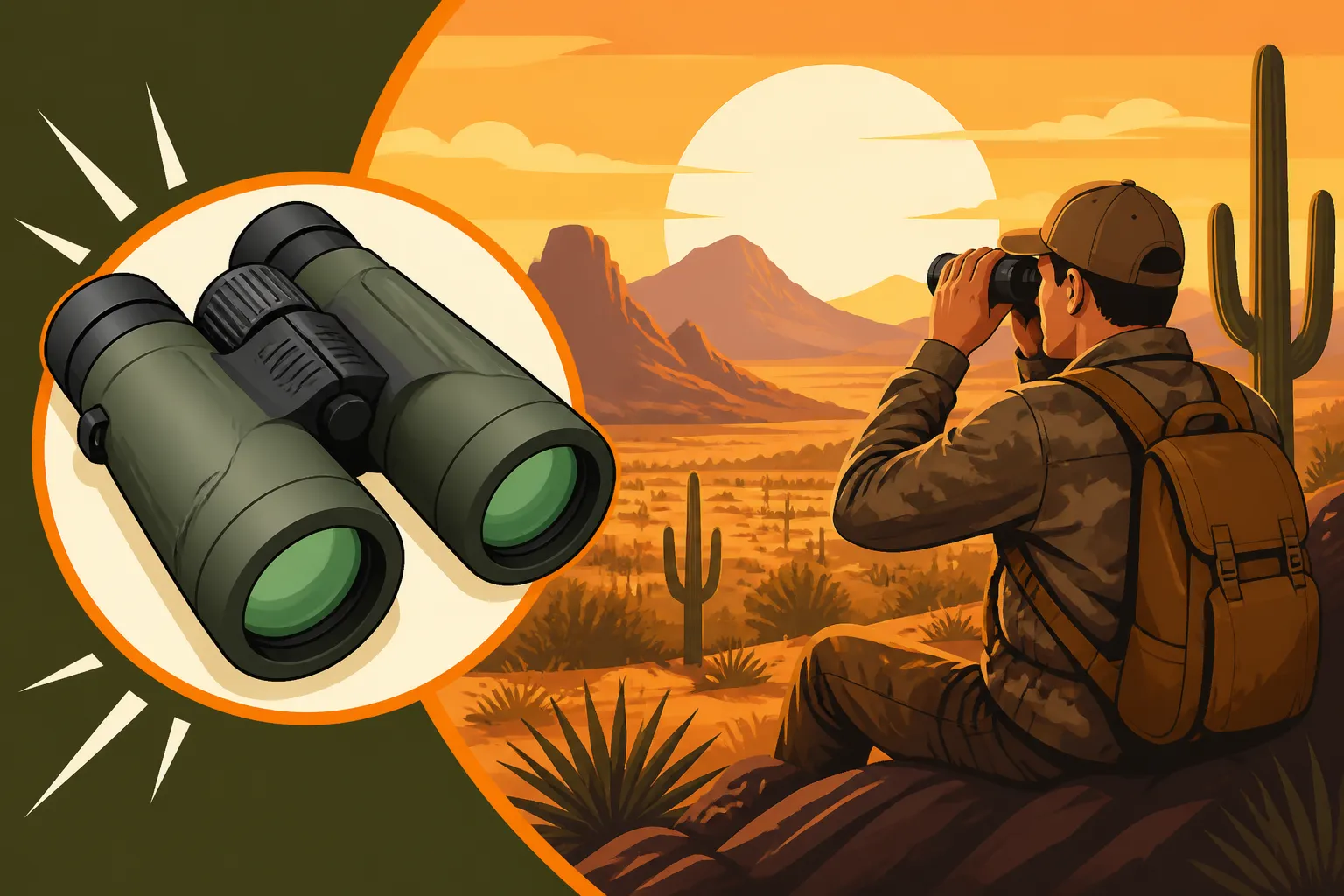
Binocular Size That Survives an All-Day Session
Navigating Arizona's vast and often unforgiving landscapes for big game isn't just a physical challenge; it's an equipment challenge too. One of the biggest headaches hunters face is finding binoculars that offer enough power to pick apart distant hillsides, yet remain light enough to carry comfortably from dawn till dusk, day after brutal day. This guide is all about helping you cut through the confusion and choose the perfect binocular size that won't leave your neck aching or your hands trembling after an all-day glassing session.
The Core Challenge of All-Day Glassing in Arizona
Arizona hunting is often a glassing game. Whether you're chasing elusive Coues deer in the Sky Islands, trying to locate a bull elk on the Mogollon Rim, or scanning for mule deer on the expansive northern plateaus, your binoculars are your primary tool. But here's the kicker: the "perfect" binocular on paper can quickly become a lead weight around your neck after a few hours under the Arizona sun.
Why Weight and Bulk Matter More Than You Think
Imagine cresting a steep ridge in the Chiricahua Mountains, your heart already pounding from the climb, only to have to immediately shoulder a heavy pair of 15×56 binoculars. That initial enthusiasm wanes fast. In Arizona, where temperatures can swing wildly and the terrain is rarely flat, every ounce counts. A binocular that feels fine for a quick half-hour scan from the truck can become a literal pain in the neck—or shoulders, or back—after hours of hiking, climbing, and repeated glassing.
This isn't just about comfort; it's about performance. When you're fatigued, your concentration wavers. You might rush through your glassing grids, missing that flick of an ear or the faint outline of an antler. A heavy binocular also makes it harder to hold steady, introducing wobble that negates the benefit of higher magnification. This becomes especially critical when you're trying to spot a bedded Coues deer whose camouflage is practically perfect. The physical toll of oversized optics can genuinely impact your ability to spot game and maintain the mental sharpness needed for success.
The Trade-Off Between Magnification and Portability
It’s a tale as old as time for hunters: you want the most powerful optics you can get to see as far as possible. Who wouldn't want to spot that trophy buck a mile away? However, that desire for increased magnification almost always comes with a significant trade-off in size and weight. A 15x binocular will, almost without exception, be heavier and bulkier than a 10x. This isn't just due to larger objective lenses; the prisms and optical elements needed to achieve higher magnification in a functional binocular demand more material and a larger housing.
For an all-day session, particularly if you’re covering a lot of ground on foot, this trade-off becomes critical. Do you sacrifice a bit of reach for nimble portability, or do you accept the extra weight for a clearer, closer look at distant objects? For many Arizona hunters, especially those focused on active hunting styles like spot-and-stalk for How to Hunt Arizona's Five-Month OTC Archery Deer Season, carrying a massive binocular can be more hindrance than help. You might spot more from a stationary position with powerful optics, but if those optics prevent you from moving quietly and efficiently to get into a better position, then they're not serving their ultimate purpose.
Understanding Binocular Specifications for All-Day Comfort
When you look at a binocular, you'll almost always see two numbers, like "10×42" or "12×50." These aren't just arbitrary figures; they tell you a lot about the binocular's performance and, crucially, its physical attributes. Understanding what these numbers mean is the first step in making an informed decision for your Arizona hunts.
Interpreting the Numbers: Magnification and Objective Lens
Let's break down those numbers. The first number, "10x" or "12x," represents the magnification. A 10x binocular makes an object appear 10 times closer than it is to the naked eye. So, if a deer is 1,000 yards away, it will look as if it's 100 yards away through a 10x binocular. Higher magnification means you can see finer details at longer distances, which is invaluable when Judging an Arizona Coues Buck at Distance. However, higher magnification also amplifies any hand shake, making a steady image harder to achieve without a tripod. It also tends to narrow your field of view, making it harder to scan broad areas.
The second number, "42" or "50," refers to the diameter of the objective lens in millimeters. This is the large lens at the front of the binocular, the one that faces the object you're viewing. A larger objective lens gathers more light, resulting in a brighter, clearer image, especially in low-light conditions like dawn or dusk when game is most active. For instance, a 50mm objective lens will gather more light than a 42mm lens. However, a larger objective lens also means a physically larger and heavier binocular. So, a 10×42 balances good magnification with decent light gathering in a relatively compact package, while a 12×50 offers more magnification and light gathering but at an increase in bulk and weight.
Ergonomics and Build Quality for Field Durability
Beyond the optical specifications, how a binocular feels in your hands and how it's built for the rigors of the field are paramount for all-day comfort and longevity. Ergonomics include factors like the binocular's balance, the texture of its armor, and how well it fits your hands. Many modern binoculars feature an "open-bridge" design, where the barrels are connected by two separate hinges rather than one solid piece. This design often allows for a more secure and comfortable grip, making it easier to hold the binoculars steady during prolonged glassing sessions.
Build quality is crucial for Arizona's harsh environments. You'll encounter dust, heat, occasional rain, and plenty of sharp rocks. Look for binoculars that are fully waterproof and fogproof, typically achieved by O-ring seals and nitrogen or argon purging. This protects the internal optics from moisture and temperature changes that can cause internal fogging. The outer armor, usually rubberized, should provide a good grip even with sweaty hands and offer a degree of shock absorption against minor bumps and drops. Some top brands, known for their ruggedness, are often favored by hunters who consult resources like GoHunt for gear reviews and field reports. Investing in a durable pair means it will survive years of demanding hunts, ensuring your focus remains on the game, not on protecting delicate equipment.
Recommended Binocular Sizes for Arizona's Diverse Terrain
Choosing the right binocular size is less about finding a universal "best" and more about matching the tool to the task and the hunter's preferences. Arizona's hunting opportunities are incredibly diverse, from the high-elevation ponderosa pines to the scorching Sonoran Desert, and what works perfectly for one hunt might be less ideal for another.
The Versatility of 10×42 for All-Around Hunting
If there's a "sweet spot" for an all-around hunting binocular in Arizona, many would argue it's the 10×42. This configuration hits a fantastic balance of magnification, light-gathering capability, and manageable size/weight. With 10x magnification, you have enough power to effectively scan distant terrain, identify game, and judge antlers with reasonable confidence for species like elk or Mule Deer Across Arizona's Northern Plateaus. The 42mm objective lens gathers sufficient light to provide a bright image in most hunting conditions, even at dawn and dusk, without making the binocular overly bulky or heavy.
For hunters who cover varied terrain—perhaps glassing open canyons for Coues in the morning and then still-hunting a transition zone for elk in the afternoon—the 10×42 offers the versatility needed. It’s light enough to carry comfortably on a chest harness all day, allowing quick access when you spot something moving. It also provides a wide enough field of view to make scanning large areas efficient, which is key when you're trying to locate game in vast landscapes. For many hunters, this size is the workhorse of their optics kit, capable of performing admirably in almost any Arizona scenario without causing undue fatigue.
When to Consider 12×50 for Long-Range Glassing
For those who prioritize extended long-range glassing, particularly in open country, stepping up to a 12×50 binocular can offer a distinct advantage. The increased 12x magnification allows you to resolve finer details at greater distances, which is incredibly useful for dissecting distant hillsides for a bedded buck or scrutinizing a distant elk herd. The 50mm objective lens enhances light gathering even further, ensuring a bright image despite the higher magnification. This can be a game-changer when you're meticulously Glassing Arizona's Sky Islands for Coues Deer or trying to pick out a trophy mule deer across a vast plain on the Arizona Strip.
However, this increased performance comes with the aforementioned trade-off: 12×50 binoculars are noticeably larger and heavier than their 10×42 counterparts. While they offer superior resolution at range, they are also more prone to hand shake, making a tripod or other steadying device almost essential for prolonged use. If your hunting style involves spending hours at a time stationary, patiently scanning vast expanses, and you're willing to manage the extra weight, a 12×50 could be your ideal choice. Just remember that carrying them up and down Arizona’s rugged mountains will be a more demanding physical endeavor. Many experienced hunters often use a high-powered spotter alongside their 10x or 12x binoculars for serious long-range work, integrating tools like those found on GoHunt's gear lists.
Compact Options: When 8×32 or 8×42 Might Be Enough
While higher magnification often gets the glory, there are legitimate scenarios in Arizona where a more compact, lighter binocular like an 8×32 or 8×42 truly shines. These smaller optics are incredibly easy to carry, often weighing significantly less than their 10x or 12x counterparts. An 8x magnification provides a wide field of view, which is excellent for quickly scanning closer terrain or for use in denser cover where long-range viewing isn't possible, such as still hunting in thick oak brush for Coues or in the timbered areas of the Mogollon Rim.
An 8×32, for example, is wonderfully light and compact, making it an excellent choice for a secondary binocular or for hunts where minimal gear is preferred, such as a short, fast-paced javelina hunt. An 8×42 offers better light gathering than the 8×32 while still retaining a relatively light and compact form factor. These smaller binoculars are also much easier to hold steady by hand, reducing eye fatigue during longer scanning periods. While they won't pick apart distant ridges with the same detail as a 12×50, their ease of use, wide field of view, and reduced weight make them surprisingly effective for certain hunting styles and conditions, especially when How Close a Bowhunter Needs to Get on Coues is the primary concern. They’re fantastic for quickly acquiring targets and keeping your hands free for your bow or rifle.
| Binocular Size | Magnification | Objective Lens (mm) | Typical Weight | Ideal Arizona Use Case |
|---|---|---|---|---|
| 8×32 | 8x | 32 | Lightweight | Fast-paced hunts, dense cover, secondary optic, quick target acquisition, still hunting. |
| 8×42 | 8x | 42 | Light-Moderate | General purpose, excellent low-light performance in a lighter package, good for active hunters. |
| 10×42 | 10x | 42 | Moderate | Most versatile all-around option, balances power and portability for diverse terrain (elk, mule deer, Coues). |
| 12×50 | 12x | 50 | Heavier | Dedicated long-range glassing, open country, stationary hunting, requires tripod for optimal stability. |
| 15×56 | 15x | 56 | Heaviest | Extreme long-range glassing, often used as a primary glassing tool from a fixed position, requires a tripod. |
Practical Tips for Carrying and Using Binoculars All Day
Once you've settled on the ideal binocular size, the next crucial step is ensuring you can carry and use them effectively throughout your long Arizona hunting days. Even the lightest, most ergonomic binoculars won't perform their best if they're cumbersome to access or uncomfortable to wear.
Harness Systems vs. Neck Straps
This is perhaps one of the most significant upgrades a hunter can make to their optics setup. A traditional neck strap is a relic for serious hunting. It concentrates all the weight of your binoculars directly on your neck, causing discomfort and fatigue, especially with heavier optics. Not only that, but a neck-slung binocular tends to swing freely, getting in the way when you're climbing over rocks, crawling through brush, or even just hiking. This constant movement can be annoying and, in some cases, even dangerous if they snag on something.
A quality binocular harness system, on the other hand, distributes the weight across your shoulders and back, dramatically increasing comfort. It keeps your binoculars secure against your chest, preventing them from swinging and making them instantly accessible. Brands like FHF Gear, Kuiu, and Sitka offer excellent harness designs with additional pockets for calls, wind-checkers, or a small rangefinder. For those tough hunts in Arizona's rugged backcountry, a good harness is non-negotiable for comfort and quick access to your most vital spotting tool. It's an investment that pays dividends in comfort and efficiency every single day afield.
Tripod Adapters for Extended Glassing Sessions
While a binocular harness keeps your optics secure and accessible, even the steadiest hands can't hold a binocular perfectly still for extended periods, especially at higher magnifications. This is where a lightweight tripod and a binocular adapter become indispensable, particularly when you're dedicating significant time to Why Arizona Coues Hunting Is a Glassing Game. Mounting your binoculars to a tripod eliminates hand shake entirely, allowing you to truly appreciate the optical clarity and detail your binoculars offer. This stability reduces eye strain and significantly increases your ability to pick out subtle details, like an antler tip or the flicker of an ear, miles away.
Most modern binoculars have a threaded port at the front that accepts a tripod adapter. These adapters are relatively inexpensive and screw onto the binocular, then attach to any standard camera tripod head. For long days of glassing, especially for species like Coues deer where patience and meticulous scanning are key, setting up your binoculars on a tripod lets you maintain focus and efficiency without physical fatigue. Pairing a 10×42 or 12×50 with a sturdy yet lightweight tripod can elevate your glassing game to an entirely new level, allowing you to scrutinize every shadow and juniper patch with unparalleled stability. Checking resources like GoHunt often reveals recommendations for specific lightweight tripods and adapters favored by Western hunters.
Protecting Your Investment: Cleaning and Maintenance
Your binoculars are a significant investment and a critical piece of hunting gear, especially in a state as dusty and rugged as Arizona. Proper cleaning and maintenance are essential to ensure they perform optimally for years to come. Dust is the number one enemy of optics in the desert. Always use a soft lens brush or compressed air (specifically for optics, not a shop compressor) to remove loose dust and grit from the lenses before wiping them. Rubbing a dusty lens with a cloth will act like sandpaper, scratching the coatings.
Once loose debris is removed, use a high-quality lens cleaning solution and a micro-fiber cloth to gently wipe the lenses. Never use harsh chemicals or paper products, as these can damage delicate lens coatings. Pay attention to the housing and eyecups as well, keeping them free of dirt and debris. After a day in the field, especially if it was wet or extremely dusty, give your binoculars a quick wipe down. Store them in a protective case or your binocular harness when not in use. Regular, gentle cleaning not only preserves the image quality but also extends the life of your valuable optics, ensuring they're always ready for your next Arizona adventure.
Disclaimer
Please remember that hunting regulations, license requirements, and unit boundaries can change. Always consult the most current Arizona Game and Fish Department regulations or visit their official website before planning any hunt. This guide is for informational purposes only and should not be considered legal advice.