Bugling Against Cow Calling in September
The crisp September air in Arizona's high country brings with it the electrifying sound of bugling elk, igniting a debate among hunters every single season: do you bugle back aggressively, or do you play coy with subtle cow calls? It's a classic conundrum that can make or break your elk hunt, often leaving hunters scratching their heads about the best strategy for the moment. This comprehensive guide will unravel the mysteries behind both bugling and cow calling in Arizona, helping you understand when and why each tactic can lead to success in the field.
The Eloquence of the Elk Bugle in Early Fall
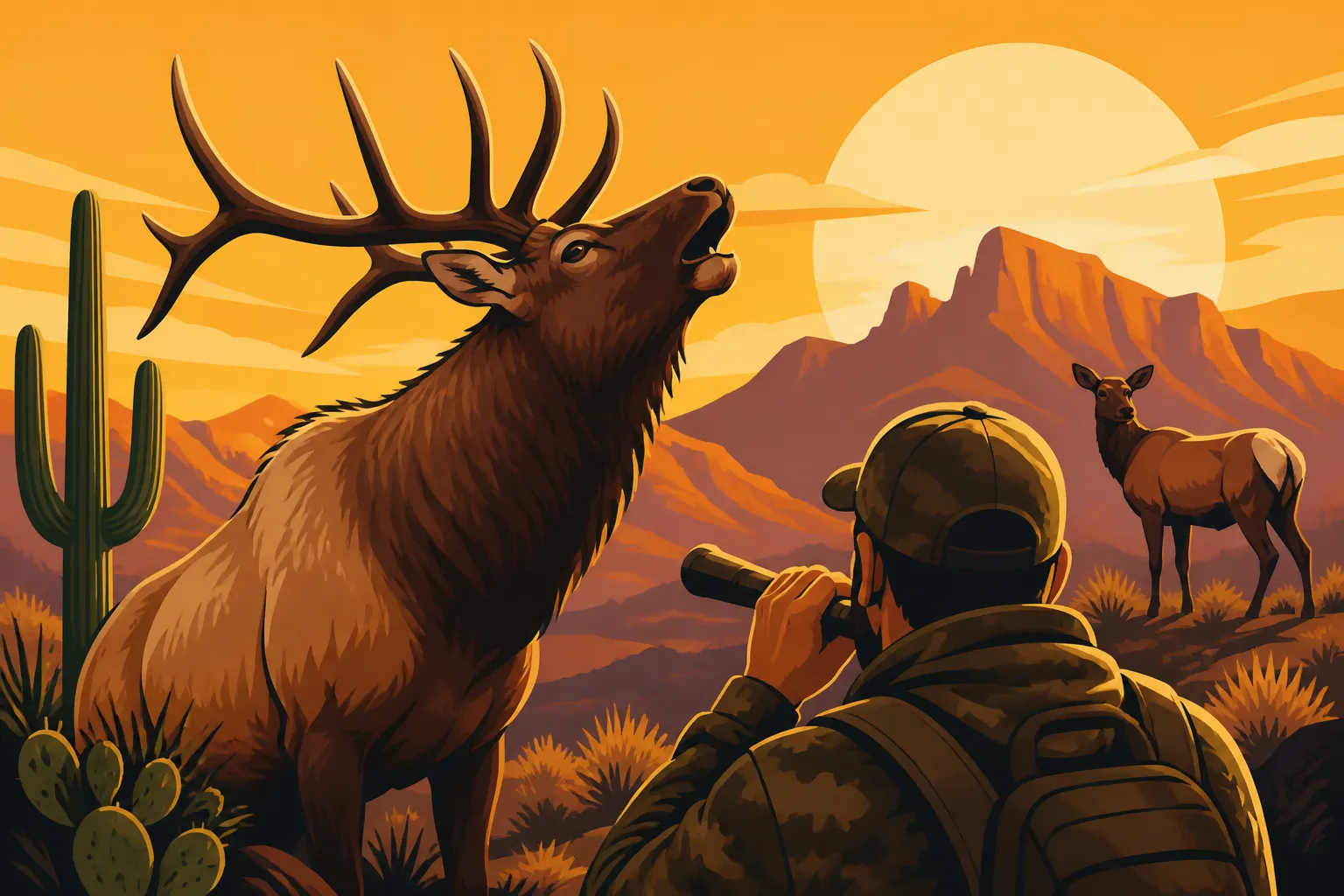
There's something undeniably primal and exhilarating about an elk bugle echoing through the canyons and timber of Arizona. In September, as the rut intensifies, bulls are often highly vocal, challenging rivals and announcing their presence. A well-timed bugle can draw a bull in, but a poorly executed one can send him running. It’s a high-stakes game of communication.
The Challenge and Reward of Roaring Back
When you hear a bull bugle, your heart immediately starts racing. The instinct is often to mimic that challenge, to engage him in a vocal sparring match. This can be incredibly effective, especially if the bull is looking for a fight or trying to gather cows. A dominant bull might march right in, eager to assert his authority. However, not all bugles are created equal, and not all bulls respond in the same way. Sometimes, a bull is merely proclaiming his status to cows and isn't looking for a direct confrontation with another bull, particularly if he already has a herd.
The reward, when it works, is seeing a magnificent bull emerge from the timber, steam pouring from his nostrils as he searches for the interloper. It’s a moment of pure adrenaline, the culmination of scouting and precise calling. But the challenge lies in knowing when that bull is ready to commit, and when he's just testing the waters. Being too aggressive too early can sometimes backfire, making a wary bull skirt around you or simply shut down his vocalizations.
Aggressive Bugling Versus Locator Calls
Understanding the difference between an aggressive challenge bugle and a softer locator call is critical. An aggressive bugle is designed to mimic a bull that's ready to fight for his cows or territory. It's often louder, longer, and more guttural, sometimes ending with a series of chuckles or grunts. You deploy this when you believe the bull is receptive to a challenge, perhaps if he's actively herding cows or responding to another bull's vocalizations. This can be particularly effective during the peak of the rut when bulls are at their most competitive.
On the other hand, a locator bugle is much softer, often just a short, higher-pitched whistle. Its purpose is purely to get a bull to respond, revealing his location without committing to a full-blown confrontation. This is invaluable when you're trying to pinpoint elk at dawn or dusk, or when you're working through new terrain where you haven't heard much activity. Once you get a response, you can then assess his temperament and decide on your next calling strategy. Many hunters begin their day with a subtle locator bugle to gauge the activity in a unit, especially in areas like Elk Country Along the Mogollon Rim.
Situational Awareness: When a Bugle Pays Off
Timing and situation are paramount when deciding to bugle. A bugle pays off when a bull is actively rutting, responsive to challenges, and perhaps already tending cows. Early in the morning, when bulls are fresh and active, or late in the evening as they prepare to bed down, can be prime times. Consider the terrain: a bugle carries well across open canyons or draws, allowing you to cover more ground vocally. However, in thick timber, the sound can be muffled, making it harder for a distant bull to pinpoint.
You also need to read the bull's response. Is he bugling back immediately and moving towards you? Or is he bugling once and then going silent? The former indicates an engaged bull, while the latter might suggest a more cautious or pressured animal. If he's already with cows, a bugle can sometimes prompt him to herd them tighter and move them away, rather than come to investigate. It's a delicate balance, and experience often teaches you to interpret these subtle cues. Tools like GoHunt can help you analyze a unit's characteristics, like road density and hunter pressure, which might influence how responsive bulls are to aggressive bugling.
The Nuance of the Cow Call for Wary Bulls
While bugling offers a direct challenge, cow calling provides a subtle invitation. This strategy often shines when bulls are pressured, educated, or simply not responding to aggressive bugles. It taps into a bull's desire to find a mate, often proving more effective in drawing in a cautious animal.
The Art of Deception with Subtle Sounds
Cow calling is all about convincing a bull that there's a receptive female nearby, perhaps one separated from the herd or simply looking for company. The goal is to pique his interest without raising his guard. Soft, pleading cow mews, estrus whines, or even calf chirps can work wonders. These sounds convey vulnerability and appeal directly to a bull's instinct to breed. It’s an art of deception, creating a picture in the bull’s mind that there’s an easy opportunity awaiting him.
Unlike a bugle, which can be heard from a long distance, cow calls are often most effective when you're already relatively close to the elk. They draw a bull in slowly, cautiously, often making him circle downwind to get a scent. This requires immense patience and meticulous setup, as the bull will be on high alert, looking for the source of the sound. Many experienced hunters in Arizona find great success with this method, especially when bulls have been pressured early in the season, as discussed in Cow Calling Pressured Arizona Bulls.
Reading Bull Behavior to Choose Your Cow Call
The type of cow call you use should ideally match the behavior you're trying to illicit or mimic. A lost cow mew can be a universal attractant, suggesting a female separated from her group. An estrus whine, often a longer, more drawn-out sound, signals a cow in heat and can be incredibly enticing to a breeding bull. Calf chirps can sometimes draw in a protective cow, which in turn might bring in a bull. It's about understanding the "conversation" you're trying to create.
Pay close attention to how the bull responds. Does he quietly move towards the sound? Does he bugle softly back, as if confirming your presence? Or does he come in hot, grunting and looking? Each response dictates your next move. If he’s cautious, maintain soft, intermittent calls. If he’s coming in strong, you might increase the urgency slightly, but still keep it natural. The goal is always to keep him guessing, yet interested, until he's within a shootable range. Using mapping tools like those on GoHunt can help you visualize potential approach corridors and anticipate where a bull might try to circle downwind when responding to cow calls.
Pressure Cooker Bulls and the Soft Approach
Arizona's elk units, particularly those with higher hunter densities or easier access, can quickly create "pressure cooker" bulls. These are animals that have heard it all: loud bugles, aggressive challenges, and even constant cow calling from less-skilled hunters. They become incredibly wary, often going silent or simply moving off at the first sign of human presence. For these bulls, a soft, subtle approach using cow calls is often your best bet.
Instead of trying to challenge them, you're trying to lull them into a false sense of security. You become another elk in the woods. This might involve setting up in an area where you've seen fresh Reading Fresh Elk Sign in Ponderosa Timber, then sitting quietly and making very few, very realistic cow sounds. The goal isn't to draw them in quickly, but to make them think there might be a lone cow they haven't bred yet. Sometimes, no call at all is the best call, waiting for them to move naturally through an area where you've set up an ambush.
Strategic Deployment: When to Choose Which Call
The real mastery of elk calling in September lies not just in executing the calls, but in knowing when to use each one. It's a dynamic decision-making process influenced by the bull's demeanor, the terrain, time of day, and even the general hunting pressure in the unit.
Analyzing the Hunting Scenario and Elk Response
Before you even raise a call to your lips, take a moment to analyze the entire hunting scenario. What kind of bull did you hear? Was it a lone satellite bull, or did it sound like a herd bull with cows? If he's a herd bull, he's less likely to abandon his harem for a fight, but he might investigate a lone cow. If he's a satellite bull looking for a fight, a challenge bugle might be just the ticket. Consider the time of day: early morning might favor locator bugles to find active animals, while mid-day siestas might be better for subtle cow calls near bedding areas.
Also, pay close attention to the bull's initial response. If you throw out a soft bugle and he immediately screams back with aggression, he might be ready for a challenge. If he only lets out a soft mew, or goes silent, a cow call might be more appropriate. Every elk interaction is unique, and adapting your strategy on the fly is crucial. Sometimes, a bull might come in silently, so be prepared for a visual encounter even if you don't hear another vocalization.
The Dance Between Aggression and Subtlety
Often, the most effective strategy isn't choosing one call over the other, but knowing how to transition between them. You might start with a locator bugle to pinpoint an animal, then switch to cow calls as you stalk closer to draw him in. Or, if a bugle initially brings a bull to a standstill, a few soft cow mews can often coax him to take those final, critical steps into range. This is the "dance" between aggression and subtlety.
Imagine you're stalking a bugling bull on the Mogollon Rim. You use soft cow calls to pull him through a thick patch of timber, then, as he hangs up just out of sight, a quick, light bugle might trigger his curiosity enough to expose himself. Or perhaps he's bugling persistently, but not moving. A series of agitated cow calls, mixed with a soft bull grunt, might convince him that a rival is already moving in on his cows, spurring him to action. Experimentation and observation are your best teachers here.
Mastering Two-Hunter Calling Setups for Success
For many hunters, especially those targeting elk, a two-person calling setup can significantly increase your odds of success. This strategy involves one hunter acting as the shooter, positioned quietly and unseen, while the other acts as the caller, positioned 50 to 100 yards behind or to the side. The idea is that when a bull responds and comes to the calls, his attention will be focused on the caller, allowing the shooter to have an unobstructed, ethical shot.
This tactic is incredibly effective when using both bugles and cow calls. If the caller is bugling aggressively, the bull will often approach head-on, searching for the "rival" bull. If the caller is using cow calls, the bull will likely circle downwind, trying to catch the scent of the "cow." In both scenarios, the shooter, positioned silently, has the advantage. Practice is key to mastering these setups, ensuring both hunters understand their roles and can communicate silently. Learn more about effective strategies in Two-Hunter Calling Setups That Actually Work.
Here's a quick comparison of when to lean on each calling method:
| Scenario / Condition | Best Call Strategy | Why It Works |
|---|---|---|
| Early Morning/Late Evening | Locator Bugle, then Cow Calls | Find active bulls, then entice them with subtle sounds as they move/bed. |
| Active Rutting Bull (W/Cows) | Subtle Cow Calls, Soft Grunts | Less likely to abandon cows for a fight; more likely to investigate a "new" cow. |
| Satellite Bull (No Cows) | Aggressive Bugle, followed by Cow Calls | Often seeking to challenge or steal cows; can be drawn in by a rival or new female. |
| High Pressure Area | Soft Cow Calls, Minimal Bugling | Wary bulls are less likely to respond to aggressive calls; subtlety is key. |
| Thick Timber/Close Quarters | Soft Cow Calls, Estrus Whines | Keeps the bull calm, encourages slow approach, easier to pinpoint. |
| Open Country/Long Distance | Locator Bugle, Aggressive Bugle | Sound carries well to cover ground, announce presence, challenge distant rivals. |
| Bull Hanging Up Out of Sight | Combination (Soft Bugle/Cow Call) | A change in call can trigger curiosity, making him take a few more steps. |
Beyond the Call: Other Factors for September Elk Success
While mastering bugling and cow calling is fundamental, they are just pieces of the larger puzzle. Successful Arizona elk hunting in September requires a holistic approach, integrating meticulous scouting, an understanding of the environment, and unwavering persistence.
Pre-Season Preparation and E-Scouting
Your success in September begins long before you set foot in the woods. Pre-season preparation, including extensive e-scouting, is paramount. Spend hours poring over maps, identifying potential bedding areas, feeding zones, water sources, and travel corridors. Look for natural funnels, saddles, and benches where elk are likely to move. These are the locations where your calling efforts will have the highest chance of success. Use online tools like GoHunt to analyze topography, satellite imagery, and even historical burn areas that might create new forage.
Understanding the specific unit you're hunting is also critical. What is the typical When the Elk Rut Peaks on the Rim? Are there specific areas known for high or low hunter pressure? Knowing these details helps you anticipate elk behavior and refine your calling strategy. For example, in a heavily hunted unit, you might opt for more subtle cow calling, knowing that the bulls are likely to be educated. Conversely, a remote, less pressured unit might allow for more aggressive bugling. Don't underestimate the value of E-Scouting an Arizona Unit Before the Season to gain an edge.
Understanding Wind and Thermals in Arizona's Terrain
Elk have an incredible sense of smell, and a misplaced call or stalk can instantly alert them to your presence. In Arizona's diverse terrain, understanding wind patterns and thermals is non-negotiable. Thermals typically rise as the sun heats the ground in the morning and fall as the air cools in the evening. This means that if you're stalking uphill in the morning, your scent will likely be carried up ahead of you. Conversely, if you're stalking downhill in the evening, your scent will be carried down.
Always try to approach from a direction that keeps your scent out of the elk's nose. This might mean making a long, circuitous route to get into position. When setting up to call, always position yourself so the wind is in your favor, or at least neutral. A bull responding to your calls will almost always try to circle downwind to get your scent. Anticipate this movement and set your shooter up accordingly. Ignoring the wind is one of the quickest ways to educate an elk and send him running.
Patience, Persistence, and Adapting on the Fly
Elk hunting, especially during the rut, is a rollercoaster of emotions. There will be days when the woods are alive with bugles, and days when it feels utterly silent. The key is to remain patient and persistent. Don't get discouraged if your first few calling attempts don't yield immediate results. Elk can be unpredictable, and what worked yesterday might not work today.
Be prepared to adapt your strategy on the fly. If aggressive bugles aren't working, switch to soft cow calls. If the elk are hanging up at a distance, try moving and calling from a new position. Sometimes, it's not about how loud or how realistic your calls are, but simply about being in the right place at the right time. Being physically prepared for the demands of the Arizona backcountry, as detailed in Preparing Physically for a Desert Hunt, will also allow you to cover more ground and remain mentally sharp throughout the hunt. Remember, the elk rut is a fleeting opportunity, and every moment spent in the field is a chance to learn and connect with these incredible animals.
Disclaimer
Hunting involves inherent risks, and conditions in the backcountry can change rapidly. Always prioritize safety, adhere to all Arizona Game and Fish Department regulations, and respect private land boundaries. The information provided in this guide is for informational purposes only and should not replace professional guidance or personal judgment.