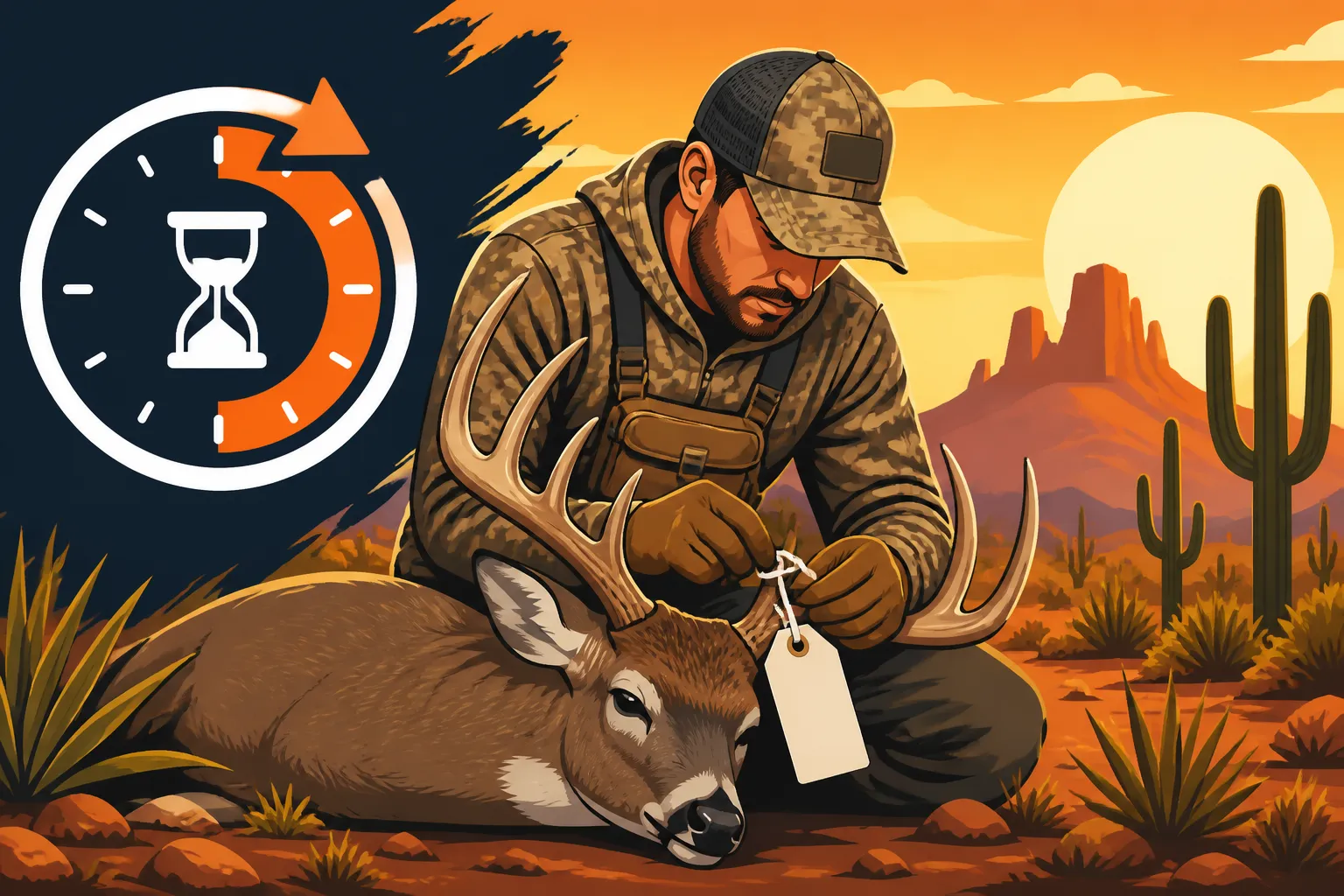
How Soon You Must Tag a Downed Animal
There's nothing quite like the surge of adrenaline when an animal finally goes down after a long stalk or a patient wait in the blind. But in that intense moment of triumph, it's easy to overlook a crucial step that can protect your hunt and your hunting future: properly tagging your downed animal. This guide will walk you through Arizona's specific rules regarding how and when you must tag a harvested animal, helping you avoid costly mistakes and ensure your hard-earned success is completely legal.
Understanding Arizona's Tagging Requirements
Arizona's hunting regulations are very clear about the process of tagging game, and it's a detail that every hunter, seasoned or novice, needs to internalize. The rules are designed to prevent unethical practices and ensure proper wildlife management, making it paramount that you understand them thoroughly.
The Immediate Tagging Mandate
The Arizona Game and Fish Department (AZGFD) regulations state that once you've harvested a big game animal, you must "immediately" attach your tag to the carcass. Now, "immediately" can sometimes feel a bit vague when you're out in the vast Arizona landscape, especially when dealing with the physical realities of a downed animal. It doesn't mean you have to tag it while the animal is still kicking, nor does it mean you can wait until you've packed it back to camp. It means as soon as the animal is deceased, secure, and you can safely approach it, your very next priority, before anything else like taking photos or even field dressing, is to affix that tag.
This rule is in place for a few critical reasons. Primarily, it's a measure against poaching and illegal harvest. An untagged animal, even if legitimately taken, can be indistinguishable from one that was not, raising immediate red flags for wildlife officers. By attaching your tag promptly, you establish legal possession and compliance. The tag essentially serves as the animal's official "receipt" and legal proof that it was harvested by you, within your permitted season and unit.
Required Information on the Tag
It's not enough just to slap the tag onto the animal. The tag itself must be filled out completely and accurately. This isn't just bureaucratic red tape; it's essential data for the state's wildlife management efforts. You'll need to use a pen or permanent marker (trust me, a pencil won't cut it in desert conditions) to clearly and indelibly provide specific information. This typically includes your Arizona hunting license number, the exact date and time of the kill, the game management unit where the animal was harvested, and the sex of the animal. Depending on the species, you might also need to indicate specific features like antler points or horn length.
Failing to fill out all the required information is almost as bad as not tagging the animal at all. An incomplete tag can be deemed invalid, leading to the same serious consequences as an untagged animal. It's vital to double-check every field before you detach the tag from your license and affix it to the animal. Many hunters keep a small, waterproof pen clipped to their tag or license holder specifically for this purpose. If you're unsure about any specific requirements for your species or unit, consulting your Reading the Arizona Hunt Regulations Booklet before you head afield is always a smart move.
Practical Application in the Field
The moment of truth—when an animal is down—is often a mix of excitement, relief, and sometimes, a little chaos. Knowing the practical steps to take ensures you stay legal and ethical, even when emotions are running high.
Steps to Take After a Harvest
Once your animal is down, the very first thing is to ensure safety. Confirm the animal is deceased and immobile from a safe distance before approaching. A wounded animal, especially big game like elk or even a javelina, can be dangerous. Once you're certain it's safe to approach, your focus immediately shifts to the tag.
Locate your tag and a reliable writing instrument. Before you even think about moving the animal, snapping a photo, or beginning to field dress, fill out the tag completely. Detach it from your license (making sure not to lose the remaining portion of your license!) and securely attach it to the animal. The regulations usually specify that it must be affixed in a visible, tamper-proof manner, often to an antler, ear, or leg, where it won't easily fall off during transport. Zip ties are an excellent tool for this, as they're strong, secure, and difficult to remove without cutting.
After the tag is securely in place and properly filled out, then you can start with the practicalities of field dressing. This is especially crucial in Arizona's often-hot climate. You’ll want to get the internal organs out quickly to start the cooling process. For more on this, you might find our guide on Field Dressing in Desert Heat particularly useful.
What "Immediately" Means in Real-World Scenarios
The term "immediately" in Arizona's tagging regulations is interpreted with a degree of common sense, but the onus is always on the hunter to prove diligence. It generally means that as soon as you have physically reached the downed animal and it is safe to do so, tagging is the next action. It doesn't mean you need to be a track star to get to it in seconds, but you shouldn't delay for other non-essential activities.
Consider a scenario where you've shot a deer at last light, and it runs a short distance into thick brush. You may need to take a few minutes to ensure it's safe to track, especially if there's difficult terrain or other dangers. Once you locate the animal and confirm it's expired, tagging is your immediate priority. If you've been Tracking Arizona Javelina Through Prickly Pear for hours, the moment you finally locate the expired animal, the tag comes out. You're not expected to perform miracles in extreme conditions, but you are expected to make a good-faith effort to tag it as soon as reasonably possible. Delaying to celebrate, take extensive photos, or call friends before tagging could be seen as non-compliance. Always have your license, tag, and a working pen readily accessible, even when you're just starting a stalk or sitting a water source.
Consequences of Non-Compliance and Enforcement
Ignoring or mismanaging the tagging process in Arizona can lead to severe penalties that extend far beyond a simple slap on the wrist. The Arizona Game and Fish Department takes these regulations very seriously, and rightfully so.
Penalties for Untagged or Improperly Tagged Game
The repercussions for failing to properly tag a downed animal in Arizona can be substantial. Depending on the specifics of the violation, you could face misdemeanor charges, significant monetary fines, and even the confiscation of your harvested animal, hunting equipment, and vehicle. Worse yet, you could lose your hunting privileges for a period, which is a devastating outcome for any passionate hunter. In some cases, repeated or severe violations can lead to the revocation of your hunting license for life, and impact your ability to hunt in other states through interstate compacts.
Beyond the immediate legal and financial penalties, violations can also affect your bonus points. If found guilty of a serious violation, you could forfeit any accumulated bonus points for future draws, making it even harder to draw those coveted tags down the line. It’s a harsh reminder that the privilege of hunting comes with a significant responsibility to abide by all regulations. Understanding What Happens to Arizona Points When You Draw is important not just for success, but for avoiding penalties.
Game and Fish Enforcement and Checkpoints
Arizona Game and Fish Department (AZGFD) wildlife managers and officers are highly active in the field, especially during peak hunting seasons. They conduct regular patrols, check hunters in camps, on roadsides, and even deep in the backcountry. It's not uncommon to encounter a game warden who will ask to see your license, tags, and any harvested game. They are specifically trained to look for proper tagging, evidence of sex, and compliance with all other regulations.
They also set up temporary checkpoints on main access roads leading out of popular hunting units. These checkpoints serve as educational opportunities and enforcement points. If you encounter an AZGFD officer or a checkpoint, always be courteous, cooperative, and transparent. Have your license and tag readily available for inspection. Officers are looking for hunters who are respectful of the resource and the law. A properly tagged animal, along with the correct Evidence of Sex Requirements on a Carcass, will make for a smooth interaction and confirm your ethical hunting practices. Remember, these officers are out there protecting the wildlife resources for everyone, and your cooperation helps them do their job effectively.
Special Considerations and Ethical Responsibilities
Beyond the black and white of the regulations, there are several nuances and ethical responsibilities that every Arizona hunter should understand regarding tagging. These considerations help ensure a smooth hunt and uphold the integrity of the sport.
Group Hunting and Tagging Responsibilities
When you're out hunting with a group, whether it's for elk on the Mogollon Rim or Coues deer in the Sky Islands, the question of who tags the animal can sometimes arise. The rule is simple and unambiguous: the hunter who personally harvested the animal is the one whose tag must be affixed to it. There's no transferring of tags, no "whose tag is open," and no sharing of tags among hunting partners. Each hunter is responsible for using their own tag for an animal they legally take.
This individual accountability is critical to prevent tag fraud and ensure fair chase. Even if you're working together in a "two-hunter calling setup" for elk, the person who fires the shot or releases the arrow is the one whose tag must be used. Clear communication within your hunting party about this rule is essential before you even head afield. It eliminates any potential confusion or temptation to bend the rules in the excitement of a harvest.
Evidence of Sex and Species Identification
In addition to proper tagging, Arizona often requires hunters to maintain "evidence of sex" on big game carcasses until they reach their final destination or are processed. For antlered or horned animals, this typically means leaving a portion of the head with antlers/horns naturally attached. For antlerless animals, specific regulations might require leaving the udder, vulva, or scrotum attached to the hindquarter. These requirements are put in place to verify the legality of the harvest, especially for hunts that are specific to sex or age.
Furthermore, proper species identification is paramount. Arizona is home to both mule deer and Coues whitetail, and while they can look similar, they are distinct species with different tags and regulations. Mistaking one for the other and tagging it with the wrong species tag is a violation. Being confident in your animal identification skills is part of your ethical responsibility as a hunter. Using resources like GoHunt or the AZGFD website to study species characteristics specific to your unit can greatly reduce the chance of an error.
The Role of Technology in Compliance
While Arizona still primarily relies on physical tags that must be immediately affixed to the animal, technology plays a huge role in staying compliant. Modern hunting apps, like those provided by GoHunt, offer invaluable tools for hunters. These platforms can provide real-time access to regulations, unit boundaries, and even your licensing information directly on your phone. Imagine being deep in a unit and needing to confirm a specific rule; an app can provide that clarity instantly, assuming you have cell service or have downloaded maps beforehand. Using tools for E-Scouting an Arizona Unit Before the Season also helps you understand the regulations and features of your chosen hunting area well in advance.
However, it's crucial to remember that technology is a supplement, not a replacement. You must always carry your physical hunting license and tag, and a reliable writing utensil, as the physical tag is the only legal form of proof of harvest. Relying solely on a digital representation is not permitted. Think of these apps as a powerful research tool to help you understand regulations and plan your hunt, ensuring you have all your ducks in a row when that crucial tagging moment arrives. Always ensure you have a physical copy of the current Arizona Hunt Regulations Booklet with you, just in case technology fails.
Key Arizona Tagging Requirements Summary
To help keep all this vital information organized, here's a quick summary of Arizona's core tagging requirements. Always remember to consult the most current AZGFD regulations for specific details pertaining to your hunt.
| Requirement | Detail | Why it's Important |
|---|---|---|
| Timing | Immediately upon harvest and safely reaching the animal. | Prevents poaching, establishes legal possession. |
| Placement | Securely attached to the carcass (antler, ear, leg). | Visible, tamper-proof, remains with the animal during transport. |
| Information | Hunter's license number, date, time, unit, sex, species. | Essential for wildlife management data and legal verification. |
| Writing Tool | Indelible pen or permanent marker. | Ensures information is legible and won't fade or wash off. |
| Evidence of Sex | Retain specific parts (antlers, vulva, udder) as per regulations. | Verifies legality of harvest (e.g., antlered vs. antlerless hunts). |
| Personal Tag | Use only your own tag for the animal you harvested. | Prevents tag fraud and upholds individual accountability. |
| Regulations Access | Carry physical regulations booklet and/or use reliable digital resources (e.g., GoHunt). | For on-the-spot verification and ensuring compliance. |
| Post-Harvest Report | Complete Mandatory Reporting After an Arizona Harvest as required. | Contributes to wildlife management data and population assessments. |
Disclaimer
The information provided in this guide is for general educational purposes and is based on current Arizona hunting regulations. Hunting laws and regulations can change, and it is the individual hunter's responsibility to review and comply with the most up-to-date Arizona Game and Fish Department regulations prior to any hunting activity.