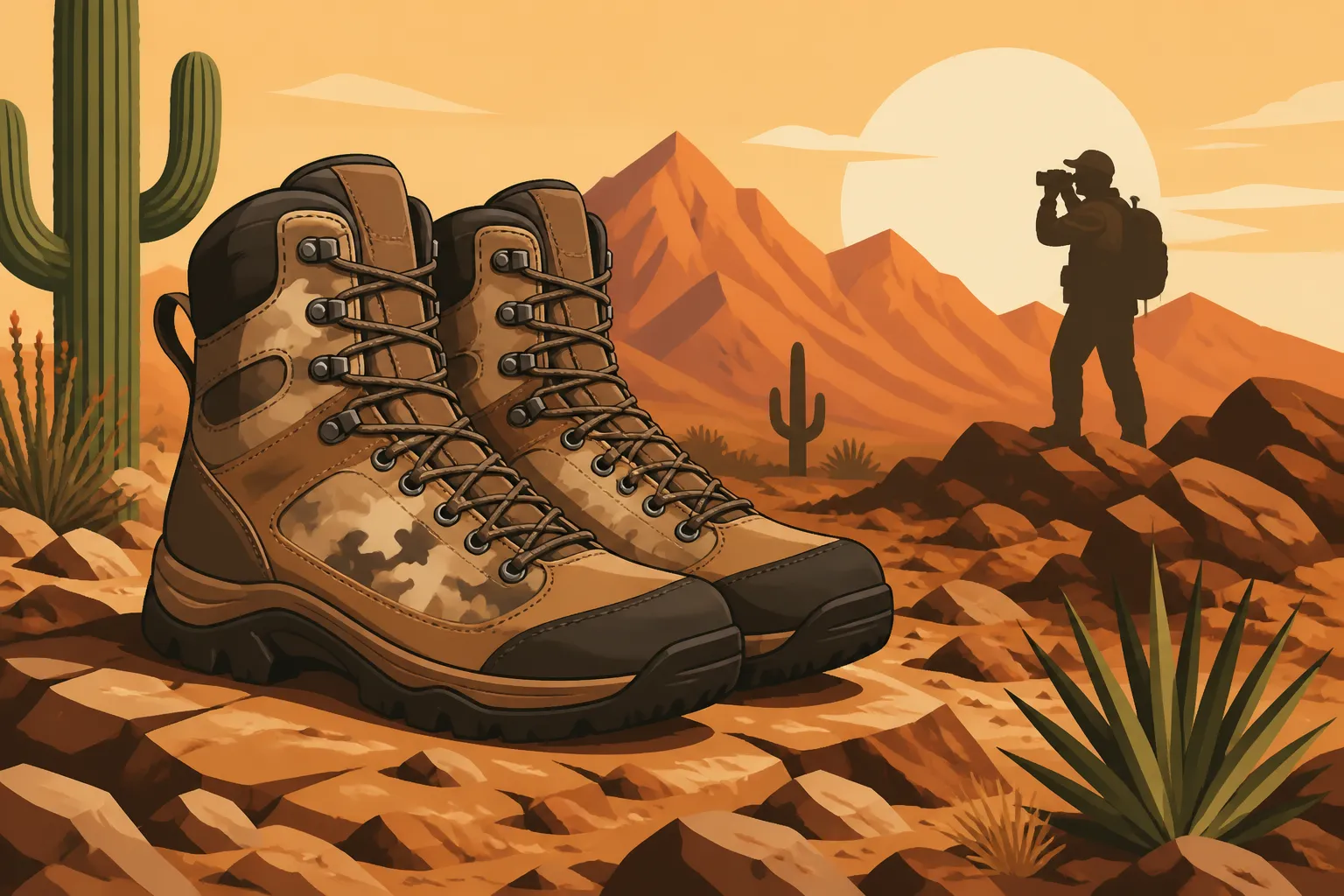
Choosing Boots for Rocky Desert Ground
There’s almost nothing worse than a ruined pair of boots on an Arizona hunt. Those sharp rocks, hidden cholla cacti, and relentlessly abrasive desert soils can chew through lesser footwear faster than you can say "Coues deer." blisters, busted seams, and aching feet can turn an exciting hunt into a miserable slog. This guide is all about helping you navigate the treacherous terrain of Arizona with confidence, ensuring your boots are your best friend, not your worst enemy.
Understanding the Unique Challenges of Arizona's Desert Terrain
Hunting in Arizona isn't like walking through a soft pine forest back east, or even the damp, loamy soil of the Pacific Northwest. Our ground is a beast of its own, demanding specialized gear, especially when it comes to what's on your feet. You'll encounter everything from jagged volcanic rock to slick granite, loose scree slopes, and an abundance of spiky plants just waiting to say hello to your unprotected ankles.
The Relentless Assault of Rocks and Cacti
Picture this: you're Still Hunting Oak Brush for Coues in a unit near the Huachuca Mountains, slowly working your way through a draw. Every step is an exercise in careful foot placement, not just to stay quiet, but to avoid turning an ankle on a loose boulder or, worse, stepping right into a patch of jumping cholla. The ground is unforgiving. Basalt shards can slice through flimsy soles, and granite outcrops offer little purchase with weak tread. These rocks aren't just an obstacle; they're an active threat to your footwear, constantly abrading seams, stretching materials, and testing the integrity of your boot construction.
And then there's the plant life. Arizona’s desert flora, while beautiful, is often armed with formidable defenses. Cholla cactus, with its barbed segments, can effortlessly embed itself into boot uppers and pant legs. Prickly pear pads, covered in clusters of fine, hair-like spines (glochids), cling stubbornly. Ocotillo stalks, while appearing dry and brittle, hold surprisingly sharp thorns. Your boots need to act as a shield, not just for your feet, but for your lower legs too, especially if you're venturing off established trails into the thicker stuff where Tracking Javelina Through Thick Cover might lead you.
Heat, Dust, and Water Crossings
The desert is synonymous with heat, and Arizona delivers it in spades, particularly during our early archery seasons in August and September. You're putting in serious miles, often climbing and descending, and your feet are generating a lot of heat. Poorly ventilated boots can quickly become sweat factories, leading to macerated skin and inevitable blisters. Dust, too, is a constant companion. Fine silt can work its way into stitching, between liners, and eventually into your socks, causing abrasive friction with every step.
However, don't let the "desert" moniker fool you into thinking water isn't a factor. Monsoon storms can turn dry washes into raging torrents in minutes, and you might find yourself needing to cross unexpected flows or navigate muddy conditions. Furthermore, many hunts, like Hunting a Stock Tank During Early Archery, involve prolonged periods near or even in water sources. Your boots need to handle these brief, yet significant, encounters with moisture without becoming waterlogged sponges. The challenge, then, is finding a boot that can breathe in the dry heat but also repel water when needed, a true desert paradox.
Key Features to Look for in Desert Hunting Boots
Choosing the right boots for Arizona hunting means understanding that compromise is inevitable, but prioritizing the right features can make all the difference. It's about finding that sweet spot of durability, protection, comfort, and weather resistance tuned for our specific conditions.
Durability and Protection: It Starts with the Sole
The foundation of any good desert hunting boot is its sole. You need a thick, aggressive outsole with deep, widely spaced lugs to dig into loose gravel, scree, and provide stability on steep, uneven rock faces. Renowned brands like Vibram are often the go-to for their proven grip and wear resistance. This isn't just about traction; it's about the sole's ability to withstand constant abrasion from sharp rocks without wearing down prematurely.
Beneath the outsole, the midsole plays a crucial role. Look for a stiff, supportive midsole, often featuring a shank or rock plate. This internal barrier is essential for protecting the bottoms of your feet from sharp points and preventing bruising from impact, especially when Packing an Elk Out of Rim Country Alone over boulder fields. Without a solid midsole, every step on a sharp rock will be felt, leading to fatigue and discomfort.
The upper material needs to be equally robust. Full-grain leather is a classic choice, known for its outstanding durability, abrasion resistance, and ability to mold to your foot over time. Modern synthetic materials also offer excellent toughness while often being lighter and quicker to dry. Whichever material you choose, ensure it has reinforced toe and heel caps, usually made of rubber, to protect against impacts and scuffs. Many Arizona hunters, myself included, rely on resources like GoHunt to pore over details like construction quality and material choices when researching boots.
Comfort and Support for Miles of Glassing and Stalking
You’ll spend countless hours on your feet in Arizona, whether you’re simply Glassing Arizona's Sky Islands for Coues Deer for hours on end from a rocky perch or actively trying to figure out How Far to Stalk a Bedded Coues Buck across a steep canyon. Comfort and support are paramount to prevent fatigue and injury. High-cut boots that extend well above the ankle are highly recommended. This extra height provides crucial ankle support, reducing the risk of twists and sprains on unstable terrain, which is common when scrambling over broken rock or traversing sidehills.
Proper fit is non-negotiable. Your boots should feel snug but not tight, with absolutely no heel slip. Heel slip is a fast track to blisters, especially on long climbs and descents. Always try boots on with the specific hunting socks you intend to wear, and preferably later in the day when your feet are slightly swollen. While protection is key, consider the overall weight. Heavy, overly stiff boots can lead to fatigue over long days, so strike a balance that offers sufficient protection without feeling like lead weights. For warm weather hunting, minimal or no insulation is preferred, allowing you to manage moisture with quality merino wool socks instead.
Waterproofing and Breathability: A Desert Paradox
While Arizona is largely arid, waterproofing is still a vital feature. You might not be slogging through swamps, but crossing a small stream, an overflowing stock tank, or even walking through dew-covered grass after a monsoon rain can quickly soak non-waterproof boots. A quality waterproof membrane, such as Gore-Tex or similar technologies, is essential to keep your feet dry.
The challenge with waterproofing in a hot environment is breathability. Waterproof membranes, by their very nature, can limit airflow, trapping heat and moisture inside. A completely soaked foot from sweat can be just as problematic as one soaked from external water, leading to discomfort and blisters. The best desert boots find a balance: they offer reliable waterproofing for those unexpected wet encounters but are constructed with materials and designs that still allow for decent moisture vapor transfer. Look for boots that aren't overly insulated and prioritize materials known for their breathability, even with a membrane. Remember, proper hydration is also part of managing your comfort; always know Water You Must Carry on a Day Hunt.
Top Boot Categories for Arizona Hunting
The market is flooded with various types of boots, and understanding which category best suits Arizona’s specific demands will narrow your search significantly. Each has its strengths and weaknesses, making the choice dependent on your primary hunting style and the intensity of the terrain you'll tackle.
Heavy-Duty Mountain Hunting Boots
These are the workhorses, the tanks of the boot world. Heavy-duty mountain hunting boots are characterized by their extreme stiffness, tall cuffs (often 8-10 inches), and robust construction. They typically feature thick full-grain leather or exceptionally durable synthetic uppers, aggressive outsoles, and substantial rock plates in the midsole. Brands like Kenetrek, Lowa, and Schnee's are well-represented in this category.
- Pros: Unparalleled ankle support, maximum foot protection from rocks and impacts, exceptional durability that can last many seasons, and the stiffness provides excellent stability on vertical ascents and descents. They offer superb protection when you're going deep into the backcountry, like on a tough late-season elk hunt.
- Cons: They are heavy, often hot due to their robust construction and minimal breathability, and come with a significant break-in period that absolutely cannot be skipped. They are also among the most expensive boots on the market.
- Ideal for: Backcountry elk hunts in Rim Country, bighorn sheep hunts in rugged mountain ranges, or any hunt where extreme terrain, heavy packing, and ultimate durability are the top priorities. If you're tackling areas like the Blue Range Primitive Area, these are what you'll want on your feet.
Mid-Weight Backpacking or Trekking Boots
Mid-weight backpacking or trekking boots strike a fantastic balance for many Arizona hunting scenarios. They offer a good blend of support and flexibility, without the sheer bulk and stiffness of heavy mountain boots. Uppers are typically leather and synthetic blends, or primarily synthetic, providing decent abrasion resistance while being lighter and more breathable. The cuff height is usually 6-8 inches, offering good ankle support without feeling restrictive.
- Pros: Very versatile for a wide range of Arizona hunts, generally less break-in required compared to mountain boots, more breathable and lighter, reducing fatigue over long days. They often come with reliable waterproofing and comfortable cushioning.
- Cons: While durable, they may not stand up to the relentless abuse of truly extreme rocky terrain as long as a dedicated mountain boot. They offer good, but not ultimate, protection from sharp rocks on the sole.
- Ideal for: General deer hunting (Coues or Mule Deer), archery javelina hunts, or less strenuous elk hunts where you're not carrying massive loads deep into the wilderness. They are a solid choice for exploring units like 21 or 23 for deer. Many hunters find these to be a great all-around option for How to Hunt Arizona's Five-Month OTC Archery Deer Season.
Lighter Hiking Boots (with caveats)
Lighter hiking boots are designed for comfort and agility on well-established trails. They are often low-cut or mid-cut, flexible, and feature highly breathable materials, sometimes sacrificing robust protection for weight savings. These are usually comfortable right out of the box and feel much more like athletic shoes.
- Pros: Extremely comfortable, lightweight, excellent breathability for hot weather, and require almost no break-in. They are great for covering easy miles quickly.
- Cons: Minimal ankle support, which is a significant drawback on uneven, rocky desert terrain. They offer poor protection against sharp rocks, impacts, and cactus thorns. Their durability is generally not suited for the sustained abuse of off-trail desert hunting, often leading to premature wear and tear on soles and uppers.
- Only for: Very specific, limited use cases in Arizona hunting, such as E-Scouting an Arizona Unit Before the Season on well-maintained dirt roads, or scouting flat, less rocky areas where you know you won't encounter significant challenges. I would strongly advise against using these for any serious hunting where you’re off-trail or navigating steep, broken ground. The risk of injury or boot failure is simply too high.
Here's a quick comparison of these boot categories:
| Boot Type | Best Use in AZ | Key Pros | Key Cons | Protection Level |
|---|---|---|---|---|
| Heavy-Duty Mountain | Extreme backcountry, sheep, rugged elk, heavy loads | Unparalleled support, rock protection, extreme durability | Heavy, hot, long break-in, expensive | Max |
| Mid-Weight Backpacking | General deer, javelina, moderate elk hunts, versatile | Good balance of support/flexibility, lighter, more breathable, shorter break-in | Less ultimate protection/durability than mountain boots for extreme terrain | High |
| Lighter Hiking | Light scouting on trails, easy terrain, very specific flat hunts (rarely) | Lightweight, comfortable out of the box, highly breathable | Minimal ankle support, poor rock/cactus protection, limited durability for hunting use | Low |
Fitting, Break-In, and Maintenance for Longevity
Even the most expensive, highly-rated boots are useless if they don't fit correctly, aren't properly broken in, or aren't maintained. These steps are just as crucial as choosing the right boot category.
The Critical Importance of Proper Fit
Forget about just ordering online. This is one piece of gear you absolutely must try on in person. Head to a reputable outdoor outfitter, and here’s a pro tip: go in the afternoon or evening when your feet have naturally swollen a bit, simulating how they’ll feel after a long day of hiking. Bring the exact type of hunting socks you plan to wear—thick merino wool, usually.
When trying them on, lace them up snugly, then walk around the store. Many stores have incline boards; use them! Walk up and down to check for heel slip (bad!) and toe jamming (also bad!). Your toes should not touch the end of the boot when descending, and your heel should remain locked in place. Pay attention to any pressure points. Different brands and models are built on different lasts, meaning they fit various foot shapes better. What works for your buddy might not work for you. Remember, Preparing Physically for a Desert Hunt involves your feet just as much as your lungs and legs, and ill-fitting boots will sabotage all your efforts.
The Non-Negotiable Break-In Process
This is where many hunters make a critical mistake. Never, ever, wear a brand-new pair of boots on opening day of your hunt. You are practically guaranteeing blisters and misery. Boots, especially those with leather uppers or stiff midsoles, need to mold to your feet and flex a bit.
Start with short walks around your neighborhood, gradually increasing the distance and the difficulty of the terrain. Wear them while doing yard work, running errands (if you don’t mind the looks!), or on short, easy day hikes. Pay close attention to any "hot spots" – areas where your feet feel rubbing or pressure. Address these immediately with moleskin or specialized hiking tape. Some hunters even wear their new boots around the house for a week or two. This slow, deliberate process is key to preventing discomfort in the field and is just as important as Building a Practice Routine Before Opener for your shooting skills.
Extending the Life of Your Investment
Hunting boots are an investment, and like any good investment, they need care to perform their best and last. After each hunt, clean your boots. Brush off any loose dirt, mud, or cactus spines. If they're muddy, rinse them thoroughly with water. Allow them to air dry naturally, away from direct heat sources like campfires or heaters, which can dry out and crack leather or damage membranes.
For full-grain leather boots, regularly apply a quality leather conditioner or waterproofing wax. This keeps the leather supple, prevents cracking, and maintains its water resistance. Inspect your boots periodically for signs of wear and tear—check stitching, the integrity of the sole, and any delamination. Minor repairs, like patching small tears or re-gluing small sections of the sole, can often be done at home and extend the life significantly. By taking care of your boots, you're not just preserving gear; you're ensuring your comfort and success on future hunts, helping with overall Heat Management on an Arizona Early Season Hunt. Before committing to a specific model, I always recommend checking out independent reviews, perhaps from platforms like GoHunt, to see how they've performed for others in similar conditions and what their long-term durability looks like.
Disclaimer
Please note that hunting regulations, seasons, and gear recommendations can change. Always consult the latest Arizona Game and Fish Department regulations before planning any hunt. This guide is for informational purposes only and does not constitute professional advice.