Which Species Fall in the June Cycle
It can feel like a real puzzle trying to keep track of all the different hunting deadlines and species in Arizona. Just when you think you've got a handle on the February draw for elk and antelope, you remember there's a whole other cycle later in the year. This guide is here to untangle the specifics of Arizona's June draw cycle, detailing exactly which big game species are included and what you need to know to navigate the application process successfully.
Deconstructing Arizona's Two Draw Cycles
Arizona's approach to big game tags can be a bit intimidating, especially for those new to the state or even seasoned hunters trying to maximize their chances. Unlike some states with a single annual draw, Arizona splits its primary draw into two distinct cycles. This system is designed to manage applications for a wide array of species, but it often leaves hunters scratching their heads, worried about missing a crucial deadline.
The first cycle, typically in February, is dedicated to the high-demand species: elk and pronghorn antelope. These are often the hunts people dream about for years, piling up bonus points in hopes of drawing a coveted tag. But once that deadline passes, the focus shifts to the later part of the year. The June cycle, sometimes referred to as the "fall draw," covers a completely different set of game animals, each with its own unique challenges and appeal. Understanding this split is the first step to ensuring you don't inadvertently miss an opportunity for some fantastic hunting. For more information, you can always check out Why Arizona Splits Its Draw Into Two Cycles.
Why Arizona Divides Its Application Periods
The reason Arizona Game and Fish Department (AZGFD) uses two separate draw cycles comes down to managing application volume, staggering workload, and aligning specific hunt types with seasonal timing. Elk and antelope hunts often occur earlier in the fall, making the February application a logical fit for hunters to plan their expeditions well in advance. These are also species with extensive pre-scouting requirements, and the earlier draw allows more preparation time.
By contrast, the species in the June draw typically have hunts that take place later in the fall, winter, or even the following spring. This later application window provides ample time for the AZGFD to process applications after the initial rush of the February draw, allocate tags, and for hunters to receive their results and plan for their respective seasons. It also spreads out the financial commitment for hunters, who might be applying for multiple species across the year. This phased approach, while sometimes confusing, ultimately helps streamline the immense administrative task of managing hunting opportunities across such a diverse landscape and for so many different game animals.
Identifying the Core Species in the June Draw
When that June deadline rolls around, you're looking at a whole new roster of big game species that you can apply for. This is where many of Arizona's iconic deer hunts, along with several other exciting opportunities, come into play. Missing this window means missing out on drawing a tag for these animals for the entire year, so it's critical to know exactly what's on the table.
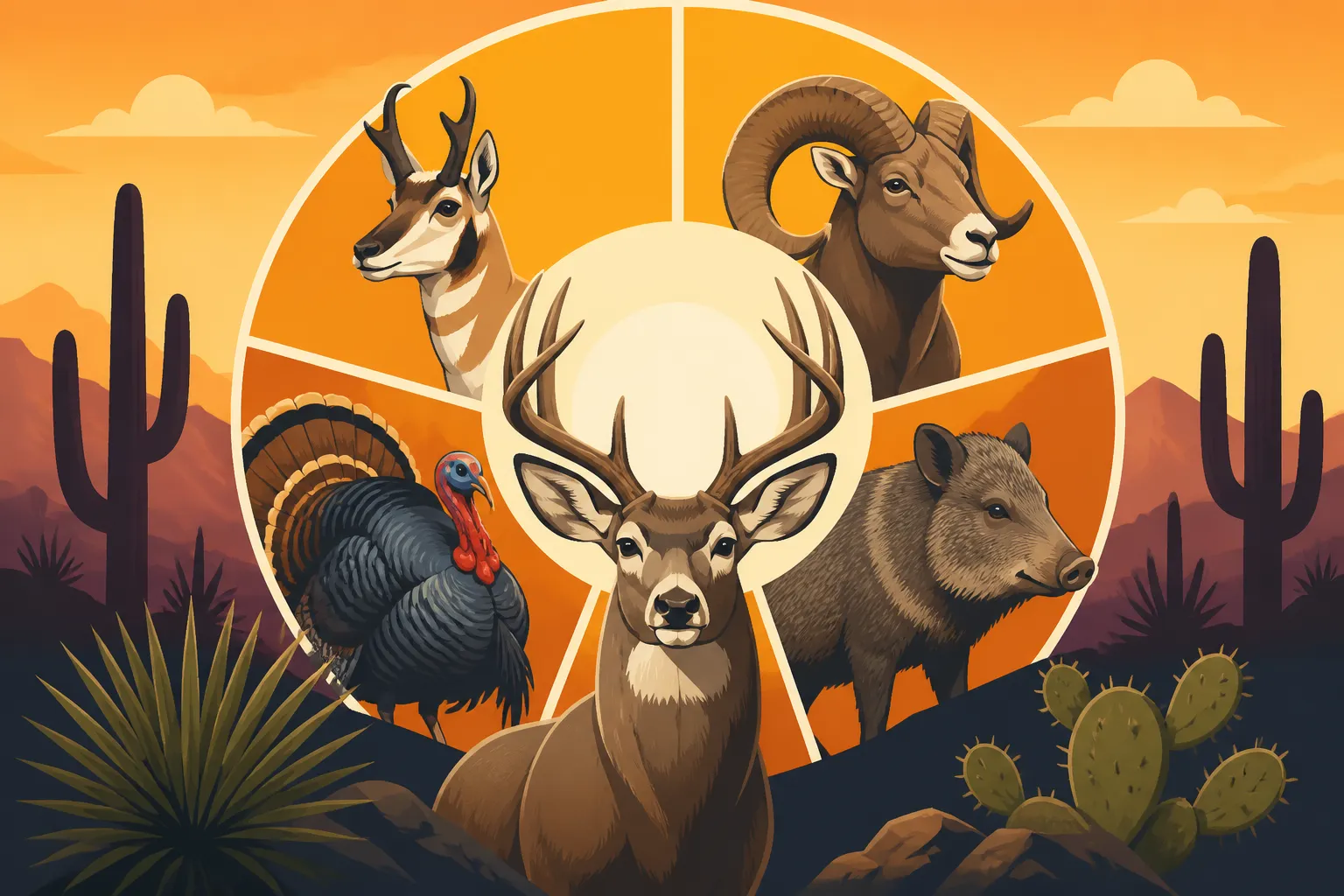
The June draw is primarily known for its deer species – both mule deer and Coues whitetail – but it also includes other highly sought-after permits. Whether you're chasing the "gray ghost" in the Sky Islands or hoping for a chance at North America's largest land mammal, the June application period is your entry point. For those looking to learn more about the animals themselves, you can dive into Coues Deer Are Arizona's Signature Whitetail or Mule Deer Across Arizona's Northern Plateaus.
Mule Deer and Coues Deer
This is arguably the biggest draw of the June application period: the chance to hunt Arizona's deer. The state is home to two distinct deer species, each offering a unique hunting experience.
- Mule Deer: Primarily found in the state's northern and western regions, mule deer are a favorite among many hunters for their impressive antlers and the challenging terrain they inhabit. From the famous Kaibab Plateau (Unit 9) to the vast expanses of the Arizona Strip, drawing a quality mule deer tag can be a once-in-a-lifetime opportunity. The June draw allocates these highly coveted tags for hunts that typically occur in late fall, usually November or December, coinciding with the rut in some areas. These hunts often require significant scouting and physical preparation, as the terrain can be rugged and unforgiving.
- Coues Whitetail Deer: Affectionately known as the "gray ghost" of the desert, Coues deer are smaller, more elusive, and live in the sky island mountain ranges of southeastern Arizona. These hunts are predominantly a glassing game, demanding patience, keen optics, and the ability to spot tiny flickers of movement in vast, brushy landscapes. The June draw offers tags for Coues deer hunts that often run from October through December, with prime rut hunts typically in December or January, depending on the unit and specific hunt code. Securing a December Coues tag is a goal for many die-hard deer hunters. You can learn more about this incredible species by exploring What Separates a Coues From a Whitetail.
Bighorn Sheep and Bison
Beyond deer, the June draw is also where you'll apply for some of Arizona's most prestigious and incredibly rare big game tags: bighorn sheep and bison. These are truly "once-in-a-lifetime" opportunities for most hunters, requiring years of bonus points and a healthy dose of luck.
- Desert and Rocky Mountain Bighorn Sheep: Arizona is unique in that it offers hunts for both desert bighorn and Rocky Mountain bighorn sheep. Desert bighorns roam the rugged, arid mountain ranges of the southern and western parts of the state, while a small population of Rocky Mountain bighorns can be found along the Salt River. Drawing a bighorn tag is the ultimate achievement for many sheep hunters. These hunts demand extreme physical fitness, specialized gear, and often the assistance of an experienced guide due to the formidable terrain and the value of the tag. The June draw allocates tags for hunts that typically occur in the late fall and early winter. Discover more about these majestic animals in Arizona Holds Desert and Rocky Mountain Bighorns.
- Bison: Arizona manages two free-ranging bison herds: one on the Kaibab Plateau and another in the House Rock Wildlife Area. These are incredibly powerful animals, and a bison hunt is a true wilderness experience. Bison tags are among the hardest to draw, with odds often in the tens of thousands to one. However, for those fortunate enough to draw, it's an unforgettable adventure. The June draw typically includes applications for fall bison hunts, though spring bison hunts might have a separate application period.
Bear, Mountain Lion, Fall Turkey, and Javelina
The June draw isn't just about deer and trophy animals; it also includes several other exciting hunting opportunities that offer more accessible or unique experiences.
- Black Bear: Arizona has a healthy black bear population, particularly in the forested mountain ranges across the state. Bear hunts in Arizona are often structured with harvest limits and can be closed early if female harvest objectives are met. The June draw allocates tags for fall bear hunts, which can be an excellent way to experience the state's diverse landscapes. These hunts can involve calling, baiting (where legal and permitted), or spot-and-stalk tactics.
- Mountain Lion: While mountain lion tags are often available over-the-counter (OTC) in many units, the June draw may sometimes include specific permit-only lion hunts or allow for general season lion tags in certain areas. It's always crucial to check the current regulations carefully. Many hunters pursue lions with hounds, which requires a specialized setup and dogs.
- Fall Turkey: For hunters looking to chase Merriam's turkey in Arizona's picturesque high country, the June draw is the time to apply for fall turkey tags. These hunts are generally less focused on calling than spring hunts, often involving spot-and-stalk or still-hunting tactics to locate flocks.
- Javelina (Some Hunts): While Arizona is famous for its year-round over-the-counter archery javelina season, some specific rifle or handgun hunts for javelina are included in the permit draw. These draw hunts are often for prime units or specific timeframes, giving hunters a chance to pursue these unique desert critters with a firearm. For year-round opportunities, check out Arizona Javelina Tags Are Available All Year.
Here's a quick overview of the primary species typically included in Arizona's June Draw:
| Species | Typical Hunt Season Timing | Application Type (June Draw) | Notes |
|---|---|---|---|
| Mule Deer | Fall (Oct-Dec) | Permit Tag | High demand, challenging hunts, often during the rut. |
| Coues Whitetail Deer | Fall/Winter (Oct-Jan) | Permit Tag | Elusive "gray ghost," glassing intensive, prime rut in Dec/Jan. |
| Desert Bighorn Sheep | Fall/Winter (Oct-Dec) | Permit Tag | Once-in-a-lifetime, extremely difficult to draw, physically demanding. |
| Rocky Mountain Bighorn | Fall/Winter (Oct-Dec) | Permit Tag | Very rare, specific units along the Salt River. |
| Bison (Fall Hunts) | Fall (Oct-Dec) | Permit Tag | Extremely rare draw, powerful animals, remote hunts. |
| Black Bear | Fall (Sept-Nov) | Permit Tag | Unit-specific closures possible, check regulations. |
| Mountain Lion | Year-round (some draws) | Permit Tag (some hunts) | Often OTC, but specific hunts may be in the draw. Check regs carefully. |
| Fall Turkey | Fall (Oct-Nov) | Permit Tag | Spot-and-stalk or still-hunting, different from spring tactics. |
| Javelina (Some Hunts) | Winter (Jan-Feb) | Permit Tag (some hunts) | Specific rifle/handgun hunts, distinct from OTC archery. |
Navigating the June Application Process
Understanding which species are in the June draw is just one piece of the puzzle. The next step is knowing how to apply, what deadlines to hit, and how to maximize your chances. Arizona's draw system, while robust, has several nuances that can trip up even experienced hunters.
The process typically begins with purchasing your annual hunting license, which is a prerequisite for applying. Then, it's about navigating the AZGFD online portal, selecting your desired hunts, and understanding the bonus point system. Tools and resources are available to help simplify this, but ultimately, it's your responsibility to ensure your application is complete and accurate before the deadline.
Essential Steps for Applying
Before you even think about hitting that "submit" button, there are a few critical prerequisites and steps you need to take.
- Purchase Your Hunting License: This is non-negotiable. You cannot apply for a big game draw tag in Arizona without a valid hunting license for the current license year. Ensure you purchase this well in advance of the June application deadline. For non-residents, this fee is separate from the application fees and the actual tag cost if you draw. You can find more details on The Nonresident Arizona Hunting License Price.
- Understand the Application Timeline: While the cycle is called the "June Draw," the actual deadline can fluctuate slightly year to year, usually landing in early to mid-June. It's imperative to check the official AZGFD hunt regulations booklet for the exact date and time. Mark it on your calendar, set reminders, and do not wait until the last minute. Technical glitches or unforeseen issues can arise, and a missed deadline means no application for that cycle.
- Choose Your Hunt Codes Wisely: Arizona's hunt codes specify the species, unit, weapon type, and season dates. You'll typically apply for up to five different hunt choices in order of preference. Researching draw odds, success rates, and unit characteristics is paramount. This is where resources like GoHunt become incredibly valuable. Their insider's section, for example, offers detailed draw odds data, unit breakdowns, and filtering tools that can help you make informed decisions about your first, second, and subsequent choices. Without a tool like GoHunt, sifting through the raw AZGFD data can be a daunting, time-consuming task.
- Consider Group Applications: If you plan to hunt with a buddy or family member, Arizona allows group applications. This can be beneficial, especially if one person has more bonus points. However, understand that the group's application will be processed based on the lowest number of bonus points in the group. This means if you have 10 points and your buddy has 2, your group will be entered into the draw with 2 points. This is a crucial consideration when deciding whether to apply as a group or individually. You can learn more about this by checking out Group Application Rules in the Arizona Draw.
Leveraging Bonus Points and Draw Odds
Arizona's bonus point system is designed to reward loyalty and persistence, giving hunters who have applied unsuccessfully in previous years a better chance in future draws.
- How Bonus Points Work: For every year you apply for a species and are unsuccessful in drawing a tag, you earn one bonus point for that specific species. These points accumulate and increase your odds in subsequent draws. Arizona uses a unique "Bonus Point Pass" system where a percentage of tags (currently 20%) are allocated solely based on bonus points before the remaining tags are distributed in a random pass. This means hunters with more points have a significantly better chance of drawing one of those coveted tags. Remember, points are species-specific; a point for deer doesn't help your sheep application. More details can be found in How Arizona's Bonus Point Pass Awards the First Twenty Percent.
- The Power of Data: Understanding draw odds is critical for making strategic application choices. Each year, AZGFD publishes draw results that include the number of applicants at various bonus point levels and the number of tags issued. Analyzing this data can reveal patterns, showing which units or hunt codes are easier or harder to draw with a given number of points. This is another area where platforms like GoHunt shine. They compile and present this complex data in an easy-to-digest format, allowing you to filter by species, unit, weapon, and point level to see your realistic chances. For instance, if you're targeting a premium Coues deer unit, GoHunt might show you that you need 10+ points to have a reasonable chance, helping you adjust your application strategy.
- Managing Expectations: Even with a good number of bonus points, drawing a premier tag for species like bighorn sheep or high-demand deer units can still come down to luck. It's essential to have realistic expectations and be prepared for the possibility of not drawing. Many experienced hunters apply for several years, building points, before they finally get their dream tag. Consider your application as a long-term strategy, not just a one-off shot.
Strategic Planning for the June Draw
Applying for a big game tag in Arizona's June draw is more than just filling out a form; it's a strategic endeavor that requires planning, research, and an understanding of the state's unique hunting landscape. Whether you're a resident or a nonresident, maximizing your chances means getting smart about your choices.
The decision of where to apply, what species to prioritize, and how to build your bonus points can feel overwhelming. But by breaking it down into manageable steps and utilizing the wealth of information available, you can approach the June draw with confidence and increase your prospects of punching a tag.
Researching Units and Hunt Codes
The sheer number of units and hunt codes in Arizona can be dizzying. Each unit presents different terrain, habitat, animal densities, and public land access.
- Understanding Unit Characteristics: Before listing your choices, delve into the specifics of each Game Management Unit (GMU) you're considering. What kind of habitat does it offer? Is it primarily desert, mountains, ponderosa pine forest, or a mix? How much public land is available for hunting, and what are the access points like? Websites like the AZGFD portal offer maps, but using digital mapping tools like onX Hunt or even advanced features on platforms like GoHunt can provide layers of information, showing land ownership, roads, and topography. This helps you visualize the actual hunting grounds. You can also explore Reading an Arizona Unit Boundary Before You Apply for further insights.
- Analyzing Hunt Success Data: While draw odds tell you the likelihood of getting a tag, hunt success data tells you the likelihood of actually harvesting an animal once you have that tag. AZGFD publishes hunt success reports that break down harvest rates by unit, weapon, and species. A unit might have great draw odds but low success, indicating tough hunting conditions or lower animal densities. Conversely, a unit with low draw odds might boast very high success rates for the few who draw. This analysis is crucial for balancing your desire to draw a tag with your desire for a quality hunting experience.
- Scouting for Success: Even if you don't draw your top choice, having a backup plan for scouting is vital. Many units, especially for deer and bear, can be effectively scouted through online maps and past reports. However, nothing beats boots-on-the-ground scouting. If you draw a tag, try to plan a trip to your unit before the season opens. Understanding water sources, travel corridors, and bedding areas will dramatically increase your chances of success. Read up on E-Scouting an Arizona Unit Before the Season to get started.
Nonresident Considerations for the June Draw
Nonresidents often face additional challenges and costs when applying for Arizona tags, but the June draw still offers incredible opportunities.
- Nonresident Cap: Arizona has a cap on nonresident tags, typically limiting them to 10% of the total tags issued for each species and hunt code. This means that for highly desirable hunts, competition can be even stiffer for nonresidents. It's important to be aware of this and factor it into your application strategy, potentially focusing on units with slightly higher tag allocations or more accessible odds.
- Financial Commitment: Beyond the hunting license, nonresidents face higher application fees and significantly higher tag fees if successful in the draw. For instance, a nonresident deer tag costs more than a resident tag. Be sure to budget accordingly, considering the total cost involved if you draw multiple tags across different species. Understanding What a Nonresident Deer Tag Costs in Arizona is essential.
- Travel and Logistics: Drawing a tag in Arizona, especially for species like deer or bear in remote units, often means significant travel and logistical planning. Consider how you will get to your unit, where you'll camp, and how you'll handle meat care in potentially warm weather. Early season deer hunts can be hot, requiring careful planning for game retrieval and processing.
The June draw is a gateway to some of Arizona's most exciting big game hunts. By understanding the species involved, diligently navigating the application process, and employing smart planning strategies, you can increase your odds of earning that coveted tag and creating unforgettable memories in the Arizona wild.
Disclaimer
Please remember that hunting regulations, season dates, and application deadlines are subject to change. Always consult the official Arizona Game and Fish Department (AZGFD) website and the current year's hunting regulations booklet before making any plans or submitting applications. This guide provides general information and should not be used as the sole source for regulatory decisions.