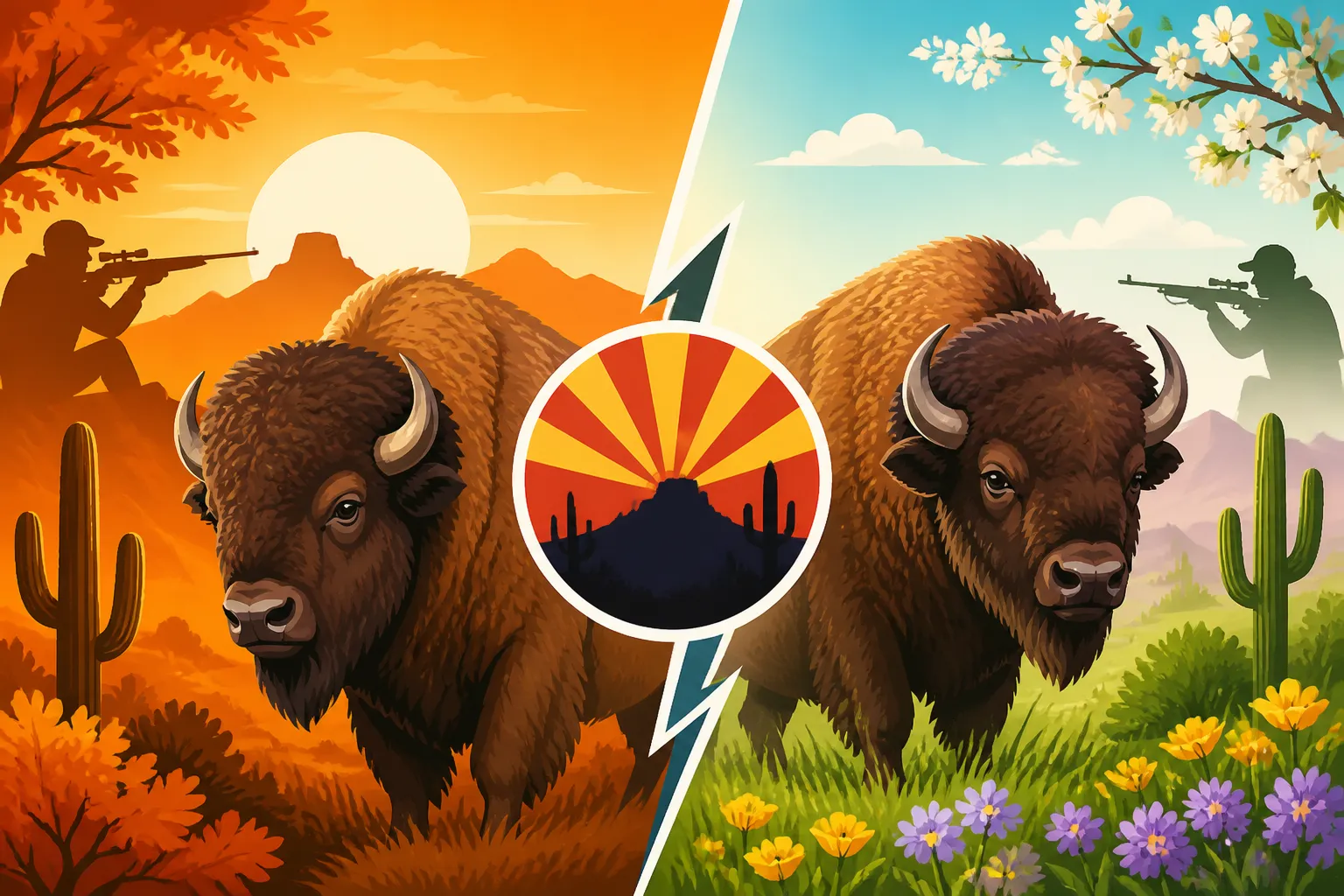
Arizona Fall Bison Against Spring Bison Hunts
Planning a hunt for Arizona bison is often a dream for many, but navigating the specific differences between spring and fall seasons can feel like deciphering an ancient scroll, leaving many hopeful hunters confused about when and how to maximize their chances. This comprehensive guide will meticulously break down the unique aspects of Arizona's spring and fall bison hunts, offering clarity on everything from draw odds and environmental conditions to hunting strategies, so you can make informed decisions when applying for one of the state's most coveted tags.
Understanding Arizona's Bison Hunting Opportunities
Arizona offers a truly unique big game experience with its free-ranging bison herds, a rare and highly sought-after opportunity that stands apart from typical elk or deer hunts. These aren't your typical plains bison; these are animals adapted to the challenging, rugged landscapes of northern Arizona. The sheer difficulty in drawing a tag, coupled with the formidable nature of the animal and its habitat, makes securing and successfully executing an Arizona bison hunt an unparalleled achievement in North American hunting. Many hunters spend a lifetime applying, sometimes without ever drawing, which speaks volumes about the exclusivity and demand for these tags.
The Rarity of an Arizona Bison Tag
Let's be real, drawing an Arizona bison tag is like winning the lottery, only harder. The Arizona Game and Fish Department issues very few permits each year, a testament to their careful management of these unique herds. This extreme scarcity means that many dedicated hunters apply for decades, accumulating bonus points with each unsuccessful attempt, hoping that one year their number will finally come up. The odds are genuinely stacked against you, and it's a frustration shared by nearly everyone who has dreamed of pursuing these magnificent animals. Understanding that going in helps manage expectations, but it certainly doesn't dim the desire to chase that dream.
Because these tags are so few and far between, every detail of your application needs to be precise. You'll want to dive deep into information like Arizona Bison Draw Odds, often found on platforms that analyze draw statistics. Non-residents face an additional hurdle, as Arizona caps nonresident tags at a small percentage of the total. Specifically, Arizona Caps Nonresidents at Ten Percent of Every Hunt, meaning the already slim odds become even thinner for those coming from out of state. It's a tough pill to swallow, but it's the reality of hunting in a state with such high demand and limited resources.
Where Arizona's Bison Herds Roam
Arizona's bison herds are primarily found in two distinct areas: the House Rock Wildlife Area and within or adjacent to Grand Canyon National Park. The House Rock herd, managed by Arizona Game and Fish, is the primary target for most state-issued hunts. This area is characterized by a mix of juniper woodlands, sagebrush flats, and open grasslands, all set against the dramatic backdrop of the Vermilion Cliffs. It's rugged, often remote country, and these bison are wild, wary animals that demand respect and serious hunting effort.
Then there's the Grand Canyon bison, which often cause management headaches for the National Park Service due to their growing population and impact on park resources. While direct hunting within the national park itself is generally prohibited, the Arizona Game and Fish Department sometimes coordinates with federal agencies for population reduction efforts, which can lead to unique hunt opportunities. However, for the purposes of the state draw, most focus is on the Arizona Bison on the Kaibab and House Rock populations. Accessing these areas often requires navigating remote dirt roads, and a good 4×4 vehicle is pretty much non-negotiable, especially after any significant rain or snow.
The Nuances of Arizona's Spring Bison Hunts
Spring bison hunts in Arizona offer a distinct set of challenges and advantages compared to their fall counterparts. The landscape is just starting to shake off winter's chill, and the behavior of the bison reflects this seasonal transition. It's a time of rejuvenation, but also of unpredictable weather, which can turn a mild day into a harsh ordeal in a matter of hours.
Typical Season Dates and Conditions
Arizona's spring bison hunts typically occur in late February through March. This window can vary slightly year to year, so always confirm the exact dates in the official regulations booklet, which you can usually find by reading The Arizona Hunt Regulations Booklet. During this period, the northern Arizona high country can still be quite cold, with overnight temperatures often dipping below freezing, and the potential for late-season snowstorms is a very real factor. However, daytime temperatures can quickly warm up, sometimes reaching into the 50s or 60s, creating significant temperature swings that hunters need to be prepared for.
The landscape during a spring hunt is often a mosaic of melting snow patches, emerging green grasses, and still-dormant vegetation. Water sources, which can be critical for concentrating animals later in the year, might be abundant from snowmelt or still frozen solid. This variability means scouting becomes even more critical, as conditions can change rapidly. Muddy roads are a constant threat, and getting stuck far from any services is a very real possibility, so always tell someone where you're going and when you expect to return.
Hunting Strategies for Spring Bison
Hunting bison in the spring often means dealing with animals that are less concentrated than they might be in the fall. They might be spread out, seeking out those first tender shoots of green grass, or still grouped up from winter, moving across larger areas. One common strategy is to cover a lot of ground, using high vantage points for glassing. A good pair of binoculars and a spotting scope are indispensable here; you'll spend hours pouring over the landscape, searching for dark specks that could be bison. When you're searching vast expanses of the House Rock Wildlife Area, patience becomes your most important tool.
Another key aspect of spring hunting is understanding the bison's post-winter condition. Bulls might still be shedding their winter coats, and their behavior won't be dominated by the rut, which is a fall phenomenon. This means less vocalization and potentially more solitary behavior from older bulls. Stalking in this open country requires extreme caution; bison have excellent senses, and their sheer size makes them easily visible if you're not careful. Paying attention to wind direction is paramount, as a bison's sense of smell is incredibly keen. Getting close often means long, careful approaches, utilizing every fold in the terrain to stay out of sight.
Delving into Arizona's Fall Bison Hunts
Fall bison hunts in Arizona contrast sharply with their spring counterparts, offering different environmental dynamics and animal behaviors that can influence a hunter's strategy and success. This is often when the landscape comes alive with richer colors and the air carries a crispness that signifies the change of seasons.
Season Dates and Environmental Differences
Arizona's fall bison hunts generally take place in October and November. This time of year sees a significant shift in conditions from spring. The summer monsoons have typically brought moisture, leading to more abundant forage, and the temperatures are generally cooler and more stable than the spring's fluctuating weather. You'll still get cold nights, but the risk of extreme snowstorms that might close roads for days is typically lower, though not entirely absent. The air is often clearer, offering incredible long-range visibility, which is a major advantage for glassing vast tracts of land.
The vegetation might be turning golden, especially in areas with aspens or cottonwoods, creating a stunning backdrop but also providing different kinds of cover for both hunter and hunted. Water sources might be less abundant than in spring if the monsoon season was light, potentially concentrating animals around remaining water holes. This can be a double-edged sword: easier to find bison, but also more competition or increased pressure from other hunters if a leftover tag was picked up after the Arizona Runs Two Draw Cycles, February and June. Understanding these environmental nuances is critical for effective scouting and hunting.
Tactics and Challenges of Fall Bison Hunting
The most significant difference in fall bison hunting is often the rut. While not as pronounced as an elk rut, bison bulls do engage in breeding behavior during the fall, which can sometimes make them more visible or vocal. Bulls might be more aggressive, challenging each other, and sometimes moving with cows, making for larger, more visible groups. This behavior can be leveraged by hunters, as these animals might be less wary while focused on breeding. However, it also means potentially encountering larger, more agitated bulls.
Glassing remains a primary tactic, but with the possibility of bison concentrated around water sources or specific feeding areas, focusing your efforts becomes a bit easier. Tracking can also be more effective in the fall, especially after a light rain, as the ground might be softer and hoof prints more discernible. Given the size and power of these animals, shot placement is absolutely critical. Bison are incredibly tough, and a poorly placed shot can lead to a very difficult, if not impossible, recovery in rugged terrain. Always use a rifle and cartridge appropriate for such a large animal, prioritizing penetration and energy.
Comparing Spring and Fall Bison Hunts
Deciding whether to apply for a spring or fall bison tag involves weighing the distinct characteristics of each season. There's no "better" option; it truly depends on your personal preferences, your tolerance for certain conditions, and your assessment of the draw odds.
Key Differences in Draw Odds and Accessibility
Historically, there isn't a massive disparity in draw odds between spring and fall bison hunts for the same unit and weapon type, primarily because all bison tags are incredibly difficult to draw. However, some years might see a slight shift based on the specific number of tags allocated for each season. Platforms like GoHunt become invaluable here, providing historical draw data and predicting future odds based on application trends. This kind of detailed analysis can help you strategically decide which season to put your precious points towards.
Access can differ significantly. Spring hunts might mean navigating snow and mud, potentially limiting road access to certain areas, especially higher elevations or less-maintained routes. Fall hunts, generally after the monsoon season, might offer better road conditions, but specific areas could still be wet from recent storms. Consider which type of challenging terrain you're more equipped and comfortable to handle. If you're physically preparing, think about Preparing Physically for a Desert Hunt, as even the high country has its own version of "desert" challenges.
Pros and Cons of Each Season
To help put things into perspective, here's a quick breakdown of the general advantages and disadvantages of each season:
| Feature | Spring Bison Hunt (Feb-Mar) | Fall Bison Hunt (Oct-Nov) |
|---|---|---|
| Temperatures | Wide swings; cold nights, potential for warm days; late snow | Generally cooler, more stable; crisp air; less extreme snow risk |
| Vegetation | Dormant with emerging green; melting snow patches | Vibrant fall colors; good forage; less widespread water if dry |
| Bison Behavior | Less concentrated; seeking new forage; post-winter condition | Rut activity (more visible/vocal); potentially more grouped up |
| Access | Potential for snow/mud; roads may be impassable | Generally better road conditions; clearer trails after dry spell |
| Physical Demands | Navigating mud/snow; cold weather gear; potential for rapid changes | Longer days of glassing; colder temps, but less extreme swings |
| Visibility | Can be excellent on clear days, but hazy conditions possible | Often clearer, excellent long-range visibility |
| Trophy Quality | Animals still recovering from winter; less coat prime | Animals in prime condition, good coat; rut-induced challenges |
Ultimately, the choice comes down to personal preference. Some hunters prefer the challenge of unpredictable spring weather and finding animals before they've been pressured. Others prefer the stable conditions and potential rut activity of the fall. No matter which you choose, understand that it will be a demanding hunt.
Applying for an Arizona Bison Tag
Getting an Arizona bison tag requires careful planning, adherence to strict deadlines, and a healthy dose of patience. Unlike some other big game species, bison tags are exclusively part of the draw system, meaning no over-the-counter options exist. This emphasizes the importance of understanding the process inside and out.
Application Deadlines and Process
Arizona runs two main draw cycles annually. Elk and antelope are in the February cycle, while deer, bighorn sheep, and bison fall under the June cycle. So, if you're dreaming of a bison hunt, mark your calendar for June! The application deadline is usually in early June, but it’s absolutely critical to confirm the exact date and time each year. A common mistake is missing the deadline by even a few hours, completely nullifying your application for the entire year. To set yourself up for success, it’s best to create an account on the Setting Up an Arizona Portal Account well in advance and familiarize yourself with the application interface.
The application process itself involves selecting your desired hunt number (which specifies species, unit, season, and weapon), paying the application fee, and purchasing your hunting license if you haven't already. You'll apply for your first, second, and third choice hunt numbers. Since bison tags are so rare, many applicants will only list bison as their first choice, or perhaps a different bison hunt as their second, often leaving the third choice blank. Remember, this is about getting a tag, and for bison, every choice counts. The state details How Arizona Bison Tags Are Allocated within their regulations, which is worth reviewing thoroughly.
Maximizing Your Odds and Research
When it comes to maximizing your odds for an Arizona bison tag, it’s really about accumulating bonus points. Every year you apply and are unsuccessful, you earn a bonus point for that species. These points essentially give you additional entries in subsequent draws, increasing your mathematical chance of drawing a tag over time. This is where Earning an Arizona Point by Applying comes into play – consistency is key. There's also the How Arizona's Bonus Point Pass Awards the First Twenty Percent, which gives a percentage of tags to those with the most points, further emphasizing the long game.
This is also where resources like GoHunt become invaluable. Their detailed draw odds and harvest data can help you understand the historical trends for specific bison units and seasons. While bison tags are consistently tough, GoHunt can offer insights into whether, for example, a specific hunt code had a slightly better draw rate one year, or if applying for a particular weapon type (like muzzleloader vs. rifle) might marginally improve your chances, though these margins are usually razor-thin for bison. Investing time in research before the June deadline can truly set you apart, helping you avoid common pitfalls and strategically use your hard-earned bonus points. Don't forget that even if you don't draw, you can still gain a point just by applying for the species.
Disclaimer
Please remember that hunting regulations, season dates, and tag application processes in Arizona can change. It is always the hunter's responsibility to consult the most current Arizona Game and Fish Department regulations before planning any hunt or submitting an application.