Pronghorn on the Northern Grasslands
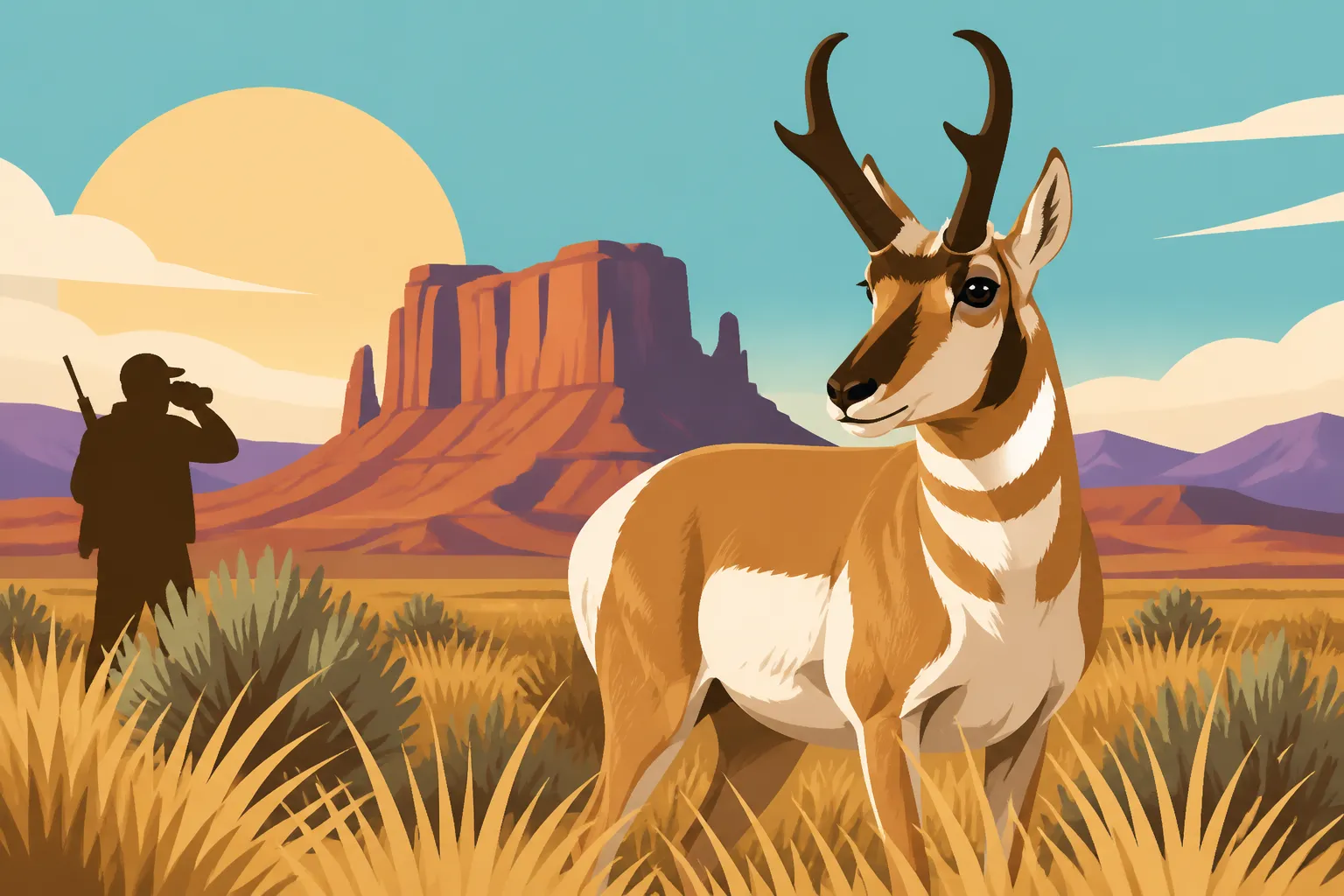
Staring out across the vast, rolling grasslands of northern Arizona, many hunters feel a pang of intimidation. It's a landscape of endless horizons, dotted with sagebrush and juniper, and spotting a fast-moving pronghorn can feel like finding a needle in a colossal haystack. This guide is here to demystify the process, offering a deep dive into how these magnificent animals thrive in this unique environment and how you can successfully pursue them.
Understanding Arizona's Pronghorn Habitat
Arizona might be known for its deserts, but the northern part of the state harbors expansive grasslands that are prime habitat for pronghorn, often called "speed goats" for good reason. These aren't your typical dense forests; we're talking about wide-open country that demands a different kind of hunting strategy and a deep understanding of the landscape.
The Unique Ecology of Northern Grasslands
The northern grasslands of Arizona are a fascinating ecosystem, shaped by elevation, rainfall, and historic grazing patterns. These areas, generally found on plateaus above 5,000 feet, receive enough moisture to support a mix of native grasses, forbs, and scattered shrubs. This vegetation forms the perfect buffet for pronghorn, which are selective grazers and browsers, constantly seeking out the most nutritious plants. Unlike deer or elk that often rely on thick cover, pronghorn thrive in these open environments, using their incredible eyesight and speed as their primary defenses. The undulating terrain, while seemingly flat from a distance, provides subtle folds and dips that offer precious moments of concealment for both animal and hunter.
These grasslands are not static; they are dynamic systems influenced by seasonal changes. Spring rains bring a flush of new growth, providing lush forage. Summer monsoons can green things up again, but also create challenging conditions with sudden downpours and lightning. Winters, though often mild, can bring snow that covers vital food sources, pushing pronghorn to south-facing slopes or lower elevations. Understanding these ecological rhythms is crucial to predicting where pronghorn might be at different times of the year. This dynamic environment is precisely why Arizona is a great place to hunt, but it also means hunters need to be adaptable and prepared for varying conditions.
Key Geographic Areas and Their Characteristics
When we talk about northern Arizona's pronghorn country, several key units and regions immediately come to mind. Areas like Anderson Mesa, between Flagstaff and Payson, are classic pronghorn habitat, characterized by sprawling plains, scattered ponderosa pine, and volcanic cinder cones that offer elevated glassing points. Further north, units bordering the Grand Canyon, though often thought of as mule deer country, also hold significant pronghorn populations, particularly in the more open plains south of the canyon rim. These areas typically have a mix of federal lands, primarily Bureau of Land Management (BLM) and National Forest, interspersed with state trust land and private holdings.
Each of these geographic areas has its own subtle nuances. For instance, the grasslands west of Flagstaff, often referred to as the "Big Chino Valley," offer vast, unbroken expanses of grass that can make stalking incredibly difficult but are also home to healthy herds. In contrast, areas near the Mogollon Rim might have smaller, more fragmented pockets of grassland interspersed with heavier timber, requiring hunters to focus on transition zones and edges. It's not just about finding "grass"; it's about understanding the specific type of grass, the presence of water sources, and how these factors interact with the topography. Checking out maps and understanding the unit boundaries is essential before you apply, as knowing what you're getting into physically can make all the difference.
Why Pronghorn Thrive in Open Country
Pronghorn are truly masters of the open plains, having evolved unique adaptations that allow them to not just survive but flourish in these exposed environments. Their most notable feature is their incredible speed, capable of reaching sustained speeds of up to 60 miles per hour, making them the fastest land mammal in North America. This speed is their primary defense mechanism against predators like coyotes and mountain lions, and it’s why they prefer wide-open spaces where they can see danger coming from a long way off and then simply outrun it. Their long legs and specialized lung capacity are perfectly designed for covering vast distances at high speed.
Beyond speed, their eyesight is arguably the best of any land mammal on the continent. With eyes positioned far to the sides of their head, they have an astonishing 270-degree field of view, allowing them to spot movement at incredible distances – sometimes up to four miles away with the naked eye. This makes them notoriously difficult to approach, as they're likely to see you long before you ever see them. Their light tan and white coloration also provides excellent camouflage against the sun-baked grasses and sagebrush, allowing them to disappear into the landscape even when standing in plain sight. These combined adaptations mean that hunting pronghorn is often a test of patience, glassing prowess, and strategic stalking.
Pronghorn Behavior and Movement Patterns
Successfully hunting pronghorn means more than just finding an open field; it means understanding the intricate dance of their daily and seasonal lives. These animals are creatures of habit, yet their movements are always dictated by the immediate needs for food, water, and safety.
Seasonal Migrations and Range Use
While not all Arizona pronghorn undertake massive, multi-state migrations like some of their northern counterparts, many populations exhibit distinct seasonal movements within their home ranges. During the lush spring and summer months, they'll often be found in higher elevation grasslands where forage is abundant and nutritious. As the late summer heat intensifies and forage begins to dry out, their focus often shifts dramatically to reliable water sources. This is a critical time for hunters, as knowing where water is available can significantly narrow down potential locations. Areas around stock tanks and natural springs become magnets for herds, especially during archery seasons when temperatures are still quite high.
Come winter, if significant snow blankets the northern plateaus, pronghorn will often move to lower elevations or to areas where strong winds have scoured the snow, exposing forage. This isn't a hard and fast rule, as mild winters might see them staying higher, but it's a pattern to be aware of if you're ever drawn for a late-season hunt (though most pronghorn seasons are in the early fall). Their movements are also influenced by human disturbance, with heavy hunting pressure or increased recreational use sometimes pushing them into less accessible areas or causing them to become more nocturnal. Staying current with local conditions and observed patterns is always key, as pronghorn are more sensitive to change than you might initially think.
Herd Dynamics and Social Structure
Pronghorn have a fascinating social structure that influences their distribution and behavior. During much of the year, particularly outside the rut, you'll often find herds of does and fawns, sometimes numbering in the dozens, moving together across the landscape. Bachelor groups of bucks also form, usually smaller in number, but occasionally you'll see a collection of impressive animals. As the rut approaches, generally in late August and early September, this social structure breaks down. Dominant bucks establish territories, often marked by scrapes and urine, and attempt to gather harems of does.
During the rut, bucks become much more visible, often chasing does tirelessly and engaging in intense sparring matches with rival males. This can present both opportunities and challenges for hunters. While the bucks might be distracted by breeding activities, they're also highly mobile and can cover vast distances quickly. Understanding these dynamics is essential for successful hunting. For instance, knowing when the elk rut peaks on the Rim might be different than when the pronghorn rut is in full swing on the grasslands, and those differences dictate where you should focus your scouting and hunting efforts. It's a game of reading the animals and the calendar.
Foraging Habits and Preferred Food Sources
Pronghorn are not just grazers; they're selective and opportunistic, with a diet that reflects the diversity of their grassland habitat. While they do consume grasses, their preferred foods are often forbs (broad-leafed plants) and the tender shoots of shrubs like sagebrush. This selective foraging ensures they get the most nutrients from their diet. They have a four-chambered stomach, similar to deer, which allows them to efficiently digest tough plant material, but they generally prefer more palatable and digestible options when available.
Their feeding patterns are often concentrated during the cooler parts of the day – early morning and late evening – though they will feed sporadically throughout the day. You'll often see them moving slowly across a plain, heads down, systematically cropping vegetation. However, their acute senses mean they'll often lift their heads every few minutes, scanning the horizon for any sign of danger. This constant vigilance is part of what makes them so challenging. Identifying areas with a rich diversity of forbs or healthy stands of sagebrush can be a crucial first step in finding where these animals will concentrate their feeding efforts.
Locating Pronghorn on Arizona's Northern Plateaus
Finding pronghorn in such expansive country demands a keen eye and the right tools. It's less about busting through brush and more about strategic observation and thoughtful planning.
The Art of Glassing Wide-Open Spaces
If there's one skill paramount to pronghorn hunting, it's glassing. The vast, open nature of northern Arizona grasslands means that you'll spend far more time behind optics than you will stalking or shooting. You simply cannot effectively cover enough ground on foot to find these animals without first locating them from a distance. A good pair of 10x binoculars is your baseline, but to truly excel, you'll want to invest in a quality spotting scope, preferably 65mm or larger, with a magnification range up to 60x or more. A sturdy tripod is non-negotiable for stable viewing, especially at high magnification or in windy conditions. Many experienced hunters will tell you that the right optics power for Arizona's long desert sightlines makes all the difference.
The technique isn't just about randomly sweeping the horizon. Instead, break the landscape into manageable grids. Start at the closest point in your grid and systematically scan slowly, looking for anything that seems out of place – a horizontal line in a vertical world, a patch of white, or a glint of horn. Pronghorn, with their excellent camouflage, can blend in surprisingly well, even in open country. It’s often the subtle details that give them away: a twitch of an ear, a flick of a tail, or the distinct shape of their body against the horizon. Don't forget to study not just the obvious feeding areas, but also the subtle topographical breaks, drainages, and even old fence lines, as these can provide cover or travel corridors.
Identifying Key Features for Pronghorn
While pronghorn prefer open country, they aren't just randomly distributed. They are drawn to specific features within the landscape that provide vital resources or a tactical advantage. Water sources, such as stock tanks, windmills, and natural springs, are absolute magnets, especially during dry periods or early season hunts. These spots become predictable gathering points, offering hunters a strategic place to focus their glassing efforts. Even a small, stagnant pool can be a major draw for a herd.
Beyond water, look for subtle changes in elevation – small knolls, ridges, or draws – that offer both visibility and potential cover. Pronghorn love to bed down on slight rises where they can see for miles in all directions, making them incredibly difficult to sneak up on. Conversely, these same features can provide the stalking hunter with an approach lane if used correctly. Focus on the transitions between different vegetation types, such as where grasslands meet scattered juniper or sagebrush flats. These edges often provide both food and a modicum of concealment. Finally, don't overlook old roads, two-tracks, or fence lines, as pronghorn often use these as travel routes.
Using Technology for E-Scouting and Planning
In today's hunting world, technology is an indispensable tool for locating game, and pronghorn hunting is no exception. E-scouting, or scouting from your computer or phone, allows you to meticulously analyze a unit before you ever set foot in it. Satellite imagery from platforms like Google Earth or dedicated hunting apps like onX Hunt provides invaluable insights into terrain, vegetation types, and potential access points. You can identify potential glassing knobs, water sources, and likely bedding areas from the comfort of your home. It’s a huge time-saver and can help you develop a solid game plan long before opening day.
Tools like GoHunt are particularly useful for pronghorn hunters in Arizona. Their application data and draw odds information can help you determine which units offer the best chances of drawing a tag, while their mapping features allow you to overlay public and private land boundaries, topography, and even historical burn data. This comprehensive approach lets you pinpoint areas of high potential and map out exact access routes. You can even mark potential stalk routes, identify areas of high cover, and note natural barriers. Remember, technology is a tool to enhance your boots-on-the-ground efforts, not replace them. Combine your e-scouting with real-world scouting trips to verify conditions and gain a deeper understanding of the landscape.
Hunting Strategies for Northern Arizona Pronghorn
Once you've located a buck, the real challenge begins. Northern Arizona's open terrain forces specific hunting strategies, requiring a blend of patience, stealth, and precise execution.
Stalking Challenges in Open Terrain
Stalking a pronghorn in open country is often described as one of the most difficult feats in Western hunting, and for good reason. With their phenomenal eyesight, any movement or silhouette against the skyline is immediately detected. Cover is sparse, often limited to small rises, dry creek beds, or patches of taller sagebrush. This means every step of your stalk needs to be meticulously planned. Before you even think about moving, spend significant time watching the animal. Understand its direction of travel, its feeding patterns, and any potential bedding areas. Look for any topographical feature, no matter how small, that can offer a momentary reprieve from their watchful eyes.
Wind is another critical factor. While pronghorn don't rely on their nose as heavily as deer or elk, a sudden gust carrying your scent can still spook them. Always approach into the wind or with a crosswind. The sun's position also matters; approaching with the sun at your back can cast a long shadow, while approaching with the sun in their eyes might offer a slight advantage. The biggest frustration for many hunters is feeling like they're crawling for hours, only to have the pronghorn get up and casually walk away before they can get into range. It's a game of inches and patience, sometimes requiring multiple stalks on the same animal over the course of a day. Remember that playing thermals on a canyon stalk is one thing, but on flat plains, wind is king.
The Importance of Patience and Observation
When it comes to pronghorn, patience isn't just a virtue; it's a non-negotiable requirement. You might spend hours, even days, glassing without spotting a buck worth pursuing, or you might find one only to have a stalk blow up because of an unexpected movement or a slight miscalculation. The key is to remain disciplined and keep observing. Sometimes, the best strategy is to find a good glassing spot, set up your tripod, and simply watch a herd for an extended period. Observe their feeding cycles, their travel routes, and where they typically bed down. Understanding these patterns can make your eventual stalk far more effective.
Don't be afraid to take a break if a stalk isn't going well. Pronghorn often move to bed down in the midday heat, offering a window for a re-approach or to simply reposition for later. Rushing a stalk is almost always a recipe for failure. Many successful pronghorn hunts come down to out-waiting the animal, letting it move into a more favorable position, or simply waiting for it to become preoccupied with feeding or rutting behavior. This patient, observant approach is truly why Arizona Coues hunting is a glassing game, and it holds just as true for pronghorn.
Ethical Shot Placement and Range Considerations
Because pronghorn live in such open country, shots can often be at extended ranges. It's not uncommon for shots to be taken at 300, 400, or even 500 yards. This means that practicing at these longer distances and having an accurate rifle system is absolutely essential for ethical hunting. A rangefinder is a critical piece of gear to precisely determine the distance, and knowing your rifle's ballistic drops and windage adjustments is non-negotiable. Even a slight breeze can push a bullet significantly off target at these ranges.
Aiming for the lung-heart vitals, just behind the front shoulder, is the standard for a quick, humane harvest. Given their smaller body size compared to deer or elk, the margin for error is smaller. A solid rest, whether from a bipod, shooting sticks, or a backpack, is paramount for stability. Shooting sticks or a bipod on rocky ground can make all the difference in achieving that stable platform. Never take a shot you're not 100% confident in. If the shot isn't there, back out and try to improve your position or wait for a better opportunity. Respect for the animal and ethical shot placement should always be your top priority.
Draw Odds and Tag Acquisition for Northern Pronghorn
Arizona's pronghorn tags are highly coveted, and for good reason—they offer a unique hunting experience. However, this popularity means tags are limited and typically acquired through a draw system, making understanding the process critical.
Understanding Arizona's Application Process
Arizona runs a bonus point system for its big game draws, including pronghorn. The state uses two main draw cycles throughout the year: one in February for elk and antelope, and another in June for deer, sheep, and bison. For pronghorn, you'll be focusing on that February deadline. To even apply, you'll need to purchase an Arizona hunting license. Each species requires a separate application, and you'll typically be able to select up to five unit choices in order of preference. The system awards tags in a couple of passes, with a significant portion going to applicants with the most bonus points. Earning an Arizona point by applying is a common strategy for building preference over time.
It's a weighted lottery, meaning that while points increase your odds, there's always a random element. The more points you accumulate, the better your chances in the "Bonus Point Pass," which allocates a percentage of the tags to the highest point holders. The remaining tags are then distributed in a "Random Pass." This system can be frustrating for new applicants or those with few points, as coveted units for Arizona Pronghorn Draw Odds can require a decade or more of applying to build up enough points to feel confident. However, it's also worth noting that some units, often those that are harder to access or have slightly lower success rates, may require fewer points or even be attainable in the random pass.
Analyzing Draw Odds for Northern Units
Analyzing draw odds is perhaps the most strategic part of applying for an Arizona pronghorn tag. The Arizona Game and Fish Department (AZGFD) publishes draw reports after each cycle, detailing the number of applicants, points accumulated by successful applicants, and the resulting odds for each hunt number in every unit. This data is gold. For northern Arizona pronghorn, certain units consistently have higher point requirements due to their reputation for larger bucks or higher success rates. These are typically the "trophy" units that non-residents especially covet.
Resources like GoHunt provide excellent tools for breaking down this complex data. Their analytics can help you understand historical draw trends, compare unit-specific success rates, and even project point requirements for future draws. You'll want to look at the "odds with max points" versus "odds with zero points" to get a realistic picture. Some units might have excellent odds for max point holders, but virtually no chance in the random draw. Other units might offer a glimmer of hope in the random draw, even if you have zero points. It's about balancing your desired hunt experience with your realistic chances of drawing, given your current point total.
Strategies for Improving Your Chances
Building bonus points is the most straightforward way to improve your odds for a northern Arizona pronghorn tag. If you don't draw a tag, you automatically receive a bonus point for that species, which rolls over to the next year. You can also purchase a bonus point without applying for a hunt, ensuring you keep accumulating points even if you decide to sit out a year or aren't ready to commit to a hunt. Group applications are another strategy. While they can average points down in some states, in Arizona, if any member of a group draws a tag, everyone in that group draws. However, the group's application is assigned the point total of the member with the fewest points, so choose your hunting partners wisely!
Another lesser-known strategy is to consider less popular hunt dates or weapon types if they align with your hunting style. For example, archery hunts for pronghorn often have slightly better draw odds than rifle hunts, though they present a significantly greater challenge in terms of getting close to these wary animals. While the core of improving your chances lies in accumulating points, intelligent unit choice, based on a thorough analysis of draw odds and your personal tolerance for risk, is also vital. Don't be afraid to apply for a slightly "easier" unit to increase your chances of finally drawing a tag.
Preparing for a Northern Arizona Pronghorn Hunt
Once you've drawn that coveted tag, the real planning begins. A pronghorn hunt in northern Arizona is physically demanding and requires meticulous preparation to maximize your success and comfort.
Essential Gear for Open Country
Hunting pronghorn in northern Arizona demands specific gear tailored to wide-open spaces and potentially harsh conditions. Your optics are paramount: a high-quality spotting scope on a sturdy tripod is indispensable for covering vast distances and evaluating bucks. Combine this with excellent 10x or 12x binoculars, preferably stabilized, for scanning. A laser rangefinder that can accurately measure out to 1,000 yards or more is not a luxury, but a necessity, given the potential for long shots. For your rifle, choose a flat-shooting caliber that you are proficient with, zeroed for at least 200-300 yards, and bring a ballistic calculator or cheat sheet. Don't forget a solid bipod or shooting sticks to ensure a steady rest for those long-range opportunities.
Clothing should be layered, even in the early fall. Mornings on the northern plateaus can be quite chilly, but midday temperatures can soar, especially in August and early September archery seasons. Moisture-wicking base layers, insulating mid-layers, and a quiet, windproof outer layer are ideal. A wide-brimmed hat, sunglasses, and sunscreen are critical for protection against the intense Arizona sun. Hydration is also key; carry a significant amount of water – often more than you think you'll need – and consider a water filtration system for emergency resupply from stock tanks if necessary. Don't forget comfortable, broken-in hiking boots suitable for covering uneven ground and potentially prickly vegetation.
Physical and Mental Conditioning
Don't let the "flat" appearance of the grasslands fool you; a pronghorn hunt can be incredibly physically demanding. You might not be climbing mountains, but you will be walking for miles across uneven terrain, often in soft dirt or over small washes. More significantly, successful stalks often involve extended periods of crawling or low-crawling, sometimes for hundreds of yards, carrying your rifle and pack. This requires core strength, hip flexibility, and knee endurance. Incorporate exercises like lunges, planks, and even bear crawls into your routine months before the hunt. Preparing physically for a desert hunt is about more than just walking; it's about being able to move stealthily and comfortably when it counts.
Mentally, a pronghorn hunt tests your patience and resilience. You will face blown stalks, missed opportunities, and the constant challenge of spotting an animal that seems to disappear into thin air. Frustration can easily set in. Develop a strong mental game by setting realistic expectations, practicing positive self-talk, and understanding that success often comes after multiple failures. Learn to enjoy the process of glassing and the challenge of the stalk, rather than solely focusing on the outcome. This mental fortitude, combined with your physical preparation, will significantly increase your enjoyment and your chances of success.
Logistics: Water, Camp, and Vehicle Considerations
Logistics are paramount for a successful hunt in northern Arizona's vast landscapes. Water availability is often a concern, especially if you're planning a multi-day trip. While stock tanks dot the landscape, they might be dry or heavily used by cattle, so bringing ample water for drinking, cooking, and hygiene is essential. For camping, much of the northern grasslands are on BLM or National Forest land, allowing for dispersed camping. This means you can often set up camp anywhere that's not restricted, following Leave No Trace principles. Always check for current fire restrictions, especially during dry periods.
Vehicle access can vary. Many areas are crisscrossed with dirt roads and two-tracks, but some can become impassable after heavy rains. Carrying a good spare tire, a full-size jack, and recovery gear like a shovel and tow strap is a wise precaution. Mapping apps like onX Hunt, coupled with Forest Service MVUM (Motor Vehicle Use Maps), are crucial for understanding legal driving routes and seasonal road closures across Arizona forests. Remember, you can't drive off-road to retrieve game, so be prepared to pack out your animal. Planning your approach routes, escape routes, and potential game retrieval paths beforehand can save a lot of headaches when you finally connect with a buck.
Disclaimer
Please note: Hunting regulations and seasons can change frequently. Always consult the most current Arizona Game and Fish Department regulations before planning any hunt. This guide is for informational purposes only and does not supersede official regulations.