Rocky Mountain Bighorn Along the Salt River
The dream of drawing a bighorn sheep tag in Arizona feels like chasing a desert mirage for many of us. With incredibly tough odds and the sheer majesty of these animals, it's easy to get discouraged just thinking about it. But for those persistent few, the unique challenge of pursuing Rocky Mountain Bighorn along the iconic Salt River represents one of the most incredible hunting experiences Arizona has to offer. This guide will delve deep into what makes these sheep so special, where they roam, and what it truly takes to even have a chance at this once-in-a-lifetime hunt.
The Distinctive Nature of Arizona's Rocky Mountain Bighorn
When most folks think of bighorn sheep in Arizona, their minds often drift to the widespread Desert Bighorn. While those rams are certainly magnificent, Arizona is also home to a smaller, more localized population of Rocky Mountain Bighorn. These aren't just desert-adapted sheep; they represent a unique genetic lineage that has carved out a life in a very specific, rugged habitat. Understanding the subtle yet significant differences between these two sub-species is key to appreciating the Salt River's special inhabitants.
Physical Traits Setting Them Apart
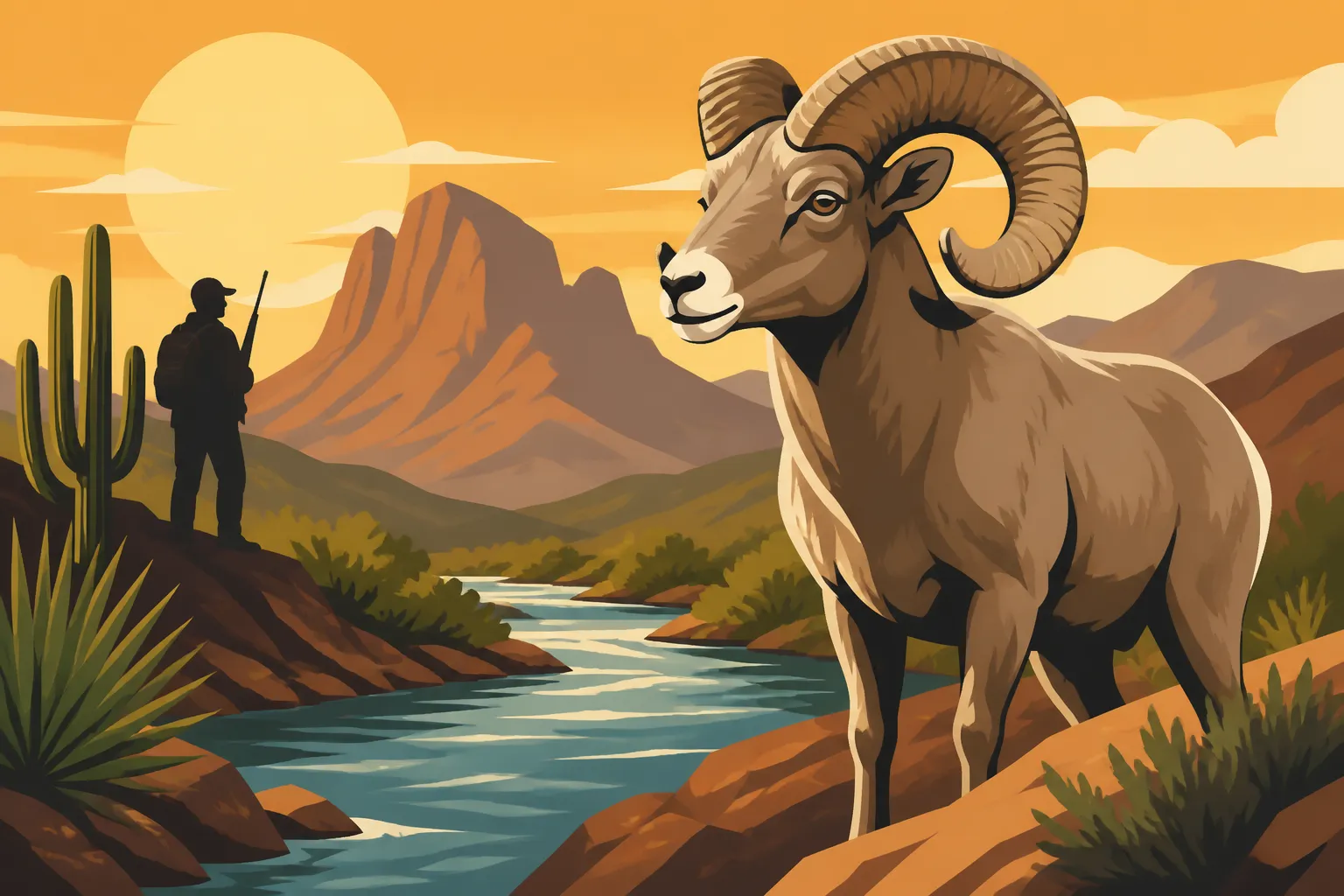
Rocky Mountain Bighorn Sheep, even in Arizona, tend to be slightly larger and heavier-bodied than their desert counterparts. While both boast impressive curling horns, the Rocky Mountain rams often display a more robust, "fuller" curl, sometimes appearing heavier at the base. Their coats are typically a darker brown, often with a grayish tint, in contrast to the lighter, sandier tones common among Desert Bighorn, which helps them blend into the sun-baked, rocky terrain of the lower desert. It's not always an obvious difference at a glance, especially when you're glassing from miles away, but up close, the distinction is clear. This size and coloration are adaptations to the slightly higher elevations and more temperate, albeit still harsh, environment they inhabit.
Another interesting aspect is their hooves. While all bighorn have incredible traction on steep terrain, the Rocky Mountain bighorns' hooves might show subtle adaptations to handle a bit more varied ground, perhaps a mix of rock and some soil, compared to the extremely abrasive and rugged rocks favored by Desert Bighorn. This subtle difference allows them to navigate the river breaks and canyon systems of the Salt River with unparalleled agility, making them incredibly difficult to approach. You really have to get to know the subtle nuances to understand why Arizona Holds Desert and Rocky Mountain Bighorns in separate, distinct populations.
Habitat Preferences Along the Salt River
The Salt River drainage is truly the stronghold for Arizona's Rocky Mountain Bighorn. This isn't your typical high-alpine Rocky Mountain habitat found further north; instead, it's a dramatic landscape of deep canyons, steep cliffs, and volcanic rock formations interspersed with riparian corridors. These sheep are masters of this broken country, utilizing the sheer verticality for escape from predators like mountain lions and coyotes, while staying close enough to the life-giving water of the Salt River. Their range typically includes the Salt River Canyon, extending into areas around the Roosevelt Lake and Apache Lake systems.
Unlike Desert Bighorn that might traverse vast stretches of open, arid country between water sources, the Rocky Mountain Bighorn along the Salt River are more tightly associated with the river and its immediate tributaries. They rely on the permanent water source and the unique vegetation that thrives in these riparian zones, often feeding on grasses, forbs, and browse. This habitat preference means they don't wander as extensively into the surrounding Sonoran Desert as their desert relatives might. Understanding these microhabitats is critical for anyone hoping to Scouting an Arizona Unit Before the February Deadline for these elusive creatures; you can't just scout anywhere in a unit, you need to focus on the specific river corridors.
Why the Salt River Holds Rocky Mountain Bighorn
It might seem counterintuitive to find Rocky Mountain Bighorn in the arid landscapes of Arizona. This isn't the timbered peaks of Colorado or the sprawling ranges of Montana. Their presence here is a testament to historical movements, adaptive evolution, and successful conservation efforts. The Salt River provides a unique ecological niche that, despite its desert surroundings, mimics some critical aspects of their traditional range.
Historical Range and Relocation Efforts
The presence of Rocky Mountain Bighorn in Arizona is a fascinating chapter in wildlife history. While indigenous bighorn populations were once more widespread across North America, significant declines occurred due to disease, overhunting, and habitat loss. The Rocky Mountain Bighorn populations in Arizona are largely the result of successful transplant efforts. In the mid-20th century, sheep were brought from other states, like Colorado and Montana, and carefully introduced into suitable habitats. The Salt River Canyon proved to be an ideal location, offering the rugged terrain, water sources, and forage necessary for them to establish a foothold and thrive. These historical relocations underscore the commitment Arizona Game and Fish Department has made to restoring and maintaining healthy bighorn populations, recognizing the unique value of both sub-species. Transplant Programs That Rebuilt Herds are a shining example of how dedicated conservation can bring back iconic wildlife.
The initial releases were painstaking, involving trapping efforts in established herds and careful transportation to new, promising areas. Biologists meticulously studied the landscape, looking for areas with minimal human disturbance, diverse forage, and secure escape terrain. The Salt River, with its deep, inaccessible canyons, offered that perfect blend of security and resources. This careful planning laid the groundwork for the robust herds we see today, allowing hunters a chance at these magnificent animals.
Unique Ecosystem of the Salt River Corridor
The Salt River isn't just a geographical feature; it's a vibrant, linear oasis cutting through the desert. This unique corridor creates a microclimate that supports a different array of flora and fauna compared to the surrounding Sonoran Desert. The constant flow of water sustains lush riparian vegetation, including cottonwoods, willows, and various grasses, which provide critical forage and cover for the bighorn. The steep canyon walls, carved by millennia of water and erosion, offer the vertical escape terrain that bighorn sheep absolutely depend on. They can quickly ascend nearly vertical faces, leaving ground predators far below.
This combination of permanent water, diverse vegetation, and rugged topography forms a perfect mosaic for Rocky Mountain Bighorn. It’s an ecosystem that allows them to live their lives largely undisturbed, despite being relatively close to human population centers. This specific combination of features is Why Arizona Counts the Bighorns Separately; their ecological requirements and the specific challenges of managing their populations are distinct from their desert relatives. The stability of the Salt River's water levels, managed in part by upstream dams, plays a crucial role in maintaining this delicate balance, ensuring a consistent resource base for the sheep.
The Challenging Prospect of Drawing a Tag
Drawing a Rocky Mountain Bighorn Sheep tag in Arizona is often considered the holy grail of big game hunting. It’s an incredibly rare opportunity, making the application process intense and highly competitive. This isn't a tag you casually apply for; it's a long-term commitment, often involving years, if not decades, of accumulating bonus points.
Understanding Arizona's Bighorn Draw Odds
Arizona's draw system is famously tough for premier species, and bighorn sheep sit at the very top of that pyramid. While there might be more tags for Desert Bighorn across the state, the number of Rocky Mountain Bighorn tags for the Salt River units is exceptionally limited, often just one or two tags per hunt code, if any. This means the draw odds are astronomically low, often well below 1%. For many, the strategy involves applying year after year, slowly building up bonus points, hoping that one day, their number will finally come up. Resources like GoHunt become indispensable during this period, as they provide comprehensive data on draw odds, success rates, and unit breakdowns, helping applicants make informed decisions about where to apply their precious bonus points.
It’s a game of patience and perseverance. Many successful applicants have accumulated 20+ bonus points before finally drawing a bighorn tag. This makes the application process more about investment over time than a quick win. Every year you apply and don't draw for a species, you earn another bonus point, increasing your mathematical chances, however incrementally. Hunters need to keep a close eye on the Arizona Elk and Antelope Application Deadline and other crucial dates, as a missed application means missing out on a point that could be years in the making.
Application Strategies for Arizona Bighorn
Given the brutal odds, a well-thought-out application strategy is paramount. For many, this means focusing solely on accumulating points for bighorn sheep. You can apply for a bonus point only without actually applying for a hunt, ensuring you keep adding to your tally without risking a draw on a less desired hunt if you're truly only after bighorn. This is particularly relevant because Arizona Caps Nonresidents at Ten Percent of Every Hunt, making it even harder for out-of-state hunters to draw these coveted tags. Resident hunters, while still facing incredibly long odds, do have a slightly better mathematical chance.
Another strategy involves meticulous unit research. Even with few tags, analyzing past draw data, available through services like GoHunt, can provide marginal insights. Some units, even within the Salt River drainage, might have slightly different tag allocations or hunter success rates based on access or sheep population dynamics. However, for Rocky Mountain Bighorn, the primary strategy remains consistent: apply every year, earn your point, and be prepared for the long haul. There's no secret shortcut, just persistent participation in the draw and a hefty dose of luck.
| Feature | Desert Bighorn Sheep | Rocky Mountain Bighorn Sheep (Salt River) |
|---|---|---|
| Typical Size | Smaller to medium body mass | Slightly larger, heavier body mass |
| Coat Color | Lighter, sandy brown/tan | Darker brown, often grayish tint |
| Horn Shape | Can be more slender, often with wider flare | More robust, "fuller" curl, heavier base |
| Primary Habitat | Extremely rugged, dry mountain ranges, sparse water | Deep river canyons, steep cliffs, volcanic rock, riparian zones, permanent water |
| Water Reliance | Can travel long distances between water sources | More tightly associated with permanent water (Salt River/lakes) |
| Range in AZ | Widespread across southern & western AZ ranges | Primarily Salt River drainage (Roosevelt, Apache Lakes) |
| Genetics | Distinct sub-species | Distinct sub-species, often from translocation |
The Unique Challenges of Hunting the Salt River Bighorn
Should you be one of the incredibly fortunate few to draw a Rocky Mountain Bighorn tag for the Salt River, the real work begins. This isn't a hunt for the faint of heart or those unprepared for extreme physical demands and technical challenges. It requires meticulous preparation, specialized gear, and an unwavering commitment to the pursuit.
Navigating Rugged Terrain and Extreme Heat
The Salt River Canyon is an unforgiving landscape. Hunting here means navigating incredibly steep, unstable slopes, traversing treacherous canyons, and often encountering thick, thorny vegetation. The heat, especially during early seasons, can be brutal, with temperatures regularly soaring into the triple digits. This demands peak physical conditioning and a deep understanding of heat management. Carrying ample water is non-negotiable, and knowing how to stay hydrated in arid conditions is literally a matter of survival. It’s crucial to understand that Preparing Physically for a Desert Hunt means more than just being able to walk a few miles; it means being able to navigate vertical, loose ground, often for days on end, under extreme sun exposure.
The sheer verticality of the terrain is often underestimated. What looks like a manageable slope on a map can turn into a dangerous scramble over loose scree and sheer rock faces in person. Hunters must be proficient in route finding, comfortable with exposure, and ideally have some experience in mountain climbing or rappelling, especially if a ram goes down in an inaccessible spot. The river itself can also be a barrier, requiring careful planning for crossings or using a boat for access in certain areas.
The Art of Glassing and Long-Range Spotting
Hunting bighorn, particularly in expansive and broken country like the Salt River, is predominantly a glassing game. These sheep blend incredibly well into their surroundings, often appearing as nothing more than a rock or a shadow to the untrained eye. High-quality optics are not just recommended; they are essential. You'll spend countless hours behind binoculars, spotting scopes, and tripods, systematically breaking down vast swaths of country, searching for any subtle sign of movement or the tell-tale curl of a ram's horn. Optics Power for Arizona's Long Desert Sightlines isn't just about magnification; it's about clarity, light gathering, and comfort for extended viewing sessions.
Spotting bighorn requires immense patience and a keen eye for detail. They often feed on steep slopes, bedding down in inaccessible nooks and crannies to escape the midday sun and potential predators. Learning their typical escape routes and bedding areas is a lifetime pursuit, but understanding general bighorn behavior can give you an edge. Once a ram is spotted, the real challenge of planning a stalk begins, often involving miles of arduous hiking to get within shooting range, all while trying to stay undetected in a very exposed environment.
Conservation and Management of Salt River Bighorn
The presence of Rocky Mountain Bighorn along the Salt River is not a given; it's the result of ongoing, dedicated conservation and management efforts by the Arizona Game and Fish Department, along with various partner organizations. These efforts ensure the health and stability of the herd, allowing future generations to marvel at these animals, and a lucky few to pursue them.
Monitoring Herd Health and Population Dynamics
Arizona Game and Fish actively monitors the Rocky Mountain Bighorn population along the Salt River. This includes conducting aerial surveys to count sheep, assessing ram-to-ewe ratios, and monitoring lamb recruitment to determine herd health and growth. Biologists also collect biological samples to test for diseases, which are a constant threat to bighorn sheep populations. Diseases like pneumonia, often carried by domestic sheep, can devastate bighorn herds, and constant vigilance is required to prevent outbreaks. Learning about Bighorn Sheep Disease Die-Offs Explained provides crucial context for the fragility of these populations.
This data is vital for setting hunting quotas and ensuring sustainable management. If lamb recruitment is low, or disease is detected, tag numbers might be reduced in subsequent years to allow the herd to recover. Conversely, a healthy, growing population might allow for a slight increase in tags, though numbers will always remain extremely conservative for these trophy animals. This careful balancing act is how the department ensures that hunting contributes to conservation, providing funding and an incentive to maintain robust populations.
Protecting Habitat and Water Sources
Maintaining and enhancing bighorn habitat is another cornerstone of conservation efforts. This involves working to prevent habitat degradation from human activities, managing invasive species that can outcompete native forage, and ensuring reliable access to water sources. While the Salt River itself provides a substantial water source, smaller catchments and natural seeps are also important, particularly in drier periods or for sheep ranging further from the main river channel. Efforts might include building or maintaining artificial water developments (guzzlers) in strategic locations to support sheep distribution and survival.
Collaboration with land management agencies, private landowners, and conservation groups like the Arizona Desert Bighorn Sheep Society is critical. These partnerships help coordinate efforts to protect key bighorn ranges, educate the public about bighorn conservation, and fund critical research and habitat improvement projects. The very existence of these unique Rocky Mountain Bighorn in such a challenging environment is a testament to the ongoing dedication to their future. For those fortunate enough to draw one of these tags, understanding these management nuances is part of the ethical responsibility that comes with the hunt, perhaps even prompting them to look up options for Desert Bighorn Guided Hunt Expectations to learn from experienced professionals.
Ethical Considerations and Regulations
Hunting Rocky Mountain Bighorn, or any bighorn for that matter, comes with a profound ethical responsibility. These are incredibly valuable animals, and every effort must be made to ensure a clean harvest and respect for the resource. Adhering strictly to regulations is not just about legality; it's about upholding the integrity of the hunt and contributing to conservation.
Ram Curl Requirements in Arizona
Arizona has specific regulations regarding ram harvest, often referred to as "curl requirements." For bighorn sheep, this usually means a ram must have at least 3/4 curl on one side, meaning the horn tip must extend past a line drawn across the top of the eye and touching the back of the skull. This regulation is designed to protect younger rams and ensure that animals have a chance to reach a mature age, contribute to the breeding population, and grow their impressive horns. Judging a ram's curl in the field, especially at long distances or in difficult light, requires practice and confidence. Hunters often use their spotting scopes to get a clear view, carefully assessing the curl before committing to a stalk.
It's a challenging aspect of bighorn hunting, as misjudging a ram can lead to severe penalties. This is why thorough preparation, including studying official regulations and practicing field judging, is paramount. Many hunters will spend hours reviewing photos and videos of rams to hone their judging skills before ever setting foot in bighorn country. The topic of Ram Curl Requirements Arizona Enforces is a critical one for all bighorn hunters, ensuring they are targeting legal, mature animals.
Hunt Reporting and Evidence of Sex
Harvesting a bighorn sheep in Arizona comes with strict reporting requirements. Hunters must tag their animal immediately upon harvest, and then typically report the kill to the Arizona Game and Fish Department within a specified timeframe, often 24 or 48 hours. This reporting is not just for record-keeping; it's crucial for biologists to collect important data, including location of harvest, age, and health of the animal. Often, the entire skull and horns must be presented to the department for inspection and sealing.
Additionally, specific "evidence of sex" requirements usually apply, meaning certain parts of the carcass must remain attached until the animal is checked in or reaches its final destination. This helps wildlife officials verify that a legal animal was harvested. These regulations are in place to prevent poaching and ensure accurate data collection, which is essential for ongoing management of these sensitive populations. Compliance with these rules is a mark of a responsible and ethical hunter, demonstrating respect for the animal and the resource.
Disclaimer
Please remember that hunting regulations, seasons, and requirements can change. Always consult the most current Arizona Game and Fish Department hunting regulations booklet before planning any hunt. This article is for informational purposes only and should not replace official sources.