Javelina Harvest Success Rates
For many hunters, especially those new to Arizona or trying their hand at this unique desert dweller, figuring out the true odds of tagging a javelina can feel like trying to track a ghost through the creosote. It’s easy to look at a number and feel discouraged or overly optimistic, without understanding what truly drives those statistics. This guide will peel back the layers on javelina harvest success rates in Arizona, breaking down how they're calculated, what influences them, and most importantly, how you can stack the odds in your favor.
Understanding Arizona's Javelina Harvest Data
When you're trying to gauge your chances of success on an Arizona javelina hunt, the first place many hunters look is at the "harvest success rate." But what does that number truly represent, and where do you even find reliable information? It's more than just a simple percentage; it's a window into the challenges and opportunities of the hunt, if you know how to interpret it.
What "Harvest Success Rate" Really Means
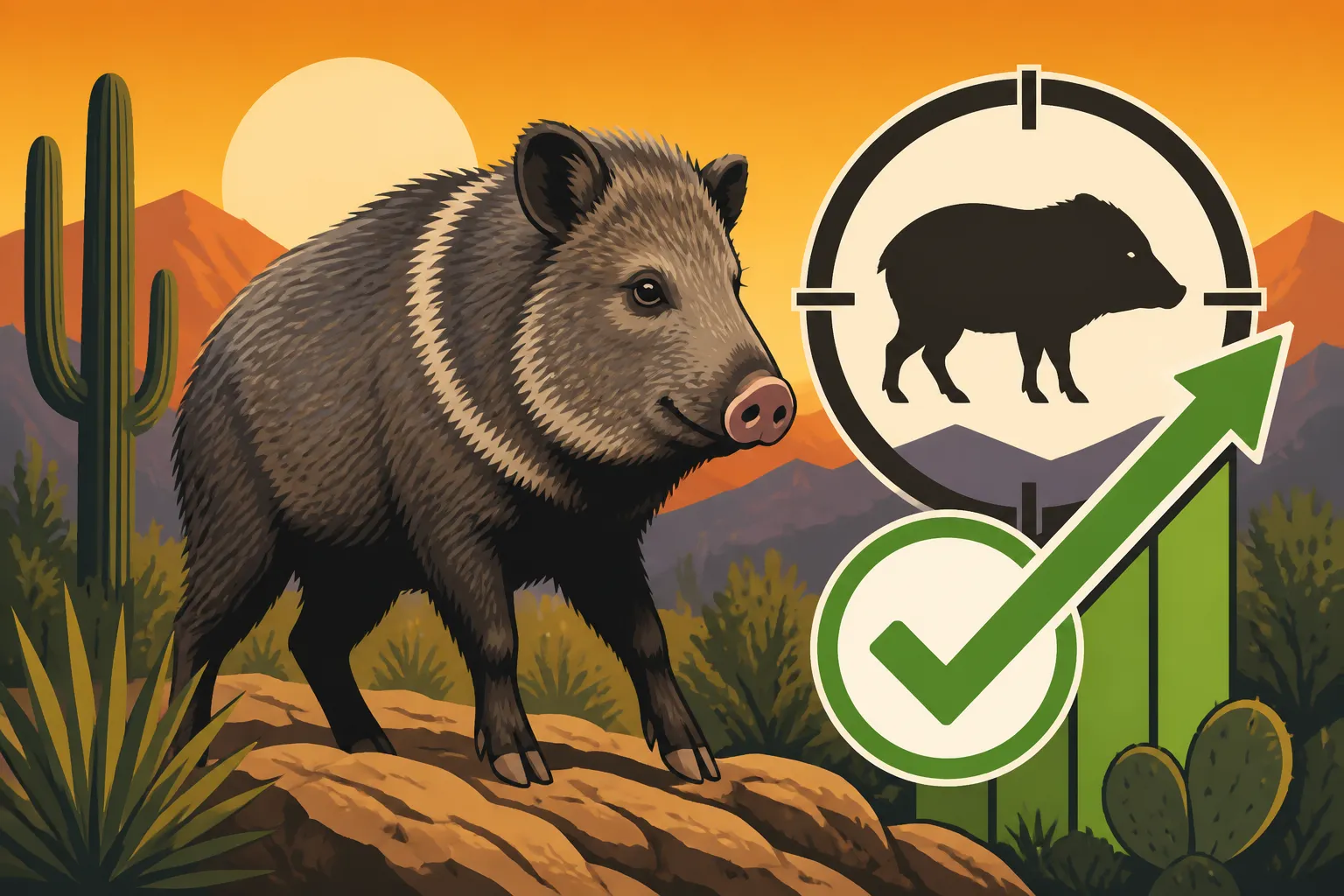
At its core, the harvest success rate is typically calculated as the number of animals harvested divided by the number of tags issued for a specific unit and season. For javelina, this means if 100 tags were handed out for a rifle hunt in Unit X, and 30 javelina were taken, the success rate would be 30%. Simple enough, right? Not quite. This figure doesn't tell you how many hunters actually went afield, how much effort they put in, or how many javelina they saw but couldn't seal the deal on. It's a black-and-white statistic that misses all the vibrant colors of the actual hunting experience.
Consider this: a unit might have a 20% success rate. To one hunter, that sounds low. To another, who understands the unit is vast, rugged, and requires significant legwork, 20% might be considered excellent. It's also critical to distinguish harvest success from "opportunity rate" or "encounter rate." You might have countless opportunities, seeing herds daily, but fail to connect for a variety of reasons – poor shot placement, bad luck, or simply not being able to close the distance. This is especially true for archery hunters who need to get How Close a Bowhunter Needs to Get on Coues, which applies equally to javelina. Many hunters, myself included, rely on tools like GoHunt to make sense of the vast amount of data, helping to add that crucial context to raw numbers.
Where to Find Official Arizona Harvest Reports
The most authoritative source for javelina harvest data in Arizona is the Arizona Game and Fish Department (AZGFD). They compile comprehensive reports after each hunting season, breaking down success rates by unit, weapon type (archery, rifle, muzzleloader), and even specific hunt numbers. These reports are usually available through their online portal and are invaluable for researching potential hunts.
Navigating these reports can be a bit overwhelming at first. You’ll see data for various species, broken down in sometimes complex tables. The key is to focus on your specific hunt type – for instance, are you looking at a general rifle hunt, a HAM (Handgun, Archery, Muzzleloader) hunt, or one of the Over-the-Counter Archery Javelina in Arizona seasons? It's also wise to look at trends over several years rather than just the most recent season. One bad year could be an anomaly due to extreme weather or disease, while consistent performance over five years paints a much clearer picture. When you're sifting through unit information and trying to establish patterns, platforms like GoHunt can be invaluable for organizing historical harvest data and presenting it in a more user-friendly, digestible format, saving you hours of spreadsheet diving.
Factors Influencing Javelina Success Rates
Javelina, often affectionately called "desert pigs" though they're actually peccaries, are a unique and challenging game animal. Their success rates aren't just random; they're influenced by a confluence of environmental factors, hunter choices, and individual skill. Understanding these elements can help you make more informed decisions when applying for tags or planning your hunt.
The Impact of Habitat and Population Density
Javelina are incredibly well-adapted to Arizona's arid and semi-arid landscapes. They thrive in areas with diverse vegetation, from the saguaro forests of the Sonoran Desert to the oak brush country and even some higher elevation pinyon-juniper zones. You’ll find that Javelina Range Across Southern Arizona primarily, but their distribution isn't uniform. Some units simply hold more javelina than others, leading to naturally higher harvest success rates. This often correlates with reliable water sources, suitable bedding cover in thickets and washes, and abundant food like prickly pear, agave, and mesquite beans.
Rainfall plays an enormous role in herd health and numbers. A few good monsoon seasons can lead to a boom in forage, which translates to healthier herds, higher survival rates for young, and ultimately, more javelina for hunters. Conversely, prolonged drought can severely impact populations, making them harder to find and leading to lower success. It's also important to remember that javelina often concentrate around Water Sources That Concentrate Arizona Desert Game, especially in dry periods, which can make them easier to locate but also more pressured. Researching a unit's historical rainfall and forage conditions before applying can give you an edge.
Weapon Choice and Season Timing
The weapon you choose and the timing of your hunt are huge determinants of your potential success. Archery hunts, while incredibly rewarding, almost always have lower success rates than rifle hunts. Why? Because bowhunters need to get within very close range – often 20-40 yards – of an animal known for its keen sense of smell and habit of staying in dense cover. Rifle hunters, on the other hand, can often capitalize on longer shots across open terrain, making it easier to fill a tag.
Arizona offers various javelina seasons: general rifle, HAM (handgun, archery, muzzleloader), and the popular over-the-counter (OTC) archery seasons. While the OTC archery seasons provide an unparalleled opportunity to hunt without drawing a tag, they typically coincide with warmer weather, especially the early season dates. Heat Management on an Arizona Early Season Hunt is crucial, and it can affect javelina behavior, often pushing them into thicker cover during the middle of the day. Drawn rifle or HAM hunts, often occurring later in the winter, benefit from cooler temperatures, which can make javelina more active and easier to spot throughout the day. If you're new to javelina, or simply want to maximize your odds, a general rifle hunt often presents the highest statistical chance of success.
Hunter Effort, Skill, and Strategy
Beyond external factors, your effort and skill are paramount. A high success rate in a unit doesn't guarantee you'll fill your tag if you don't put in the work. Javelina hunting, particularly in the vastness of Arizona, demands patience, persistence, and a solid strategy. Sitting Water for Javelina and Deer can be effective, especially during warmer periods, but often requires long hours and careful setup. More active strategies involve extensive glassing, covering ground, and then executing a disciplined stalk.
Understanding Javelina Herd Behavior and Scent is critical. These animals move in groups, often along washes and through thick mesquite and prickly pear. They have terrible eyesight but an incredible nose, which means playing the wind is non-negotiable. Knowing How Javelina Differ From Wild Pigs also helps, as their behavior is distinct. Hunters who scout diligently, understand the terrain, and practice their calling techniques (javelina respond well to specific distress and contact calls) will naturally have higher success rates than those who just show up hoping for luck. Even in units with lower overall success, a skilled and dedicated hunter can beat the odds.
Strategies to Improve Your Javelina Hunting Success
Looking at harvest success rates gives you a baseline, but the real goal is to become one of those successful hunters. Javelina hunting is a fantastic pursuit that often provides numerous opportunities, even if closing the deal can be tricky. By employing smart strategies, from comprehensive e-scouting to mastering specific tactics, you can significantly boost your chances of bringing home some tasty pork – well, peccary!
Thorough E-Scouting and Boots-on-the-Ground Recon
Before you ever set foot in your chosen unit, the work begins at home. E-scouting using satellite imagery is your best friend for javelina. Look for areas with a mix of dense cover (mesquite bosques, prickly pear thickets, palo verde groves), washes that javelina use as travel corridors, and proximity to water sources. These areas often provide everything a javelina herd needs to survive. You might use tools like GoHunt to layer public land boundaries and identify potential access points while simultaneously analyzing historical success data for specific units.
Once you've identified some promising spots on your map, nothing beats boots-on-the-ground reconnaissance. If possible, take a pre-season scouting trip. Look for fresh sign: rooting in the dirt (like a small plow), distinctive three-toed tracks, and scat. Pay attention to how the terrain lays out – where are the natural travel routes, and what cover will aid a stalk? If you're looking for prime areas, researching Best Units for an Archery Javelina Hunt will highlight regions known for their javelina populations. Remember, javelina are often found in broken country, so learning to read an Arizona Unit Boundary Before You Apply is crucial to ensure you're on public land or land you have permission to access.
Mastering Javelina-Specific Hunting Tactics
Javelina hunting requires a unique set of skills. They’re not big, but they can be incredibly elusive. One of the most effective tactics is methodical glassing. Find a high point that offers a good view of washes, flats, and dense brush. Use good quality binoculars or a spotting scope to slowly pick apart the terrain. Look for movement, subtle color changes, or even just the distinctive outline of their stout bodies. Patience is key here; a herd might be bedded down in thick cover for hours before moving.
Once you spot them, the stalk begins. This is where understanding wind direction and thermal currents becomes paramount, especially if you're trying to get close for an archery shot. Javelina have an incredible sense of smell. Always approach from downwind. Moving silently through the desert, especially areas thick with prickly pear and catclaw acacia, is a challenge, but essential. Tracking Javelina Through Thick Cover means moving slowly, pausing often, and using every bit of available concealment. Learn to use javelina calls – a soft "woof" can sometimes stop a moving herd, and distress calls can occasionally draw in curious animals. Remember, they are herd animals, so if you see one, there are usually more nearby.
Leveraging Local Knowledge and Resources
Even with the best e-scouting and hunting skills, sometimes there's no substitute for local knowledge. If you know experienced Arizona javelina hunters, pick their brains. Ask about historical hot spots, what the animals prefer to eat in certain areas, or specific challenges they've faced. Online hunting forums and local social media groups can also be excellent resources for connecting with other hunters who are willing to share tips or insights, though always be cautious about exact locations shared publicly.
The Arizona Game and Fish Department (AZGFD) is another fantastic resource beyond just harvest reports. Their website offers detailed information on javelina biology, management, and even public access maps. Understanding how to use their online map viewers to find public land, especially around Stock Tanks During Early Archery can give you a significant advantage. Finally, if you're genuinely struggling or want to fast-track your learning, consider a guided hunt. Even a single day with an experienced guide can teach you more about javelina behavior and effective tactics than weeks of trial and error on your own.
| Javelina Hunt Type | Typical Success Rate Trend | Key Challenges | Potential Advantages |
|---|---|---|---|
| General Rifle | Higher (Moderate to High) | Competition | Longer range, usually cooler weather |
| HAM (Handgun, Archery, Muzzleloader) | Medium (Moderate) | Weapon limitations, closer range | Fewer hunters than rifle, diverse weapon choice |
| OTC Archery | Lower (Low to Moderate) | Close range, heat, thick cover | No draw required, extended season, ultimate challenge |
| Youth Hunts | Often Higher | Limited units, short seasons | Mentored hunting, less pressure |
Disclaimer
This article is for general informational purposes only and does not constitute professional advice. Laws, prices and regulations vary by location and change over time. Consult a qualified professional for guidance on your specific situation.