How Big a Trophy Coues Buck Scores
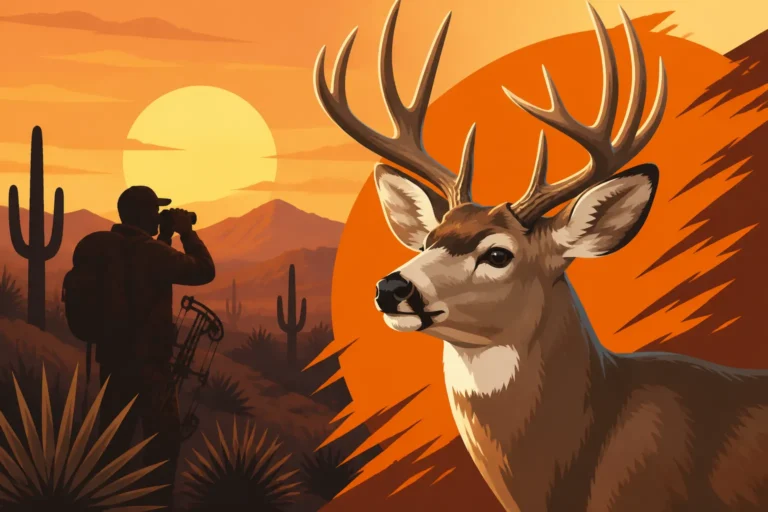
Oh, the age-old question that keeps us all up at night after a long day of glassing those distant ridges: "Just how big is that Coues buck?" We've all been there, squinting through our binos, heart pounding, trying to decipher if those antlers are truly "trophy" material or just a good-looking deer. For hunters pursuing Arizona's elusive Coues deer, understanding what makes a buck a legitimate trophy by official scoring standards is a huge part of the challenge and the dream. This guide will walk you through the specifics of how these remarkable whitetails are scored, what to look for in the field, and why sometimes, the greatest trophy isn't just about the numbers.
Understanding the Boone and Crockett Scoring System for Coues Deer
When we talk about "trophy" big game animals in North America, the gold standard for measurement is often the Boone and Crockett Club's scoring system. It's a method designed to objectively quantify the size and symmetry of an animal's antlers or horns, and Coues deer are certainly part of that tradition. It might seem intimidating at first, all those measurements and deductions, but once you break it down, it's quite logical.
The "Typical" vs. "Non-Typical" Distinction
The first crucial step in scoring any antlered animal, including a Coues deer, is to determine if it's "typical" or "non-typical." This distinction dictates how the final score is calculated and, frankly, how it's admired.
- Typical Racks: These are the classic, symmetrical antlers we often picture. They're judged primarily on their symmetry from one side to the other. Every point on one side should have a corresponding point of similar length and shape on the other. The goal here is to get as high a net score as possible, meaning deductions for asymmetry are subtracted. A perfect, symmetrical rack with long, well-formed tines and heavy mass will net a high typical score. When you're out there, dreaming of a clean 3×3 or 4×4, you're usually thinking "typical."
- Non-Typical Racks: This is where things get a bit wilder! A non-typical rack has abnormal points, often called "stickers," "kickers," or "drop tines," that don't mirror on the opposite side. While these abnormal points are deductions in a typical score, they actually add to the gross score in a non-typical category. The appeal here is often the unique character and massive bone. A Coues buck with a gnarly drop tine or a host of little points sprouting off its main beams might not be symmetrical, but it can certainly be an incredible non-typical trophy.
The Boone and Crockett system measures both typical and non-typical aspects, but a deer will be categorized into whichever score is higher. This means a buck with a few small non-typical points might still score higher as a typical if its symmetrical frame is exceptional and the abnormal points aren't numerous enough to make a large non-typical addition.
Key Measurements That Contribute to a Coues Score
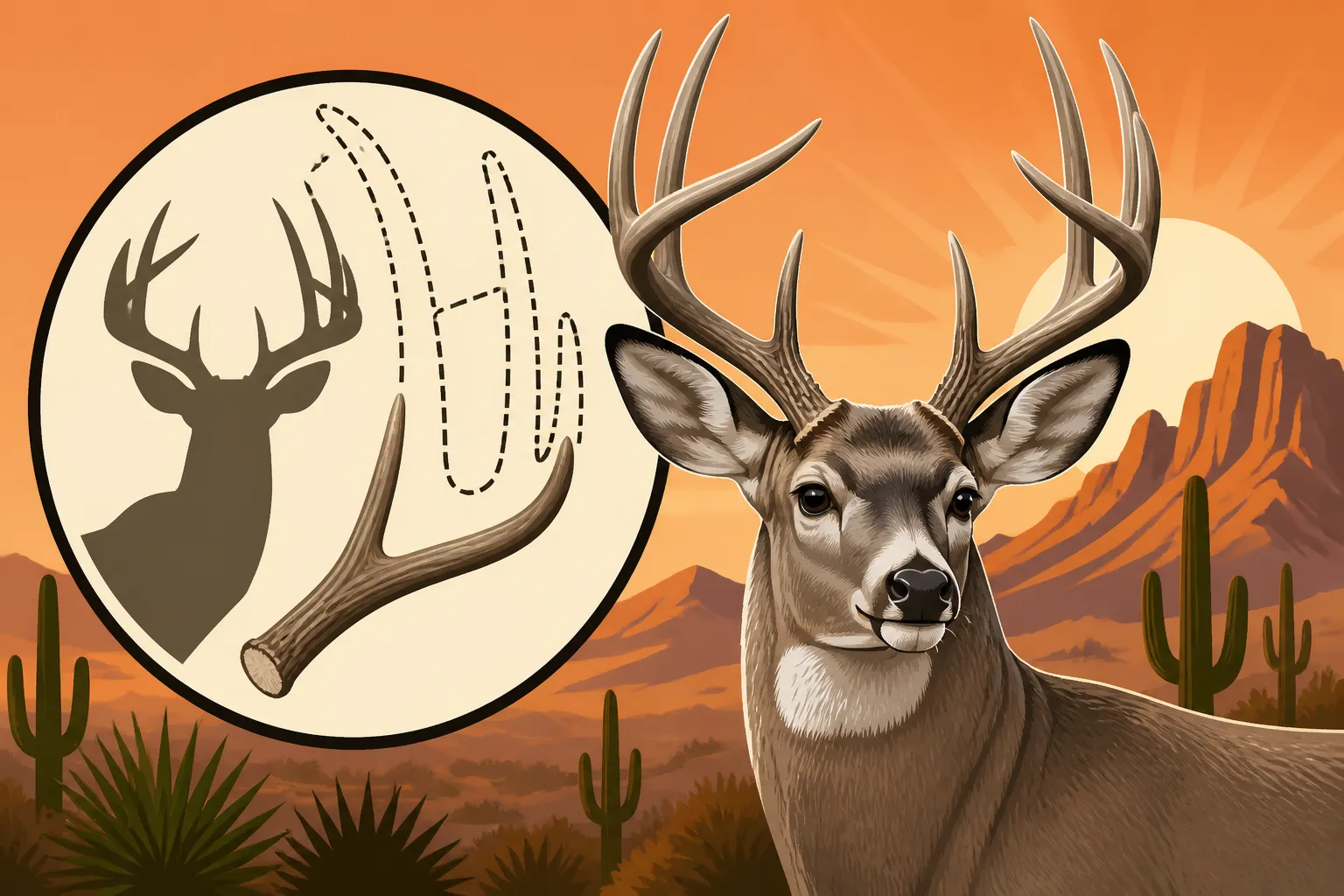
Scoring a Coues buck involves a series of precise measurements taken with a flexible steel tape. It's a detailed process that considers several aspects of the antler.
- Main Beam Length: This is measured from the base of the antler along the outside curve to its tip. Longer main beams are a huge factor in a high score.
- Inside Spread of Main Beams: The widest point between the main beams, taken at right angles to the centerline of the skull. A wide spread can really make a buck look impressive, though it contributes less to the overall score than other measurements.
- Number and Length of Normal Points (Tines): Each normal point is measured from its base to its tip. The more long, well-defined points, the better. Coues deer typically have fewer points than their mule deer cousins, so each one counts!
- Circumferences (Mass): Measured at four specific locations along each main beam. These measurements reflect the antler's thickness or "mass." Heavy mass throughout the beams is a significant contributor to score and often indicates a mature buck.
- Deductions for Asymmetry: For typical entries, any differences in length between corresponding points or main beam measurements from one side to the other are subtracted from the gross score. This is why symmetry is so prized in typical racks.
Here's a quick look at the main components:
| Scoring Component | Description | Impact on Score (Generally) |
|---|---|---|
| Main Beam Length | Length from base to tip, following outside curve. | Major contributor to overall length. |
| Inside Spread | Widest measurement between main beams. | Adds visual impressiveness but has a smaller numerical impact than beam/tine length. |
| Tine Length (G-points) | Length of individual points rising from the main beam. | Essential for high scores; longer tines mean more points. |
| Mass (H-measurements) | Circumference measurements at specific points along the beam. | Adds significantly to the score, reflects antler thickness and maturity. |
| Abnormal Points | Any points not part of the typical antler configuration. | Deducted from typical scores, added to non-typical gross scores. |
| Deductions | Differences in corresponding measurements between symmetrical antlers. | Reduces typical score; minimized in ideal typical racks. |
Official Minimum Scores for Trophy Status
While I can't give you exact numbers as they can shift or be specific to different categories (like Boone and Crockett vs. Pope and Young for archery harvests), it's important to know that official minimum scores exist for both typical and non-typical Coues deer. These benchmarks are what officially classify an animal as a "trophy" in the record books.
To give you a general idea, Coues deer are a smaller subspecies, so their minimum scores are naturally lower than, say, a Rocky Mountain elk or a mule deer. For a Coues buck to be considered a record-book animal, it needs to meet specific thresholds for its net typical or gross non-typical score. If you're chasing that coveted entry, your best bet is to always consult the current official Boone and Crockett Club and Pope and Young Club websites for their precise minimum score requirements and rules. They keep the definitive lists, and it's exciting to see what truly makes the cut!
Field Judging Coues Deer in Arizona's Rugged Terrain
Now, here's the kicker: none of us carry a tape measure in the field when we're trying to decide whether to make a move on a buck. Field judging a Coues deer is a skill that takes years of practice, countless hours behind glass, and a keen eye. These deer are masters of camouflage, often looking smaller than they are in the vast, broken landscapes of Arizona's sky islands and desert foothills.
Characteristics of a High-Scoring Typical Coues
When you finally spot a Coues buck worthy of a second, third, and fourth look, here's what your brain should be analyzing for typical score potential:
- Symmetry is King: For a typical buck, symmetry is paramount. Mentally draw a line down the middle of its skull and compare the two sides. Do the tines match up? Are they roughly the same length and thickness?
- Long Main Beams: Look for beams that sweep out and forward, appearing long and graceful. Imagine how far past the deer's ears they extend. This is a primary driver of score.
- Good Mass Throughout: Don't just look at the base. Follow the beam out. Does it carry its mass well? Does it stay thick all the way to where the tines begin? This is crucial for those circumference measurements.
- Long, Defined Tines: For a Coues, a 3×3 or 4×4 with long, distinct tines is a trophy. Are the G2s (the second points) and G3s (the third points) long and pointy? Are they proportionate to the main beam?
A common Coues buck might have decent beams but lack tine length or mass. A true typical trophy will have the whole package: excellent symmetry, impressive main beam length, strong mass, and tall, clean tines.
Identifying Non-Typical Potential
If you spot a buck and immediately notice something "off" – a point growing backward, a cluster of points at the base, or a fork where there shouldn't be one – you're likely looking at a non-typical candidate.
- Abnormal Points: These are the exciting bits for non-typical hunters. Look for points that grow at unusual angles, drop below the main beam, or are simply extra points that don't have a symmetrical counterpart. These are often called "stickers" or "kickers."
- Massive Bone: Non-typical bucks often have very heavy, gnarly antlers. Sometimes, the abnormal points themselves add a lot of bulk and character. Don't let a lack of symmetry deter you; those weird points can add up quickly in a non-typical score.
- The "Wow" Factor: Sometimes, a non-typical just has that undeniable "wow" factor due to its unique and impressive configuration. It might not be pretty in the classical sense, but it's certainly memorable.
Remember, a buck that would net a lower score as a typical due to deductions for asymmetry might actually score higher as a non-typical if it has enough abnormal points to boost its gross score in that category. It’s all about perspective!
The Importance of Body Size and Age
While antlers are the focus of scoring, a buck's body size and age are often excellent indicators of antler potential. Generally speaking, older bucks tend to grow larger racks. A young Coues buck, even with good genetics, may not have reached its full antler potential.
- Maturity Equals Potential: A fully mature Coues buck, usually in the 5.5+ year range, is more likely to be carrying its maximum antler size. These bucks often have thicker necks, deeper chests, and a more robust overall appearance compared to younger deer.
- Deceiving Perspectives: It’s easy to misjudge size in the field. A young, tall-tined buck can look fantastic, but a truly mature buck will often have better mass and longer main beams. Use external cues like body size to help you gauge age and therefore, antler potential.
- Practice, Practice, Practice: The more Coues deer you see, the better you'll get at estimating their age and understanding what a "big" Coues truly looks like. Check out resources like "Judging an Arizona Coues Buck at Distance" to hone your skills before your next hunt.
Using Optics for Accurate Field Judging
In Coues country, good optics aren't a luxury; they're an absolute necessity. These deer are often spotted at extreme distances in vast, open landscapes. Without high-quality binoculars and a spotting scope, accurately field judging a buck is nearly impossible.
When you're glassing those distant hillsides, zoom in and take your time. Look for characteristics like:
- Antler Height and Width: Does the rack appear taller than its ears? How far does it extend past its nose when the deer looks at you? This helps you estimate main beam length.
- Mass Points: Try to identify the four mass measurements on each beam. Does the antler retain its thickness as it goes up, or does it pencil out quickly?
- Tine Length: Are the tines long and pointy, or do they appear stubby? Try to compare their length to the deer's ear for a rough estimate.
- Symmetry Check: Even with a spotting scope, it can be tough to confirm perfect symmetry. Try to observe the buck from different angles if possible, watching it feed or move.
Platforms like GoHunt offer incredible e-scouting tools and community insights that can help you visualize the terrain and potential bedding areas where these bucks might live, but nothing beats the power of excellent glass in your hands for the actual field judging. Take your time, set up your tripod, and really study that buck before you decide to commit to a long, arduous stalk. After all, knowing "How Far to Stalk a Bedded Coues Buck" often depends on knowing if it's the one you truly want.
Beyond the Score: The True Measure of a Trophy Coues Buck
While the Boone and Crockett score provides an objective number, any seasoned Arizona hunter will tell you that the true measure of a "trophy" Coues buck often goes far beyond the tape measure. These little deer present one of the most unique and challenging hunts in North America, and that experience itself holds immense value.
The Challenge of Hunting Coues Deer
Let's be honest, hunting Coues deer is tough. They don't call them the "gray ghosts" for nothing! Their small size, incredible camouflage, and the rugged, often desolate terrain they inhabit make locating and closing the distance on them a monumental task. You can spend days, even weeks, behind your glass, picking apart every mesquite patch and rocky outcrop without seeing a single legal buck.
- The Elusiveness: These deer seem to materialize out of thin air and disappear just as quickly. The sheer effort required to simply find a Coues buck, let alone get a shot opportunity, adds layers to the experience that a simple score can never capture.
- The Terrain: Arizona's Coues country, particularly the iconic sky islands, demands physical and mental fortitude. Steep climbs, thorny brush, and often unforgiving heat mean every step earned feels like a victory. For more on their habitat, you can explore "Where Coues Whitetail Live in Arizona".
- The "Glassing Game": Unlike many other hunts, Coues deer hunting is predominantly a glassing game. Hours upon hours spent scanning with optics, trying to discern an antler tine from a branch or a gray hide from a rock. It's a test of patience and eye strain. Understanding "Why Arizona Coues Hunting Is a Glassing Game" is key to success.
Many hunters will tell you that simply harvesting any mature Coues buck after a hard hunt is a trophy, regardless of its score. The satisfaction comes from overcoming the challenges these incredible animals present.
Personal Value Over Numbers
Ultimately, what constitutes a trophy is deeply personal. For one hunter, it might be about breaking a specific score barrier. For another, it might be the first buck they ever took with a bow, or a deer taken on a self-guided public land hunt with their family.
- The Journey, Not Just the Destination: The memories made during the hunt – the sunrises over a desert canyon, the camaraderie with hunting partners, the quiet moments of solitude – often outweigh the numerical value of the antlers.
- Firsts and Milestones: Your first Coues buck, or a buck that represents a personal best for you, will always be a trophy in your heart, no matter what the tape says.
- Ethical Considerations: Taking an animal ethically and respectfully is always the most important aspect of any hunt. A clean kill on a smaller buck will always be more valuable than a high-scoring animal taken unethically.
Consider the dedication it takes to scout a unit, like some of the prime areas discussed in "Best Units to Draw for Coues Deer", then put in the grueling hours behind the glass, meticulously working a grid as described in "The Grid Glassing Method, Step by Step", and finally executing a successful stalk. That entire process creates a profound experience.
Arizona's Unique Coues Deer Experience
Hunting Coues deer in Arizona offers a truly unique experience that imprints itself on a hunter's soul. The diverse landscapes, from the oak-studded foothills to the towering pine-covered sky islands, create a stunning backdrop for the pursuit of this special whitetail.
When you're out there, glassing those distant slopes, remember that every Coues buck represents a wild, free-ranging animal that has survived and thrived in some of Arizona's toughest country. The score is a fun way to quantify antler size, and it's certainly exciting to chase those record-book animals. But the real trophy often comes down to the stories, the effort, and the deep connection forged with the wild places these gray ghosts call home.
Disclaimer
This article is for general informational purposes only and does not constitute professional advice. Laws, prices and regulations vary by location and change over time. Consult a qualified professional for guidance on your specific situation.