Arizona Holds 9.2 Million Acres of State Trust Land
There's a lot of confusion out there about hunting in Arizona, especially when it comes to understanding the different types of land you can access. Many hunters, particularly those new to the state or coming from elsewhere, hit a real wall trying to figure out what "State Trust Land" actually means for them. It’s not quite public land as you might traditionally think of it, and it definitely has its own set of rules. This guide is here to untangle that knot, making it clear how to identify, access, and ethically hunt across Arizona's vast State Trust Land acreage, ensuring you stay on the right side of the law and maximize your hunting opportunities.
Understanding Arizona State Trust Land: What It Is and Why It Matters for Hunters
Navigating the diverse landscapes of Arizona means encountering a mosaic of land ownership. Unlike federal lands such as Bureau of Land Management (BLM) or National Forests, which are managed for broad public use and recreation, Arizona State Trust Land operates under a different mandate entirely. This distinction is absolutely critical for any hunter looking to explore new grounds or simply understand where they can legally step foot. Ignoring these nuances can lead to frustrating encounters or, worse, unintended trespass.
The Genesis of Arizona's State Trust Land System
The concept of State Trust Land might seem a little opaque at first, but it has roots reaching back to Arizona's journey to statehood. When Arizona was granted statehood, the federal government endowed the state with millions of acres of land. The catch? These lands weren't given for general public use in the same way National Forests or BLM lands were. Instead, they were granted "in trust" to generate revenue for specific public beneficiaries, primarily common schools. Think of it like a massive endowment fund, where the land and its resources are managed to produce income through leases, sales, and permits. This income then directly supports schools and other vital public institutions.
This fundamental difference is why the rules for State Trust Land feel a bit more restrictive than what you might be used to on other public lands. Every decision, every lease, every permit issued by the Arizona State Land Department (ASLD) is weighed against its potential to generate revenue for those beneficiaries. It’s a pragmatic approach, but it means that public access, while often permitted, isn't the primary goal. You, as a hunter, contribute to that revenue stream through your license and any additional permits, which is a key part of the arrangement.
The Vast Acreage and Its Importance to Arizona Hunting
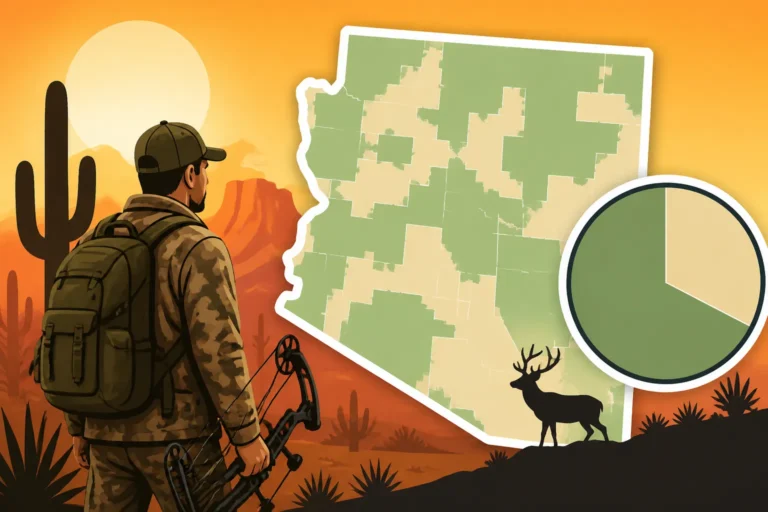
When we talk about State Trust Land, we're not just talking about a few scattered parcels. Arizona holds an impressive Arizona Holds 9.2 Million Acres of State Trust Land that falls under this unique management system. That's a huge chunk of the state, often interspersed with federal lands, private holdings, and tribal lands, creating a complex patchwork. For hunters, this vast acreage represents an enormous amount of potential hunting ground that, if understood and accessed correctly, can unlock countless opportunities.
These trust lands often encompass critical wildlife habitat, including migratory corridors, important water sources, and diverse ecosystems ranging from desert washes to high-elevation grasslands. They frequently border or even "fill in" gaps between larger blocks of National Forest or BLM land, making them integral to a holistic hunting plan. Imagine you're scouting a unit and notice a prime looking ridge or a secluded waterhole that just happens to sit on a section of State Trust Land. Knowing how to legally access that piece of ground can literally make or break your hunt. Ignoring these lands means effectively cutting off a significant portion of potential hunting habitat, severely limiting your options in many units across the state.
Your Hunting License as a Trust Land Permit: The Basic Rule
One of the biggest sources of confusion for hunters revolves around whether they need a separate permit to step foot on State Trust Land. The good news is, for the primary purpose of hunting, your valid Arizona hunting license often acts as your ticket. However, there are crucial distinctions to be aware of, as "hunting purposes" doesn't cover every recreational activity you might want to do.
The Hunting License as Your Primary Access Pass
Let's clear this up right away: in most scenarios, a valid Arizona hunting license grants you permission to access State Trust Land for activities directly related to hunting. This is a critical point and saves hunters from needing to buy an additional recreational permit just to pursue game. Does a Hunting License Cover Trust Land Access? Yes, it generally does. This means during the legal hunting season for your tag, you can be on State Trust Land to hunt, retrieve game, and even conduct reasonable scouting activities in preparation for that hunt.
This provision acknowledges that hunting is a legitimate activity that contributes to wildlife management and generates revenue. When you purchase your hunting license and tags, a portion of those funds supports the Arizona Game and Fish Department (AZGFD), which in turn works with the Arizona State Land Department to ensure that hunting access is maintained where appropriate. It’s a synergistic relationship that benefits both wildlife and hunters. So, when you're geared up with your rifle, bow, or muzzleloader, and you have a valid tag for the season, you can confidently walk onto State Trust Land, provided you adhere to all other regulations.
Specific Activities Covered Under the Hunting License
So, what exactly does "activities directly related to hunting" entail? It's more comprehensive than you might think. Generally, your hunting license covers:
- Active Hunting: Obviously, pursuing game during open seasons with your legal weapon.
- Scouting: Pre-season trips to locate game, identify travel routes, glass terrain, or set up trail cameras (adhering to trail camera regulations, of course).
- Camping (Temporary): Setting up a temporary camp that is solely for the purpose of your active hunt. This typically means small, non-permanent setups, and certainly no long-term residency. Remember, the intent must be directly tied to your hunting activity. For more detailed information, it's worth checking Can You Camp on Arizona Trust Land? rules specifically.
- Game Retrieval: Accessing the land to retrieve game you have legally harvested.
- Vehicle Access: Driving on existing, open roads to access hunting areas. This doesn't mean creating new roads or driving cross-country.
It's important to differentiate these activities from general "recreation." If your primary purpose isn't hunting, or directly supporting a hunt, then you might need that separate recreational permit. For instance, if you're out taking photographs of wildflowers in July with no hunting season open, or simply camping for leisure, your hunting license won't cut it. The key is the intent and timing of your presence on the land.
When You Need More Than Just Your Hunting License: Recreational Permits and OHV Decals
While your hunting license is a great asset for accessing State Trust Land during your hunts, there are specific situations where additional permits are absolutely necessary. Understanding these distinctions is paramount to avoiding fines or, worse, losing your hunting privileges. It’s all about respecting the different designations and uses of these lands.
The Arizona State Trust Land Recreational Permit: Beyond Hunting
Imagine you want to spend a beautiful spring day hiking through a canyon on State Trust Land, long after deer season has closed. Or perhaps you're an avid photographer hoping to capture the desert bloom, or maybe you enjoy target shooting in a safe, designated area. In these scenarios, when your activity is not directly related to hunting or scouting for an imminent hunt, you will need to purchase an Arizona State Trust Land Recreational Permit. This permit covers a wide array of non-hunting recreational uses, ensuring that the Trust still generates revenue for its beneficiaries from these activities.
When Arizona Requires a Recreational Permit Instead, it's generally for activities like:
- Casual Hiking or Backpacking: Exploring trails or backcountry areas without a hunting purpose.
- Camping for Leisure: Setting up camp simply for relaxation or enjoyment, unrelated to a hunt.
- Photography: Pursuing landscape or wildlife photography as a standalone hobby.
- Horseback Riding: Equestrian activities outside of a hunting context.
- Picnicking: Enjoying a meal in a scenic location.
- Target Shooting: Practicing with firearms in appropriate, safe locations (always check local regulations and fire restrictions).
- Geocaching or Rockhounding: Recreational pursuits that don't involve game animals.
These permits are typically affordable and relatively easy to acquire through the Arizona State Land Department website. Think of it as your all-access pass for general outdoor enjoyment on these specific lands. It’s a small price to pay for access to millions of acres and ensures you're contributing to the trust's mission, even when not actively hunting.
OHV Decals and Vehicle Use on Trust Land
Arizona is a state where off-highway vehicles (OHVs) are incredibly popular, both for recreation and for accessing hunting areas. Whether you're driving a quad, a side-by-side, or even a modified 4×4 truck on a dirt road that isn't maintained by a county or state, it's often considered an OHV activity. And just like on other public lands, there are clear rules for OHV use on State Trust Land.
Crucially, any OHV operated on State Trust Land, or any public land in Arizona for that matter, must display a valid OHV Decals on Arizona Trust Land. This decal confirms that you've paid the necessary registration fees, which contribute to maintaining trails, enforcing regulations, and promoting OHV safety. Beyond the decal, it's absolutely vital to understand and adhere to the "stay on existing roads" rule. Driving off-road, creating new tracks, or disturbing sensitive desert ecosystems is illegal and can lead to significant penalties. This rule applies uniformly across State Trust Land, BLM land, and National Forests. Always remember:
- Stay on established roads and trails: Do not drive cross-country or create new routes.
- Respect seasonal closures: Some roads may be closed seasonally due to weather, wildlife migrations, or other management needs.
- Mind your speed and dust: Be courteous to other users and landowners.
- Pack it in, pack it out: Leave no trace of your presence.
Failing to have an OHV decal or violating travel management rules can result in citations and fines, which can quickly put a damper on your hunting trip. Always double-check your vehicle's registration and understand the specific travel rules for the unit you intend to hunt.
Navigating Access: Respecting Lessees and Private Inholdings
Even with your hunting license in hand and a recreational permit when needed, navigating State Trust Land isn't always as simple as crossing a fence line. Much of this land is actively leased for various commercial operations, most commonly ranching. Furthermore, the checkerboard pattern of land ownership means private parcels can be nestled deep within public access areas, creating potential trespass hazards if you're not paying close attention. Understanding and respecting these realities is crucial for responsible hunting.
Understanding Grazing Leases and Agricultural Operations
Many of Arizona's State Trust Land parcels are leased out to ranchers for cattle grazing or for agricultural purposes. These lessees have a legal right to conduct their operations on these lands, and their activities often take precedence. This doesn't necessarily mean you can't hunt there, but it means you must be mindful and respectful of their presence and operations. Imagine spending countless hours managing livestock only to have hunters disregard gates or disturb your herd. It creates conflict and can jeopardize future access for everyone.
Why Arizona Lessees Can Restrict Trust Land Access sometimes comes down to protecting their operations or property. While your hunting license gives you access, it doesn't give you free rein to interfere with a rancher's livelihood. This means:
- Close all gates: This is perhaps the most important rule. Leaving a gate open can lead to cattle straying, costing ranchers significant time and money. Always assume gates should be closed, even if you find them open. If a gate is locked with a private lock and no public access sign, it likely means you cannot proceed by vehicle.
- Avoid disturbing livestock: Give cattle and horses a wide berth. Don't chase them or harass them.
- Respect infrastructure: Don't tamper with watering troughs, fences, corrals, or other ranching equipment.
- Be aware of active operations: If you encounter ranch hands or active work (e.g., cattle drives, branding), give them space and cooperate with any reasonable requests to ensure safety.
A little common sense and courtesy go a long way in maintaining good relationships with lessees, which in turn helps preserve hunting access on these critical lands. Hunters who disregard these simple rules risk creating a negative perception that can impact all hunters.
Identifying and Avoiding Private Inholdings and Posted Areas
Arizona's land ownership maps can look like a complex jigsaw puzzle, especially in areas where State Trust Land, BLM, National Forest, and private parcels all converge. It's incredibly common to find small, privately owned pieces of land completely surrounded by accessible public or trust lands. These are often referred to as "inholdings," and accidentally trespassing onto them is a real risk if you're not meticulous with your navigation.
This is where advanced mapping tools become absolutely indispensable. Applications like onX Hunt and GoHunt provide detailed land ownership layers that color-code different land types, making it easy to see where State Trust Land begins and private land ends. These tools are far superior to traditional paper maps for this purpose. When using them:
- Always check your maps: Before you leave the truck, and frequently while on the ground, consult your mapping app to verify land boundaries.
- Understand color coding: Learn what colors represent State Trust, private, BLM, National Forest, and tribal lands.
- Look for signs: While private land should be clearly marked with "No Trespassing" signs, don't rely solely on them. Some boundaries might be unmarked or poorly signed.
- If in doubt, back out: If you're unsure about a boundary, err on the side of caution and find another route or location.
Accidental trespass is still trespass, and the penalties can range from a warning to a significant fine, or even confiscation of your weapon or game. Trespass Law on Posted Arizona Property is enforced, and ignorance of the boundary is rarely an excuse. Taking the time to study your maps and use modern technology can prevent a frustrating and potentially costly mistake. Always ensure your mapping app has downloaded offline maps for your hunting area, as cell service is often nonexistent in Arizona's backcountry. Reading a Land Ownership Layer Correctly is a skill every hunter needs to develop.
The Role of Arizona State Trust Land in Wildlife Management and Conservation
While the primary mission of Arizona State Trust Land is revenue generation, its vast footprint inevitably means it plays a significant role in the broader landscape of wildlife management and conservation. It's not just a place where hunters pursue game; it's an integral part of the ecosystem that supports diverse species. Understanding this dual function helps hunters appreciate the value and complexity of these lands.
Habitat Management and Wildlife Corridors
The sheer size and geographical distribution of Arizona State Trust Land mean it often encompasses crucial habitats that wildlife depend on year-round. From critical winter range for deer and elk in the high desert to vital water sources for javelina and desert bighorn sheep, these lands are indispensable. Many parcels serve as essential wildlife corridors, connecting larger blocks of National Forest or BLM land that might otherwise be isolated. These corridors allow animals to migrate between seasonal ranges, find mates, and disperse, which is vital for maintaining healthy and genetically diverse populations.
The Arizona Game and Fish Department (AZGFD) frequently works in cooperation with the Arizona State Land Department to implement habitat improvement projects on Trust Land. This might involve developing new water sources (guzzlers), restoring riparian areas, or conducting controlled burns to enhance forage. Hunters directly support these efforts through their license and tag purchases, which provide critical funding for AZGFD's conservation initiatives. So, when you're hunting on State Trust Land, you're not just utilizing a resource; you're often benefiting from ongoing efforts to enhance the very habitat that supports the game you're pursuing.
Balancing Revenue Generation with Public Access
The unique challenge of State Trust Land management lies in its mandate to generate revenue while simultaneously accommodating various other uses, including public access for recreation and hunting. Unlike federally owned lands where public access is often a cornerstone of their management, Trust Land must always consider the financial benefit to its beneficiaries. This creates a delicate balance.
Every lease for grazing, mining, commercial development, or even public recreational permits is designed to maximize income for schools and other state institutions. Hunting, too, plays a part in this. The revenue generated from hunting licenses, particularly those tied to species often found on Trust Land, directly or indirectly contributes to the state's coffers. Therefore, while it might sometimes feel like accessing Trust Land is overly complicated, it's a system designed to serve a greater public good through its financial contributions.
It means that sometimes, access might be limited or restricted if a higher-value commercial use is at play, or if there's a safety concern related to other operations. This is why vigilance with maps and understanding potential restrictions is key. Who Arizona Trust Land Revenue Serves is a reminder that there's a legitimate reason behind the rules. Hunters, by understanding and adhering to these rules, become responsible partners in this system, helping to ensure continued access and healthy wildlife populations on these vital lands.
Practical Tips for Hunting Arizona State Trust Land: Maps, Scouting, and Etiquette
Hunting Arizona State Trust Land effectively and legally boils down to preparation, knowledge, and a strong sense of ethical responsibility. With millions of acres available, these lands offer incredible opportunities, but they also demand a higher degree of diligence than many other public land types. Mastering a few key practices will make your experience much more rewarding and stress-free.
Essential Mapping Tools for Trust Land Hunters
Gone are the days when a general highway map or even a basic Forest Service map was sufficient for navigating complex land ownership. For hunting Arizona State Trust Land, digital mapping applications are no longer a luxury—they are a necessity. Tools like onX Hunt and GoHunt have revolutionized how hunters understand and interact with the landscape.
These applications provide detailed satellite imagery overlaid with clearly marked land ownership boundaries, often color-coded to differentiate State Trust Land from private, BLM, National Forest, and tribal lands. Here's how to leverage them effectively:
- Download Offline Maps: Cell service is notoriously unreliable in much of Arizona's hunting country. Before you even leave home, make sure you download the detailed offline maps for your entire hunting unit within your chosen app. This ensures you'll have access to all the critical information even when miles from a signal.
- Understand the Layers: Familiarize yourself with the various map layers available. The land ownership layer is paramount. You can often toggle on layers for roads, trails, water sources, wilderness areas, and even historical burn scars, all of which are invaluable for scouting and on-the-ground navigation. Using onX Layers for Arizona Public Land is a great way to visualize these boundaries.
- GPS Functionality: Use your phone or a dedicated GPS device with these apps to track your position in real-time. This is your best defense against accidental trespass. You can see your exact location in relation to all property lines, allowing you to confidently navigate tight corners or avoid landlocked private parcels.
Investing in and learning to proficiently use one of these mapping tools is perhaps the single most important piece of advice for any hunter targeting Arizona's State Trust Land.
Scouting Strategies for Trust Land
Scouting is fundamental to successful hunting, and Trust Land demands a thoughtful approach. Because these lands are often intermingled with various other ownership types and frequently utilized for grazing, specific strategies can give you an edge.
- E-Scouting is Your First Step: Before you ever put boots on the ground, use your mapping app and aerial imagery to e-scout. Look for patterns:
- Access Points: Identify legal roads and access points. Some Trust Land parcels might be difficult to reach due to surrounding private land or impassable terrain.
- Water Sources: Stock tanks, guzzlers, and natural springs are magnets for game, especially in arid Arizona. Locate them and plan approaches. Finding Stock Tanks on a Unit Map is a great skill to develop.
- Transition Areas: Look for where different habitat types meet, like where sparse desert transitions into mesquite bosques or steeper rocky slopes. These areas are often productive.
- Proximity to Other Public Lands: Trust Land parcels acting as "bridges" or "buffers" to larger federal land blocks can be excellent spots, especially if they offer less obvious access points that might deter other hunters.
- Boots-on-the-Ground Verification: E-scouting can only get you so far. Once you've identified promising areas, visit them. Check for fresh sign, water availability, and confirm road conditions. Be prepared to encounter livestock.
- Consider Pressure: Trust Lands near population centers or with easy road access might see higher pressure. Look for parcels that require a longer walk or have more challenging access; these often hold unpressured game. E-Scouting an Arizona Unit Before the Season can help you visualize these pressure points.
Responsible Conduct and Ethical Hunting Practices
Hunting on State Trust Land comes with a heightened responsibility. Your actions directly reflect on the entire hunting community and can influence future access. Adhering to strict ethical guidelines and respectful conduct is non-negotiable.
- Leave No Trace: Pack out everything you pack in. This includes spent shell casings, food wrappers, and any trash you might encounter that others have left. This is particularly important on lands that might not see regular clean-up from federal agencies.
- Close Gates: As mentioned, always assume gates should be closed. It's a fundamental courtesy to ranchers and prevents livestock from straying.
- Respect Livestock: Give cattle, horses, and any working dogs a wide berth. Do not harass them.
- Fire Safety: Arizona is prone to wildfires. Be acutely aware of fire restrictions, especially during dry or windy periods. Never build a campfire outside of designated areas unless absolutely necessary and permitted, and always ensure it's dead out before you leave.
- Respect Other Users: You might encounter hikers, birdwatchers, OHV riders, or even geocachers. Be courteous, acknowledge their presence, and avoid conflicts.
- Adhere to All Regulations: This includes hunting regulations, seasonal closures, and any specific rules posted for the area.
By being a responsible and ethical hunter on State Trust Land, you help ensure these valuable acres remain open and accessible for future generations. It’s about being a steward of the land, not just a consumer of its resources.
Comparing Trust Land Access to Other Public Lands in Arizona
Arizona's landscape is a fascinating mix of federal, state, and private ownership. While all public lands offer hunting opportunities, the nuances of access, permitting, and management differ significantly between State Trust Land, Bureau of Land Management (BLM) land, and National Forest (NF) land. Understanding these differences is key to navigating your chosen hunting unit effectively and legally.
Trust Land vs. BLM and National Forests
To really grasp the distinctive nature of Arizona State Trust Land, it's helpful to compare it directly with the two other major categories of public land you'll encounter: BLM and National Forest. The primary distinction lies in their foundational purpose and, consequently, their management priorities.
| Feature | State Trust Land | BLM Land | National Forest Land |
|---|---|---|---|
| Primary Purpose | Generate revenue for state beneficiaries (schools) | Multiple uses: grazing, recreation, mineral extraction, energy development, conservation | Conservation, recreation, timber, water resources, wildlife habitat |
| General Hunting Access | Hunting license typically grants access | Generally open with hunting license | Generally open with hunting license |
| Other Recreational Permit | Often required for non-hunting activities | Generally not required for dispersed recreation | May require day-use fees at developed sites (e.g., campgrounds, boat launches) |
| OHV Decal | Required for OHVs | Required for OHVs | Required for OHVs |
| Grazing Leases | Common, lessees have priority | Common, managed for multiple uses | Common, managed for multiple uses |
| Private Inholdings | Can be heavily interspersed, requiring careful navigation | Can be interspersed | Can be interspersed |
| Motorized Travel Rules | Stay on existing roads | Stay on existing roads/designated routes (e.g., travel management plans) | Stay on existing roads/designated routes (Motor Vehicle Use Maps) |
| Management Agency | Arizona State Land Department | Bureau of Land Management (Federal) | U.S. Forest Service (Federal) |
As you can see, the main takeaway is that BLM and National Forest lands are generally managed under a "multiple-use" mandate that inherently includes public recreation as a key component, often without extra permitting for dispersed activities. BLM and Forest Ground Across Arizona Needs No Permit for general access. State Trust Land, however, always circles back to its revenue-generating purpose, which is why those additional recreational permits are often necessary for non-hunting activities. This doesn't make Trust Land "worse" for hunting, just different in its regulatory approach.
Understanding the Patchwork of Public and Private Ownership
Arizona's land ownership can be best described as a patchwork quilt, with squares of different colors representing various land types all stitched together. This complex mosaic is particularly pronounced in many of the state's prime hunting units. You might be hunting a vast expanse of National Forest, only to find small parcels of State Trust Land, or even private land, creating critical pinch points or unexpected boundaries.
This intermingling means that a single hunting trip could involve navigating all three major land types—State Trust, BLM, and National Forest—along with numerous private parcels. This is precisely why relying on outdated maps or simply guessing about boundaries is a recipe for trouble.
Consider a scenario where a crucial water source or a bedding area for elk lies on a small island of State Trust Land, completely surrounded by BLM land. Without knowing the precise boundary, you might unknowingly violate regulations or miss out on a prime hunting spot. Conversely, a tempting-looking ridge might be private property, despite appearing to be part of a larger public block.
The takeaway here is that hunters in Arizona must embrace precision in their navigation. This means:
- Always Carry Detailed Maps: As discussed, digital mapping apps with land ownership layers are your best friend.
- Plan Your Routes: Look at the maps before you go and identify potential boundary issues, access points, and escape routes.
- Be Aware of Your Surroundings: Even with GPS, be observant. Look for fences, survey markers, or "No Trespassing" signs that might indicate a boundary change.
By understanding the distinct characteristics of each land type and diligently using modern mapping tools, you can confidently navigate Arizona's complex ownership landscape, maximizing your hunting opportunities while respecting all land designations. It ensures you're a responsible and effective hunter, contributing positively to the overall outdoor community.
Disclaimer
This article is for general informational purposes only and does not constitute professional advice. Laws, prices and regulations vary by location and change over time. Consult a qualified professional for guidance on your specific situation.