How Outfitter Trophy Fees Work
You’ve finally found that perfect Arizona outfitter, reviewed their base prices for a guided elk or deer hunt, and then you spot it: "Trophy Fees Apply." This term can feel like a hidden cost or an unwelcome surprise after budgeting for what seemed like the entire trip. This guide is here to unravel the mystery of outfitter trophy fees, explaining what they are, why they exist, and how you can navigate them confidently.
Understanding the Basics of an Outfitter Trophy Fee in Arizona
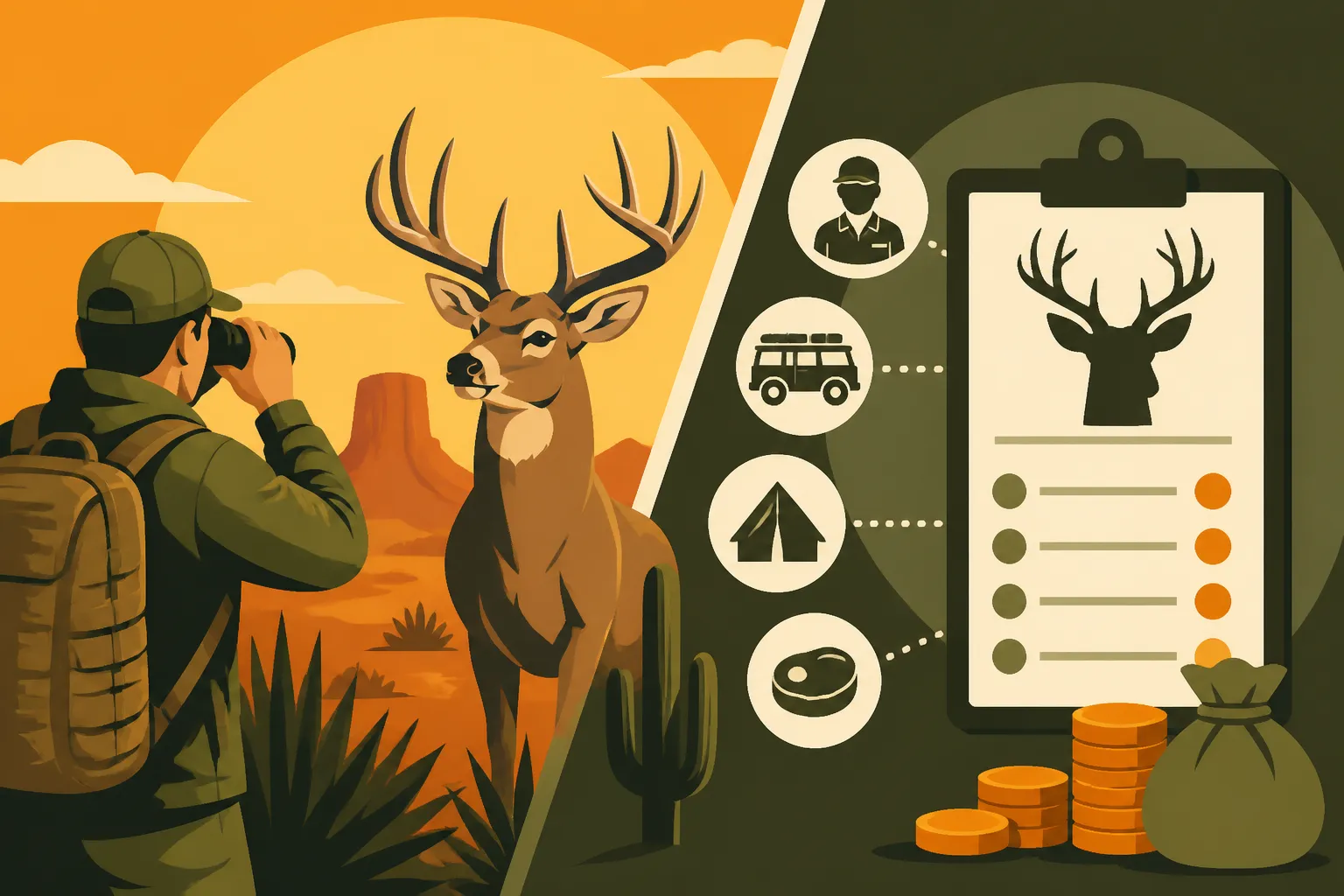
When you look at an outfitter's price sheet for a guided hunt in Arizona, you'll typically see a base price for the hunt itself. This covers the guide's time, transportation during the hunt, camp logistics, and often meals and lodging. It's the core cost of the experience. However, a "trophy fee" is an entirely separate charge, almost always in addition to that base price. It's not a secret charge, but it’s often misunderstood because it’s not just a flat fee for taking an animal. Instead, it's a specific charge tied to the harvest of a particular animal, and sometimes, even to its size or characteristics.
Imagine you're booking an archery elk hunt on the Mogollon Rim. The outfitter might quote a certain price for a 7-day guided hunt. This covers the endless glassing, the early mornings, the late nights, and the expert guidance. But if you actually harvest an elk, then a separate trophy fee might apply. This structure ensures that while you're paying for the outfitter's services and the opportunity to hunt, the guide is also compensated specifically for their expertise in helping you locate and successfully harvest a significant animal. It’s a way for outfitters to differentiate between a successful harvest and simply providing the hunting experience itself.
What Differentiates a Trophy Fee from Your Base Hunt Cost?
The base hunt cost is essentially your access pass to the guided experience. It secures the guide's time, their scouting efforts prior to your arrival, the use of their equipment like vehicles and optics, and the logistical support that makes a remote Arizona hunt possible. Think of it as the overhead for putting you in a position to hunt. This includes everything from the hours spent Scouting an Arizona Unit Before the February Deadline to setting up camp.
A trophy fee, on the other hand, is specifically triggered by a successful harvest. It's a payment directly associated with the result of the hunt – the taking of an animal. For instance, if you're hunting Coues deer in the Sky Islands, the base fee covers the intense glassing and stalking, but the trophy fee comes into play only when that "gray ghost" is on the ground. This distinction is crucial because it means that even if you have an incredible hunt, see lots of animals, and learn a ton, but don't pull the trigger, you won't incur the trophy fee. This separation allows outfitters to tailor their pricing to reflect both the effort of the hunt and the value of a successful harvest, especially for those highly sought-after Arizona species.
When Do Trophy Fees Typically Come into Play?
Trophy fees aren't universal for every type of hunt or every species in Arizona. They are most commonly associated with big game hunts, particularly those for species where hunters are seeking a mature or high-scoring animal. You’ll frequently see them applied to hunts for Arizona elk, especially in premium units, as well as mule deer, Coues deer, bighorn sheep, and bison. These are animals that often require significant time, specialized knowledge, and persistent effort from the outfitter to locate and position a hunter for a shot.
For example, a hunter pursuing a mature bull elk on the Kaibab Plateau might pay a base fee that covers several days of intense hunting. The outfitter invests heavily in pre-scouting, knowing the movements of specific bulls, and has often passed on other clients to commit to this high-odds scenario. When that hunter finally connects with a trophy bull, the trophy fee recognizes that extraordinary effort and the value of that harvest. Conversely, for smaller game, predator hunts, or often even javelina hunts, trophy fees are less common, or they might be rolled into a simpler, all-inclusive package price. It truly depends on the species, the perceived value of the animal, and the outfitter's business model.
Why Outfitters Implement Trophy Fees: The Economic Realities
The idea of a trophy fee might initially feel like an extra burden, but from an outfitter's perspective, it's a practical and necessary component of their business. Guiding a hunter to a trophy animal involves a massive investment of resources, time, and specialized knowledge that goes beyond simply putting a client in the field. These fees help cover the higher costs and risks associated with pursuing specific, high-value animals. What Outfitter Prices Almost Never Include are things like the potential for a large trophy, which is where these fees often come in.
Consider the dedication required to secure a limited-entry Arizona elk tag, for instance. A hunter might draw that tag with years of bonus points, and they expect their outfitter to deliver on that once-in-a-lifetime opportunity. The outfitter, in turn, has often spent months, if not years, monitoring specific units, patterning mature animals, and investing in top-tier optics and equipment. This deep commitment and the inherent uncertainty of hunting big game contribute to the need for a structure that rewards success and compensates for that significant upfront investment.
The Outfitter's Investment in a Quality Animal
Outfitters who consistently produce successful trophy hunts in Arizona aren't just lucky; they’ve made substantial, ongoing investments. This includes extensive pre-season scouting, sometimes spanning hundreds of miles and countless hours glassing from high points overlooking prime habitat. They invest in high-quality optics, mapping software, and reliable vehicles that can handle Arizona's rugged terrain. Think about the fuel, vehicle maintenance, and wear and tear that comes from navigating remote forest roads or rough desert trails.
Beyond the physical assets, there's the intellectual capital: years of accumulated knowledge about animal behavior, migration patterns, and the best times and places to find a specific species. An outfitter who knows When the Elk Rut Peaks on the Rim or Best Time of Day to Glass a Sky Island has gained that insight through seasons of trial and error. This expertise is what a hunter is truly paying for when they seek out a reputable guide for an Arizona trophy. The trophy fee helps offset these significant operational costs and ensures the outfitter can continue to provide high-quality hunting experiences year after year.
Incentivizing Guides for Top-Tier Harvests
Trophy fees also serve as a powerful incentive for guides to put in the extra effort required to find and help clients harvest truly exceptional animals. When a portion of the guide's compensation is tied to the size or quality of the animal taken, it motivates them to go the extra mile. This could mean staying out longer, hiking into more remote areas, or employing advanced calling tactics to coax out a wary bull.
For a guide, the difference between an average animal and a truly trophy-class animal can represent weeks of focused pre-season work and intensive effort during the hunt itself. If a guide knows that guiding a client to a record-book mule deer will result in a higher fee, they are more likely to dedicate all their energy and expertise to that goal. This benefits the hunter, who gets a guide fully invested in maximizing their chances of success, and it benefits the outfitter, who can attract and retain top-tier guiding talent. It creates a system where everyone is aligned around the objective of a successful, quality harvest.
How Trophy Fees Are Calculated and Applied in Arizona Hunts
The specific way an outfitter calculates and applies a trophy fee can vary significantly, so it’s never safe to assume a standard method. This is where clear communication and a detailed contract become absolutely paramount. You might encounter flat fees, tiered systems based on antler score, or even fees that vary by the sex of the animal. Understanding these nuances before you commit is key to avoiding surprises.
Many hunters use platforms like BookYourHunt or GoHunt to research outfitters, and while these sites often list general price ranges, the specifics of trophy fees are always best confirmed directly with the outfitter. It's not uncommon for an outfitter to require a signed agreement detailing all potential fees, including the trophy fee structure, before you even send a deposit. This transparency protects both parties and ensures everyone is on the same page regarding expectations and costs.
Common Calculation Methods: Score-Based, Flat-Rate, and Species-Specific
There are generally a few ways outfitters structure their trophy fees:
- Flat-Rate Trophy Fee: This is perhaps the simplest. Once an animal is harvested, a single, predetermined fee applies, regardless of its size or score. For example, an outfitter might charge a flat fee for any legal elk harvested. This method offers clear, predictable costs for the hunter.
- Score-Based Tiered Fee: This is very common for species like elk, mule deer, and Coues deer, where antler size is a primary measure of trophy quality. The fee increases with the animal's antler score (e.g., Boone & Crockett or Pope & Young score). An outfitter might have a base trophy fee for an animal up to a certain score, a higher fee for an animal in the next score range, and an even higher fee for a truly exceptional, record-book class animal. This incentivizes the guide to help you find the biggest possible animal, but it also introduces more financial variables for the hunter. You might pay one fee for a 300-inch bull and a significantly higher one for a 350-inch bull.
- Species-Specific Fees: Sometimes, the fee is simply tied to the species, with different fees for different animals. A guided bighorn sheep hunt, for example, will almost always have a substantial trophy fee, reflecting the rarity and difficulty of drawing a tag and successfully harvesting such an animal. Conversely, a javelina hunt might have a much lower, or even no, separate trophy fee.
- Sex-Specific Fees: For some species, particularly deer, there might be a lower or no trophy fee for a doe or cow, but a specific fee for a buck or bull. This is often seen in management hunts where the objective might be to reduce herd numbers rather than specifically target a trophy.
It's important to clarify which method your chosen outfitter uses and to understand the specific thresholds if it's a tiered system.
The Role of Field Judging and Official Scoring
When a trophy fee is based on antler score, the process of judging an animal in the field becomes critically important. Most ethical outfitters and experienced guides are masters of Field Judging a Mule Deer Buck Quickly or judging a Coues buck at distance. They'll have a good idea of an animal's score before the shot is even taken. However, field judging is an art, not an exact science. Wind, light, distance, and the animal's angle can all make it challenging.
After a harvest, the initial score might be a field measurement. But for tiered fees, the official "green score" (before drying and shrinkage) will often determine the final fee. Most outfitters will carry a tape measure to get this measurement in camp or at the truck. If there's a significant disagreement or if the animal is truly exceptional, an official scorer might be involved later, but generally, the outfitter’s field assessment is the working number. Make sure you understand how any disputes over score will be handled before the hunt begins.
What Happens If You Don't Harvest?
This is a critical question for any hunter worried about trophy fees. In most cases, if you don't harvest an animal, you do not owe a trophy fee. The trophy fee is contingent upon a successful take. You've still paid for the outfitter's time, expertise, and the guided experience, but the additional cost for the animal itself isn't incurred.
However, some outfitters may have specific policies regarding "wounded and lost" animals. If you wound an animal and the guide determines, based on blood trail or other evidence, that it was a lethal hit, even if the animal isn't recovered, the trophy fee might still apply. This policy protects the outfitter's investment of time and effort, as they dedicated resources to that specific animal, and it prevents hunters from intentionally not recovering a smaller animal to avoid a fee. Always clarify your outfitter's policy on wounded game and recovery efforts – it's one of the most important Questions Worth Asking Before You Book.
Key Questions to Ask Your Outfitter About Trophy Fees
Navigating trophy fees without confusion comes down to proactive communication. Before you sign any contract or send a deposit, have a detailed conversation with your outfitter about their specific policies. Don't be shy about asking direct questions; a reputable outfitter will appreciate your diligence and provide clear answers. This proactive approach will help you create an accurate budget for your All-In Cost of an Arizona Nonresident Elk Hunt or any other species.
Getting all the details in writing is incredibly important. A good contract will spell out the exact terms of the trophy fee, leaving no room for ambiguity. This is where you should refer to Reading the Cancellation and Refund Terms carefully, as some of those clauses can relate to how fees are handled under different scenarios.
Clarifying the Inclusions and Exclusions
When discussing trophy fees, don't just ask if there's a fee, but what it includes. For instance:
- Is it solely for the animal itself, or does it include field dressing, caping, and quartering? Most trophy fees are for the animal, with basic field care included in the base hunt, but confirm.
- Does it include any taxidermy prep or transportation to a taxidermist/meat processor? Some outfitters will help arrange this, but the costs are usually extra.
- What if I take a smaller animal than planned? For tiered fees, this is critical. Does the outfitter encourage you to pass on smaller animals to hold out for a bigger one, or is the goal simply to harvest a legal animal? Understand their philosophy.
- Are there different fees for different units or seasons? Sometimes, a premium unit or a prime rut hunt might have different fee structures.
Being clear on these points ensures you know exactly what you're paying for and what additional costs might arise after a successful harvest.
Addressing the "Wounded Animal" Policy
As mentioned, this is one of the most crucial points of discussion. You need to understand your outfitter's specific policy on wounded game.
- What constitutes a "wounded animal" for which a trophy fee applies? Is it any blood? Visible impact? A certain length of blood trail?
- What is the recovery protocol? How long will the guide search? What methods will be used (e.g., tracking dogs if legal and available)?
- What happens if the animal is wounded but not recovered? Will the trophy fee still be charged? Is it a partial fee? A full fee?
- What if the animal is wounded, recovered, but isn't as large as originally judged? This often defaults to the score-based fee for the animal recovered, but it's worth clarifying upfront.
These questions protect both you and the outfitter. A good outfitter wants to recover every animal ethically, and a clear policy helps manage expectations and responsibilities in a high-stress situation.
Understanding Payment Schedules and Deadlines
Just like the base hunt cost, the payment schedule for trophy fees needs to be crystal clear.
- When is the trophy fee due? Is it due immediately after the harvest, upon leaving camp, or is there a grace period?
- What payment methods are accepted? Cash, check, credit card? Be aware of potential credit card processing fees if that's your only option.
- Is any portion of the trophy fee required as a deposit? Generally, trophy fees are paid after the harvest, but it's always worth asking if any part needs to be secured upfront, although this is rare.
Knowing these details prevents any awkward conversations in the field or at the end of a successful hunt. Always make sure these terms are explicitly written into your outfitter contract.
Making Sense of Your All-In Cost with Trophy Fees
When you're planning a guided hunt in Arizona, it's easy to get tunnel vision on the base price. But to truly understand your financial commitment, you need to factor in all potential costs, and trophy fees are a significant piece of that puzzle. Thinking about the "all-in" cost from the beginning will save you from sticker shock later and ensure you have a realistic budget for your adventure. This comprehensive view is essential whether you're working with an outfitter you found on BookYourHunt or one you researched independently.
Comparing different outfitters goes beyond just their day rates; it requires looking at the full package, including their trophy fee structure. An outfitter with a slightly higher base price but no trophy fees, or very low ones, might actually be more affordable in the long run than one with a lower base price but steep trophy fees for the animal you hope to take. Always create a hypothetical budget for a successful hunt to get the most accurate picture.
Beyond the Base Price: Calculating Your Total Investment
To get a true estimate of what your Arizona hunt might cost, you need to add up several components:
- Hunting License: This is your entry ticket to hunt in Arizona. Non-resident fees are typically higher than resident fees.
- Tag/Permit Fee: This is the specific permit for the animal you're hunting (e.g., elk, deer). For draw tags, you pay if you're successful. For over-the-counter tags, you purchase it directly.
- Outfitter Base Fee: This covers the guiding service, camp, meals, and logistics.
- Trophy Fee (if applicable): The additional charge for harvesting an animal, especially a trophy-class one.
- Travel Costs: Flights, fuel for driving, vehicle rental.
- Gear and Equipment: Investing in the right optics, clothing, and weapon for Arizona's diverse terrain.
- Meat Processing and Taxidermy: Costs for butchering your animal and any trophy preservation.
- Shipping: If you're traveling a long distance, shipping meat and/or antlers home can be a substantial expense.
- Gratuities: How Much to Tip a Hunting Guide is an important consideration, as tips are a significant part of a guide's income.
- Contingency Fund: Always have a little extra set aside for unexpected expenses or emergencies.
By compiling all these figures, you move from an estimate of the hunt itself to a realistic "total trip cost" for your Arizona adventure.
The Importance of a Written Contract and Clear Communication
This cannot be stressed enough: Always get a detailed, written contract from your outfitter. This contract should clearly outline all fees, including the base hunt price, any applicable trophy fees (with their structure and tiers), the wounded animal policy, payment schedules, cancellation policies, and what's included and excluded from the hunt. Reputable outfitters will always provide such a document.
Don't hesitate to ask questions if any part of the contract is unclear. It's much better to clarify everything upfront than to have a misunderstanding in the field. Think of it as an insurance policy for your significant investment. A clear contract based on open communication sets the stage for a positive hunting experience, free from financial stress, allowing you to focus on the incredible opportunities Arizona has to offer. This thoroughness is a key step in Vetting an Arizona Outfitter Before You Send a Deposit.
Disclaimer
This article is for general informational purposes only and does not constitute professional advice. Laws, prices and regulations vary by location and change over time. Consult a qualified professional for guidance on your specific situation.