How Wildfire Changes Elk Habitat
Wildfires are an unfortunate, yet natural, part of the Arizona landscape, and when they rage through prime elk country, many hunters worry about the future of their beloved herds and hunting grounds. It's a valid concern, seeing a favorite unit turn to ash can be disheartening. This guide will walk you through the complex ways wildfires immediately disrupt, and eventually revitalize, elk habitat in Arizona, helping you understand the ecological dance between fire and wildlife, and offering insights for hunters facing these changed landscapes.
The Immediate Aftermath: Scorch, Disruption, and Displacement
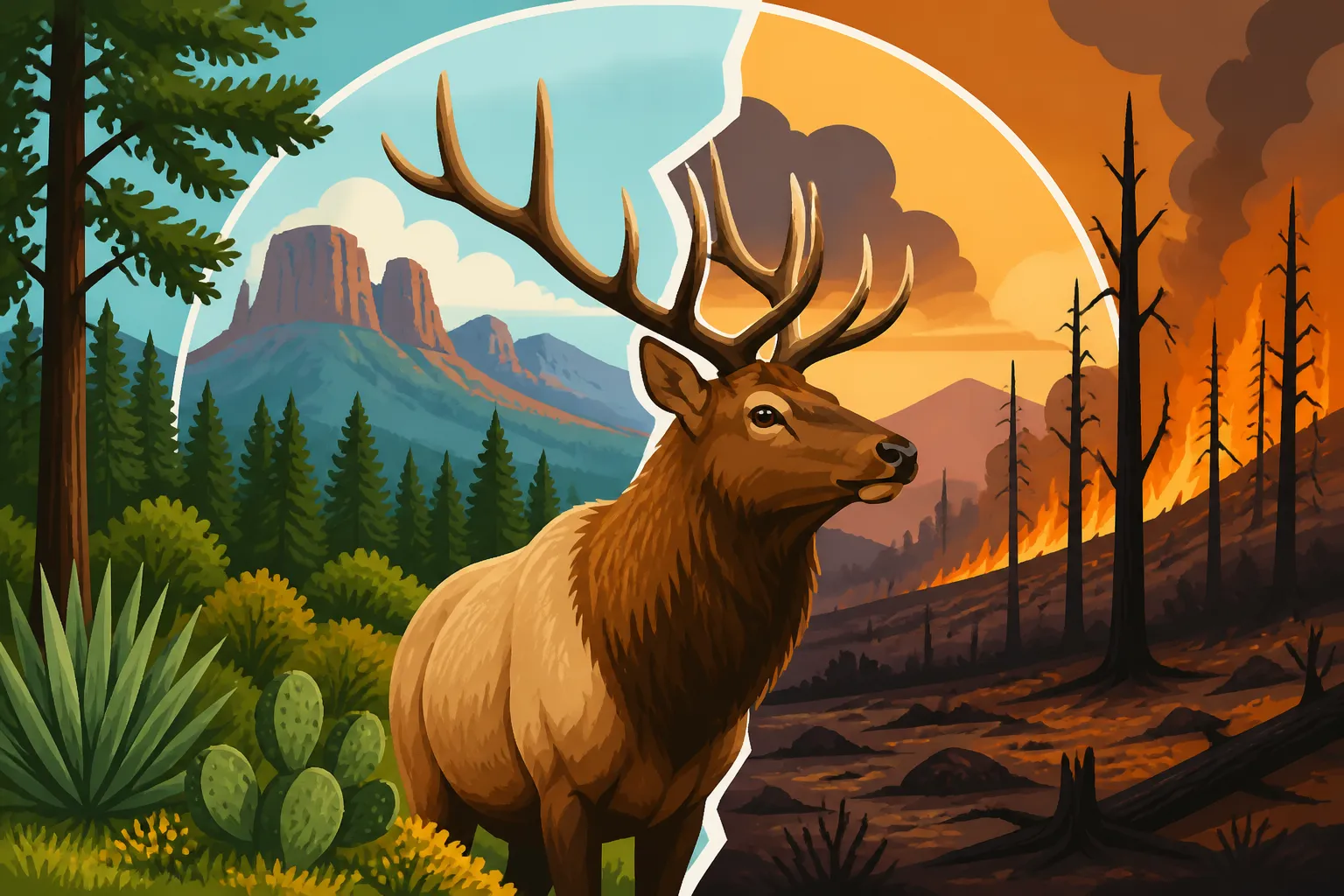
When a wildfire tears through an area, the immediate impact on elk habitat can feel catastrophic. Lush forests, thick with undergrowth and towering pines, can be reduced to blackened sticks and ash. This isn't just an aesthetic change; it represents a fundamental, albeit temporary, alteration of the resources elk rely on for survival.
Loss of Critical Forage and Cover
The most obvious and immediate effect of a wildfire is the destruction of vegetation. Elk are primarily grazers and browsers, meaning they rely on a diverse diet of grasses, forbs (herbaceous flowering plants), and the tender shoots of shrubs and trees. A hot, fast-moving fire can incinerate all of this, leaving behind a barren landscape. Even a less intense fire might burn off the nutritious new growth that elk prefer. Imagine being an elk, accustomed to a buffet of green shoots and hiding in dense timber, only to wake up surrounded by a charcoal-blackened desert. This instant loss of their primary food source forces immediate adaptation.
Beyond food, wildfires devastate both thermal and security cover. Thermal cover, typically dense stands of conifers or thick brush, protects elk from extreme temperatures, whether it's the scorching Arizona summer sun or the biting cold of winter storms. Security cover, equally vital, allows elk to hide from predators – including human hunters. When a forest burns, these vital layers are stripped away, leaving elk exposed. This vulnerability is a major factor in their immediate displacement. They have to move, often into unfamiliar territory, which can increase stress and energy expenditure, especially for cows with calves or older, less mobile bulls. Hunters often find that elk push into adjacent unburned pockets or seek refuge in canyons and washes that offered a natural firebreak.
Impact on Water Sources and Elk Movement Patterns
While fire doesn't typically "burn" water, it can profoundly affect its availability and quality. Intense fires can increase runoff and erosion, leading to sediment-laden streams and stock tanks. Ash and debris can choke smaller seeps and springs. Furthermore, the loss of shade trees around water sources can lead to increased evaporation, making them dry up faster in the intense Arizona heat. Elk need consistent access to water, particularly in the arid regions of Arizona where surface water is already a precious commodity. A fire that burns out key water points will force elk to travel further, concentrating them around fewer, remaining sources. This can lead to increased competition and stress.
This displacement isn't a simple straight-line migration. Elk are creatures of habit, often returning to the same bedding areas, waterholes, and foraging grounds year after year. A wildfire shatters these patterns. Herd units might split, and individuals can become disoriented. They will seek out new areas that offer the essential combination of food, water, and cover. For hunters, understanding these shifts is crucial. You can't expect elk to be in the same locations they were before a major burn. Tools like GoHunt can be invaluable for analyzing burn perimeters, identifying unburned pockets, and using historical data to predict new travel corridors or bedding areas. It requires a whole new level of scouting and adaptability, both E-Scouting an Arizona Unit Before the Season and on the ground.
The Phoenix Effect: Long-Term Recovery and Habitat Improvement
While the initial impact of a wildfire can be devastating, fire is a natural and often beneficial ecological process in many Western ecosystems, including Arizona. Over time, burned areas can transform into incredibly productive habitats, often superior to what existed before the fire. This "phoenix effect" is a testament to nature's resilience.
Nutrient Cycling and Forage Explosion
One of the most profound long-term benefits of wildfire is its role in nutrient cycling. When vegetation burns, the organic matter is converted into ash, which quickly breaks down and returns vital nutrients like nitrogen, phosphorus, and potassium to the soil. This nutrient pulse, combined with the removal of dense canopy cover that previously shaded the forest floor, creates ideal conditions for an explosion of new plant growth.
Within months to a year after a fire, especially if followed by good monsoon rains, burned areas can experience a boom in grasses, forbs, and fire-adapted shrubs. These new plants are often highly palatable and nutritious for elk. Species like annual grasses, legumes, and various browse species that were dormant or suppressed under a closed canopy can now thrive. This surge of high-quality forage acts like a massive food plot, drawing elk back into the area. How Monsoon Rain Affects Antler Growth is a key factor here; good moisture after a burn can lead to incredible forage and subsequently, healthier, larger elk.
Creating Habitat Mosaic and Edge Effect
Forests, particularly dense, mature stands, can sometimes become too uniform, limiting habitat diversity. Wildfires, by creating a mosaic of burned, partially burned, and unburned patches, introduce incredible diversity to the landscape. This "habitat mosaic" is highly beneficial for elk. They thrive in areas where they can easily move between open foraging grounds and secure, dense cover.
The "edge effect" is amplified in post-fire landscapes. An edge is the transition zone between two different habitat types – for example, an open meadow next to a dense forest. Elk often prefer these edges because they offer convenient access to food (in the open) and immediate safety (in the cover). A patchy burn creates countless new edges, maximizing these preferred zones. Imagine a unit where fire burned intensely in some areas, skipped others, and merely thinned the understory in still more. This creates a landscape of interconnected feeding and bedding areas, making it easier for elk to meet all their needs within a smaller home range.
Long-Term Benefits for Healthier Elk Populations
Over several years, a post-fire landscape can become a prime location for elk. The abundant, nutritious forage supports healthier cows, leading to better calf survival rates. Bulls also benefit from improved nutrition, which contributes to better antler growth. Areas that experienced significant burns years ago often become renowned for producing impressive animals, a direct result of this habitat regeneration.
However, it's not without its challenges. While the forage is excellent, the long-term loss of thermal cover can still be an issue in very large, severe burns, particularly during harsh winters or scorching summers. Biologists carefully monitor these areas, often through methods described in How Biologists Count a Desert Big Game Herd, to ensure that the ecological balance is maintained and that elk populations can truly thrive. Understanding Reading a Herd Unit Management Plan for a specific unit can offer insights into how the state manages these post-fire changes.
Hunting the Burn: Strategies and Considerations for Hunters
Hunting a unit that has experienced a wildfire requires a significant shift in strategy. What worked before the fire likely won't work in the same way after. It demands adaptability, careful scouting, and an understanding of how elk utilize these transformed landscapes.
Scouting the New Landscape
The first step in hunting a burn area is recognizing that it's a completely new unit, even if the boundaries are the same. Pre-season scouting, both digitally and physically, becomes paramount. Digital tools like satellite imagery (available through platforms like GoHunt) are incredibly powerful for identifying burn perimeters, finding unburned pockets of cover, and locating key water sources that may still be viable. Look for areas where the fire intensity was patchy, leaving islands of green within the blackened landscape. These islands become magnets for elk seeking refuge.
Once on the ground, focus your efforts on these transitional zones. Elk will often feed aggressively in the nutrient-rich new growth within the burn, especially during cooler parts of the day or at night, but they will retreat to any available cover for bedding and security. This means concentrating your physical scouting on the fringes of the burn, investigating the unburned finger ridges, dense drainages, and north-facing slopes that might have escaped the fire's full fury. Also, pay close attention to water sources. Even if springs or stock tanks within the burn were damaged, the green-up around them will still attract elk. Hunting a Stock Tank During Early Archery or any other season can be highly effective in these post-fire environments.
Navigating Access and Terrain Challenges
Wildfires often leave behind a maze of downed timber, making travel incredibly difficult, if not impossible, in some areas. Forest roads may be closed for safety reasons, or simply impassable due to fallen trees and erosion. Seasonal Road Closures Across Arizona are common, and fire can extend their duration significantly. This means you might need to embrace longer walks, or even consider packing into more remote areas. Hiking through deep ash can be messy and tiring, and burned areas often have unstable soil, increasing the risk of falls or rockslides.
When planning your hunt, be realistic about access. If roads are closed, you'll need to adjust your expectations for covering ground. This might mean focusing on areas accessible by foot or where residual roads are open. Carrying a reliable GPS or mapping app is essential, as familiar landmarks might be gone, making navigation challenging. Additionally, always be aware of your surroundings; dead standing trees ("snags") can fall without warning, especially on windy days.
Understanding Elk Behavior in Burned Areas
Elk are adaptable, and they will learn to use burned areas to their advantage. They'll exploit the new, succulent forage, often grazing openly during low-light hours. During the day, they will seek out the densest remaining cover, even if it's just a small patch of unburned scrub or a deep, shaded canyon.
Hunting strategies in burn areas often lean heavily on glassing. The more open landscape, while lacking cover for elk, also provides improved visibility for hunters. Climb to a high point on the edge of a burn, preferably with a good vantage of both the new growth and the remaining cover, and spend considerable time glassing. Look for elk feeding in the burn at dawn and dusk, and then try to pinpoint where they retreat for midday bedding. Glassing Grids for Arizona Coues Deer offers principles that apply equally well to elk in open, post-fire landscapes. Understanding wind direction is also paramount, as the open conditions can make swirling thermals even more unpredictable.
Ecological Perspective: Fire's Natural Role and Management
Understanding wildfires isn't just about hunting strategies; it's about appreciating their complex role in shaping the ecosystems where Arizona Elk on the Rim, White Mountains and Kaibab and other species thrive. Far from being purely destructive, fire has been an integral part of Western landscapes for millennia.
Historical Fire Regimes and Ecosystem Health
Before active fire suppression became common, many Arizona forests and grasslands experienced frequent, low-intensity fires. These fires, often started by lightning or Native American practices, would clear out underbrush, thin crowded stands of trees, and return nutrients to the soil. This created open, park-like forests with diverse age structures and robust understories – ideal conditions for elk and many other wildlife species. These historical "fire regimes" maintained ecosystem health and prevented the buildup of excessive fuel loads.
Decades of fire suppression, while well-intentioned, have often led to unnaturally dense forests with vast amounts of dead and down timber. When fires do occur in these conditions, they tend to be much more severe, hotter, and larger than historical fires, leading to extensive stand-replacing burns that are genuinely detrimental in the short term. However, even these severe fires contribute to a long-term ecological reset.
Prescribed Burns vs. Catastrophic Wildfires
It's important to distinguish between naturally ignited, catastrophic wildfires (especially those in overly dense, fuel-laden forests) and prescribed burns. Prescribed burns are intentionally set fires, conducted under specific weather conditions and with careful planning, to mimic natural fire regimes. They aim to reduce fuel loads, stimulate new growth, and enhance habitat diversity without the widespread destruction of an uncontrolled wildfire. Many land management agencies, including Arizona Game and Fish, utilize prescribed burns as a key tool in habitat management to improve conditions for species like elk.
These controlled burns improve forage quality, create vital edge habitat, and can even help to limit the size and severity of future unplanned wildfires. For hunters, knowing if a unit has had recent prescribed burns can be just as valuable as knowing about a wildfire. How Wildfire Changes Elk Habitat often overlaps with the intentions of prescribed fire.
Wildlife Management and Post-Fire Monitoring
Wildlife agencies, including the Arizona Game and Fish Department, play a critical role in managing post-fire landscapes. They assess the extent of habitat damage, monitor elk populations for changes in distribution and health, and implement restoration efforts. These efforts might include reseeding burned areas with native grasses and forbs, enhancing water sources, or even targeted thinning of dense stands to promote healthier forest growth.
Long-term studies help biologists understand the full scope of fire's impact. They track everything from forage quality and quantity to elk herd composition and movement patterns. This data is crucial for making informed decisions about hunting seasons and tag allocations in affected units. When you see information on Arizona Elk Season Structure by Hunt Code or Reading an Arizona Hunt Success Report, much of that data informs how wildlife populations are responding to habitat changes, including those caused by fire. The goal is always to support sustainable elk populations and healthy ecosystems, recognizing that fire, despite its destructive appearance, is often a necessary component of the landscape.
| Aspect of Habitat | Immediate Post-Fire Impact | Long-Term Post-Fire Impact |
|---|---|---|
| Forage | Significant loss, blackened earth, ash | Explosion of new, nutrient-rich grasses, forbs, and browse |
| Cover (Security) | Severe reduction, exposed landscape | Creation of edge habitat, patches of regrowth, new hiding spots |
| Cover (Thermal) | Near complete loss, increased exposure | Slow recovery as saplings grow, continued exposure in large burns |
| Water Sources | Sedimentation, increased evaporation, ash contamination | Improved water flow from healthier watersheds, renewed spring activity |
| Elk Movement | Displacement, seeking unburned refugia, disruption of patterns | Return to burn for forage, use of new travel corridors and bedding areas |
| Habitat Diversity | Initially reduced to uniform burned area | Greatly increased mosaic of habitat types, enhanced edge effect |
| Hunter Access | Road closures, downed timber, difficult terrain | Roads may reopen, trails cleared, but snags and erosion persist |
Disclaimer
This article is for general informational purposes only and does not constitute professional advice. Laws, prices and regulations vary by location and change over time. Consult a qualified professional for guidance on your specific situation.