Water Development Projects Built for Wildlife
The scorching Arizona sun doesn't just make us humans thirsty; it's a brutal reality for the wildlife trying to survive in this arid landscape. Many hunters struggle to understand why game animals seem to vanish in certain dry spells, or why a particular canyon suddenly holds more deer than expected. This guide is all about shedding light on the crucial, often unseen, efforts to provide life-giving water for Arizona's diverse wildlife, and how understanding these "water developments" can make you a more informed and ethical hunter.
The Critical Role of Water in Arizona's Ecosystems
Arizona is a land of incredible beauty and stark contrasts, where towering pines meet saguaro-studded deserts. But whether you're chasing elk on the Mogollon Rim or glassing for Coues deer in the Sky Islands, one constant remains: water is the ultimate limiting factor for almost all life. Without reliable access to drinking water, game animals simply cannot thrive, or even survive, especially during the long, hot, dry periods that define much of the year here.
The Desert's Thirst: Why Every Drop Counts
Imagine trekking through a unit in August, the ground baked hard, the air shimmering with heat, and every plant appearing to gasp for moisture. This isn't just uncomfortable for us; it's a life-or-death scenario for a bighorn sheep or a mule deer. Natural water sources like seasonal potholes, small springs, and ephemeral streams often dry up completely when the monsoon rains haven't arrived or winter snows were sparse. When those sources disappear, animals face an impossible choice: migrate to find water, if any is available, or perish from dehydration. Every single drop of available water, natural or otherwise, becomes a magnet for wildlife. This is particularly true in areas where natural flows are infrequent, emphasizing why even a small, maintained water source can be the difference between a thriving population and a struggling one.
Wildlife Dependence on Reliable Water Sources
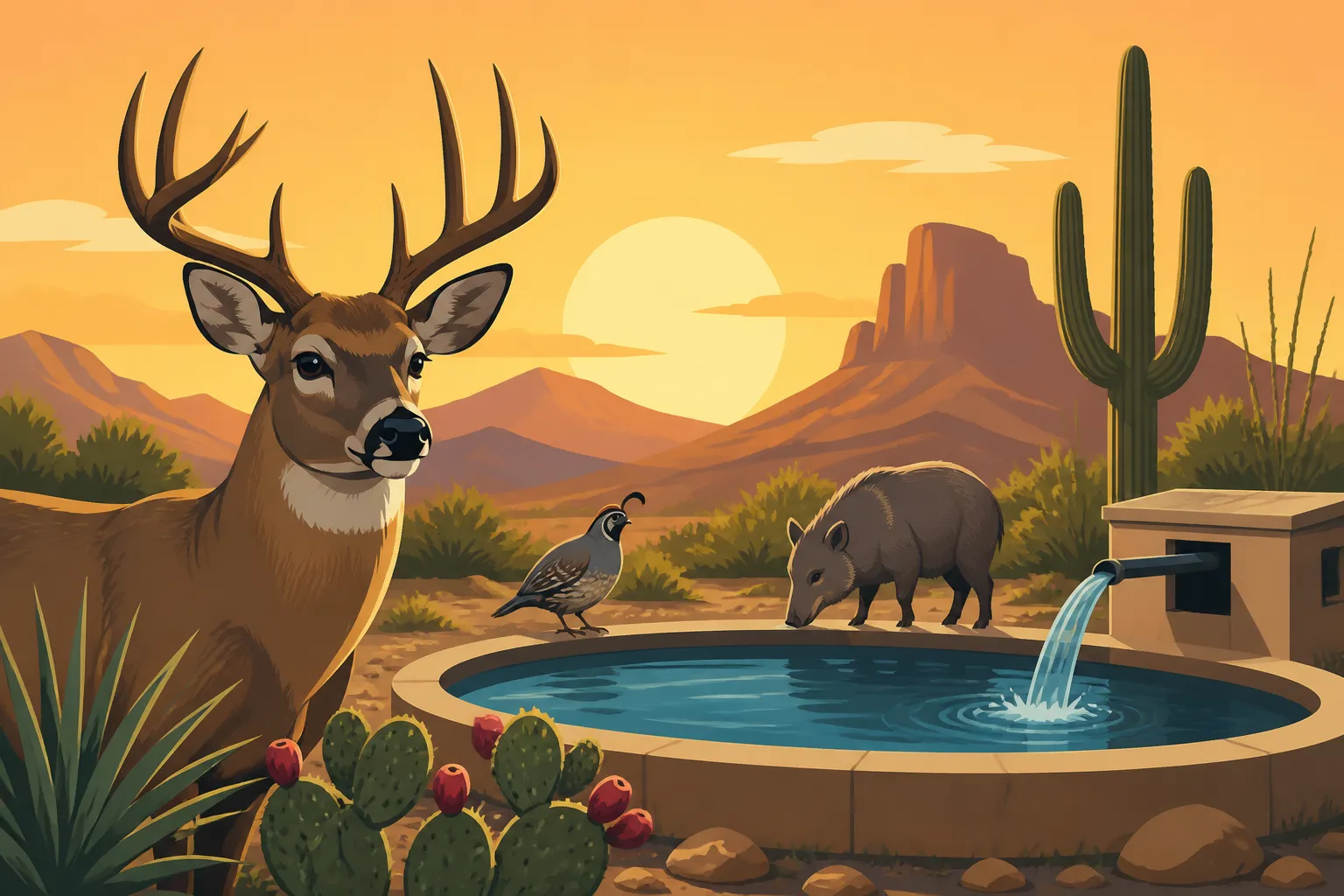
From a tiny quail to a massive elk, every creature in Arizona's vast and varied landscape relies on predictable water sources. Desert dwellers, like javelina, often get a significant portion of their hydration from the plants they eat, but even they need free-standing water, especially when conditions are extreme. Larger animals, such as deer and elk, require regular access to water for digestion, cooling, and overall metabolic function. Without it, their body condition deteriorates rapidly, making them more susceptible to disease and less capable of surviving tough winters or evading predators. Understanding this fundamental need is key to comprehending wildlife movement patterns and habitat use. Finding Water in Arizona's Dry Country is often the first step in successful scouting.
Types of Water Development Projects for Wildlife
Recognizing the critical need, wildlife agencies and conservation groups have invested heavily in creating and maintaining artificial water sources across the state. These projects are strategically placed to fill gaps in natural water distribution, especially in remote, arid regions where animals would otherwise struggle to find a drink. They are not merely puddles; they are often engineered solutions designed for longevity, efficiency, and minimal impact on the landscape.
Guzzlers: Engineered Oases
When you hear "guzzler," you might picture something straight out of a Mad Max movie, but in the Arizona desert, they are quite literally lifesavers. Guzzlers are self-contained water collection and storage systems designed to capture rainfall and funnel it into a wildlife-friendly drinking trough. They typically consist of a large collection apron (often made of corrugated metal or synthetic material), a storage tank buried underground to keep water cool and minimize evaporation, and a small, accessible drinker that allows animals to get a drink without falling in.
There are different designs – some are built into hillsides, others are stand-alone structures. They are specifically designed for different species; a quail guzzler, for instance, will be very low to the ground with easy access for small birds, while a bighorn sheep guzzler will be more robust and higher off the ground, built to withstand the traffic of larger animals. These ingenious systems ensure that even during prolonged droughts, a reservoir of water remains available, often in areas miles from any other reliable source. They are critical for species like bighorn sheep that often inhabit extremely rugged, dry terrain.
Natural Enhancements and Spring Development
Not all water projects involve hauling in tanks and metal sheeting. Sometimes, the best solution is to enhance what nature already provides. This can mean "developing" a natural spring. Many natural springs in Arizona are diffuse, with water seeping into the ground or evaporating before it can form a reliable pool. Spring development involves carefully excavating around the source, sometimes installing piping or rock work to concentrate the flow into a more accessible basin or trough. This makes the water available to more animals for a longer period.
It's a delicate balance, as the goal is to enhance the spring's utility without disrupting the natural environment or the existing vegetation that also depends on that moisture. These projects often blend seamlessly into the landscape and can sometimes be harder for an untrained eye to spot than a more obvious guzzler. They represent a sustainable approach, leveraging existing natural resources to greater effect.
Water Catchments and Tanks
Beyond specialized guzzlers and spring developments, there are simpler, yet equally vital, water catchments and storage tanks scattered across the state. These might be large steel or concrete tanks, often filled by rainfall or periodically by volunteers hauling water. They are typically placed in strategic locations, often in conjunction with existing stock tanks or natural depressions, to provide supplemental water.
These tanks feed small drinkers or open basins. In some cases, existing ranch stock tanks, originally put in for cattle, also serve as critical water sources for wildlife. While not explicitly "wildlife-only" developments, their presence on public land often means they become vital hubs for all kinds of game. When you're using a mapping tool like GoHunt, you'll often see these stock tanks marked, indicating a potential hotspot for game activity. Hunting a Stock Tank During Early Archery or any season for that matter can be highly productive, precisely because these locations become essential for survival.
The Impact of Water Developments on Arizona Hunting
As hunters, understanding these water developments isn't just about appreciating conservation efforts; it's about becoming more effective and ethical in the field. These artificial oases fundamentally alter game distribution and behavior, offering both opportunities and responsibilities.
Concentrating Game and Hunter Strategy
It's no secret that animals need water, and in dry country, they will travel significant distances to get it. Water developments act as magnets, drawing game from miles around. This means that during scouting, identifying and evaluating these water sources becomes paramount. A unit that appears dry and barren on a map might actually hold a thriving population of deer or javelina if it has a few well-maintained guzzlers.
Hunters often focus their efforts around these water holes, especially during hot, dry periods or early season hunts when animals are most thirsty. This can make for more predictable game movement patterns, as animals will often arrive at water during low light hours, or establish travel corridors leading to and from these spots. However, this also means increased hunter pressure around these critical areas. Using satellite imagery or tools from GoHunt can help you Finding Stock Tanks on a Unit Map and plan your approach, but always be prepared for competition.
| Type of Water Development | Primary Benefit | Key Feature | Maintenance Needs | Species Served |
|---|---|---|---|---|
| Guzzler | Drought-proof | Rainwater collection apron, buried tank, drinker | Regular cleaning, tank repair, apron checks | All game, especially desert species (bighorn, deer, quail) |
| Spring Development | Enhances natural source | Excavation, piping, natural basin | Clearing debris, ensuring flow, minor repairs | All game, often in more timbered/mountainous areas |
| Water Catchment/Tank | Supplemental storage | Large steel or concrete tank, piped drinker | Hauling water (if needed), tank integrity, drinker function | All game, often in conjunction with existing features |
Ethical Considerations and Water Sources
Hunting near water sources, while often effective, comes with significant ethical considerations. Water Sources and Ethics in Arizona Desert Hunting is a topic that can't be stressed enough. These are not merely hunting spots; they are critical survival points for animals. Harassing game at water, setting up too close, or impacting their ability to drink freely are behaviors that undermine fair chase and conservation. It's generally considered unethical to camp directly on a water source or sit on it for days, monopolizing access.
The Arizona Game and Fish Department (AZGFD) often has specific regulations regarding hunting proximity to water. Always consult the current regulations for the unit you're hunting. The spirit of the rule is to ensure wildlife can access water unimpeded. As responsible hunters, we should always strive to minimize our impact and respect these vital areas, recognizing their broader conservation role beyond just hunt opportunities.
How Hunters Can Support Water Projects
Many of these water developments exist thanks to the tireless efforts of volunteers and organizations like the Arizona Desert Bighorn Sheep Society, the Mule Deer Foundation, and local chapters of conservation groups. These groups spend countless hours in remote areas, repairing fences, hauling concrete, scraping out sediment from drinkers, and even bringing in thousands of gallons of water during severe droughts.
As hunters, we benefit directly from these projects, and we have a responsibility to support them. Here's how:
- Volunteer: Look for work parties in your area. It's a fantastic way to give back, learn about your hunting units, and see these projects firsthand. You'll gain an appreciation for the effort involved and invaluable knowledge about local water sources.
- Report Issues: If you find a guzzler or tank that's damaged, leaking, or dry, report it to AZGFD. Your observation can help ensure timely repairs.
- Donate: Many organizations rely on donations to fund materials, fuel, and equipment for these projects. Even a small contribution helps.
- Practice Respect: When you encounter a water development, leave no trace. Pack out all your trash, avoid disturbing the site, and be mindful of your presence so as not to deter wildlife.
- Be a Good Steward: Understand that these water sources are for the animals first and foremost. Be respectful of other hunters and give animals their space.
By supporting these water development projects, either directly through volunteering or indirectly through responsible hunting practices, we ensure that Arizona's wildlife continues to have the hydration they need to survive and thrive. It's a testament to how human intervention, guided by conservation principles, can play a positive role in sustaining wild populations in some of the most challenging environments.
Disclaimer
This article is for general informational purposes only and does not constitute professional advice. Laws, prices and regulations vary by location and change over time. Consult a qualified professional for guidance on your specific situation.