When an Arizona Hunt Really Needs a Guide
Many hunters dream of chasing big game across Arizona's vast and diverse landscapes, but the reality of actually making a successful hunt happen can be daunting. From the rugged Sky Islands to the sprawling Mogollon Rim, Arizona presents unique challenges that often leave even seasoned hunters wondering if they truly need professional assistance. This guide will help you navigate those considerations, breaking down the scenarios where hiring an experienced guide might be your best bet for a safe, ethical, and successful hunt.
Navigating Arizona's Challenging Species and Terrain
Arizona is home to some incredible animals, but many of them live in unforgiving country that tests even the most prepared hunter. The sheer scale and harshness of the landscape, coupled with the elusive nature of certain species, often make a guide an invaluable asset.
The Elusiveness of Coues Deer
Chasing Coues deer in Arizona's southern Sky Islands is an experience unlike almost any other in the West. These "gray ghosts" are incredibly wary and blend seamlessly into their oak brush and cactus surroundings. Their small size makes them incredibly difficult to spot, even with premium optics. The terrain is often steep, rocky, and covered in thorny vegetation, turning a simple stalk into a brutal test of endurance.
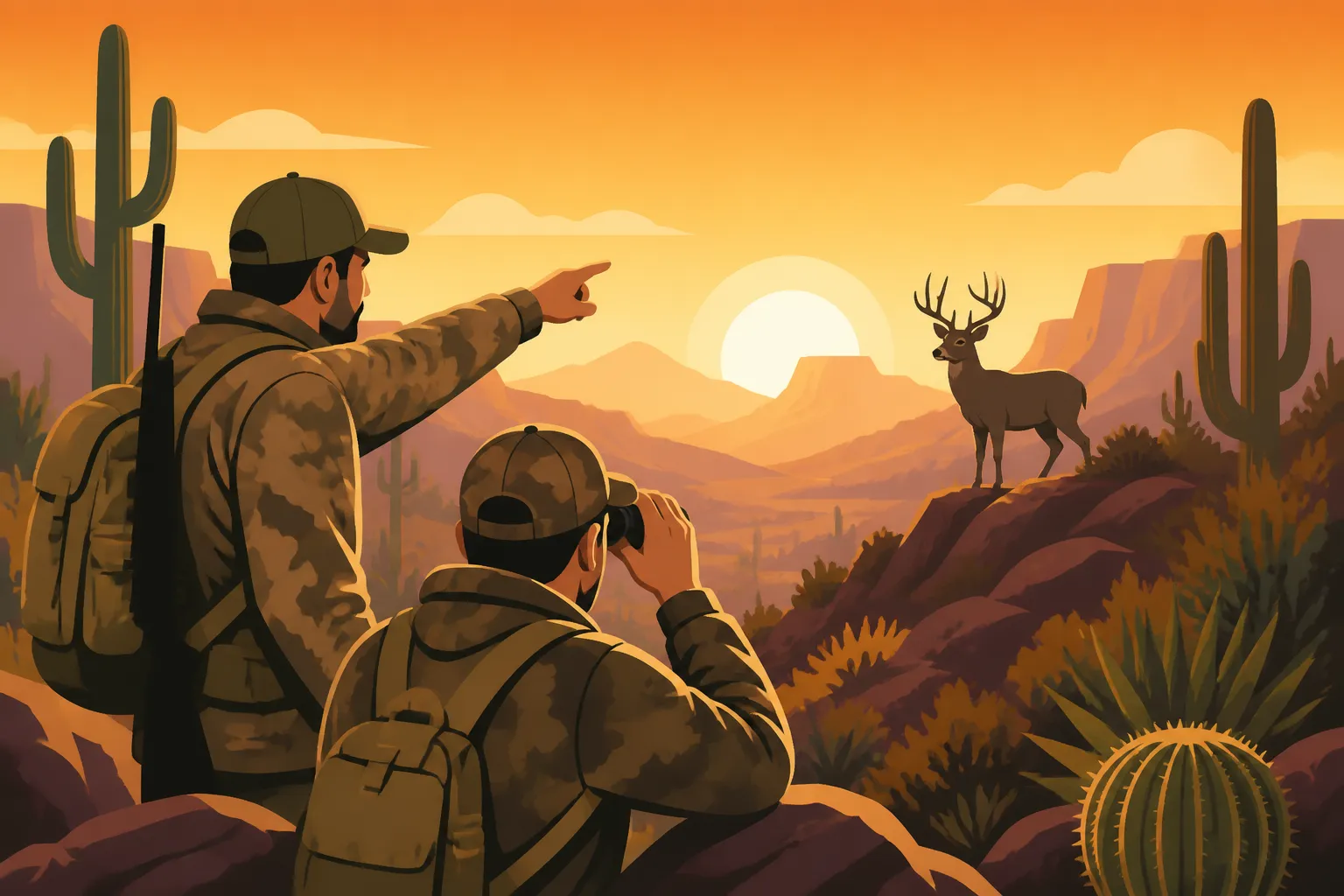
A skilled Coues guide isn't just about showing you where the deer are; they're masters of glassing. They know the subtle nuances of light, shadow, and terrain that reveal a bedded buck. They've spent countless hours studying these animals and understanding their patterns in specific drainages and ridges. Without that intimate knowledge, a self-guided Coues hunt can quickly become a frustrating exercise in looking at empty hillsides. They can also teach you The Grid Glassing Method, Step by Step for maximum efficiency.
Beyond spotting, a guide can also assist with the critical stalk. The desert environment offers limited cover, and closing the distance on a Coues buck often requires navigating treacherous slopes and avoiding detection in wide-open spaces. A guide's experience in reading the wind, understanding thermal currents, and knowing which terrain features can conceal an approach is paramount to getting within shooting range. This isn't just a suggestion; for many, it's the difference between seeing deer and taking one home.
The Scale of Arizona Elk Country
Arizona's elk hunting is legendary, particularly on the Mogollon Rim and in the White Mountains. But these areas encompass millions of acres of dense ponderosa pine, steep canyons, and vast plateaus. Unless you've spent significant time scouting a specific unit, finding a herd, let alone a mature bull, can feel like searching for a needle in a haystack. The sheer scale makes it incredibly difficult to cover enough ground effectively on your own, especially during the peak of the rut when bulls are vocal but often on the move.
An experienced elk guide often has years, if not decades, of experience in specific units. They know the elk migration patterns, the bedding areas, the feeding grounds, and the crucial water sources. They understand Bugle Timing Across the Mogollon Rim and can interpret the nuances of elk vocalizations, knowing when to push aggressively and when to sit back and call. This knowledge reduces the amount of "dead" hunting time and significantly increases your chances of encountering elk.
Furthermore, a guide can provide the necessary logistical support that many elk hunts demand. This might include packing in gear to remote locations, setting up spike camps, or even assisting with packing out a heavy bull across challenging terrain. If you're physically capable but lack the intimate knowledge of the area or the robust support system, an outfitter can bridge that gap, allowing you to focus purely on the hunt. For those eyeing the iconic Kaibab Plateau, guides often have extensive experience with Kaibab Plateau Elk Genetics and where they frequent.
Rugged Desert Bighorn Habitat
Hunting desert bighorn sheep in Arizona is a once-in-a-lifetime opportunity, and it's also arguably one of the most physically demanding hunts in North America. These magnificent animals live in some of the most remote and rugged mountain ranges, often requiring extreme physical exertion to access and glass. The terrain is a mix of steep, rocky cliffs, deep canyons, and vast, open desert washes, all under the intense Arizona sun.
For bighorn, a guide is almost universally recommended, if not outright essential. Their knowledge of specific mountain ranges, water sources, and historical ram habitat is critical. They are often equipped with top-tier optics and have the stamina and experience to navigate the treacherous landscape safely and efficiently. Finding a legal ram in this environment demands an exceptional amount of time, effort, and specialized skill that few self-guided hunters possess. For those seeking this incredible experience, exploring guides who specialize in these hunts through platforms like BookYourHunt can be a wise first step.
The physical demands alone are a huge factor. Bighorn hunts often involve glassing for hours from a vantage point, then executing long, steep stalks in unforgiving conditions. A guide ensures not only that you're hunting in the right areas but also that you're doing so with the necessary safety precautions and logistical support. From navigating dangerous terrain to field care of a prized ram in extreme heat, their expertise is invaluable.
Time Constraints and Logistical Challenges
For many hunters, time is a precious commodity. Juggling work, family, and the demands of scouting and hunting can be overwhelming. This is where a guide truly shines, effectively condensing weeks or even months of preparation into a streamlined hunting experience.
Maximizing Limited Vacation Time
Most hunters get a limited number of vacation days each year. If you're coming to Arizona from out of state, or even if you're a busy resident, those few days are gold. You don't want to spend them driving around, getting lost, or trying to decipher maps when you could be actively hunting. This is a common frustration, and it's a primary reason people turn to guides.
A guide pre-scouts the area, often extensively, before your arrival. They've located game, understood their patterns, and identified prime hunting spots. This means that when you arrive, you hit the ground running. Every precious minute of your vacation can be spent hunting, rather than searching. They handle the camp setup, meal preparation, and transportation, allowing you to focus on the hunt itself and truly enjoy the experience. This level of efficiency is invaluable for those with tight schedules and high expectations for their hunt.
Consider the time investment of a do-it-yourself hunt: researching units, purchasing maps, e-scouting, physical scouting trips, travel, gear prep, setting up camp, and then the actual hunting. All this adds up to many hours away from home and work. A guided hunt significantly reduces this upfront investment of time, making it a viable option for those who simply don't have the luxury of weeks to dedicate to a single hunt. This is especially true for popular draw tags like elk, where you might only get a shot every few years.
Understanding Complex Unit Boundaries and Access
Arizona's land ownership can be a checkerboard of public lands (BLM, National Forest), State Trust Land, and private property. Navigating these boundaries, especially in remote areas, requires careful attention to detail to avoid trespassing. Knowing How Arizona Numbers Its Game Management Units is just the first step. For hunters less familiar with the specific unit, understanding what's public, what requires an additional permit, and what's strictly off-limits can be a major headache.
Guides are intimately familiar with the units they operate in. They know the public access points, the nuances of State Trust Land permits (which your hunting license often covers, but always verify), and which private parcels are leased or strictly off-limits. They can ensure you stay on legal ground, avoiding costly and embarrassing trespass violations. This expertise prevents wasted time and potential legal issues, allowing you to hunt with confidence. Many outfitters utilize digital mapping tools and have years of on-the-ground experience to ensure they are always within legal hunting boundaries.
Some areas, particularly the Arizona Strip or portions of the Kaibab, have complex access roads and regulations for motorized travel. A guide knows these routes, knows which roads are seasonally closed, and how to navigate rugged terrain that might be impassable for a standard truck. They can get you to prime hunting areas efficiently and safely, something that might be a significant barrier for an unfamiliar hunter. Utilizing resources like GoHunt, for example, can help you e-scout and understand unit access, but a local guide's real-time knowledge is often superior.
Handling Game Retrieval and Field Care
Let's be honest: taking down a large animal like an elk or a mule deer is only half the battle. The other half is getting it out of the backcountry and properly cared for, especially in Arizona's often warm climate. Field dressing, quartering, and packing out an animal can be incredibly strenuous and time-consuming, requiring specific skills and equipment.
A guide team is typically well-equipped and experienced in game retrieval. They often have pack animals, ATVs, or a network of strong backs to help get your animal out efficiently. More importantly, they understand the urgency of proper field care in warm temperatures to prevent meat spoilage. They can expertly quarter an animal, get it cooled, and transport it to a processor or cooler. This logistical support takes a massive burden off the hunter, ensuring that your hard-earned trophy is properly preserved. For information on Getting Meat Cooled on an Early Season Hunt, a guide can offer crucial advice.
Without a guide, a solo hunter or a small group might find themselves in a serious predicament with a downed animal miles from a road, especially if the weather turns hot. This can lead to spoiled meat, extreme physical exhaustion, or even dangerous situations. A guide mitigates these risks, making the entire process, from shot to freezer, much smoother and more successful.
Bridging Skill and Experience Gaps
Not every hunter has years of experience in diverse terrains or with specific hunting techniques. Arizona hunting often demands specialized skills, and a guide can fill those gaps, acting as a mentor and increasing your chances of success.
Learning Specialized Hunting Techniques
Arizona's unique species often require specialized hunting techniques. For Coues deer, it's about meticulous glassing and precise stalking. For elk during the rut, it's about calling strategy and knowing when to use a Two-Hunter Calling Setups That Actually Work. For javelina, it might involve tracking through thick desert brush. If you're new to these methods or to Arizona's specific conditions, a guide can provide invaluable instruction and hands-on experience.
A guide can teach you how to properly use high-power optics for long-range glassing, how to read sign specific to Arizona's game, and how to execute a successful stalk in unforgiving terrain. This isn't just about bagging an animal; it's about becoming a better, more knowledgeable hunter. They can demonstrate effective calling sequences, show you how to identify specific bedding areas, and explain why certain strategies work better than others in a given situation. This mentorship aspect is one of the most significant benefits of a guided hunt.
For instance, understanding how to play the thermals and wind in mountainous terrain is critical for success with many Arizona species. A guide, through years of experience, can read these subtle environmental cues instinctively and apply them to your hunt. They can help you develop crucial skills that will serve you well on future hunts, whether guided or self-guided.
Overcoming Limited Local Knowledge
If you're an out-of-state hunter, or even a resident who typically hunts in a different part of Arizona, you'll have limited local knowledge of your chosen unit. While e-scouting tools are fantastic for initial research, they can't replace boots-on-the-ground experience. A guide provides that critical local insight, often accumulated over decades.
This local knowledge includes understanding which specific canyons hold water during a dry year, which ridges are preferred bedding areas in different seasons, or how animal behavior changes with pressure or weather patterns. They know the historical movements of herds, the local road systems, and where to go to find animals when conditions change. This intimate familiarity with the landscape and its inhabitants is a cornerstone of a guide's value.
Without this local insight, a self-guided hunter risks wasting valuable hunting time in areas devoid of game or missing crucial opportunities due to a lack of understanding of local conditions. A guide acts as a local expert, instantly putting you years ahead in terms of knowing the terrain and the animals that live there. They can help you pinpoint areas, explaining Reading an Arizona Unit Boundary Before You Apply and how different land types impact game movement.
Handling Unexpected Situations and Emergencies
The backcountry of Arizona can be a dangerous place. From unexpected weather shifts to wildlife encounters, falls, or equipment failures, things can go wrong quickly. Being prepared for emergencies requires specific skills, first aid knowledge, and communication tools that many hunters may not possess or carry.
A professional guide prioritizes safety. They carry comprehensive first aid kits, satellite communication devices, and often have training in wilderness first aid and emergency response. They know the terrain, potential hazards, and how to react calmly and effectively in a crisis. This level of preparedness offers a significant peace of mind, especially when hunting in remote, rugged areas far from immediate help. For a better understanding of what your guide will send, check out The Gear List Your Outfitter Will Send.
Beyond medical emergencies, guides are adept at handling other unexpected situations, like a sudden change in game patterns, lost equipment, or vehicle breakdowns in remote locations. Their experience navigating the unpredictable nature of backcountry hunting ensures that you're in capable hands, allowing you to focus on the hunt itself rather than worrying about what could go wrong.
When a Guide is Truly Indispensable
While a guide is beneficial in many scenarios, there are specific hunts and circumstances in Arizona where their expertise becomes less of a luxury and more of a critical necessity for any realistic chance of success.
High-Demand, Low-Odds Trophy Hunts
Arizona is famous for its trophy elk, mule deer, and bighorn sheep. Tags for these hunts are often extremely difficult to draw, sometimes requiring decades of accumulating bonus points. When you finally draw one of these coveted tags, the pressure to make the most of it is immense. For these high-stakes hunts, a guide offers the best possible chance of fulfilling that once-in-a-lifetime opportunity.
These hunts often target specific, mature animals in challenging terrain. A guide has the time, resources, and local knowledge to pre-scout these areas extensively, locate trophy-class animals, and devise a strategy for your specific hunt. They invest countless hours before you even arrive, and that preparation significantly tips the odds in your favor for a hunt that you may never get again. This is particularly true for Arizona Desert Bighorn Guides and a Lifetime Tag, where the investment in a guide is often seen as a prerequisite for success.
When you've waited years, sometimes decades, for a specific tag, the cost of a guide becomes a relative fraction of the overall value of the experience. It's an investment in maximizing your single opportunity. The peace of mind, the increased odds, and the invaluable assistance in field care and retrieval make a guide almost indispensable for these types of premier Arizona hunts.
Specialty Permits and Disabled Hunter Access
Arizona offers specific permits and provisions for hunters with disabilities, such as the CHAMP permit (Citizens Helping Arizona's Mentally and Physically Challenged). These permits allow for special access or methods, like the use of a crossbow during archery-only seasons. Navigating these regulations and making the most of a CHAMP permit can be greatly aided by a guide.
A guide familiar with these programs can help a disabled hunter understand their options, select appropriate hunting units, and ensure all regulations are met. They can provide the physical assistance required in the field, whether it's navigating challenging terrain, setting up blinds, or assisting with tracking and retrieval. This support makes hunting accessible and enjoyable for individuals who might otherwise find it too difficult to participate in a self-guided capacity. The What a CHAMP Permit Allows details how these opportunities can open up.
Furthermore, guides can tailor the hunting experience to the individual's specific needs and capabilities, ensuring a safe, comfortable, and successful hunt. They handle the logistical heavy lifting, allowing the hunter to focus on the experience and the thrill of the chase. This specialized support transforms a potentially overwhelming challenge into a memorable adventure.
Group Hunts and Complex Logistics
While group applications for the Arizona draw are common, coordinating a self-guided hunt for multiple people, especially with varying skill levels and expectations, can be a logistical nightmare. From finding accommodation to planning meals, assigning roles, and managing individual hunting preferences, a group leader can quickly become overwhelmed.
A guide or outfitter specializes in managing these complex logistics. They can accommodate groups of various sizes, ensuring everyone is on the same page and that the hunt runs smoothly. They can manage camp, food, and daily activities, freeing up the group to simply enjoy the hunting experience together. This is especially useful for families or friends who want to hunt together but don't want the added stress of coordinating every detail themselves.
Outfitters often have established camps, equipment, and a support staff capable of handling the demands of a larger group. This structured approach ensures that the hunt stays organized and enjoyable for everyone, preventing potential conflicts or frustrations that can arise from a poorly planned group hunt. If you're planning a trip with friends or family, particularly if some are less experienced, a guide can be the glue that holds the experience together.
Here's a quick overview of when a guide might be essential based on common hunting scenarios:
| Scenario | Key Factors & Challenges | When a Guide is Likely Essential |
|---|---|---|
| Coues Deer | Small, elusive "gray ghosts" in dense, thorny, steep Sky Island terrain. Demands expert glassing. | Limited experience with long-range glassing, difficult terrain, or if time is a major constraint. |
| Trophy Elk | Massive units (Mogollon Rim, White Mountains), dense timber, often remote. High stakes, once-in-a-lifetime tags. | For premier draw tags, maximizing limited vacation time, or if lacking extensive pre-scouting. |
| Desert Bighorn | Extreme physical demands, remote and dangerous mountain ranges. Once-in-a-lifetime tags. | Virtually always recommended due to extreme terrain, physical demands, and specific ram identification. |
| First-Time Arizona Hunter | Unfamiliarity with diverse landscapes, regulations, species behavior, and access rules. | If you have limited experience with Western hunting or Arizona's specific conditions and don't have ample scouting time. |
| Limited Time/Vacation | Inability to dedicate weeks to scouting, travel, and camp setup. Need to maximize hunting days. | When every day on the ground needs to be a hunting day, with logistics handled by someone else. |
| Disabled Hunters | Physical limitations, need for specialized access/methods (e.g., CHAMP permit), assistance in the field. | To provide necessary physical assistance, ensure accessibility, and navigate specific permit regulations. |
| Remote Backcountry | Far from roads, no cell service, harsh conditions. Need for safety, navigation, and game retrieval. | If you lack extensive backcountry experience, robust safety protocols, or the means to pack out large game in remote areas. |
| Specific Game Calls | Need to learn calling strategies for elk (bugling), javelina, or other species in high-pressure situations. | If you want to master specific calling techniques or hunt during the rut where calling is key, and you're new to the methods. |
Vetting and Booking Your Guide
Once you've decided a guide is the right choice for your Arizona hunt, the next step is finding the right one. This isn't a decision to take lightly, as a good guide can make or break your experience.
Researching Reputable Outfitters
The internet is a powerful tool for initial research. You can find many Arizona outfitters listed on platforms like BookYourHunt or through direct searches. Don't just look at their website; delve into client testimonials, online reviews, and hunting forums. Pay attention to what past clients say about their experience, the guide's professionalism, and the success rates. Remember, success rates can be tricky; ask what they consider a "successful" hunt (e.g., shot opportunity versus harvested animal).
It's crucial to ask for references, and then actually call them. Speak to recent clients about their experience, specifically asking about the guide's communication, preparation, ethical conduct, and overall professionalism. Ask about specific challenges they faced and how the guide handled them. A reputable guide will be transparent and happy to provide a list of contacts. This due diligence is the best way to ensure you're making a sound investment. You can also explore Questions to Ask an Arizona Outfitter before committing.
Beyond online searches and references, consider attending hunting expos. Many Arizona outfitters have booths where you can meet them in person, discuss their offerings, and get a feel for their personality and approach. This face-to-face interaction can be invaluable in choosing someone you trust to spend potentially a week or more with in the wilderness.
Understanding Costs and What's Included
Guided hunts are a significant investment, and the costs can vary widely depending on the species, duration, type of hunt (e.g., fully guided vs. drop camp), and the outfitter's reputation. It's imperative to get a clear, itemized breakdown of what the price includes. Does it cover food, lodging, transportation once in Arizona, field dressing, and basic meat processing? What about taxidermy preparation or shipping?
Crucially, understand what the price doesn't include. Often, your hunting license, tag fees, gratuities for the guide and camp staff, and personal gear are separate costs. Some outfitters also have trophy fees for specific animals or for animals that exceed a certain size. Make sure there are no hidden fees or surprises. Get all terms and conditions in writing before sending any deposit. For example, The All-In Cost of an Arizona Nonresident Elk Hunt needs careful consideration beyond just the outfitter's fee.
It's also important to discuss payment schedules and cancellation policies, especially regarding draw hunts. What happens if you book a guide but fail to draw a tag? Are deposits refundable, or can they be rolled over to the next year? This is a critical detail that needs to be clarified upfront to avoid potential financial headaches. Many reputable outfitters have fair policies, but it's up to you to understand them completely.
Booking Ahead and Draw Considerations
For popular Arizona big game hunts, especially elk and trophy mule deer, outfitters often book out years in advance. If you're planning a hunt that requires drawing a limited tag, it's wise to engage with an outfitter before the draw deadline. This allows you to discuss their availability for various hunt codes and potential strategies. Some hunters even book an outfitter with a "deposit contingent on drawing a tag" clause, which is a common practice.
Outfitters who specialize in draw hunts are also excellent resources for understanding draw odds, unit choices, and application strategies. While they can't guarantee you a tag, their insight can be invaluable in making informed decisions about which units to apply for to maximize your chances over time. Platforms like GoHunt often provide detailed draw odds, which can be cross-referenced with your chosen outfitter's recommendations. For more information, check Booking Before Arizona Draw Results Land.
Ultimately, the decision to hire a guide for an Arizona hunt depends on your personal circumstances, experience level, budget, and the specific hunt you're pursuing. For many, especially those chasing challenging species in vast, rugged landscapes, a guide is not just a luxury but a crucial partner in achieving a successful and memorable adventure.
Disclaimer
This article is for general informational purposes only and does not constitute professional advice. Laws, prices and regulations vary by location and change over time. Consult a qualified professional for guidance on your specific situation.