Prescott National Forest Hunting
One of the biggest headaches for any hunter new to Arizona, or even seasoned veterans looking for new territory, is simply figuring out where to hunt. With vast swaths of public land broken up by private parcels, state trust land, and varying designations, it's easy to feel lost before you even leave the driveway. This guide is here to untangle the complexities of hunting the Prescott National Forest, giving you the insights and practical tips you need to confidently explore its diverse landscapes and pursue the game animals that call it home.
Understanding Prescott National Forest: A Hunter's Overview
The Prescott National Forest is a true gem in central Arizona, offering a remarkable diversity of habitats and, consequently, hunting opportunities. It’s not just one type of terrain; it’s a patchwork that transitions from low desert to high ponderosa pine, providing a home for a wide array of species. For hunters, understanding this mosaic is the first step toward a successful outing.
Geography and Terrain for Hunters
Imagine driving from the saguaros of the Sonoran Desert up into cool, pine-scented mountains—that's the kind of transition you'll find within the Prescott National Forest. The elevation here ranges dramatically, starting around 3,000 feet in the lower desertscrub and climbing to over 7,000 feet in areas like the Bradshaw Mountains. This creates distinct ecological zones that directly influence where you'll find certain game animals. Lower elevations are characterized by Sonoran desertscrub and chaparral, dense with prickly pear, mesquite, and various brush species. As you gain elevation, you'll encounter extensive pinyon-juniper woodlands, offering excellent cover and forage. Climb even higher, and the landscape shifts to ponderosa pine forests, providing cooler temperatures and different food sources.
This varied topography means your hunting strategy will need to adapt as you move through the forest. What works in the dense chaparral for javelina won't necessarily be effective for elk in the higher pines. The steep, rocky canyons and draws can make for challenging but rewarding stalks, while open ridges offer prime glassing opportunities. Understanding these transitions is key to anticipating animal movements and selecting your approach.
Game Management Units Within the Forest
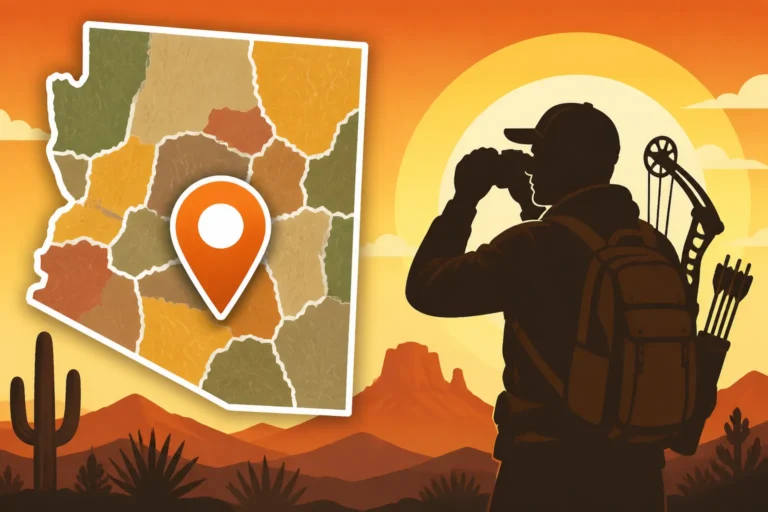
The Prescott National Forest isn't a single, monolithic hunting area; instead, it spans across several Arizona Game and Fish Department (AZGFD) Game Management Units (GMUs). The primary units that contain significant portions of the Prescott National Forest include Units 19A, 19B, 20A, 20B, and Unit 21. Each of these units, while sharing the overarching National Forest designation, has its own unique characteristics, draw odds, and species concentrations. For example, some units might be renowned for their elk populations, while others are prime coues deer habitat.
It's absolutely essential to know which unit you're in at all times, not just for regulations but for understanding the specific dynamics of the hunt. These unit boundaries aren't always obvious on the ground, so reliable mapping tools are non-negotiable. Knowing these units allows you to research their specific hunt statistics, habitat types, and access points, tailoring your application and scouting efforts accordingly.
Permitted Game Species and Opportunities
The diverse habitats of the Prescott National Forest support a healthy population of various game species, making it a fantastic destination for a range of hunting pursuits. For big game, hunters can pursue:
- Deer: Both Mule Deer and Coues Whitetail can be found here. Mule deer typically prefer the more open, broken terrain and higher elevations, while the elusive Coues deer often stick to the dense chaparral and oak brush of the lower Sky Island-like mountain ranges within the forest.
- Elk: Found primarily in the higher elevations and timbered areas, particularly in units with good water sources and forage. While not as famous for giant bulls as some of Arizona's more northern units, the Prescott National Forest offers legitimate elk hunting opportunities.
- Javelina: These "desert pigs" are abundant in the chaparral and desertscrub areas across the forest, offering an exciting and challenging hunt, often in the late winter and early spring.
- Black Bear: While secretive, bears are present throughout the forest, especially in areas with dense cover and food sources like oak acorns. Bear seasons are often managed with harvest limits and closures, so staying updated on current conditions is crucial.
- Mountain Lion: These apex predators roam throughout the forest, with tags often available over-the-counter or through specific draw hunts.
Beyond big game, the forest also provides opportunities for small game such as Gambel's quail, cottontail rabbits, and various predators like coyotes. The sheer variety means that whether you're drawing a coveted elk tag or simply looking for an over-the-counter small game adventure, the Prescott National Forest has something to offer.
Navigating Access and Regulations in Prescott NF
Hunting the Prescott National Forest isn't just about finding game; it's also about understanding the lay of the land and playing by the rules. Arizona has a mix of public and private ownership, and within the public lands, there are specific guidelines for access and activities. Getting this right is crucial for a lawful and enjoyable hunt.
Public Access Points and Road Systems
The Prescott National Forest boasts an extensive network of forest roads, ranging from well-maintained gravel paths to rugged two-tracks that require high-clearance 4×4 vehicles. These roads are your primary means of accessing much of the interior of the forest. However, not all roads are open year-round, and some areas are designated as non-motorized. It’s absolutely vital to consult current Motor Vehicle Use Maps (MVUMs), which are available through the Forest Service or digitally. These maps clearly delineate which roads are open, which are seasonally closed, and which are entirely off-limits to vehicles. Ignoring these can lead to fines and habitat damage.
Digital mapping tools like onX Hunt have become indispensable for this. They overlay these MVUMs directly onto your GPS-enabled device, showing you exactly where you can drive and where you need to park and walk. Trust me, trying to navigate these road systems with only a paper map can lead to a lot of wasted time and frustration, especially when seasonal closures kick in.
Understanding Land Ownership & Boundaries
This is where many hunters get into trouble in Arizona. The Prescott National Forest is primarily federal land, managed by the U.S. Forest Service. However, it's often checkerboarded with other land types: Bureau of Land Management (BLM) land, Arizona State Trust Land, and private property. While your Arizona hunting license typically acts as your permit for hunting on State Trust Land, you must ensure you are aware of all boundaries. Crossing onto private land without permission is trespassing, full stop.
This is another area where modern mapping technology shines. Services like onX Hunt provide detailed land ownership maps, color-coded for clarity. Before you head out, spend time scouting these layers. Reading a Land Ownership Layer Correctly is not just a good idea, it's an ethical and legal necessity. You might find public land access corridors you never knew existed, or discover that what looked like a continuous block of public land is actually split by private ranchland. Always confirm the boundaries to avoid any unpleasant encounters with landowners or game wardens.
General Regulations and Restrictions
Beyond the basic hunting laws that apply statewide, there are specific regulations that govern activities within the National Forest. These can include:
- Camping Rules: Dispersed camping is often allowed in many areas, but there might be limits on how long you can stay, how far you must be from developed areas or water sources, and restrictions on campfires. Camping on Forest Ground During Hunting Season is a common question, and generally, it's permitted, but always check for current fire restrictions, especially during dry periods, as these can change quickly and without much warning.
- Fire Restrictions: Arizona experiences severe fire seasons, and stage 1, 2, or even full fire restrictions are common. This can mean no campfires, no charcoal grills, and sometimes even restrictions on smoking outside vehicles. Always check the Forest Service website or local ranger stations for the most up-to-date information.
- Seasonal Road Closures: As mentioned, many forest roads close seasonally, particularly in winter due to snow or during monsoon season due to muddy conditions that can cause extensive damage. Plan your scouting and hunting trips accordingly.
- Weapon Restrictions: While general Arizona hunting regulations apply regarding weapon types (archery, muzzleloader, rifle), there might be specific areas within the forest, such as certain developed recreation sites or safety zones, where discharge of firearms is prohibited or restricted. Pay attention to signage.
Being a responsible hunter means respecting not only the game but also the land and other users. A quick call to the local Forest Service office or a check of their online resources before your trip can save you a lot of hassle and ensure you're hunting within the rules.
Strategies for Hunting Big Game in Prescott NF
The diverse terrain of the Prescott National Forest calls for adaptable hunting strategies. What works for a high-country elk might be entirely ineffective for a desert javelina. Let’s dive into some tactics tailored to the primary big game species you’ll find here.
Deer Hunting Tactics (Mule Deer & Coues)
Hunting deer in the Prescott National Forest means understanding the nuances between its two primary species: mule deer and Coues whitetail. Mule deer tend to favor the more open, broken country, often at mid-to-higher elevations, where they can browse on varied vegetation and use the terrain for cover. Coues deer, on the other hand, are masters of the dense chaparral, oak brush, and pinyon-juniper thickets, earning them the nickname "gray ghosts" for their incredible ability to vanish into seemingly sparse cover.
For mule deer, glassing large expanses of terrain, especially at dawn and dusk, is a highly effective strategy. Find a vantage point, settle in with good optics, and systematically pick apart every patch of cover, rock outcropping, and shadowed draw. Once you spot a buck, the real work begins: planning your stalk. With Coues deer, glassing is still paramount, but the cover they inhabit often means you're looking for movement, an ear twitch, or a patch of hide rather than a whole animal. Still Hunting Oak Brush for Coues involves moving incredibly slowly, pausing frequently, and scrutinizing every bit of brush. Pay close attention to water sources and bedding areas, especially during warmer parts of the season.
Elk and Javelina Opportunities
Elk hunting in the Prescott National Forest typically focuses on the higher elevation timbered areas, often associated with the Bradshaw Mountains. These areas offer the cooler temperatures, dense cover, and consistent water sources that elk prefer. During the archery seasons, particularly in September, calling can be very effective as bulls are responsive during the rut. Locator bugles at dawn can help pinpoint herds, followed by strategic calling and stalking to close the distance. Understanding the thermals in steep canyons is crucial for a successful approach, as swirling winds can quickly give away your position. During rifle seasons, elk hunting often transitions to more still-hunting or spot-and-stalk tactics, focusing on travel corridors, bedding areas, and feeding grounds near water.
Javelina, while much smaller, offer an incredibly fun and challenging hunt, primarily in the lower to mid-elevation chaparral and desertscrub. These social animals travel in herds, and their powerful scent is often your first clue to their presence. Glassing for herds feeding in washes or along brushy hillsides is a common tactic. Once spotted, a careful stalk is necessary, as javelina have poor eyesight but an excellent sense of smell and hearing. Pay close attention to the wind! Hunting near water sources can also be productive, especially in drier times. Hunting a Stock Tank During Early Archery can be a great way to find not only javelina but deer and other game as well, as these vital water points draw animals from miles around.
Bear and Mountain Lion Hunting
Bear and mountain lion hunting in the Prescott National Forest requires a different set of strategies and an even closer eye on regulations. Black bear seasons are typically managed by harvest limits, often with unit-specific quotas for female bears. Once a certain number of female bears are harvested in a unit, that unit's bear season can close immediately, sometimes mid-season. Hunters must check the AZGFD website or hotline frequently for current closures. General tactics include spot-and-stalk in areas with abundant food sources (like oak brush during acorn drops), hunting near water, or over bait in legal areas (check specific unit rules carefully). Arizona Bear Season and Harvest Limits can vary significantly, so always be informed.
Mountain lions are elusive predators, and hunting them effectively often involves covering vast amounts of ground to cut fresh tracks, particularly after a rain or in areas known for deer and elk concentrations. Hound hunting is a traditional and highly effective method for lions, though specific regulations apply. For the DIY hunter, glassing rocky canyons and ridges, especially those with good populations of prey animals, can sometimes yield a sighting. Patience and persistence are key when pursuing these elusive cats.
Planning Your Prescott National Forest Hunt
A successful hunt in the Prescott National Forest isn't just about showing up with a rifle or bow; it's about meticulous planning, preparation, and leveraging the right resources. This vast and varied landscape demands a thoughtful approach.
Essential Gear and Preparedness
Hunting in the Prescott National Forest means being ready for anything. The terrain is often rugged, and weather can change dramatically, especially as you move through different elevations. Your gear list should be comprehensive:
- Optics: High-quality binoculars (10x or 12x) are a must for glassing. A spotting scope on a tripod will greatly enhance your ability to identify game at long distances, especially for deer and elk.
- Footwear: Sturdy, broken-in hiking boots with good ankle support are non-negotiable for navigating rocky, uneven terrain and steep climbs.
- Water: This cannot be stressed enough in Arizona. Always carry more water than you think you'll need. A hydration pack, multiple water bottles, and perhaps a water filter for emergency refills are smart additions. Water You Must Carry on a Day Hunt is often underestimated by newcomers.
- Navigation: A reliable GPS device or a smartphone with a robust hunting app like onX Hunt is essential. Coupled with downloaded maps for offline use, you'll always know your position relative to unit boundaries, private land, and your vehicle.
- Clothing: Layering is key. Even in warmer seasons, mornings can be cool at higher elevations, warming up significantly during the day. Pack rain gear, as monsoon storms can pop up quickly, especially in summer.
Beyond gear, physical conditioning is paramount. The elevation changes and rugged terrain can be demanding, so a preseason fitness regimen will pay dividends. Preparing Physically for a Desert Hunt means more than just being able to walk; it means being able to do it with a pack, in varying temperatures, and often up steep grades.
Scouting Techniques and Resources
Effective scouting is the backbone of any successful hunt, and the Prescott National Forest offers ample opportunities for both virtual and on-the-ground preparation. Start with e-scouting from home. Google Earth and tools like onX Hunt allow you to pore over satellite imagery, identifying potential access points, water sources, bedding areas, and travel corridors. Look for changes in vegetation, shaded north-facing slopes, and pinch points in the terrain. E-Scouting an Arizona Unit Before the Season can save you countless hours of unproductive walking once you're on the ground.
Once you have a few promising areas identified, nothing beats a preseason scouting trip. Walk the ground, look for tracks, scat, rubs, and active game trails. Note water availability and assess the density of cover. Even if you can't make a dedicated scouting trip, understanding the general characteristics of a unit before you arrive is crucial. Reading a Unit Before You Ever Walk It means studying topographic maps, unit descriptions, and historical harvest data. Pay attention to how the different elevation bands might dictate animal movement patterns throughout the season.
Maximizing Success: Draw Odds and Timing
Arizona's draw system can be complex, and maximizing your success often comes down to choosing the right units and understanding the draw odds. Resources like GoHunt are invaluable for this. They compile draw statistics, success rates, and unit information, allowing you to make informed decisions about where to apply your hard-earned bonus points. Checking Arizona Draw Odds Before You Apply should be a non-negotiable step in your planning process, especially for limited-entry elk or deer tags.
Beyond the draw, timing your hunt within the season can make a significant difference. Early archery seasons, for instance, might offer hotter weather but also less pressure and potentially more predictable animal behavior around water sources. Heat Management on an Arizona Early Season Hunt becomes a major consideration, requiring early starts, long midday breaks, and careful attention to hydration. Later seasons bring cooler weather but might also mean more pressure or animals shifting to winter ranges. Align your timing with animal behavior patterns and your personal preferences for weather and hunting style.
Challenges and Considerations for Prescott NF Hunters
While the Prescott National Forest offers incredible hunting, it's not without its challenges. Being aware of these potential hurdles and planning for them can make the difference between a frustrating trip and a rewarding one.
Pressure and Solitude
Like many accessible public lands, popular units within the Prescott National Forest can experience significant hunting pressure, especially on opening weekends for rifle seasons. This pressure can push animals into thicker cover, make them more nocturnal, or drive them into less accessible terrain. For hunters seeking solitude, this can be a real bummer.
To mitigate this, consider hunting weekdays if your schedule allows, or focus your efforts on areas that require more effort to reach. Hiking a few miles deeper into the backcountry, away from main roads and popular trailheads, often yields a more undisturbed experience and increases your chances of encountering less pressured animals. Finding Low Pressure Ground on Opening Weekend usually means putting in the extra boot leather or utilizing areas with tougher terrain. Embracing a longer hike in, or even considering a pack-in camp, can be a game-changer.
Water Availability and Management
Water is the lifeblood of the Arizona desert, and this holds true for much of the Prescott National Forest, especially in its lower and mid-elevations. During dry years or late in the season, natural water sources can dry up, concentrating animals around remaining stock tanks, guzzlers, or perennial springs. For hunters, this presents both an opportunity and a challenge. Animals will be drawn to water, making these areas prime for observation, but it also means you need to carry enough water for yourself.
Always know your water plan. Identify reliable water sources on your maps beforehand. If possible, cache water along your route, or be prepared to filter and treat water from natural sources. Finding Water in Arizona's Dry Country requires research and sometimes a bit of luck, but knowing where to look – in deep canyons, shaded drainages, or designated wildlife waters – is crucial. Remember that during early archery seasons, animals will often bed near water or make daily trips, making these areas hot spots.
Navigating Terrain and Weather
The rugged and varied terrain of the Prescott National Forest can be physically demanding. Steep climbs, rocky footing, and dense brush are common, requiring good physical conditioning and appropriate gear. A simple hike on a trail can become a challenging ordeal when you're off-trail, navigating thick chaparral or descending into a canyon.
Beyond the terrain, the weather can be a formidable adversary. Summer and early fall hunts can experience extreme heat, making Heat Management on an Arizona Early Season Hunt a critical factor. Thunderstorms are common during the monsoon season (typically July through September), bringing with them the risk of flash floods in washes and canyons, and turning dirt roads into impassable muddy quagmires. Conversely, higher elevations in late fall and winter can see significant snowfall and freezing temperatures. Always check the forecast for the specific elevation band you plan to hunt and pack accordingly, layering your clothing and being prepared for sudden shifts in conditions.
| Species | Preferred Habitat | Typical Elevations | Hunting Methods | Key Considerations |
|---|---|---|---|---|
| Mule Deer | Open, broken country, pinyon-juniper, pine | Mid-to-high (4,500-7,000 ft) | Glassing, spot-and-stalk | Water sources, terrain for cover, e-scouting |
| Coues Deer | Dense chaparral, oak brush, pinyon-juniper | Low-to-mid (3,000-6,000 ft) | Glassing, slow still-hunting | Wind, patience, exceptional optics |
| Elk | Timbered areas, dense cover, water | High (6,000-7,500 ft+) | Calling during rut, spot-and-stalk, still-hunting | Thermals, pressure, herd locations |
| Javelina | Chaparral, desertscrub, washes, mesquite | Low-to-mid (3,000-5,500 ft) | Glassing for herds, scent tracking, careful stalk | Wind, herd movement, water proximity |
| Black Bear | Dense cover, oak groves, canyons | Mid-to-high (4,500-7,500 ft) | Spot-and-stalk, food sources, harvest limits | Check closures, food availability, cover |
| Mountain Lion | Rugged canyons, rocky terrain, dense cover | All elevations | Tracking, glassing prey areas, hound hunting | Elusive, fresh sign, prey abundance |
Disclaimer
This article is for general informational purposes only and does not constitute professional advice. Laws, prices and regulations vary by location and change over time. Consult a qualified professional for guidance on your specific situation.