How Much Riding Ability a Horseback Hunt Needs
The thought of a horseback hunt in Arizona's rugged backcountry brings visions of majestic landscapes and hard-earned success, but for many, it also brings a nagging question: "Am I a good enough rider for this?" It’s a completely valid concern. You don't want to be a liability to your group or, worse, injure yourself or an animal. This guide is here to demystify the riding ability required, helping you understand what's really expected when you saddle up for an Arizona hunting adventure and how to prepare.
Understanding the Terrain and Challenges of Arizona Backcountry
Hunting in Arizona often means venturing far from paved roads and easy trails. When you add a horse into that equation, the dynamics change considerably. You're not just a hiker with a heavy pack; you're part of a two-animal team navigating some truly unforgiving country.
What Arizona's Hunting Terrain Looks Like From a Saddle
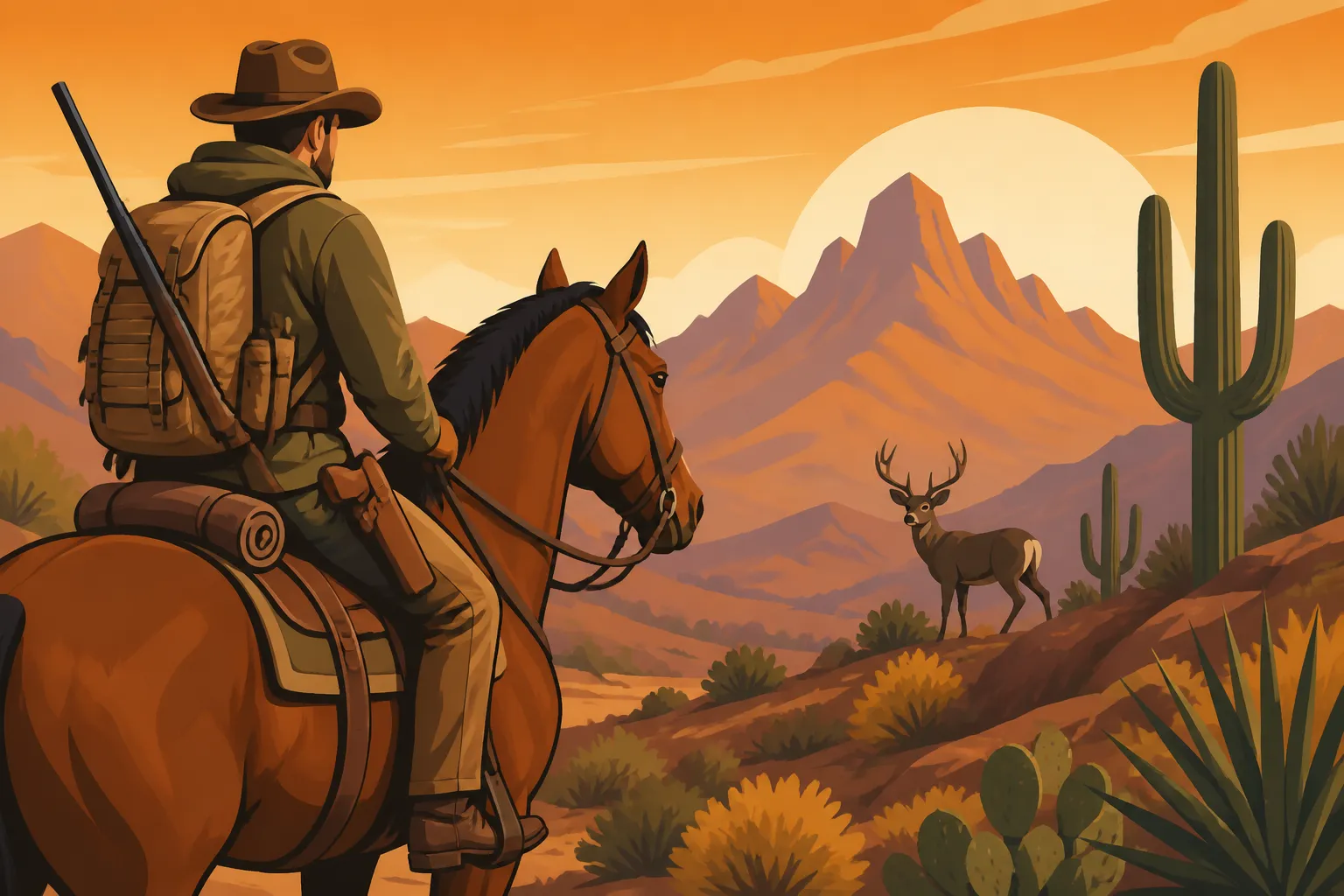
Arizona’s hunting units are incredibly diverse, from the high ponderosa pine forests and steep canyons of the Mogollon Rim to the rocky, cactus-studded slopes of the Sky Islands. Imagine navigating a horse through thick oak brush where branches constantly try to pull you from the saddle, or picking your way across a scree slope where every step is critical. You might be climbing steadily for hours on narrow trails, descending into deep washes, or moving through dense timber where downed logs force the horse to step over or around obstacles. The Logistics of a Horseback Drop Camp really highlights how varied and demanding these routes can be.
This isn't a leisurely canter through a flat pasture. The terrain is often steep, uneven, and sometimes downright treacherous. Your horse will be working hard, and so will you, even if you’re "just riding." They'll be stepping over rocks, pushing through thickets, and constantly adjusting their balance. You need to be able to stay with them, anticipating their movements and not inadvertently hindering them. Being able to read the ground ahead, even from the saddle, helps you brace for changes and give subtle cues to your horse.
The Physical Demands on Rider and Horse
A horseback hunt is a physical endeavor for both rider and horse. While the horse does most of the "walking," you, as the rider, are not merely a passenger. You'll be using muscles you didn't even know you had to maintain balance, absorb shocks, and subtly communicate with your animal. Hours in the saddle, especially over rough ground, can lead to sore hips, inner thighs, and core muscles. Think about holding a static position while your base is constantly shifting beneath you – it’s a workout. This is why Physical Conditioning for a Sky Island Hunt isn't just for backpack hunters; it applies to horseback adventures too.
Beyond the riding itself, there's the inevitable getting on and off the horse multiple times a day for glassing sessions, tracking, or navigating short sections on foot. You might be leading your horse through a particularly difficult patch of blowdown or helping to steady a pack animal. When you return to camp, there's still work to be done: unsaddling, brushing, feeding, and watering the horses. This isn't a guided tour where someone else handles all the chores. A true backcountry hunt often involves the entire group pitching in to care for the stock that's carrying you and your gear.
Assessing Your Current Riding Experience for the Trail
Before you even think about booking, take an honest look at your riding background. There's a big difference between a leisurely ride on a gentle trail horse at a dude ranch and navigating a spirited mountain horse across challenging terrain.
Beginner vs. Intermediate vs. Experienced Rider Expectations
Outfitters are generally accustomed to working with hunters of varying experience levels, but they appreciate honesty. A "beginner" in the context of a hunting outfitter usually means someone who has ridden a few times, can stay on a horse at a walk, and understands basic commands. An "intermediate" rider is comfortable at a walk and trot, perhaps cantering, and has some experience with trail riding or navigating obstacles. An "experienced" rider is confident in all gaits, understands horse behavior, and can handle various situations, including riding independent of a guide.
Here's a breakdown of what these levels often imply for a hunting trip:
| Riding Skill Level | Typical Experience | Hunting Trip Expectation |
|---|---|---|
| Beginner | Few rides, walk only, limited control. | Will be paired with the most docile, "bombproof" horse. Requires constant guidance from the outfitter. Likely limited to less strenuous trails. May be asked to walk certain sections. |
| Intermediate | Comfortable at walk/trot, some trail experience, understands basic cues. | Can handle more challenging terrain with a steady, reliable horse. Can follow the guide without constant supervision. Expected to assist with some horse care. |
| Experienced | Confident in all gaits, capable on various trails, handles different horse temperaments. | Can ride independently, assist significantly with horse care and packing. May be asked to help with difficult sections or manage multiple animals. |
Outfitters want you to be safe and enjoy your hunt. They won't put you on a horse that's too much for your skill level, but you have to be upfront about what that level is. Don't exaggerate; it only puts you, the horse, and the entire hunting party at risk. When you're talking with potential outfitters, especially those offering Horseback and Pack String Outfitters in Arizona services, be explicit about your comfort level.
Practical Riding Skills You'll Actually Use
So, what skills are truly essential? It boils down to control, balance, and communication. First, control: can you make the horse start, stop, turn, and back up reliably? Can you maintain a consistent pace? Second, balance: can you stay in the saddle over uneven ground, up and down hills, and when the horse makes sudden movements? This often means riding with a slight forward lean on ascents and sitting back on descents, using your core strength. You need to be able to ride defensively, anticipating potential spooks or stumbles and reacting calmly.
Third, communication: horses respond to subtle cues from your hands, legs, and even your weight distribution. Learning to ride "light" and give clear signals is key. You'll also need to be able to safely mount and dismount, sometimes in difficult terrain. Picture getting off to walk through a particularly rocky section, then having to remount on a steep hillside. These aren't just parlor tricks; they're practical necessities for a safe and effective horseback hunt. Knowing how to properly tie a horse, lead it safely, and navigate around other horses and pack animals are also crucial skills you'll utilize every day.
Preparing for Your Horseback Hunt: Training and Expectations
Decided a horseback hunt is for you? Fantastic! Now comes the preparation. It's not just about getting your hunting gear ready; it's about getting yourself ready for the saddle.
Building Riding Confidence and Physical Fitness
If your riding experience is minimal, or if it's been a while, consider taking some riding lessons. Focus on western riding, as that's typically what outfitters use. Look for lessons that emphasize trail riding, navigating obstacles, and spending extended periods in the saddle. Even a few lessons can drastically increase your confidence and comfort. Don't be afraid to explain to the instructor that you're preparing for a hunting trip; they can tailor some of their teaching to that goal. It's an investment that pays off in safety and enjoyment.
Beyond specific riding skills, general physical fitness is huge. Riding uses a lot of core strength, leg strength, and endurance. Start a walking or hiking routine, focusing on uneven terrain if possible. Squats, lunges, and core exercises will all build the necessary muscle groups. The better physical shape you're in, the less fatigued you'll be, and the more capable you'll be of reacting quickly and effectively to any situation that arises with your horse. Remember, fatigue diminishes your ability to concentrate and react, increasing the risk of an accident. Physical Conditioning for a Sky Island Hunt really stresses the importance of overall fitness, which absolutely includes horseback hunts.
Communicating with Your Outfitter About Your Experience
This is perhaps the most crucial step. When you're talking to an outfitter, whether you found them through BookYourHunt or another resource, be completely honest about your riding ability. Tell them how many times you've ridden, what kind of riding you've done, and what your comfort level is. Don't embellish or downplay. An experienced outfitter will assess your honesty and match you with a horse that suits your skill level. They have "bombproof" horses for beginners and more spirited animals for experienced riders. They want you to be safe and have a good time.
Use the opportunity to ask plenty of Questions to Ask an Arizona Outfitter. Inquire about their horses' temperaments, how much riding is involved daily, and what the typical terrain will be. Ask if they prefer you to have riding experience or if they routinely take novices. If you're considering a Drop Camp Against Fully Guided option that involves packing in, clarify how much of the horse handling you'll be responsible for. The more information you share and collect, the better prepared everyone will be.
What to Expect from an Arizona Outfitter's Stock
Outfitters invest heavily in their horses. These aren't just any animals; they are working partners, often with years of experience navigating the very same rugged landscapes you'll be hunting.
The Traits of a Good Pack or Saddle Horse
A good hunting horse, whether a saddle horse or a pack animal, is a special kind of animal. They are usually well-trained, calm, and incredibly sure-footed. They’ve seen it all: flapping tarps, spooking deer, gunshot noises, and strange smells. They’re accustomed to working in groups, climbing steep trails, and carrying heavy loads. They are often described as "mountain broke" or "bombproof," meaning they are reliable and less likely to react violently to unexpected stimuli.
Outfitters meticulously select and train their horses for this specific work. They look for animals with a calm disposition, strong legs, and a willingness to follow commands. While they are usually quiet and forgiving, remember they are still animals with their own personalities and instincts. Treat them with respect, follow your guide's instructions for handling them, and they'll likely be your best asset in the backcountry. Understanding the difference between a trusty saddle horse and a dedicated pack mule, which might be covered in Arizona Drop Camp Hunts Explained, is also helpful.
Safety Protocols and Emergency Preparedness
Safety is paramount on any guided hunt, especially when animals are involved. Your outfitter will have clear safety protocols for mounting, dismounting, riding in a string, and handling the horses in camp. Pay close attention to these instructions and follow them diligently. Don't try to be a cowboy or take unnecessary risks. If you're unsure about anything, ask your guide. That's what they're there for. They might even have you do a short "test ride" at the trailhead to see how you handle the horse and make any necessary adjustments.
Outfitters are also well-versed in Wilderness First Aid on a Guided Hunt and have plans for emergencies. While we all hope for an incident-free trip, accidents can happen. Knowing that your guide has thought through How Outfitters Plan Emergency Evacuations and has the necessary communication equipment can provide a lot of peace of mind. Your role in this is to communicate any discomfort, fatigue, or concerns you have about your horse immediately to your guide. Their experience can often prevent small issues from becoming big problems.
Ultimately, a horseback hunt in Arizona is an incredible experience that opens up country you simply couldn't access on foot. With honest self-assessment, a bit of preparation, and open communication with your outfitter (perhaps found via GoHunt for research), you can absolutely enjoy this unique and rewarding way to pursue big game.
Disclaimer
This article is for general informational purposes only and does not constitute professional advice. Laws, prices and regulations vary by location and change over time. Consult a qualified professional for guidance on your specific situation.