Horseback and Pack String Outfitters in Arizona
Arizona's vast and rugged landscapes, from the Sky Islands of the south to the high plateaus of the north, offer unparalleled hunting opportunities. However, the sheer scale and often roadless nature of these units can pose a significant challenge, especially when you've finally connected with that dream animal miles from the nearest trail. This guide will delve into how horseback and pack string outfitters can be your ultimate solution, providing the access, logistics, and expertise needed to turn your backcountry hunting aspirations into a successful reality, and crucially, ensuring you can get your hard-earned harvest out of the wilderness.
The Lure of Arizona's Remote Backcountry
There's something deeply alluring about heading into Arizona's vast and untamed wilderness, isn't there? It's where the air feels cleaner, the sounds of civilization fade into a distant hum, and the animals truly act like wild creatures. For many hunters, myself included, the dream isn't just about punching a tag; it's about the experience of truly earning it in a place few others can reach. Arizona delivers on this in spades, but it also demands respect for its scale and its unforgiving nature.
Why Conventional Access Falls Short
You can pull up all the maps you want, Reading an Arizona Unit Boundary Before You Apply and planning your attack, but the reality on the ground often tells a different story. Many of Arizona's prime big game units, particularly for elk and mule deer, contain vast tracts of wilderness or rough, unmaintained Forest Service roads that close seasonally or are simply impassable to most vehicles. We're talking about canyons so deep they make your quads burn just looking at them, ridges that stretch for miles, and thick timber that swallows up any hint of a trail. Trying to hike into these areas with a full camp on your back is a monumental task, and then imagining packing out a 600-pound elk? That's where conventional boots-on-the-ground hunting hits a very real, and often painful, wall.
The physical toll of navigating miles of unforgiving terrain, often at elevations that thin the air, can quickly deplete your energy reserves. This leaves you less sharp, less patient, and less effective when it matters most – during the actual hunt. Furthermore, the sheer weight and bulk of a multi-day backcountry camp, coupled with specialized optics and gear, make deep penetration into the wilderness a logistical nightmare for a solo hunter or small group relying solely on their own two feet.
The Appeal of a Wilderness Hunt
So, if it's so tough, why bother? Because the rewards of a wilderness hunt in Arizona are absolutely incredible. Picture this: you've ridden deep into a unit, leaving vehicle tracks far behind. The only sounds are the rustle of pine needles underfoot, the distant call of a hawk, and maybe the subtle creak of leather. You're in country where elk aren't constantly dodging ATV riders or hikers, where mule deer might be a little less wary of human scent. This lack of pressure often means healthier, less disturbed animals, and potentially, bigger trophies.
A wilderness hunt isn't just a pursuit of game; it's an immersion. It's about reconnecting with a more traditional way of hunting, one where patience, woodcraft, and self-reliance take center stage. You experience the raw beauty of places like the Blue Range Primitive Area or the Mazatzal Wilderness, often finding solitude that’s hard to come by on more accessible public lands. This deeper connection to the land and the hunt itself creates memories that last a lifetime, far beyond the size of any rack. It’s an adventure that challenges you, physically and mentally, and provides a profound sense of accomplishment. Imagine hearing Calling Bulls on Arizona's Mogollon Rim knowing you're miles from anyone else. That's the magic.
Understanding Horseback and Pack String Outfitters
When you start dreaming of those remote Arizona units, the question quickly becomes: how do I get there, and what do I do if I actually get something? That's precisely where horseback and pack string outfitters become invaluable partners. They're not just guides; they're the bridge to unlocking truly wild hunting experiences.
What "Horseback Outfitter" Truly Means
A horseback outfitter typically provides the means for you to ride into remote hunting grounds, often covering significant distances quickly and comfortably compared to hiking. This service is about getting you, the hunter, and your immediate day-pack gear, into a hunting area efficiently. You'll likely be riding seasoned mountain horses or mules, animals specifically trained for navigating steep, rocky, and often brushy terrain. They know how to pick their way through country that would exhaust a human in short order.
Once you arrive at a pre-established camp, or a spot where a spike camp can be set up, the hunt often continues on foot. The horses provide the mobility to reach those distant areas, allowing you to conserve your energy for the stalk and the retrieve. Think of it as your primary mode of transportation in the backcountry, enabling you to cover more ground, scout more effectively, and access country where animals might feel safer from human intrusion. The outfitter might ride with you daily, guiding you to specific areas, or they might simply drop you off and pick you up at agreed-upon times and locations.
The Role of a Pack String Outfitter
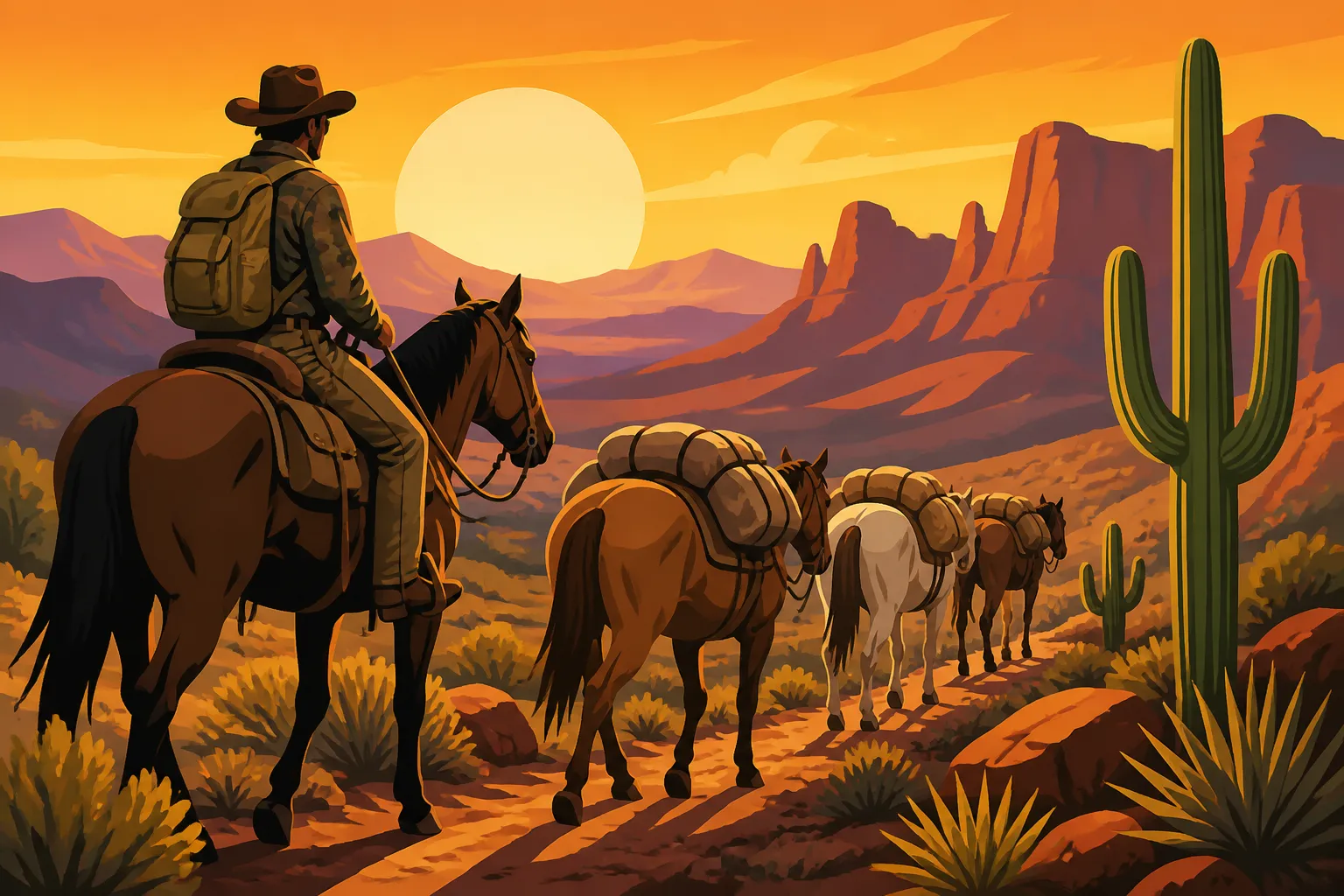
A pack string outfitter goes a step further, providing the vital logistical support to transport heavy gear, supplies, and, most importantly, your harvested game. While often offered by the same operations that provide horseback riding, the "pack string" specifically refers to the use of additional horses or mules laden with panniers and rigging designed to carry significant weight.
Imagine you're planning a multi-day hunt deep in the White Mountains for elk, where Arizona Elk on the Rim, White Mountains and Kaibab are known to roam. You'll need tents, sleeping bags, cooking gear, food for several days, water filters, and all your hunting equipment. A pack string carries this burden, freeing you up to ride unencumbered or hike in with just your day pack. This service is absolutely critical for hunts lasting more than a couple of days, or for areas where you simply cannot carry everything you need. Post-harvest, the pack string truly shines, eliminating the back-breaking, multi-trip ordeal of Packing an Elk Out of Rim Country Alone. They will methodically load quarters of game, capes, and antlers, ensuring your valuable harvest makes it out of the wilderness safely and efficiently.
Beyond the Saddle: Guided vs. Drop Camp Services
Not all horseback or pack string services are created equal, and understanding the nuances can help you choose the right fit for your budget and hunting style. It's a spectrum of support, from full-service luxury to pure logistics.
At one end, you have fully guided hunts. Here, the outfitter provides not just the horses for transport and the pack string for gear, but also a professional guide who accompanies you throughout the hunt. This guide is your expert: they've scouted the area, know the local animal movements, terrain, and weather patterns. They'll advise on strategy, help with glassing, judging animals, and even tracking. They'll handle camp duties, cooking, and horse care, allowing you to focus 100% on hunting. This is often the most expensive option, but for those seeking a high chance of success and a stress-free experience, it's invaluable.
Then there are semi-guided hunts. With this option, the outfitter might pack you into a pre-established camp or a designated area, provide initial scouting information, and perhaps periodically check in on you. However, they don't actively hunt with you daily. You're responsible for your own hunting decisions and daily activities, but you still benefit from the outfitter's logistical support and knowledge of the area. This can be a good middle ground for hunters who want some independence but need help with access and retrieval.
Finally, there are drop camp services. This is where the pack string outfitter truly acts as a glorified taxi service. They will pack you, your hunting partners, and all your gear into a pre-arranged or agreed-upon remote camp location. They'll drop you off with your supplies and leave you to hunt completely independently for a set number of days. At the end of your hunt, or when you've harvested an animal, they'll return with the pack string to retrieve you and your game. This is generally the most economical pack string option and is perfect for experienced backcountry hunters who possess strong woodcraft and navigation skills but simply need help accessing difficult terrain or getting a heavy animal out. It allows you to create your own adventure without the full cost of a guided experience. What a Drop Camp Actually Includes can vary, so always clarify the details!
When to Consider a Pack String for Your Arizona Hunt
So, you've got your tag in hand, your gear is meticulously organized, and you're ready to hit the dirt. But before you lace up those hiking boots and strap on your heaviest pack, let's talk about the scenarios where a horseback or pack string outfitter isn't just a luxury, but a genuine necessity for a successful and ethical hunt in Arizona.
Accessing Designated Wilderness Areas
Arizona is blessed with numerous designated wilderness areas, places like the Mazatzal Wilderness, the Superstition Wilderness, or the Blue Range Primitive Area. These are truly wild places where human impact is minimized, and they often hold incredible hunting opportunities. However, the designation comes with a critical rule: no motorized vehicles. That means no ATVs, no dirt bikes, and certainly no driving your truck down an old two-track. If your desired hunting unit overlaps with significant wilderness acreage, or if the best hunting spots are deep inside these protected zones, horses and mules become your only practical means of transportation.
Attempting to pack a full camp and hunt deep into a wilderness area on foot for an entire week can be an exercise in masochism, requiring extreme physical conditioning and an almost superhuman dedication to suffering. By utilizing a pack string, you respect the wilderness regulations while still gaining access to those pristine, low-pressure environments. Plus, it means you'll have the energy to hunt effectively once you're there, rather than being utterly exhausted from the trek in. Remember, Motorized Travel Rules on Arizona Public Land are strictly enforced, and wilderness areas are the ultimate example of this.
Tackling Extreme Distances and Terrain
Arizona's terrain isn't always gently rolling hills. We're talking about deep canyons carved by ancient rivers, mountain ranges that shoot straight up from the desert floor, and vast expanses of roadless public land. Trying to cover ten or fifteen miles of this kind of country on foot each day, just to get to and from your hunting spot, is simply not feasible for most hunters over the course of a multi-day trip. Your energy reserves will quickly dwindle, your focus will wane, and your enjoyment of the hunt will plummet.
Horses and mules can navigate this challenging terrain with an ease that humans simply cannot match. They can climb steep inclines, descend rocky trails, and cover long distances through thick brush, all while carrying you and your day's necessities. This extended range means you can access areas that are too far or too difficult for foot travel, opening up prime hunting grounds that receive less pressure. It conserves your energy for the actual act of hunting – glassing, stalking, and remaining alert – rather than just getting there. Imagine spending your precious hunting hours actually hunting, not just recovering from the hike in.
Managing a Heavy Harvest in Remote Country
Let's be brutally honest: harvesting a large animal like an elk or a big mule deer in remote country is often only half the battle. The other half, the one that can break your spirit and your body, is getting that meat and trophy back to the truck. A mature bull elk can weigh over 700 pounds live, meaning you're looking at hundreds of pounds of bone-in meat, plus the hide and skull. If you're five, ten, or even fifteen miles from the nearest road, that's not just a walk in the park. That's multiple trips, each with 80-100 pounds on your back, over rugged terrain, potentially in challenging weather conditions. Many hunters find themselves in this exact predicament, realizing too late the monumental task ahead.
This is where a pack string outfitter isn't just helpful; it's almost essential for an ethical and practical retrieval. Having a string of pack mules ready to haul out your animal means you can focus on proper field dressing and cooling the meat quickly, without the crushing anxiety of how you'll move it. The outfitter's experience with Getting Meat Cooled on an Early Season Hunt in the field is also invaluable. They have the knowledge and equipment to quarter, bag, and load the meat efficiently, preserving its quality. This means less wasted meat, a quicker extraction, and significantly less wear and tear on your body, ensuring you can still enjoy the success of your hunt.
What to Expect: Logistics and Preparation
Once you've decided a horseback or pack string outfitter is the right move for your Arizona hunt, the next step is to understand the logistics involved. This isn't just showing up; it's a partnership that requires clear communication and preparation from both sides.
The Pre-Trip Planning and Communication
Booking an outfitter, especially for popular species like Arizona elk, needs to happen well in advance – often a year or more out, sometimes even before you've drawn your tag. Many outfitters operate on a first-come, first-served basis, and the best ones book up quickly. When you begin your search, sites like BookYourHunt can be a great starting point for finding reputable outfitters and comparing services, while GoHunt provides application data that can help you understand tag availability. Once you've selected a potential outfitter, expect thorough communication. They'll want to understand your hunting goals, physical abilities, and any specific needs you might have.
You'll typically be asked for a deposit to secure your booking, with the remaining balance due closer to the hunt date. Read your contract carefully, especially regarding cancellation policies and what happens if you don't draw a tag. Your outfitter will provide a detailed gear list, which is not just a suggestion – it's crucial for your comfort and safety in the backcountry. This list often includes specific types of clothing (layering is key in Arizona's varied climates), sturdy riding boots, rain gear, and personal hunting equipment. Don't underestimate the physical demands of riding and hunting in the mountains; Physical Conditioning for a Sky Island Hunt is paramount, even if you're riding. Start preparing well before your trip.
In Camp and On the Trail
When the day finally arrives, your adventure truly begins. The routine in a backcountry camp, whether it's a fully-serviced wall tent setup or a more spartan spike camp, will revolve around the rhythms of hunting and animal care. Mornings will start early, often before dawn, with a hearty breakfast and preparation for the day's hunt. If you're on a guided trip, your guide will typically saddle the horses, and you'll ride out to your chosen hunting grounds. Days are long, spent glassing, stalking, and navigating the terrain.
Respect for the animals – both the game you pursue and the horses or mules carrying you – is fundamental. Learn basic horsemanship if you're new to it; your outfitter will provide guidance, but a little practice beforehand never hurts. Safety is always a priority. The outfitter and guides are highly experienced in backcountry travel and animal handling. Listen to their instructions, particularly when riding through difficult sections or interacting with the stock. Camp life itself is a unique experience, often with good food (especially on fully guided hunts), storytelling around a fire, and the camaraderie of fellow hunters. It's an opportunity to truly disconnect and immerse yourself in the wilderness.
The Ride Out and Game Retrieval
This is often the moment you've been working for, and a pack string truly makes the difference. Once an animal is down, the immediate focus is on ethical field dressing and cooling the meat. Your outfitter will guide you through this process, ensuring the meat is handled properly for packing. Quarters will be bagged, capes carefully preserved, and antlers secured. The pack animals are then brought in, often directly to the kill site if accessible, or as close as possible.
The loading process is a skilled operation, ensuring the weight is balanced and secure for the journey out. You might ride out while the pack string follows, or everyone might walk, leading the loaded animals. The pace is often slower on the way out, especially if the animals are heavily loaded, but the relief of having your harvest safely on the move is immense. This efficient retrieval process not only protects the quality of your meat but also minimizes potential spoilage, especially if you're hunting during warmer early seasons when Heat Management on an Arizona Early Season Hunt is critical. Arriving back at the trailhead, often with dusty but satisfied faces, and seeing your game safely unloaded, is a deeply rewarding conclusion to your hunt.
Choosing the Right Outfitter for Your Needs
Selecting the right horseback or pack string outfitter is a critical step that can make or break your Arizona hunting experience. It’s not just about finding someone with horses; it’s about finding a reputable professional who aligns with your expectations and values.
Essential Questions to Ask
Before you commit to an outfitter, treat it like an interview. You’re investing significant time, money, and personal effort into this hunt, so due diligence is paramount. Here are some Questions to Ask an Arizona Outfitter:
- Experience in the Unit: How long have they hunted and operated in your specific unit or region? Do they have a deep understanding of the local animal populations, water sources, and seasonal movements?
- Types of Hunts Offered: Do they specialize in fully guided, semi-guided, or drop camp services? Ensure their offerings match your desired level of independence.
- References: Always ask for recent references – clients from the past 1-2 years. Contact these individuals and ask pointed questions about their experience, the guide’s professionalism, the quality of the horses, and meat care.
- Success Rates: While no outfitter can guarantee a kill, inquire about their historical success rates for the species and weapon type you’ll be using. Be wary of anyone promising 100% success.
- Animal Care: Ask about their horse and mule care practices. Healthy, well-trained animals are critical for a safe and effective trip.
- Emergency Protocols: What are their plans for medical emergencies or unforeseen weather events in the backcountry? Satellite communication, first aid certifications, and evacuation plans are important considerations.
- What's Included/Excluded: Get a clear breakdown of what the price covers. Does it include food, lodging, field dressing, caping, and packing out game? What about state licenses, tags, or gratuities for guides? How Much to Tip a Hunting Guide is an important consideration that often isn't included.
Vetting and Due Diligence
Beyond asking questions, it’s wise to do some independent vetting. Check if the outfitter is licensed and permitted to operate on the public lands you plan to hunt. In Arizona, outfitters need specific permits for Forest Service and BLM lands. Look for online reviews, but take them with a grain of salt, as experiences can be subjective. Focus on consistent themes, both positive and negative. A strong reputation, built over years of ethical and successful operations, is a huge green flag. Avoid any outfitter who seems evasive, pushes too hard for a quick booking, or has a history of unresolved complaints. Trust your gut feeling, but back it up with facts.
Comparing Costs and Services
The cost of a horseback or pack string hunt in Arizona can vary widely depending on the species, the duration of the hunt, the level of service (guided vs. drop camp), and the outfitter’s reputation. Here's a general comparison:
| Service Type | Inclusions | Typical Cost (Shape) | Ideal For |
|---|---|---|---|
| Fully Guided | Guide, horses, camp, meals, field care, game retrieval, expertise | Highest | Hunters seeking maximum support, high success odds, less backcountry experience |
| Semi-Guided | Horses in/out, camp setup, scouting advice, game retrieval | Mid-range | Hunters wanting some independence but needing logistical support & area knowledge |
| Drop Camp | Horses in/out for hunter & gear, game retrieval | Lowest (among pack string options) | Experienced backcountry hunters with strong self-reliance and navigation skills |
Note: Prices vary significantly and are not listed here. Always contact outfitters directly for current rates and detailed package information.
When comparing options, look closely at what each outfitter explicitly includes in their package. Some might charge extra for caping, meat processing, or even specific camp amenities. Don't be afraid to get detailed quotes from several different operations. Tools like BookYourHunt and GoHunt can assist in this comparison process by listing various outfitters and their services, helping you narrow down your choices efficiently before making direct contact.
Benefits Beyond Just Access
While the primary reason most hunters seek out horseback and pack string outfitters is for access to remote areas, the advantages extend far beyond simply getting from point A to point B. These services can profoundly enhance your overall hunting experience and increase your chances of success.
Increased Range and Efficiency
Imagine you’re chasing a herd of elk that has retreated deep into a canyon system, or a mule deer buck that’s pushed into dense timber miles from any road. On foot, covering that ground takes immense time and energy. You arrive at your hunting location already fatigued, with less time to scout, glass, and plan your approach. Horses, on the other hand, allow you to cover vast distances with relative ease. You can reach those distant ridges, traverse multiple drainages, and explore more territory in a single day than you ever could on foot.
This extended range means you can penetrate deeper into unpressured areas, where animals might be less wary and larger. It also means you conserve your physical energy for the moments that truly matter: the stalk, the shot, and the crucial post-shot recovery. Instead of slogging through miles of brush, you’re sitting comfortably in the saddle, saving your legs and lungs for when you need them most. This efficiency directly translates to more time hunting and less time simply traveling, significantly increasing your odds.
Local Knowledge and Experience
A good outfitter and their guides are not just horsemen; they are seasoned wilderness professionals with an intimate understanding of the Arizona backcountry. They’ve spent countless hours in the units they hunt, observing animal patterns, learning the nuances of the terrain, and discovering hidden water sources. This local knowledge is an invaluable asset that even the most meticulous e-scouting can’t fully replicate. While Scouting a Unit From Satellite Imagery is a great starting point, nothing beats boots-on-the-ground (or hooves-on-the-ground!) experience.
They know where the elk like to bed on a warm afternoon, which canyons hold the biggest mule deer, and how the wind typically swirls in a specific drainage. They can read fresh sign, interpret faint tracks, and identify subtle clues that an inexperienced hunter might miss entirely. This expertise can be the difference between aimlessly wandering and strategically positioning yourself for an encounter. When you're trying to read Reading Fresh Elk Sign in Ponderosa Timber, an experienced guide's eye can tell you so much more than your own. For those doing a drop camp, even the advice provided during the pack-in and the initial camp setup can be golden, giving you a significant head start in understanding the immediate area.
A Traditional and Rewarding Experience
There's a deep satisfaction that comes with a hunt supported by horses and pack strings, harkening back to a more traditional era of hunting in the American West. It's a connection to the methods of pioneers and mountain men, relying on the strength and wisdom of these incredible animals to navigate wild landscapes. The rhythmic creak of leather, the scent of horse sweat, and the sight of a string of mules expertly picking their way through rugged terrain evoke a powerful sense of history and adventure.
This isn't just a hunt; it’s an immersive outdoor experience that builds character, teaches resilience, and fosters a profound appreciation for both the wilderness and the animals that inhabit it. The bond you develop with the guides and even the horses, sharing the challenges and triumphs of the backcountry, becomes a cherished part of the memory. Ultimately, a horseback or pack string hunt in Arizona offers more than just a means to an end; it provides a deeply authentic, challenging, and incredibly rewarding adventure that will leave you with stories to tell and a connection to the wild that few other pursuits can offer.
Disclaimer
This article is for general informational purposes only and does not constitute professional advice. Laws, prices and regulations vary by location and change over time. Consult a qualified professional for guidance on your specific situation.