How Many Days an Arizona Coues Hunt Runs
It's a common misconception among hunters that all deer hunts are created equal, but Arizona's Coues deer shatter that illusion almost immediately. These tiny "gray ghosts" of the desert mountains present a unique, often frustrating, challenge that leaves many wondering just how much time they need to dedicate to even have a chance. This guide will dive deep into the realistic durations for an Arizona Coues hunt, exploring the myriad factors that influence success and how you can best prepare for this demanding, yet incredibly rewarding, pursuit.
The Unforgiving Reality of Coues Deer Hunting in Arizona
Before we even talk about how many days a Coues hunt runs, we need to acknowledge why it often demands more time than many other deer species. This isn't your typical whitetail hunt from a treestand over a food plot, nor is it necessarily a mule deer hunt focused on covering miles and cutting tracks. Coues deer hunting is a specialized craft, steeped in patience, perseverance, and exceptional glassing skills.
The Elusive Nature of the Gray Ghost
Coues whitetails are small, typically weighing between 80-120 pounds, with antlers that are often less impressive in mass than their mule deer cousins, but just as beautiful in their unique symmetry. Their small stature combined with their preferred habitat makes them incredibly difficult to spot. They blend seamlessly into the oak brush, juniper, and saguaro-studded hillsides of Arizona's "Sky Islands" and desert ranges. Imagine trying to find a fawn-sized animal, camouflaged perfectly, in an ocean of similar-colored vegetation – that's the daily reality of Coues hunting.
This inherent elusiveness means you're spending vast amounts of time simply searching, scanning, and re-scanning the same slopes. Your eyes will ache, your patience will be tested, and you'll likely question every rock and shadow. This isn't a quick affair; it’s a marathon of observation. The deer themselves are incredibly wary, constantly on alert, and prone to disappearing into thin air at the slightest disturbance. It’s their mastery of their environment that dictates much of the time commitment involved in pursuing them.
Terrain and Physical Demands
The Coues deer's domain is typically rugged, steep, and often choked with thorny brush. We're talking about hunting in places like the Chiricahua, Huachuca, or Santa Rita Mountains – areas characterized by sharp elevation changes, rocky ground, and the ever-present threat of prickly pear cactus, catclaw acacia, and rattlesnakes. Glassing for hours from a vantage point is one thing, but once you spot a buck, the real work begins. A stalk can involve navigating steep canyons, crossing open bowls under the watchful eyes of other deer, and crawling through dense vegetation, often covering significant distances.
The physical toll of these hunts is immense. You'll be climbing, descending, and traversing uneven ground, often under the scorching sun during early seasons or battling biting winds in colder months. This constant exertion drains your energy, impacting your ability to stay focused and effective for long periods. If you're not physically prepared, your effective hunting days will be significantly shortened, forcing you to rest or simply pack it in early. The terrain itself dictates a slower, more deliberate approach, which naturally extends the duration required to find success.
Decoding the Typical Timeline: How Long Do Coues Hunts Really Last?
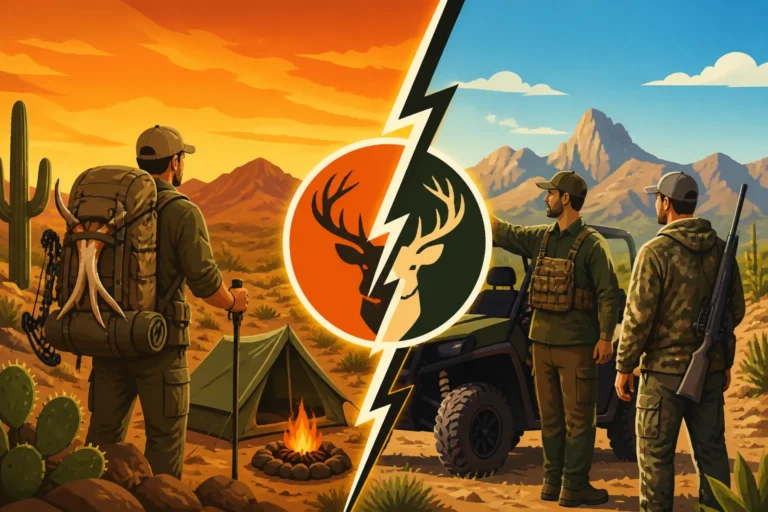
Now, let's get to the heart of the matter. How many days should you realistically budget for an Arizona Coues deer hunt? The answer isn't a simple number, as it heavily depends on your chosen method, whether you go guided, and your personal hunting style. However, we can break it down into common scenarios to give you a clearer picture.
DIY Archery Hunts – The Ultimate Test
For the intrepid DIY archery hunter, chasing Coues deer with a vertical bow is arguably one of the most challenging hunts in North America. To get within bow range of these wary animals in open country often requires an enormous time commitment. Most experienced DIY archery Coues hunters will tell you that a minimum of 5-7 full days is required for a dedicated effort, and many prefer a solid 8-10 days, or even break up the How to Hunt Arizona's Five-Month OTC Archery Deer Season into multiple shorter trips.
The reason for this extended duration is simple: you need to get close. This means hours upon hours of glassing, patiently waiting for a buck to make a mistake, and then executing a flawless stalk. With archery, your effective shooting light is often shorter than with a rifle, as you need good visibility for a clean shot. Early season hunts can be brutally hot, limiting deer movement to dawn and dusk, which further compresses your prime hunting hours. You might spend an entire day getting into position, only to have the wind shift or the deer simply vanish. Having multiple days allows you to make mistakes, learn the movements of particular deer, and simply increase your odds through sheer persistence.
Guided or DIY Rifle Hunts – More Efficient, Still Demanding
Rifle hunts for Coues deer generally offer a higher success rate and can sometimes be shorter, though they are by no means easy. A guided rifle hunt for Coues deer typically runs for 3-5 days. Outfitters who specialize in these hunts have extensively scouted their areas, know the movements of local deer, and often have multiple glassing spots and strategies ready. Their expertise drastically cuts down on the "search time" that DIY hunters must endure, making the hunt more efficient. They are selling knowledge and efficiency, not just access. What an Arizona Coues Guide Actually Provides
For DIY rifle hunters, a similar 4-7 day window is common. While your effective range is greater, the deer are still masters of camouflage and escape. You'll still spend most of your time glassing, just potentially from further distances. A full week gives you enough time to learn the unit, locate a few bucks, and execute a well-planned stalk. Shorter hunts (2-3 days) can certainly be successful, especially if you've done extensive pre-season scouting and get a bit lucky, but they carry a much higher risk of coming home empty-handed.
Here's a quick overview of typical durations:
| Hunt Type | Weapon | Typical Duration (Days) | Key Factors |
|---|---|---|---|
| DIY Archery | Vertical Bow | 5-10 | Very challenging, close range needed, high physical demand, self-reliance. |
| DIY Archery | Crossbow | 5-8 | Slightly longer range, but still demanding, legal crossbow draw weight Arizona requires. |
| Guided Archery | Vertical Bow | 5-7 | Expertise and support increase efficiency. |
| Guided Archery | Crossbow | 4-6 | Efficient with guide's knowledge and setup. |
| DIY Rifle | Rifle | 4-7 | Longer effective range, still requires significant scouting and effort. |
| Guided Rifle | Rifle | 3-5 | Guide's knowledge significantly reduces search time. |
Over-the-Counter Seasons vs. Draw Hunts
Arizona offers Arizona's Over-the-Counter Archery Deer Tag Explained, which means you can buy a tag without going through the lottery. These seasons are long, typically spanning several months split between August-September and December-January. This offers incredible flexibility: you can take multiple short trips (e.g., 3-4 days each) over several weekends, spreading out the physical and time commitment. However, each trip requires setup, travel, and re-acclimation to the unit.
On the other hand, the more coveted rifle and muzzleloader hunts are typically obtained through the state's lottery system, making them draw-only. If you're lucky enough to draw one of these tags, it's a "one-shot" deal for the year. This often compels hunters to maximize their time in the field, taking as many days off work as possible to make the most of a tag they might have waited years for. Even a 3-day rifle hunt, if it's the only chance you get that year, will likely have you squeezing every last minute out of daylight.
Beyond the Calendar: Factors Influencing Your Coues Hunt Duration
While the type of hunt you choose certainly dictates a baseline, several other critical factors can drastically shorten or extend the actual time you'll spend in the field before finding success (or packing up empty-handed). Understanding these nuances is key to planning a realistic and productive trip.
Hunter Skill and Experience
This might seem obvious, but it bears repeating: experience is a huge time-saver. A seasoned Coues hunter, someone who has spent years learning the subtle movements, habits, and escape routes of these deer, can often find success in fewer days than a novice. They've honed their glassing skills, know how to quickly judge a buck, and understand how to navigate the challenging terrain without spooking game. Why Arizona Coues Hunting Is a Glassing Game
If you're new to Coues hunting, expect a steeper learning curve and plan for more days. Your first few trips might be more about education than harvesting. You'll need time to develop your eye for spotting deer in dense cover, practice your stalking techniques, and simply learn the rhythm of the desert. Don't be discouraged if it takes a few longer trips to get the hang of it; every moment in the field is a valuable lesson.
Scouting and Pre-Season Preparation
This is perhaps the single biggest factor that can reduce your in-the-field hunt days. Thorough pre-season scouting, both digital and physical, is invaluable for Coues deer. Modern tools like satellite imagery, topographic maps, and hunting apps allow you to identify potential glassing points, water sources, bedding areas, and travel corridors from your couch. Platforms like GoHunt provide detailed unit breakdowns, draw odds, and filtering tools that can help you select a unit that aligns with your available time and hunting style. E-Scouting an Arizona Unit Before the Season
Beyond digital scouting, boots-on-the-ground preparation is crucial. Visiting your chosen unit a month or two before the season opens, if possible, allows you to confirm access routes, find water, locate fresh sign, and identify specific glassing knolls. The more homework you do before your tag is active, the less time you'll spend "running and gunning" during the actual hunt, greatly increasing your chances of efficiency and success.
Weather Conditions and Time of Year
Arizona's weather can be extreme and significantly impact deer movement and hunter comfort. Early archery seasons in August and September can see daytime temperatures well into the 90s or even 100s, especially at lower elevations. This heat forces deer to be largely nocturnal or crepuscular, meaning they'll move primarily during the cooler dawn and dusk hours, and bed down early for the day. This reduces your effective hunting window, often requiring more days to capitalize on limited opportunities. The monsoon season, which often coincides with early archery, can also throw a wrench in plans with sudden, intense storms that create Monsoon Road Conditions in Rim Country and limit access.
Later rifle and archery seasons in December and January offer cooler temperatures, which generally translate to more consistent deer movement throughout the day. However, days are shorter, and weather can still be a factor, with cold snaps and even snow at higher elevations. Understanding the typical weather patterns for your chosen hunt dates and unit is critical for setting realistic expectations for how many hours you can effectively hunt each day, which directly impacts the number of days you'll need overall.
Budget and Vacation Time Constraints
For most hunters, the ultimate decision on hunt length comes down to practical limitations: how much vacation time can you take from work, and how much can you afford to spend? A longer hunt means more days off, more fuel, more food, and potentially more lodging costs. This is where the choice between a DIY and a guided hunt often comes into play. If your vacation time is limited, a guided hunt might be a more efficient (though more expensive) use of your few days, as the outfitter's preparation and knowledge can compress the search time significantly.
When researching guided options, check platforms like BookYourHunt, which list various outfitter packages and their typical durations. This can give you a clear understanding of what a 3-day versus a 5-day guided trip entails and how it fits into your personal constraints. For DIY hunters, carefully consider the trade-offs: a shorter trip might save money, but it increases the pressure and reduces your chances. A realistic assessment of your time and financial resources is a crucial step in planning.
Making Every Moment Count: Strategies for a Successful Coues Hunt
Given the inherent difficulty and time commitment of Coues deer hunting, it's vital to maximize every single day you spend in the field. This isn't a species where you can casually stroll out for a few hours and expect to fill your tag. It demands a deliberate, strategic approach.
Strategic Glassing and Stalking
Successful Coues hunting is fundamentally a glassing game. You should plan to spend 80-90% of your time behind optics. This means finding a good vantage point – typically a high ridge or knoll that offers expansive views of multiple drainages and slopes – and patiently picking apart every patch of cover. Using a high-quality spotting scope on a sturdy tripod is non-negotiable. Break the landscape into grids and systematically scan each section, looking for a horizontal line, a flicking ear, or the unique color of a deer against the background. Patience here is paramount. The Grid Glassing Method, Step by Step
Once you spot a buck, the stalk becomes the next critical phase. This is often where many hunts fall apart. You'll need to use terrain features to your advantage, reading the wind meticulously, and moving slowly and quietly. Often, a stalk can take hours, sometimes even an entire half-day, just to close the distance without detection. Being able to effectively Reading Wind on a Sky Island Stalk is absolutely crucial. Don't rush it; a hasty move will send your buck disappearing, forcing you to go back to hours of glassing all over again.
Physical and Mental Preparation
As touched on earlier, the physical demands of Coues hunting are significant. The more physically fit you are, the longer you can effectively hunt each day, and the more ground you can cover if needed. Start a conditioning program well before your hunt, focusing on hiking with a weighted pack, climbing hills, and building endurance. Staying hydrated is also critical in Arizona's arid environment. Carry ample Water You Must Carry on a Day Hunt, even on what you think might be a short day trip, and ensure you're consuming electrolytes.
Beyond physical fitness, mental toughness is equally important. You will likely endure long periods without seeing a single deer, facing repeated failures on stalks, and battling extreme weather. Maintaining a positive attitude, staying focused on the task, and not giving in to frustration are key to seeing the hunt through to success. The mental grind is real, but overcoming it is part of the satisfaction.
Leveraging Technology and Local Knowledge
Modern hunting technology can be a powerful ally in extending your effective hunting time. GPS devices and mapping apps on your phone (like Gaia GPS or onX Hunt) can help you navigate complex terrain, mark waypoints for glassing spots or sign, and prevent you from getting lost. They also help you quickly identify public land boundaries and private property, ensuring you stay legal and don't waste time in areas you can't hunt.
Don't underestimate the value of local knowledge either. Before your hunt, reach out to the Arizona Game and Fish Department, talk to local hunters (respectfully, of course), or even visit local sporting goods stores. These sources can provide insights into current conditions, recent deer sightings, or even specific areas that might be holding deer. Using resources like GoHunt to analyze draw odds and harvest data can also inform your unit choice, helping you prioritize units with a history of success for the time of year you plan to hunt. Every piece of information that helps you be more efficient effectively adds time to your hunt.
Disclaimer
This article is for general informational purposes only and does not constitute professional advice. Laws, prices and regulations vary by location and change over time. Consult a qualified professional for guidance on your specific situation.