Spotting Scopes an Outfitter Supplies
One of the most common questions hunters grapple with when planning an outfitted trip to Arizona is exactly what gear their guide will provide. We’re not just talking about camp necessities or transportation; often, the specific tools that can make or break a hunt – especially high-end optics like spotting scopes – are a real mystery. This guide will help clarify the typical expectations regarding spotting scopes an outfitter supplies, what you should consider bringing yourself, and the critical questions to ask to ensure you’re perfectly prepared for your Arizona adventure.
Understanding Your Arizona Outfitter's Optics Policy
Arizona is a state of vast, open landscapes, whether you're glassing desert basins for Coues deer, scanning distant mesas for mule deer, or picking apart the ponderosa pines on the Mogollon Rim for elk. In this expansive country, optics are not just helpful; they are absolutely essential. A high-quality spotting scope can be the difference between tagging out and going home empty-handed.
Why Spotting Scopes are Critical in Arizona
Imagine standing on a windswept ridge in one of Arizona's "Sky Islands," looking out over miles of rugged terrain. Without a powerful spotting scope, that distant speck might just be a rock, or it could be the buck of a lifetime. For species like Coues deer, often called "gray ghosts" due to their elusive nature and camouflaged coats, the ability to resolve detail at extreme distances is paramount. You might spot a bedded buck a mile away, but only a good spotting scope will tell you if it's a shooter worth a multi-hour stalk. Similarly, when hunting big mule deer on the northern plateaus or trying to distinguish a legal bull elk from a cow in dense timber, magnification and clarity are your best friends. These aren't just tools for finding animals; they're essential for accurately judging size, sex, and legal eligibility, saving you from exhausting, fruitless stalks and ensuring ethical shot opportunities.
This intense focus on glassing is why many hunters seek out specialized help. As you might hear, Arizona Coues Guides Sell Glassing, Not Ground, emphasizing the value of their optics and expertise in these visually demanding hunts. It’s not about covering vast distances with your feet; it’s about covering them with your eyes.
Standard Inclusions vs. Client-Provided Gear
When you book an outfitted hunt, it’s a reasonable assumption that your guide will be well-equipped. And almost universally, reputable Arizona outfitters will bring a high-quality spotting scope for their personal use. This scope is a critical part of their professional kit, used for locating game, assessing trophy quality, and directing you to animals. However, it's crucial to understand that this is their primary working tool. While they might occasionally let you peer through it, it's generally not intended for your continuous, personal glassing throughout the day.
Most outfitters expect clients to come prepared with their own personal optics, which typically include a good pair of binoculars (10x, 12x, or even 15x for Arizona's wide-open country) and a reliable laser rangefinder. These are your hands-on tools for scanning and confirming distances once game is spotted. Whether you also need your own spotting scope is where the conversation with your outfitter becomes essential. Some hunters prefer to have their own high-power glass for independent searching, or simply because they're more comfortable with their personal equipment. It all comes down to clarifying expectations well in advance of your trip.
The Role of the Guide's Spotting Scope
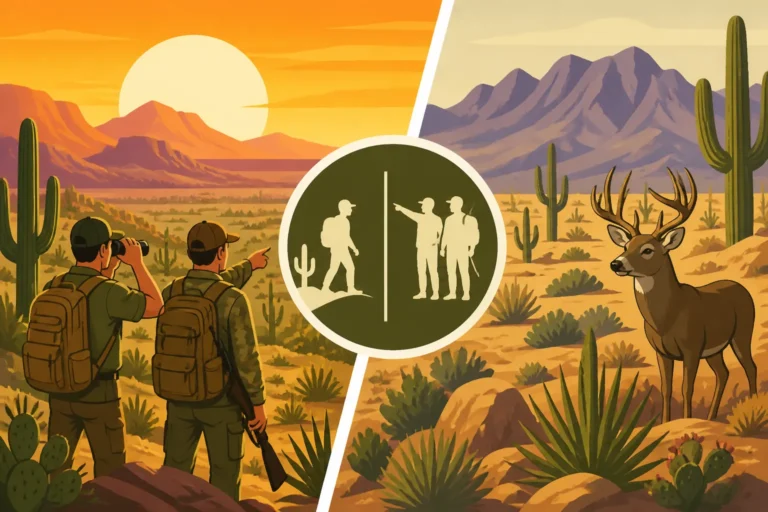
The guide's spotting scope serves a very specific and vital purpose: it is the primary instrument for spotting and identifying game from long distances. Imagine your guide setting up on a high point, systematically Glassing Grids for Arizona Coues Deer for hours. Their trained eye, coupled with their top-tier optics, is what turns vague shapes on distant hillsides into confirmed animals. They use it to determine if that distant elk is a legal bull, or if that deer has the antler size you're looking for.
This isn't to say your guide won't share the view; often, once an animal is located and evaluated, they'll invite you to look to confirm the target and understand the plan. But the heavy lifting of initial detection and persistent monitoring falls to them and their gear. Their scope is an extension of their expertise, a critical piece of the puzzle that allows them to lead you to successful shot opportunities. It's not uncommon for a guide to spend days behind their glass, finding the animals while the client focuses on fitness, shooting practice, and carrying their personal gear.
What to Ask Your Arizona Outfitter About Spotting Scopes
Navigating the specifics of an outfitted hunt requires clear communication. Don't assume anything, especially when it comes to specialized gear like optics. A proactive approach will ensure there are no surprises once you're in the field.
Specific Questions to Clarify Optics Provision
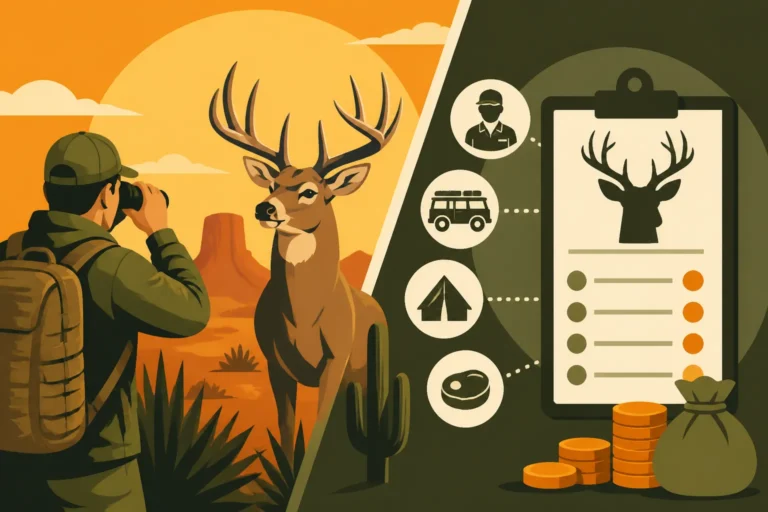
When you're having those initial conversations with potential outfitters, or solidifying plans after booking, make sure to ask direct questions about their optics. Here’s a checklist:
- "Will you, as the guide, be providing a spotting scope for your own use on the hunt?" (The answer should almost always be yes.)
- "Will clients have reasonable access to your spotting scope once game is located, or is it strictly for your use?" (Most guides will share for verification.)
- "What power range and brand of spotting scope do you typically use?" This gives you an idea of the quality and capability they’re bringing to the table. You might hear brands like Kowa, Swarovski, Zeiss, Vortex, or Leupold mentioned.
- "Based on the type of hunt and terrain we'll be covering, should I consider bringing my own spotting scope, even if you provide one for your use?" Their answer here will be key. For specific hunts like a trophy Coues deer hunt, having two high-quality spotting scopes working simultaneously can be a huge advantage.
- "What other essential optics (like binoculars, rangefinders, or even tripods for my own binos) do you expect clients to bring?" This will help you complete your personal gear list without leaving anything critical at home.
These questions, asked early, will help you understand the full picture of what to expect and what you're responsible for. If you're browsing outfitters on platforms like BookYourHunt, check their listed inclusions, but still follow up with these specific questions.
Considering Your Own Optics Needs and Preferences
Even if your outfitter confirms they'll have a top-tier spotting scope, you might still want to bring your own. Why? Personal preference and comfort play a huge role. If you've spent countless hours behind your own glass, you're familiar with its nuances, its field of view, and how it performs in different lighting conditions. Using your own equipment means one less variable on an already challenging hunt.
Consider the potential for independent glassing. While your guide is scanning one ridge, you could be picking apart another section of the mountain. Two sets of eyes, backed by two spotting scopes, are always better than one. However, also consider the practicalities: weight and bulk. If you're undertaking a physically demanding hunt, such as Packing an Elk Out of Rim Country Alone or deep into the Sky Island Ranges That Hold Coues, every ounce matters. A personal spotting scope and tripod can add significant weight. Balance the potential advantages against the physical demands of your specific hunt. Resources like GoHunt also provide a wealth of information about various units, which can help you understand the terrain and make an informed decision about extra gear.
How to Navigate Optics Discussions During Booking
The best way to ensure clarity is to bring up optics early in your conversations with potential outfitters. When you're gathering information or comparing services, make this a key point of discussion. Don't wait until a week before the hunt to ask. Reputable outfitters will appreciate your thoroughness and be happy to explain their setup. They want you to be prepared and have a successful hunt as much as you do.
Look for outfitters who are transparent and communicative. If they're vague or dismissive about optics, it might be a red flag. A good outfitter understands the critical role of glassing in Arizona and will be proud to discuss the quality of their equipment and their strategy for using it. Many outfitters, especially those listed on reputable platforms such as BookYourHunt, will detail their services and gear. Be sure to read through all contract details and inclusions carefully, especially concerning gear.
Common Spotting Scope Setups for Arizona Hunting
The equipment choices for Arizona hunting are often dictated by the extreme distances and varied terrain. Guides and experienced hunters tend to gravitate towards specific characteristics in their optics to gain an advantage.
Guide's Preferred Spotting Scope Characteristics
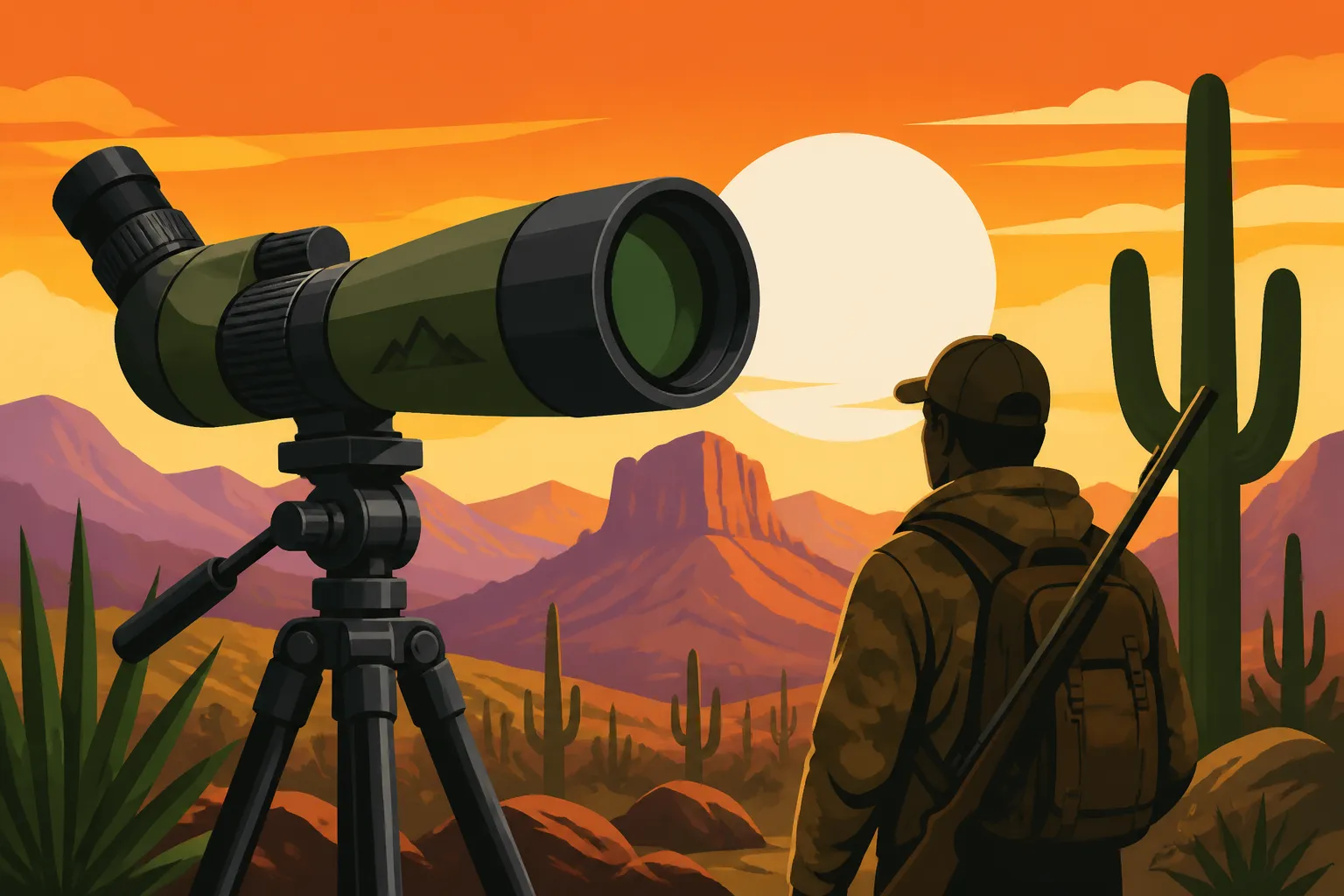
A professional Arizona hunting guide's spotting scope is a workhorse, chosen for clarity, light-gathering capability, and rugged durability. They typically opt for scopes with high magnification ranges, often starting around 20x and zooming up to 60x, 80x, or even beyond. This allows them to effectively scan wide areas and then zoom in to resolve fine details on distant animals. A large objective lens, usually between 65mm and 95mm, is critical for gathering as much light as possible, which translates to brighter, clearer images in low-light conditions at dawn and dusk—prime hunting hours.
Durability and weatherproofing are non-negotiable. These scopes are used in harsh desert sun, monsoon rains, and sometimes even snow. High-end brands like Kowa, Swarovski, Zeiss, Vortex, and Leupold are commonly seen in guide's kits because they consistently deliver on optical performance and robust construction. Perhaps more importantly than the scope itself is the tripod; a flimsy tripod renders even the best glass nearly useless for steady, long-range viewing. Guides invest in sturdy, stable tripods that can withstand wind and hold a solid image.
Client's Personal Spotting Scope Considerations
If you decide to bring your own spotting scope, you'll need to balance optical performance with portability. For hunts that involve significant hiking or backpack efforts, like many of The Logistics of a Horseback Drop Camp scenarios, a smaller, lighter scope (e.g., 65mm objective) might be a better choice than a massive 95mm beast. Magnification in the 20-60x range is generally sufficient for most Arizona big game hunting.
Another consideration is the eyepiece angle: straight versus angled. Many guides prefer angled eyepieces for comfort during long glassing sessions, especially on uneven terrain or when glassing uphill. However, a straight eyepiece can be quicker for target acquisition. This is often a personal preference developed through use. While top-tier scopes offer the best performance, there are many excellent mid-range options that provide fantastic value for a client’s personal use. Just remember, clarity and a stable image are far more important than raw magnification alone. For more insight into what kind of power you'll need, check out Optics Power for Arizona's Long Desert Sightlines.
The Role of the Tripod and Accessories
A great spotting scope is only as good as the tripod it sits on. For serious glassing in Arizona, a sturdy, lightweight, and easily adjustable tripod is paramount. Flimsy tripods transmit every little vibration, making it impossible to hold a steady image at high magnifications. Look for tripods with robust leg sections and a smooth, stable head. Pan heads are often favored by hunters for their precise, controlled movements, allowing for fluid scanning across the landscape. Ball heads can be quicker to adjust but may not offer the same level of fine-tuning for systematic glassing.
Beyond the tripod, a few accessories can enhance your spotting scope experience. A quality scope cover protects your investment from dust, scratches, and light rain. Many hunters also utilize digiscoping adapters, which allow you to attach your smartphone or a small camera to the eyepiece, turning your spotting scope into a powerful telephoto lens for capturing incredible photos or videos of distant animals. This can be a fantastic way to document your hunt, especially when you're judging an animal you ultimately decide not to pursue.
| Feature | Guide's Typical Choice | Client's Personal Considerations |
|---|---|---|
| Magnification Range | 20-60x, 27-80x (High power, maximum detail) | 20-60x (Balance of power and portability) |
| Objective Lens Size | 65mm-95mm (Max light gathering for low light) | 65mm-85mm (Good light gathering, manageable weight) |
| Build Quality | Extreme durability, fully weatherproof | Durable, weatherproof (Important, but personal budget may vary) |
| Tripod | Sturdy, carbon fiber, pan head (Max stability) | Sturdy, lightweight, pan or ball head (Balance stability/weight) |
| Eyepiece Angle | Angled (Comfort for prolonged glassing) | Angled or Straight (Personal preference) |
| Primary Purpose | Locating game, identifying legal animals, directing | Personal glassing, backup, familiar comfort |
The Value of Optics and the Guide's Expertise
Ultimately, the optics your outfitter supplies, or you bring, are just tools. It’s the seasoned eye behind the glass, combined with deep knowledge of the land and game, that truly makes the difference.
Beyond Just the Glass: A Guide's Experience
While high-end glass is crucial, it’s only as effective as the person using it. An experienced Arizona guide brings far more than just a powerful spotting scope to the table. They bring years, often decades, of intimate knowledge of the specific unit, animal behavior, and the subtle cues that indicate where game might be. They know the bedding areas, the feeding patterns, the water sources, and how animals react to pressure, weather, and time of day.
Their expertise means they know where to set up the spotting scope, how to effectively scan the terrain, and what to look for. They can quickly distinguish a bedded deer from a rock, spot the twitch of an ear at a mile, or pick out antler tips through thick brush that an untrained eye would never see. This intrinsic understanding of the Arizona landscape, combined with premium optics, creates a formidable advantage for hunters. For a clear picture of what this kind of expertise entails, look into What a Guided Arizona Coues Hunt Looks Like.
Maximizing Your Investment: Optics and Preparation
An outfitted hunt in Arizona represents a significant investment of time, money, and personal effort. To truly maximize that investment, ensure you're prepared on all fronts, including optics. Skimping on your personal binoculars or rangefinder, or failing to clarify the spotting scope situation with your outfitter, can inadvertently hinder your success. If you've paid for an experience to pursue a specific animal, you want every possible advantage.
This means asking the right questions, bringing the personal optics you need, and even practicing with your own glass before the hunt. The more comfortable and proficient you are with your own equipment, the more effectively you can contribute to the hunt. Doing your own research through resources like GoHunt can give you a leg up, helping you understand the terrain and what kind of Optics Power for Arizona's Long Desert Sightlines will be most effective. This preparation, coupled with your guide's expertise and equipment, forms a powerful synergy.
Preparing for Your Hunt with the Right Optics Mentality
Approaching your outfitted hunt with the right mentality about optics is key. Think of it as a partnership. Your guide will provide the primary, high-performance spotting scope and their unparalleled expertise. Your role is to support that effort with your own quality binoculars, a reliable rangefinder, and, if you choose, a personal spotting scope for additional glassing power.
Be ready to spend a lot of time behind the glass, whether it's your own binoculars or taking turns on the guide's spotting scope. Practice patiently scanning, understanding that finding animals in Arizona's vastness is often a slow, methodical process that rewards diligence. The success of your Arizona hunt will be a combination of your physical and mental preparation, your guide's profound knowledge, and the effective use of all available optics. This comprehensive approach, starting with clear communication with your outfitter, will put you in the best position for a successful and memorable hunt.
Disclaimer
This article is for general informational purposes only and does not constitute professional advice. Laws, prices and regulations vary by location and change over time. Consult a qualified professional for guidance on your specific situation.