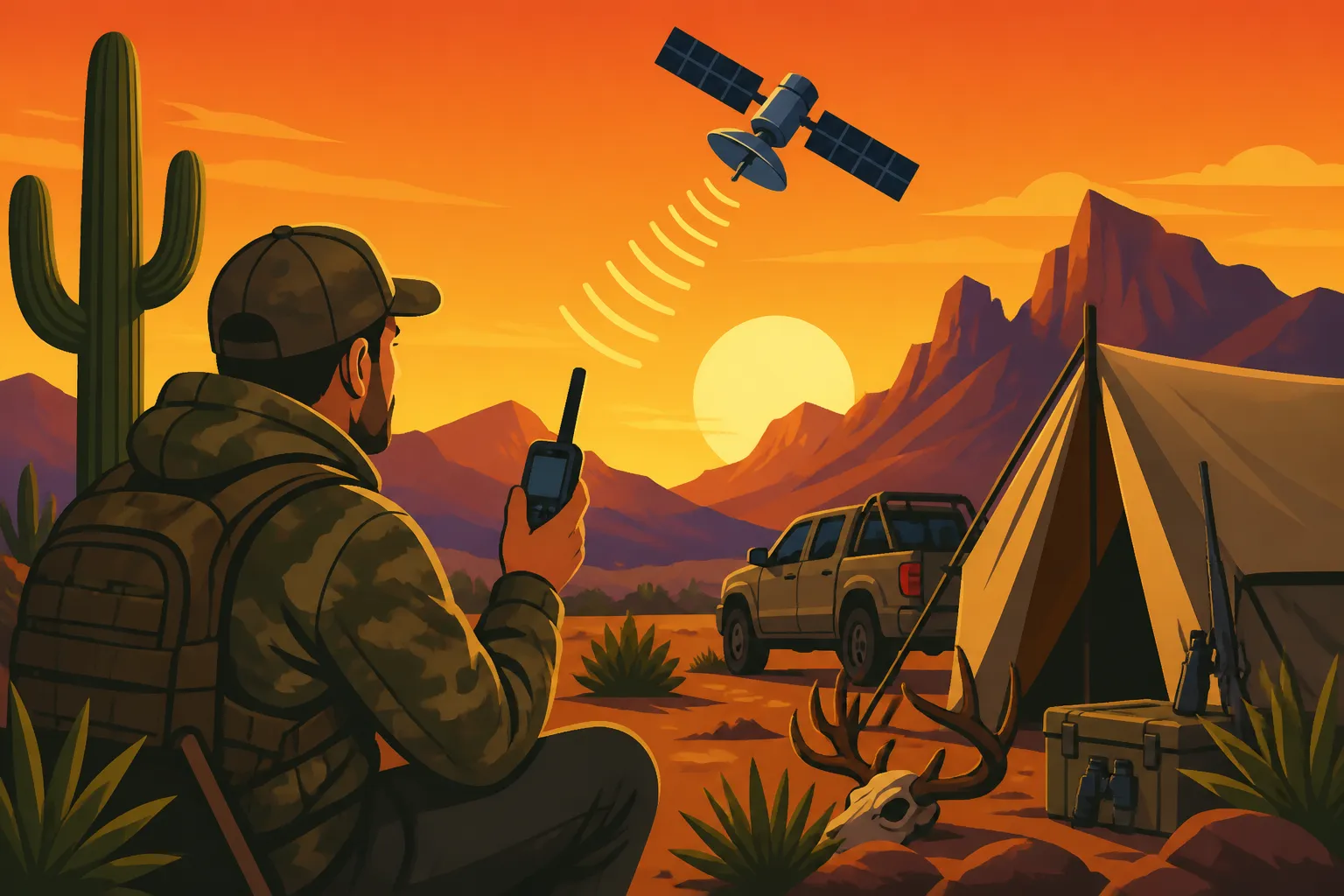
Satellite Communication From a Hunting Camp
The vast, rugged expanses of Arizona’s hunting country offer incredible solitude and challenge, but that feeling of being truly alone comes with a genuine concern: what happens if something goes wrong? Cell service is a luxury in most of our prime hunting units, leaving many of us disconnected and potentially vulnerable. This guide will walk you through the essential world of satellite communication, helping you bridge that gap and stay safe and in touch from your remote Arizona hunting camp.
Why Reliable Communication is Non-Negotiable in Arizona's Backcountry
When you’re deep in the Arizona wilderness, whether it’s chasing elk on the Mogollon Rim or glassing for Coues deer in the Sky Islands, the beauty of being unplugged is part of the draw. However, that lack of connectivity also brings very real risks. Understanding why a dependable communication plan is so vital isn't about fear-mongering; it's about being a responsible, prepared hunter.
The Reality of Arizona's Remote Hunting Units
Let's face it, many of Arizona's most coveted hunting units are far from civilization and further still from reliable cell towers. Picture yourself miles down a dusty, unmaintained forest road, or deep in a canyon chasing a bugling bull. Suddenly, you realize you haven't seen a bar of cell service in hours. This isn't an uncommon scenario; it's the norm for much of the state's prime hunting ground. From the vastness of the Kaibab Plateau north of the Grand Canyon to the rugged mountains of the Coronado National Forest, cellular dead zones are more prevalent than hotspots. Knowing where you might lose signal is part of responsible planning, and tools like GoHunt often include overlay maps that can show you approximate cell coverage, or lack thereof. This type of pre-hunt research, alongside understanding Cell Coverage Across Arizona Hunt Units, is absolutely critical.
Even what might seem like a minor mishap—a twisted ankle on a steep hillside, a sudden allergic reaction, or getting turned around in unfamiliar terrain—can escalate into a serious situation quickly without the ability to call for help. Search and rescue operations are complex and time-consuming, and being able to provide precise coordinates from a satellite device can drastically cut down response times, potentially saving a life.
Peace of Mind for Hunters and Loved Ones
Beyond the dire emergency, there's the equally important aspect of peace of mind. For us hunters, being in the field is our escape, our passion. But for the loved ones back home, especially those not accustomed to the wilderness, it can be a source of constant worry. A quick, pre-scheduled satellite message confirming you're okay can mean the world. It allows them to relax, and it allows you to focus more fully on your hunt, knowing that connection is there if needed. This simple act of checking in can transform the entire experience, removing a significant layer of stress for everyone involved.
Consider the unpredictable nature of the Arizona wilderness. Rapidly changing weather, from intense summer monsoons that can turn dry washes into raging rivers to sudden, early-season snowstorms in higher elevations, can trap hunters or make roads impassable. Or perhaps your vehicle breaks down miles from the nearest paved road. These situations aren't always life-threatening, but without communication, they can quickly turn into uncomfortable, even dangerous, ordeals. Having a satellite device ensures you can call for assistance, whether it’s for a simple ride or something more serious like needing help with Getting Meat Cooled on an Early Season Hunt if your vehicle’s refrigeration fails unexpectedly.
Understanding Your Satellite Communication Options
When it comes to staying connected in places where cell towers don't reach, you've got a few different tools in the shed. Each has its own strengths and weaknesses, and understanding them will help you pick the best fit for your style of hunting and the specific challenges of Arizona's backcountry. It’s not a one-size-fits-all solution; what works for a solo sheep hunter might be overkill for a group chasing javelina near town.
Satellite Messengers: The Hunter's Workhorse
For many Arizona hunters, a satellite messenger is the sweet spot. Devices like the Garmin inReach or Zoleo offer a fantastic balance of functionality, size, and cost. Their core purpose is two-way text messaging, which might sound basic, but it's incredibly powerful when you have no other options. You can send custom messages to friends and family, and they can reply, keeping a conversation going. This is perfect for those daily "I'm okay" check-ins or quick updates on your location. Many models also allow you to share a tracking link, so loved ones can follow your progress on a map, which is a huge comfort.
The real game-changer with these messengers is the dedicated SOS button. When activated, it sends a distress signal and your exact GPS coordinates to a 24/7 international emergency response center. This center then coordinates with local search and rescue teams, like those in Arizona, ensuring that help is dispatched directly to your location. Unlike satellite phones, messengers typically have longer battery lives, are more compact, and their subscription plans are generally more affordable, often offering flexible monthly options for seasonal hunters. They are robust, designed to take a beating, and often waterproof, making them ideal for the rough-and-tumble nature of a hunting trip.
Satellite Phones: For Voice When It Matters Most
If having a direct voice conversation is paramount, then a satellite phone is your primary choice. These devices connect directly to satellites orbiting the Earth, allowing you to make and receive calls much like a regular cell phone. For complex situations, giving detailed instructions to an emergency responder, or having an in-depth conversation with a family member, voice communication can be invaluable. Imagine needing to describe the specifics of a medical emergency or coordinating complex logistics for an extraction—a satellite phone simplifies this immensely.
However, satellite phones come with their own set of considerations. They are generally more expensive both to purchase and to operate, with higher per-minute costs or pricier service plans. They are also often larger and heavier than messengers, making them a bit more cumbersome to carry in a pack. Battery life can be significantly shorter, especially with frequent use, demanding careful power management and a reliable charging strategy in camp. Furthermore, they typically require a clear line-of-sight to the satellite to function optimally. This means dense timber, deep canyons, or operating within certain Wilderness Areas Inside Arizona Forests with heavy canopy cover can sometimes pose challenges to signal acquisition.
Personal Locator Beacons (PLBs): Emergency Only
Finally, there are Personal Locator Beacons, or PLBs. These are the simplest and most focused of the satellite communication devices. A PLB has one job and one job only: to send an emergency distress signal. When activated, it transmits a powerful signal to satellites, which then relays your position to a global search and rescue network. They are incredibly reliable for emergencies, designed to withstand harsh conditions, and often have extremely long battery lives once activated, sometimes for days.
The key difference with a PLB is that it offers no two-way communication. You press the button, and help is on the way, but you won't receive a confirmation message or be able to update anyone on your status. It's a "last resort" device for life-threatening situations where you need immediate, unwavering assistance. PLBs often have no ongoing subscription fees beyond the initial purchase and registration, making them a cost-effective choice for hunters who prioritize emergency notification above all else and don't need routine check-ins or general messaging capabilities. They are a minimalist, no-frills safety net.
| Device Type | Primary Function | Two-Way Communication | SOS Button | Typical Use Case (Hunting) | Pros | Cons |
|---|---|---|---|---|---|---|
| Satellite Messenger | Text, GPS, Tracking | Yes | Yes | Routine check-ins, minor emergencies | Compact, good battery, share location | Text-only, slower than cell |
| Satellite Phone | Voice calls | Yes | Yes | Critical voice communication | Direct voice, detailed conversations | Expensive, bulky, shorter battery, requires clear line of sight |
| Personal Locator Beacon | Emergency signal only | No | Yes | Life-threatening emergencies | Long battery, simple, robust, no subscription | No communication, no location sharing |
Choosing the Right Satellite Device for Your Arizona Hunt
Selecting the right satellite communication device isn't just about picking the newest gadget. It's about realistically assessing your hunting style, the specific areas you frequent in Arizona, and your personal comfort level with risk. What makes perfect sense for one hunter might be completely impractical for another.
Assessing Your Hunt's Remote Factor and Risk
First, consider where you hunt. Are you primarily sticking to easily accessible units with some public land but generally good infrastructure? Or are you a true backcountry enthusiast, venturing into vast areas like the Mazatzal Wilderness, or deep into units known for extreme remoteness like certain parts of the Arizona Strip? The deeper and more isolated your chosen hunting grounds, the more robust and reliable your communication system needs to be. For instance, a quick day hunt for Gambel's quail near a paved road might allow you to get away with a minimal setup, whereas a multi-day backpacking trip into the Blue Range Primitive Area for an elk hunt demands something more comprehensive.
Think about the physical demands of your hunt as well. Are you planning on Packing an Elk Out of Rim Country Alone? That's a physically taxing endeavor where an injury is a higher possibility. Are you hunting during early archery seasons when Heat Management on an Arizona Early Season Hunt is a significant concern, increasing the risk of heat-related illness? The higher the potential for physical strain or environmental hazards, the greater the need for a reliable emergency communication device. When you're Reading an Arizona Unit Boundary Before You Apply, take note of the terrain and access points – these details can often hint at how remote and cellular-free an area might be.
Budget, Battery Life, and Ease of Use
Your budget will always play a role. PLBs are typically a one-time purchase, making them the most cost-effective for emergency-only use. Satellite messengers usually involve a moderate upfront cost for the device and then a monthly or annual subscription fee, offering a good balance of features for the price. Satellite phones are the most significant investment, both for the device and for ongoing service, often with higher per-minute rates. Weigh these costs against the features you truly need.
Battery life is paramount, especially on longer hunts in Arizona's remote areas where charging opportunities are scarce. A device that lasts for days on a single charge with moderate use is a huge advantage. Consider bringing portable power banks or even a small solar charger to extend battery life for devices that consume more power, like satellite phones or messengers used for frequent tracking. You can often find great gear recommendations, including charging solutions, through resources like GoHunt, which often cater to Western hunters facing similar challenges.
Lastly, and critically, consider ease of use. In a stressful emergency situation, you need a device that is intuitive and easy to operate. Can you press the SOS button without fumbling? Is sending a text message straightforward, even with cold hands or limited visibility? Practice using your device before your hunt, familiarize yourself with its functions, and make sure any accompanying smartphone apps are paired and working.
Group Hunting Considerations and Sharing Information
If you're heading out with a hunting partner or a larger group, you'll need to decide on a communication strategy. Does every member of the group need their own satellite device, or can one central device suffice? For larger groups or those splitting up often, multiple devices might be wise. For smaller groups staying together, one reliable messenger or phone might be enough. Make sure everyone in the group knows where the device is, how it works, and who is responsible for checking in or activating the SOS feature.
The ability to share waypoints or track your routes can be incredibly useful for group coordination, especially if you're spreading out to cover more ground. Many satellite messengers offer this feature, allowing you to see your partner's location on a map or send them specific coordinates for a rendezvous point. This can also be invaluable if you're working with a guide who needs to coordinate logistics or if How Outfitters Plan Emergency Evacuations becomes a real concern. When booking a hunt, especially for What a Guided Arizona Elk Hunt Costs or even a simpler Drop Camps in Arizona's Rim Country, don't hesitate to ask the outfitter about their communication protocols and what devices they carry or recommend. Sometimes, outfits listed on platforms like BookYourHunt will specify their communication standards.
Best Practices for Satellite Communication in Camp and Field
Having the right satellite device is only half the battle. Knowing how to use it effectively, manage its power, and understand emergency protocols is equally important. These best practices can truly make the difference when you're out in Arizona's wild places.
Pre-Trip Planning and Device Familiarity
The worst time to learn how your satellite communicator works is when you're already in a remote hunting camp and realize you need to use it. Before you even pack your truck, dedicate time to fully familiarize yourself with your device. Take it for a test run in an open area with a clear view of the sky, ideally mimicking the conditions you expect on your hunt. Send test messages to your emergency contacts, making sure they receive them and know how to respond. This also confirms your subscription is active and working.
Charge all your satellite communication devices fully before leaving home. Pack extra power banks, solar chargers, or spare batteries, depending on your device and the length of your trip. Understand your device's interface, how to navigate menus, and how to activate its core functions. It's also wise to establish a clear communication plan with your family back home: agree on specific check-in times, what information you'll send, and what they should do if they don't hear from you. Having a fallback plan prevents unnecessary worry and potential false alarms. When you're doing your Scouting an Arizona Unit Before the February Deadline, scout out potential spots with clear sky views for optimal signal.
Optimizing Signal and Battery Life in the Field
Satellite devices, especially those relying on geostationary satellites like most messengers, need a clear, unobstructed view of the sky. This means stepping out of dense tree cover, avoiding deep canyon bottoms, and positioning your device away from large geological features or your vehicle when sending messages or tracking. Finding a small clearing or walking to a slight rise can often improve your signal dramatically. Patience is also key; it can sometimes take a few minutes for a device to acquire a satellite signal, especially if it's been off for a while.
Battery management is critical for any electronic device in the backcountry. For your satellite communicator, this means being judicious with its use. If it has a tracking feature, adjust the interval to longer periods (e.g., every 30 minutes instead of every 10) to conserve power. Turn off any unnecessary features like Bluetooth or continuous GPS if you don't need them. In cold weather, keep your device close to your body or inside your sleeping bag at night to prevent battery drain. A drained battery renders even the best device useless, so treat its power source with the utmost respect.
Emergency Protocols and Contact Information
This is where the rubber meets the road. Before you leave, program all critical emergency contacts directly into your device or its linked smartphone app. This should include family members, your hunting partners, and potentially even your outfitter if you’re on a guided hunt. Ensure these contacts understand what your messages mean, what information to expect (like your location), and how to interpret different types of alerts.
Most importantly, understand the SOS function on your specific device. What happens when you press it? Does it connect to a third-party monitoring center? What information should you be prepared to relay if two-way communication is established? Know this procedure cold. Practice it (without actually pressing the button, of course). This knowledge, alongside understanding specific details like Water You Must Carry on a Day Hunt for hydration and general wilderness preparedness, will empower you to react calmly and effectively should an actual emergency arise. Your satellite communicator is a lifeline, but only if you know how to properly cast it.
Disclaimer
This article is for general informational purposes only and does not constitute professional advice. Laws, prices and regulations vary by location and change over time. Consult a qualified professional for guidance on your specific situation.