Playing Thermals on a Canyon Stalk
We've all been there: slowly, painstakingly stalking that Arizona Coues buck you've been glassing for hours, moving with utmost care, only for an unexpected gust to swirl and carry your scent right to him, blowing the whole deal. It’s an incredibly frustrating experience, one that can make you feel like you just can't catch a break, especially in the rugged, canyon-filled terrain of Arizona. This guide is dedicated to helping you master the art of playing thermals on a canyon stalk, giving you the knowledge and strategies to anticipate those tricky air currents and get closer to your quarry.
Understanding the Invisible Dance of Canyon Thermals
The air in mountainous and canyon terrain doesn't just flow in one direction; it performs a complex dance driven by temperature changes throughout the day. This phenomenon, known as thermals, is often the biggest saboteur of a carefully planned stalk. If you don't understand how these invisible currents work, you're essentially hunting blind, leaving success up to pure luck. It’s not just about knowing the wind direction at your immediate location; it’s about predicting where your scent will travel as the air moves and shifts through draws, over ridges, and down into shadowed ravines.
The Science Behind Upslope and Downslope Airflow
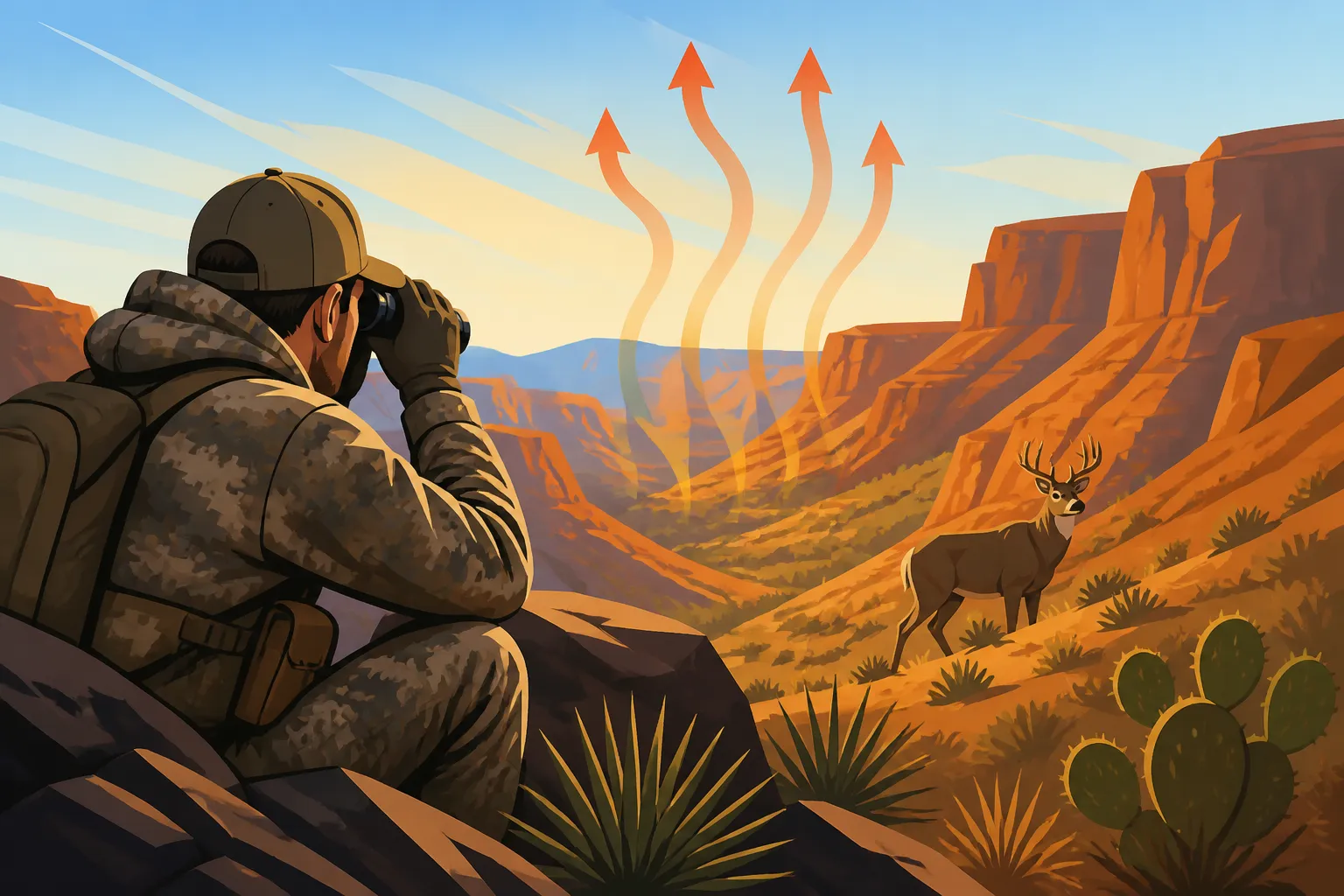
At its core, thermal movement is all about temperature differences. Warm air rises, and cool air sinks. In the unique topography of canyons, this creates a predictable, though sometimes fickle, pattern. As the sun rises and warms the canyon walls, the air directly touching those surfaces heats up, becoming lighter and beginning to rise. This rising air creates an upslope thermal, pulling air from the bottom of the canyon up towards the ridge lines. Conversely, as evening approaches and the sun dips, the canyon walls cool rapidly. The air in contact with these cooling surfaces loses its heat, becoming denser and heavier, and begins to sink. This sinking air creates a downslope thermal, pushing air from the ridge tops down into the canyon bottoms.
Imagine a giant, invisible convection oven. During the day, the canyon is like a chimney drawing air upwards. In the evening, it becomes a drain, pulling air downwards. These aren't just gentle breezes; they can be surprisingly strong and consistent, carrying your scent far and wide. Understanding this fundamental principle is the first step to truly navigating Arizona's rugged landscapes. Without this understanding, you'll constantly be battling unseen forces, often losing the fight against a deer's keen sense of smell.
How Canyon Topography Amplifies Thermal Challenges
Arizona's canyons are often a maze of complex features—side draws, narrow chutes, wide bowls, and jagged rock formations. Each of these features can influence the local thermal patterns, creating microclimates where the air behaves differently from the general upslope or downslope trend. For instance, a deeply shaded side canyon might hold onto cool air much longer into the morning, causing a localized downslope draft even while the main canyon is experiencing a strong upslope pull. This means you can be walking along a sunlit ridge with the wind in your face, only to cross into a shaded draw and suddenly have your scent swirling behind you.
These topographical nuances are what make canyon hunting so challenging and why a detailed mapping application like GoHunt can be invaluable. You can study the contours, identify choke points, and visualize how air might flow or eddy. Steep, cliff-like walls can act as barriers, funneling air currents, while wider, more open areas might allow thermals to diffuse and become less predictable. The angle of the sun's path also plays a huge role; a canyon that faces east will warm up and create upslope thermals much earlier than one facing west. Ignoring these details is like trying to navigate a dense fog without a compass – you’re bound to get lost, or in this case, busted.
Predicting Thermal Shifts Throughout Your Stalk
The key to successfully playing thermals isn't just knowing their general behavior, but anticipating their exact movements during your specific stalk. Thermals are dynamic, constantly changing with the sun's position, cloud cover, and even the type of terrain you're traversing. A successful hunter isn't just reacting to the wind; they're predicting it, often several steps ahead of their actual movement. This foresight allows for strategic pauses, detours, and even waiting out a tricky wind shift.
Morning Thermals and the Upslope Rush
The first hint of daylight in an Arizona canyon brings with it the start of the upslope thermal. As the sun begins to kiss the eastern canyon rim and spill light into the depths, the air warms quickly, creating a strong, consistent upward draft. This can be both a blessing and a curse. If you're starting your morning hunt from the canyon bottom, stalking uphill, this upslope thermal is your friend. It carries your scent away from any animals above you. This is the ideal time to slowly pick your way up, using the rising air to mask your approach.
However, if you start your morning hunt from a high point, trying to work your way down into the canyon, you'll be fighting the thermal. Your scent will be carried directly down to any animals below, alerting them to your presence long before you get close. Many a morning hunt has been ruined by an impatient hunter trying to drop into a canyon too early, only to find all the deer have already moved out of their feeding areas. A better strategy in this scenario might be to stay high, glassing, and waiting for the sun to warm the canyon enough to reverse the air flow, or to plan a route that keeps you on the same elevation band as your quarry. Patience here truly pays dividends, especially when that first light brings with it the promise of a big buck.
Afternoon Thermals and the Downslope Drift
As the day progresses and the sun begins its descent towards the western horizon, the thermal dynamic begins to reverse. The canyon walls, particularly those on the eastern side, start to cool down as they fall into shadow. This cooling causes the air to become denser, and by late afternoon, a distinct downslope thermal will have established itself. This means air is now flowing from the ridge lines down into the canyon bottoms. For hunters who prefer to stalk from high ground into lower areas, this is often the sweet spot. With the thermal carrying your scent downslope, you can effectively work your way into bedding areas or evening feeding locations without fear of your scent rising to alert animals above.
However, just like in the morning, this can be a double-edged sword. If you're working your way out of a canyon bottom or trying to stalk up a ridge in the afternoon, you'll quickly find your scent being pushed ahead of you, directly into the path of anything downwind. This is a common mistake that blows evening stalks. Understanding this critical shift means adapting your game plan. Perhaps you adjust your approach to stay on a cross-slope, or you choose to still-hunt a different section of the canyon altogether. The goal is always to have the air moving away from your target, not towards it. The predictable downslope drift in the afternoon is one of the most reliable thermal patterns to leverage if you time it right.
The Midday Lull and Transitional Periods
Perhaps the trickiest time to deal with thermals in Arizona's canyons is during the midday lull, or the transitional periods when the thermals are shifting from upslope to downslope, or vice-versa. This is when the air currents are often weakest, most unpredictable, and can swirl erratically. Imagine the sun high overhead, heating the entire landscape evenly. The strong directional flow of morning or evening thermals breaks down, replaced by localized eddies and unpredictable gusts. A deer might be bedded in a small pocket, and your scent could literally swirl around them without a consistent direction.
During these times, traditional wisdom often suggests resting, eating lunch, and glassing from a secure, elevated position. However, if you absolutely must move, extreme caution is warranted. You'll need to rely heavily on a wind checker, constantly testing the air, and making very short, deliberate movements. This is when the nuances of the terrain, like a specific rock outcropping or a patch of thick brush, become even more critical for breaking up your silhouette and catching whatever fickle wind is present. It’s also a good time to reconsider your route, perhaps opting for a more open, less-channeled path where thermals might be less intense. Moving through a deep, narrow canyon during this transitional period can be a recipe for disaster, as the slightest breeze can turn into a swirling vortex that betrays your presence.
Strategic Stalking Techniques for Canyon Hunting
Knowing how thermals work is one thing; actually using that knowledge to your advantage in the field is another. Strategic stalking in canyon country requires a delicate balance of patience, adaptability, and an intimate understanding of how your actions influence the air currents around you. This isn't just about walking quietly; it's about moving smartly, always with the invisible scent-carrying air in mind.
Approaching with the Wind, Not Against It
This is the golden rule, the absolute cornerstone of thermal hunting. You must always strive to approach your target in a way that the prevailing thermal carries your scent away from the animal. If the morning thermal is pulling air upslope, you need to be below your target, moving uphill. If the afternoon thermal is pushing air downslope, you need to be above your target, moving downhill. Sounds simple, right? The challenge comes when the animal isn't perfectly positioned for this ideal scenario, or when the terrain forces you into a less-than-optimal approach.
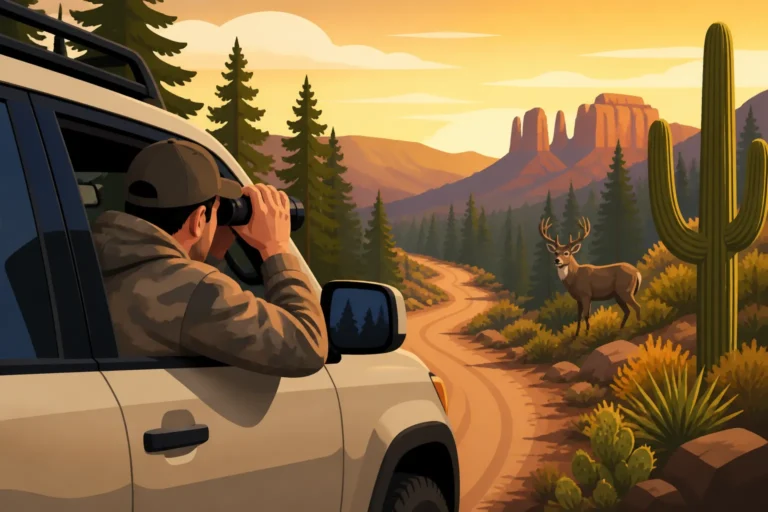
This is where planning and flexibility become paramount. Before you even start your stalk, use your binoculars and a good mapping app like GoHunt to analyze the terrain between you and the animal. Identify potential bottlenecks, changes in elevation, and areas that might create tricky crosswinds or swirling eddies. If a direct, wind-favorable approach isn't possible, you might need to make a wide loop, even adding significant mileage, to get into a position where the thermal is on your side. Sometimes, the best approach is to simply back out, wait for a more favorable thermal shift, or come back another day. Blowing a stalk because of a poor wind judgment is a bitter pill to swallow, and one that can often be avoided with careful planning and a commitment to the "wind-in-your-face" rule.
Using Terrain Features to Block or Redirect Scent
Canyons offer a unique advantage in that their varied topography can actually be used to your benefit to block or redirect your scent. A steep ridge line, a deep cut in the earth, or even a thick stand of pine trees can momentarily shield your scent from an animal. While you can't stop thermals, you can manipulate their immediate impact. For example, if you're traversing a slope where the thermal might occasionally swirl, staying just below the crest of a small ridge can keep your scent from blowing over it directly to an animal on the other side. This is particularly useful when you need to make a quick move or transition through a dicey area.
Consider using washes and draws to close distance. These natural depressions often funnel air, creating predictable currents that you can use as a "scent corridor." However, be extremely wary of exiting these features, as your scent can quickly expand and become exposed. Rock formations and large boulders can also create pockets of calmer air or micro-eddies directly behind them, offering a momentary reprieve from a strong thermal. The key is to constantly be aware of how the terrain interacts with the air flow and position yourself accordingly. It's like a chess game, where every move you make is calculated to keep your scent from reaching the opponent. This kind of mindful movement is how you Terrain That Hides an Approach in Desert Country.
The Patience Game: Waiting for the Shift
Perhaps the hardest, yet most rewarding, technique in thermal hunting is the patience game. It’s the art of waiting, sometimes for hours, for the thermals to shift into your favor. Imagine you've spotted a magnificent Coues buck bedded on a south-facing slope in the mid-morning. The thermal is currently upslope, carrying your scent towards him if you try to approach from below. If you try to come from above, your scent will likely swirl. Your best bet might be to hunker down, stay completely hidden, and wait. As the sun progresses, the thermal will weaken and eventually reverse, creating the perfect downslope drift for an afternoon stalk.
This requires incredible discipline and trust in your understanding of the air currents. It means resisting the urge to push the stalk when conditions are unfavorable, even if you’re itching to get closer. Many hunters, myself included, have blown a perfect opportunity by moving too soon, unwilling to commit to the long wait. But the hunters who consistently fill their tags in these challenging environments are often those who embrace the waiting game. They use this time to carefully study the animal, plan multiple approach routes, and mentally prepare for the crucial final moments. Sometimes, the most effective "move" you can make is no move at all, simply biding your time until the invisible hand of nature aligns with your plan. This level of physical and mental preparation is also crucial for Preparing Physically for a Desert Hunt.
Tools and Tactics for Thermal Awareness in the Field
Relying solely on your gut feeling about thermals is a recipe for disappointment. While experience certainly helps, there are practical tools and tactics you can employ in the field to give you real-time information and a tactical edge. These aren't just gadgets; they're essential aids for making informed decisions on your stalk.
Relying on a Wind Checker for Real-Time Feedback
A simple squeeze bottle of unscented powder or a small feather attached to a string is one of the most vital tools in your hunting pack, especially in canyon country. A wind checker provides immediate, visual feedback on the actual air movement at your precise location. It reveals those subtle swirls, updrafts, and downdrafts that you might otherwise miss. Before every significant move on a stalk, and often after every few steps, pull out your wind checker. Release a puff of powder and watch it intently. Does it go straight out? Does it lift? Does it fall? Does it swirl in a small eddy before moving off?
This real-time feedback is crucial during those tricky transitional periods or when navigating complex terrain. You might think the wind is consistent, but your checker could reveal a small localized crosswind or an unexpected thermal current flowing up a narrow chute. This information allows you to adjust your path, find cover, or even decide to pause and wait for a more favorable moment. Never assume the wind is doing what you expect; always verify with a wind checker. It's a small investment that can save a big hunt.
Observing Natural Indicators of Air Movement
Beyond dedicated wind checkers, the Arizona landscape itself offers countless clues about air movement if you know what to look for. These natural indicators can provide a broader picture of thermal behavior and help you anticipate shifts without constantly pulling out your powder. Pay attention to how the dust on a trail is moving, or if it's completely still. Watch the leaves on trees and bushes; even a slight tremor can indicate subtle air currents. The behavior of small birds or insects can also give clues; are they being buffeted, or are they flying smoothly?
Smoke from a distant wildfire or campfire, though rare and hopefully far away, provides an excellent visual of large-scale air movement. Even the way a spider web sways can tell you something. When you're glassing from a high point, observe distant trees or grass. Are they swaying consistently in one direction, or are they still? Learning to read these environmental cues becomes second nature to experienced hunters, allowing them to constantly assess the thermal conditions without breaking their focus on the hunt. This acute observation is also key to mastering Reading Wind on a Sky Island Stalk.
Leveraging Technology: Weather Apps and Topo Maps
In today's hunting world, technology can be a powerful ally in understanding thermals. Modern weather apps often provide highly localized wind forecasts, including wind speed and direction at different elevations. While not perfect, these can give you a general idea of the overarching wind patterns before you even step foot in the field. But perhaps even more valuable are topographical maps, especially those with advanced features found in mapping platforms like GoHunt.
Before your hunt, or even during a pause in your stalk, pull up a detailed topo map. Study the contour lines. Visualize the canyons, draws, and ridge lines. Based on the time of day and sun position, you can start to predict how thermals will flow through those specific features. Identify potential thermal traps, areas where air might swirl, or natural funnels where it will accelerate. Mark potential staging areas or approach routes that align with predictable thermal patterns. This kind of e-scouting can drastically improve your odds, allowing you to plan routes that actively work with the thermals, rather than constantly fighting against them. It’s about being proactive, not just reactive, and this foresight is what truly separates successful hunters. Understanding how to use these maps and apply that information is a critical part of E-Scouting an Arizona Unit Before the Season.
Real-World Scenarios and Troubleshooting Thermal Challenges
Even with a deep understanding of thermals and all the right tools, you'll inevitably encounter situations in Arizona's rugged canyons that test your resolve. Animals rarely position themselves in convenient spots, and the terrain often conspires to make a clean approach seem impossible. This is where experience, adaptability, and a willingness to troubleshoot on the fly become invaluable.
The Tricky Bowl: When Thermals Swirl
One of the most frustrating thermal challenges is the "tricky bowl" – a large, circular depression in the landscape where air currents can swirl unpredictably, defying simple upslope or downslope logic. You might approach from the rim, expecting a clean downslope drift, only to find your wind checker revealing pockets of air moving in every direction, seemingly at random. This often happens in areas with multiple draws feeding into a central basin, or where steep, shadowed walls create conflicting temperature zones.
When faced with a swirling bowl, your options are limited but critical. First, avoid entering the bowl itself if at all possible. Try to skirt the rim, staying on the high ground where you might catch a more consistent, albeit lighter, prevailing wind. If you must enter, move extremely slowly, using every piece of cover available, and checking the wind with every single step. This is a scenario where How Close a Bowhunter Needs to Get on Coues becomes even more crucial, as minimizing your exposed movement is paramount. You might even consider waiting it out, finding a vantage point and glassing, hoping the animal moves out of the bowl into a more predictable thermal zone, or waiting for a more stable time of day. Sometimes, the best strategy for a swirling thermal is simply to acknowledge defeat for that particular approach and find an entirely different route or target.
Crossing a Canyon: Managing the In-Between
Perhaps you've spotted a deer on the opposite side of a significant canyon, and your only option is to cross to get into range. This presents a unique thermal dilemma: as you descend into the canyon, you'll be dealing with downslope thermals, and as you ascend the other side, you'll encounter upslope thermals. The "in-between" at the canyon bottom is often the most dangerous, as it can be dead calm or experience unpredictable eddies.
The key to successfully crossing a canyon is planning your trajectory to minimize exposure and maximize thermal advantage. If it's morning, you might try to cross quickly at the very bottom, staying low, then immediately climb the other side, using the developing upslope thermal to carry your scent away from animals higher up. In the afternoon, the reverse might be true; drop down the first side with the downslope, cross, and then contour across the opposite slope, avoiding directly climbing into an active upslope that would carry your scent. This type of maneuver requires significant physical exertion, and often involves quick, deliberate movements across the "dead zone" in the bottom. Always have an exit strategy or a hiding spot in mind if the wind suddenly betrays you mid-crossing.
Adjusting Your Plan Mid-Stalk
No matter how well you plan, an Arizona canyon stalk will almost always throw you a curveball. The wind you expected might shift, a thermal might act unpredictably, or the animal might move into an unfavorable position. The ability to adjust your plan mid-stalk, without panicking, is a hallmark of an experienced hunter. This might mean abandoning your current approach and finding a completely new route, even if it adds significant time and effort. It could mean hunkering down for an extended period, waiting for conditions to improve, or simply pulling out and trying again another day.
Don't be afraid to abort a stalk if the thermals turn against you. Pushing through bad wind is almost always a recipe for failure and often results in educating the animal, making it harder to hunt in the future. Instead, use your map, identify new cover, and rethink your approach from scratch. Perhaps there's a different ridge you can use, or a less-traveled wash that offers a better thermal corridor. Sometimes, the best move is to pause, take a deep breath, re-evaluate all your options, and pick a new path, remembering that discretion is often the better part of valor in the backcountry.
Disclaimer
Please remember that hunting regulations and conditions can change. Always consult the latest Arizona Game and Fish Department regulations before heading afield. This guide provides general information and strategies, but local conditions, personal skill, and adherence to all laws are critical for a safe and successful hunt.