Using Washes and Draws to Close Distance
Hunting Arizona's vast and often exposed landscapes presents a unique set of challenges, especially when you're trying to get within range of a wary mule deer or an elusive Coues. The wide-open spaces, limited tall timber, and rocky, brush-choked terrain can make a close approach feel almost impossible, leaving many hunters frustrated and wondering how to bridge that final gap. This guide dives deep into the strategic use of washes and draws, revealing how these natural contours of the land can become your most valuable allies in closing the distance on big game across the Grand Canyon State.
The Undeniable Advantage of Arizona's Washes and Draws for Stalking
When you picture hunting in Arizona, you might imagine vast desert flats or rugged, craggy mountains. While both are certainly part of the picture, it's the more subtle, yet incredibly prevalent, features like washes and draws that often hold the key to success. These aren't just dry streambeds or shallow valleys; they are intricate systems of natural concealment that can completely revolutionize your stalking game.
Why Conventional Approaches Often Fail in Open Country
Let's be honest, trying to walk directly at a deer across a wide-open flat or a sparsely vegetated hillside in Arizona is a recipe for disaster more often than not. The visibility is usually excellent for both you and the game, and unless you're a world-class chameleon, you're going to get spotted. The ground is often noisy, covered in loose rock or crunchy dry leaves, making stealth difficult. Furthermore, the desert winds can be notoriously tricky, swirling and betraying your position from unexpected angles.
Animals like Coues deer, often referred to as "gray ghosts" for good reason, are masters of detecting movement and scent. They spend their lives in these exposed environments and have evolved acute senses to compensate. Even mule deer in the more open, high-desert country are incredibly adept at picking up on anything that looks out of place. Without a solid plan for breaking up your silhouette, muffling your footsteps, and controlling your scent, a head-on approach is almost guaranteed to end with nothing but a waving white flag (the deer's tail, of course) disappearing over the horizon. It's a frustrating experience, but it's one we've all faced when we underestimate the animals and overestimate our own stealth in the wide-open.
The Natural Cover and Concealment These Features Offer
This is where washes and draws become your best friends. Think of them as natural trenches or pathways carved into the landscape, offering immediate, built-in concealment that you just don't find elsewhere.
A wash, typically a dry streambed, provides a depressed channel below the surrounding ground level. This means you can often walk upright, or at least in a crouch, while remaining completely out of sight from animals just a short distance away on either side. The banks of these washes are frequently lined with thicker vegetation – palo verde, mesquite, catclaw acacia, or even some desert ironwood – which further breaks up your outline and provides additional visual cover. The uneven, sandy, or rocky bottom of a wash can also help muffle your footfalls if you move carefully, unlike the crunchy open ground.
Draws, which are essentially small valleys or depressions, offer similar advantages but on a broader scale. They provide undulations in the terrain that allow you to stay below the skyline and out of direct sight. The slopes can often be navigated by staying on the "backside" relative to the animal you're stalking, using the earth itself as a shield. The vegetation within draws tends to be denser because they collect more moisture, creating corridors of thicker brush and smaller trees. This natural tunnel effect is invaluable for approaching game without being detected. Mastering the art of using these natural features is critical for getting into bow range, a topic explored further in our guide on How Close a Bowhunter Needs to Get on Coues.
Understanding the Flow of Game Movement
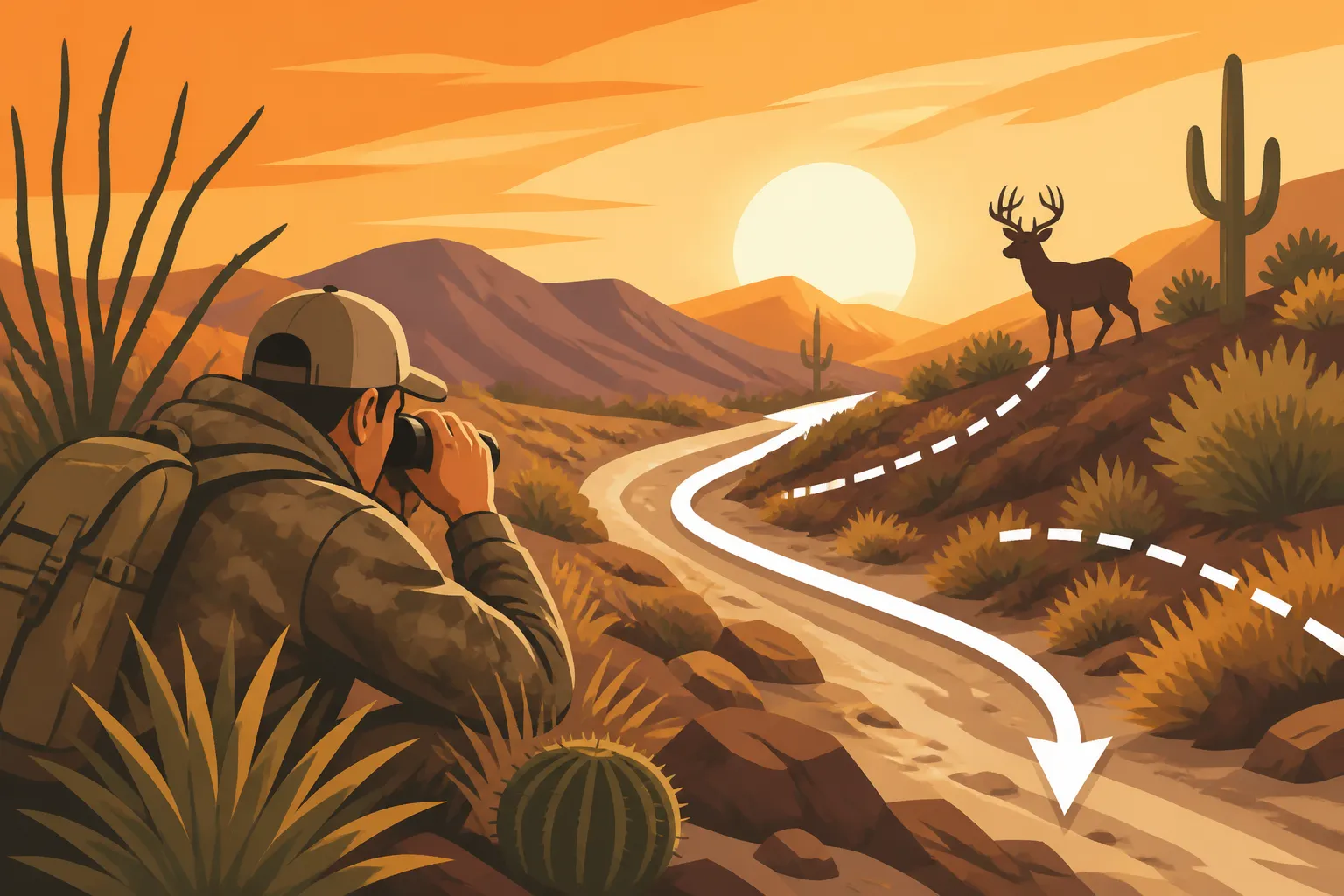
It's not just about hiding; it's about understanding how game animals inherently use these features. Washes and draws are natural travel corridors for deer, javelina, and even elk, particularly in drier environments where they often lead to water sources or connect bedding areas with feeding grounds. Animals use them for the same reasons you do: ease of travel, concealment, and sometimes even to take advantage of cooler air that settles in lower elevations during hotter parts of the day.
Deer, especially, will often bed on hillsides adjacent to or overlooking a wash, or within the thicker cover of a draw. They use these systems to move between water and food, or to escape predators. If you can identify these primary routes, you're not just finding cover, you're also putting yourself directly into the animals' predictable travel patterns. This allows you to intersect them, or to follow their path in reverse for a strategic approach. E-scouting tools like GoHunt are incredibly helpful for analyzing these natural pathways and predicting where animals might be moving. By observing how game animals move, you can develop a better understanding of Reading Fresh Elk Sign in Ponderosa Timber or even Tracking Arizona Javelina Through Prickly Pear, utilizing the terrain to your advantage.
E-Scouting and On-the-Ground Recon: Identifying Your Stalking Lanes
Before you even step foot in the field, or certainly once you're on location, you need a plan for identifying which washes and draws will serve you best. This involves a combination of digital reconnaissance and diligent in-field observation.
Leveraging Digital Tools to Map Out Potential Routes
In today's hunting world, digital mapping applications are indispensable, especially for navigating complex Arizona terrain. Platforms like GoHunt offer satellite imagery, topographic maps, and public/private land overlays that can reveal the intricate network of washes and draws in your unit. Before your hunt begins, spend hours poring over these maps.
Start by identifying areas where you expect to find game – feeding areas, bedding cover, and water sources. Then, look for washes and draws that connect these points or provide access to them while offering continuous cover. Pay close attention to the contours. Steeper-sided washes offer better concealment, while wider, shallower draws might allow for more flexible movement. Notice how these features snake through the landscape; sometimes a wash that starts small will widen and deepen, offering excellent stalking opportunities. Look for vegetation density indicators on satellite imagery as well; darker green often means thicker brush, which equals more cover. Mark potential approach routes, escape routes for game, and vantage points. This pre-hunt preparation is crucial, much like when you're E-Scouting an Arizona Unit Before the Season. It's about having a mental roadmap before you ever hit the dirt.
Reading Sign and Terrain Features in the Field
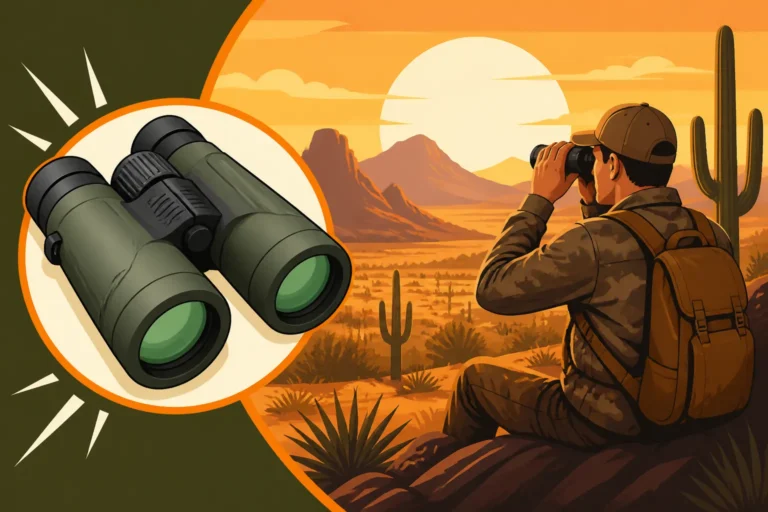
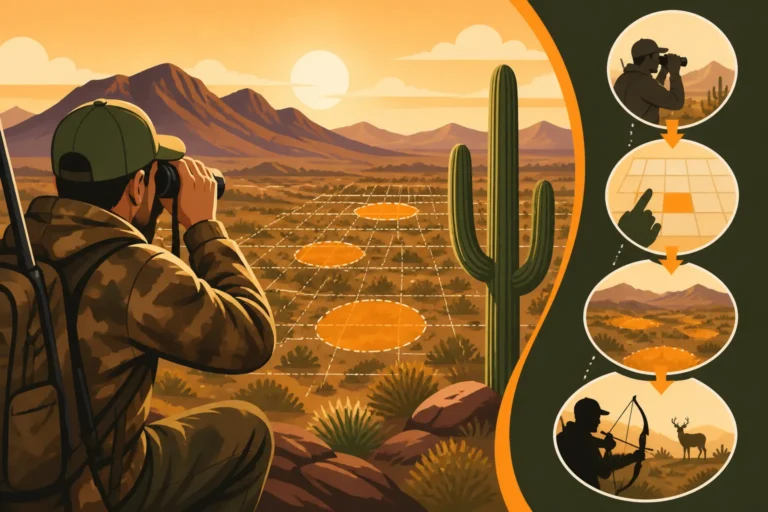
Once you're actually in the unit, your e-scouting maps come to life. The first step is often finding the animals themselves through glassing from a distance, which is particularly effective for species like Coues deer. Our guide on Glassing Grids for Arizona Coues Deer provides excellent tips for systematically searching the landscape. Once you've spotted an animal you want to stalk, it's time to confirm your map-based intel with on-the-ground observations.
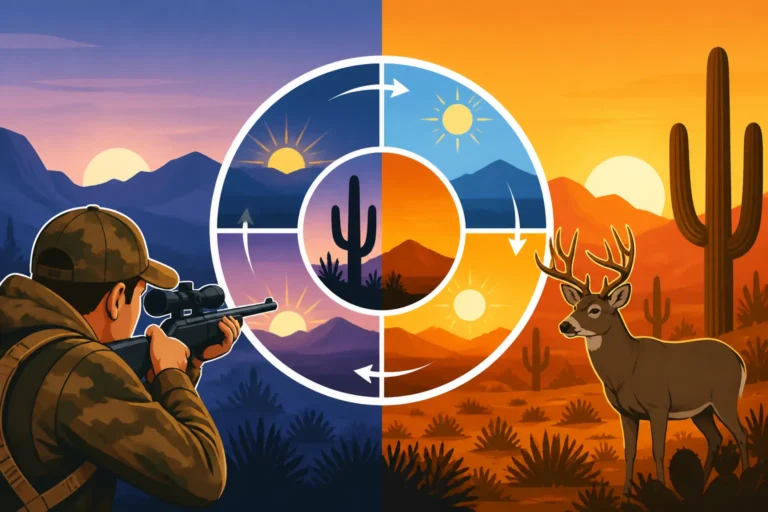
Look for fresh tracks, droppings, and rubbed vegetation along the edges and within the washes. These tell you that animals are actively using these pathways. Pay attention to the type of cover; is it dense enough to hide your approach? Are there open sections that will require extreme caution or a different route? Note the direction of the wind and the thermals. As the sun heats the desert, thermals will typically rise, pulling your scent uphill. In the evenings, as the air cools, they'll fall, pushing your scent downhill. This knowledge is paramount for effectively Playing Thermals on a Canyon Stalk and positioning yourself for success. A draw that looks great on the map might be a wind tunnel in reality, making a silent approach nearly impossible. Always check the actual conditions.
Anticipating Game Behavior Within the Draw System
This is where experience really pays off. Game animals are creatures of habit, and their behavior in washes and draws is often predictable. Deer will often bed on the shaded side of a hill overlooking a wash, or tucked into the thickest part of a draw. They'll use the wash as a quick escape route if spooked. When they're feeding, they might move slowly along the edges of a draw, periodically popping up to browse.
Consider the time of day and the pressure. Early morning and late evening often see more movement, while midday might find animals bedded down. If the area has seen a lot of hunting pressure, animals might be warier and stick to the thickest cover within the draws, only emerging under the cover of darkness. Try to anticipate their next move. If a deer is feeding along a wash, where will it go next? If it’s bedded, what’s its most likely escape route? By thinking like the animal, you can better plan your approach, using the washes and draws not just as cover, but as dynamic elements in a chess game. This kind of patience and strategic thinking is Why Coues Deer Reward Patience Over Movement is such an important concept.
Mastering the Stalk: Moving Stealthily Through Washes and Draws
Once you've identified your target and planned your route, the real work begins. Moving silently and deliberately through washes and draws is an art form that requires immense focus and patience.
The Art of Slow Movement and Sound Discipline
This cannot be stressed enough: slow down. Most stalks are blown because hunters move too quickly. When navigating a wash, particularly one with a sandy or rocky bottom, every step needs to be deliberate. Test your foot placement before committing your weight. Look for patches of softer sand, packed dirt, or even smooth rock to step on. Avoid loose gravel or crunchy leaves like the plague. If you must step on something noisy, do it slowly, gradually applying pressure to minimize sound.
The pace should be agonizingly slow, often taking several minutes to cover just a few yards. Imagine moving in slow motion, almost like a predator. Pause frequently to listen, look, and assess the situation. Use the natural sounds of the desert – the rustling of leaves in a breeze, the chirping of birds – to mask any minor noises you might make. If the wind is blowing, that's your cue to move a little more, as the ambient noise will cover your tracks. When moving through dense vegetation along the banks of a wash or within a draw, anticipate branches and twigs. Use your hands to gently push them aside, rather than letting them snap back and announce your presence. This kind of meticulous movement is key to Using Washes and Draws to Close Distance.
Playing the Wind and Thermals for Optimal Concealment
Your scent is your biggest giveaway in the desert, often even more so than sound or sight. Understanding and constantly monitoring the wind and thermals is non-negotiable for a successful stalk in a wash or draw. Always approach with the wind in your face or quartering into your face. This ensures your scent cone is blown away from the animal, not towards it.
As mentioned earlier, thermals are localized air currents driven by temperature changes. In the morning, as the sun warms the ground, air (and your scent) typically rises. In the evening, as the ground cools, air (and your scent) falls. Washes and draws can create microclimates and channel these thermals, sometimes creating unpredictable swirling currents. Always carry a small bottle of wind checker powder and use it religiously. Before every movement, spray some powder into the air to see exactly what your scent is doing. If the wind or thermals shift unfavorably, stop immediately. It's often better to wait for conditions to improve, or even to back out and try a different approach later, than to push forward and blow the stalk. Knowing how to adapt to these changes is a critical part of Reading Wind on a Sky Island Stalk, no matter the specific terrain.
Navigating Obstacles and Avoiding Unwanted Encounters
Washes and draws, while offering excellent cover, also come with their own set of challenges. You'll encounter thorny bushes, tangled branches, large boulders, and sometimes steep, unstable banks. Each obstacle requires a deliberate plan for navigation. Instead of crashing through, look for the path of least resistance. Can you go around that thorny mesquite? Is there a low-lying branch you can duck under quietly?
It's also important to be aware of other wildlife. You're entering their home, and you might surprise them. Rattlesnakes are common in Arizona's washes, especially on warmer days or when they're seeking shade. Always watch where you place your feet and hands. Javelina herds can be loud and might unexpectedly erupt from dense cover, alerting everything else in the vicinity. Deer themselves might be bedded just out of sight around a bend. Always move with caution and be prepared for a sudden encounter. A good rule of thumb is to assume an animal is always just around the next bend, ready to bust. This mindset helps maintain stealth and situational awareness, especially when moving through Terrain That Hides an Approach in Desert Country.
| Stalking Method | Pros | Cons | Ideal Scenario |
|---|---|---|---|
| Using Washes | Excellent linear concealment | Can be noisy with loose rock/sand; limited visibility | Approaching game across flats or up gentle slopes |
| Using Draws | Broader concealment, thicker vegetation | May require more contour navigation; scent can swirl | Approaching game on hillsides or in undulating terrain |
| Open Terrain | High visibility for spotting game | Almost no concealment for approach; very exposed | Glassing from a distance; long-range shooting only |
Practical Considerations and Ethical Hunting in Arizona's Draws
While washes and draws are invaluable tools for hunters, they also demand respect and awareness of potential hazards and ethical responsibilities.
Safety First: Flash Floods, Snakes, and Other Desert Dangers
Arizona's desert environment, particularly its washes and draws, can be deceptively dangerous. The most immediate and critical danger during the monsoon season (roughly July through September) is flash flooding. A wash that is bone dry one moment can become a raging torrent in minutes, even if the rain is falling miles away upstream. Never enter a wash if there's any sign of rain in the area, or if you see dark clouds upstream. If you're caught in a wash during a sudden downpour, seek high ground immediately. It’s better to lose a stalk than your life.
Beyond floods, be hyper-aware of venomous wildlife. Rattlesnakes are very common in these areas, especially where they find shade or shelter among rocks and brush. Always scan ahead of your feet and hands. Wear sturdy boots and gaiters. Scorpions and Gila monsters are also present, though less of a direct threat if you're cautious. Dehydration and heat exhaustion are constant concerns, especially during early archery seasons. Always carry more water than you think you need, especially if you're trekking through rugged washes and draws. Our guide on Water You Must Carry on a Day Hunt details how much water is truly necessary.
Knowing Your Limits: When to Back Out and Re-evaluate
It's tempting to push harder when you're close to an animal, but sometimes the smartest move is to back out. If the wind suddenly shifts, if you hit an impenetrable thicket, or if the terrain becomes too noisy to navigate silently, continuing might be futile and only educate the animal. There's no shame in calling off a stalk if the conditions aren't right.
Sometimes, the best strategy is to retreat, circle around, and try a different approach, or even return to the same spot hours later when the animal has moved or conditions have changed. This is especially true for bowhunters, who require very close proximity. Pushing an animal too hard can cause it to vacate the area completely, ruining any future opportunities. Recognizing when you're compromised is a sign of a seasoned hunter, not a failure. Patience and persistence are the true virtues in Arizona hunting.
Minimizing Impact and Respecting the Land
As hunters, we are stewards of the land, and that means minimizing our impact, especially in sensitive desert environments. When moving through washes and draws, try to stick to existing game trails or areas of less fragile vegetation. Avoid breaking branches unnecessarily or disturbing the soil more than needed. Pack out everything you pack in, including any spent casings or trash.
Respect private property boundaries; washes and draws often traverse both public and private lands, so confirm your location with your GoHunt app or other GPS tools. Be aware of any special use restrictions in specific areas, such as wilderness designations that might prohibit certain activities or vehicle access. We have a detailed guide on Motorized Travel Rules on Arizona Public Land that can clarify some of these regulations. By practicing ethical hunting and showing respect for the land, we ensure these valuable resources remain available for generations of hunters to come.
Disclaimer
Please note that hunting regulations, seasons, and access rules in Arizona can change. It is every hunter's responsibility to consult the most current Arizona Game and Fish Department regulations before heading into the field. This guide provides general information and should not be used as a substitute for official sources.