When the Coues Rut Peaks
If you've spent any time chasing those elusive "gray ghosts" of the desert, you know the frustration of trying to pinpoint the absolute best time to catch Coues deer during their breeding season. It feels like everyone has a slightly different answer, and honestly, the deer rarely read the same calendar we do. This guide is here to cut through the guesswork and give you a clear, comprehensive understanding of when the Coues rut typically peaks in Arizona, what factors can shift it, and how to adjust your hunting strategy accordingly.
The General Window for the Coues Rut in Arizona
When hunters talk about the Coues deer rut in Arizona, a particular timeframe almost always comes up: late December through January. This isn't just hearsay; it's a pattern that experienced hunters and biologists have observed for generations. However, to truly capitalize on it, you need to understand the nuances of the pre-rut, peak rut, and post-rut phases. It's not a light switch that flips on a single day, but a fluid period driven by biology and environmental cues.
The December/January Sweet Spot
While the technical "peak" of the rut can vary, the period from the last week of December into the third week of January is generally considered the prime time for catching Coues bucks actively pursuing does. During these weeks, you'll see a noticeable uptick in buck movement, territorial displays, and, most importantly, the actual breeding activity. This is when those older, reclusive bucks are most vulnerable, dropping their guard just enough to make a mistake. Imagine glassing a high-elevation saddle in one of Arizona's Sky Island ranges, and suddenly, a buck you've never seen before is scent-checking a doe right out in the open. That's peak rut magic.
For many hunters, especially those with an archery tag, having the season extend into January for these "late season" opportunities is a huge advantage. It can literally mean the difference between seeing a few does and young bucks, and actually encountering a mature animal chasing. This period aligns perfectly with cooler temperatures, which further encourages daytime movement, a stark contrast to the often brutal heat of earlier seasons. If you're planning your trip or considering when to burn your vacation days, this late December to mid-January window is your strongest bet for catching the action.
Understanding Pre-Rut Activity
Before the full-blown chaos of the peak rut, there's a crucial pre-rut phase that often starts in early to mid-December. During this time, bucks begin to get more aggressive, rubbing trees, making scrapes, and sparring with other bucks to establish dominance. They're not yet breeding, but they're building up to it, driven by increasing testosterone levels and the shortening days. This is an excellent time to start scouting, looking for fresh sign that indicates buck presence and activity. You'll find bucks shadowing groups of does, testing them to see who's coming into estrus.
For hunters, the pre-rut offers unique opportunities. Bucks are on the move, but they might still be somewhat patterned. They're feeding heavily, trying to put on condition before the energy-draining work of breeding. Glassing feeding areas at dawn and dusk can be incredibly effective. While they might not be in a full-blown chase, their increased movement means more chances for observation. It's also a good time to practice your calling techniques. Sometimes a subtle fawn bleat or an inquisitive grunt can pull a curious buck out of the brush, though the full power of calling truly comes during the peak of the rut. Understanding when the Coues rut peaks isn't just about the main event, but the build-up too.
Post-Rut Behavior Changes
Once the peak breeding activity subsides, typically towards the end of January and into February, the Coues deer transition into the post-rut. Bucks, exhausted from weeks of chasing and fighting, will shift their focus back to feeding and recovering lost body weight. They become much more reclusive again, seeking out bedding areas and food sources where they can regain their strength. The intense daytime movement diminishes, and they'll revert to more nocturnal patterns, especially the older, wiser bucks.
This doesn't mean hunting is impossible, but it requires a significant change in tactics. Instead of looking for chasing activity, you'll need to focus on bedding areas near prime food sources. Bucks will often be by themselves or in small bachelor groups again, trying to regain their strength. Patience and thorough glassing become even more paramount. They're often hunkered down, conserving energy. If you're still hunting late in the season, remember that these deer are now wary and physically spent, making them incredibly challenging to approach. Their primary drive is survival and recovery, not reproduction.
Factors Influencing the Coues Rut's Peak
While January is often cited as the peak, it's not a universal constant. Several factors can subtly shift the exact timing and intensity of the Coues rut in any given year or specific area within Arizona. Ignoring these can mean missing out on prime opportunities or misjudging deer behavior. Understanding these influences is key to becoming a more adaptable and successful hunter.
Impact of Weather and Temperatures
One of the most significant external drivers for deer movement during the rut is the weather. Cooler temperatures, especially cold fronts that bring a crisp snap to the air, tend to invigorate deer and stimulate more daytime activity. During the pre-rut, a sudden drop in temperature can kickstart more aggressive behavior, as bucks feel the biological urgency. Conversely, unseasonably warm spells can cause deer to become more lethargic and nocturnal, even during the peak rut.
Precipitation, particularly snow at higher elevations, can also influence rutting activity. Snow can drive deer to lower elevations or south-facing slopes, concentrating them and potentially making them more visible. However, heavy snow can also make travel difficult for both deer and hunters. The bottom line is to pay close attention to the long-range weather forecast for your specific unit. A week-long cold snap can make a world of difference in seeing rutting behavior, compared to a mild, sunny stretch. This attention to detail can drastically improve your chances, especially if you're trying to figure out How Close a Bowhunter Needs to Get on Coues.
The Role of Unit and Elevation
Arizona is a state of incredible topographical diversity, from low desert to high mountain ranges. This variety means that the Coues rut can manifest slightly differently depending on the specific Game Management Unit (GMU) and its elevation. Deer in higher elevation areas, particularly those in the "Sky Islands" of southeastern Arizona, might experience a rut that aligns more predictably with the calendar, often peaking firmly in January. These areas usually experience colder temperatures earlier, which aligns with the biological cues. If you're hunting in the high country, understanding The Sky Island Ranges That Hold Coues is critical.
In contrast, deer in lower desert units, where temperatures remain milder longer, might see their rut peak a bit later, or spread out over a longer period. The biological triggers are there, but the environmental cues aren't as pronounced. A good example might be a unit that spans a wide elevation gradient. Deer in the upper reaches might be deep into the rut, while those in the lower desert parts are still in the early stages. This makes research into specific units incredibly important. Tools like GoHunt can be invaluable here, offering unit-specific data and historical insights that can help you dial in the potential rut timing for your chosen area.
Buck-to-Doe Ratios and Rut Intensity
The overall health of the deer herd, specifically the buck-to-doe ratio, can also play a significant role in the intensity and duration of the rut. In areas with a healthy, balanced buck-to-doe ratio (meaning more bucks relative to does), competition among bucks is higher. This increased competition generally leads to a more intense and compressed rut, as bucks are more actively fighting and chasing to secure breeding opportunities. You might see more aggressive behavior, more vocalization, and more visible chasing.
Conversely, in areas with a very skewed buck-to-doe ratio (few bucks for many does), the rut can feel more drawn out or less intense. A single buck might be able to breed multiple does with less competition, leading to less visible chasing or fighting. This also means that individual does might come into estrus over a longer period, making the peak less distinct. While it's hard for individual hunters to influence these ratios, being aware of general herd health reports or consulting local biologists (if possible) can give you an edge. Many serious hunters use platforms like GoHunt to research herd dynamics and draw odds, which can indirectly inform expectations about rut intensity in different units.
Hunting Strategies for Each Rut Phase
Knowing when the rut is happening is only half the battle; knowing how to hunt it effectively is where you truly succeed. Each phase of the Coues rut demands a slightly different approach, and being adaptable is the hallmark of a successful Coues hunter. These small deer, famously known as Why Coues Deer Are Called Gray Ghosts, require patience and keen observation, especially during these active periods.
Tactics for the Early Rut
During the early rut, which typically encompasses much of December, bucks are becoming more active but aren't yet fully committed to breeding. They're still somewhat predictable, often frequenting specific food sources and bedding areas, while also starting to expand their territories. This is an excellent time for long-range glassing. Position yourself with a good spotting scope and binoculars, and systematically pick apart likely areas. Focus on slopes with good browse, especially oak brush or mesquite flats, that transition into thicker cover. Look for those tell-tale fresh rubs and scrapes.
This phase is about observation and interception. Bucks are making their rounds, scent-checking and feeling out does. They might not respond strongly to aggressive calling, but subtle estrus bleats or fawn distress calls can sometimes pique their curiosity. A great strategy is to identify natural travel corridors between bedding and feeding areas, especially those offering cover, and plan an ambush. You'll want to be patient and observant. Utilizing features like Terrain That Hides an Approach in Desert Country can give you the edge you need to get into position without alerting the deer.
Capitalizing on Peak Rut Action
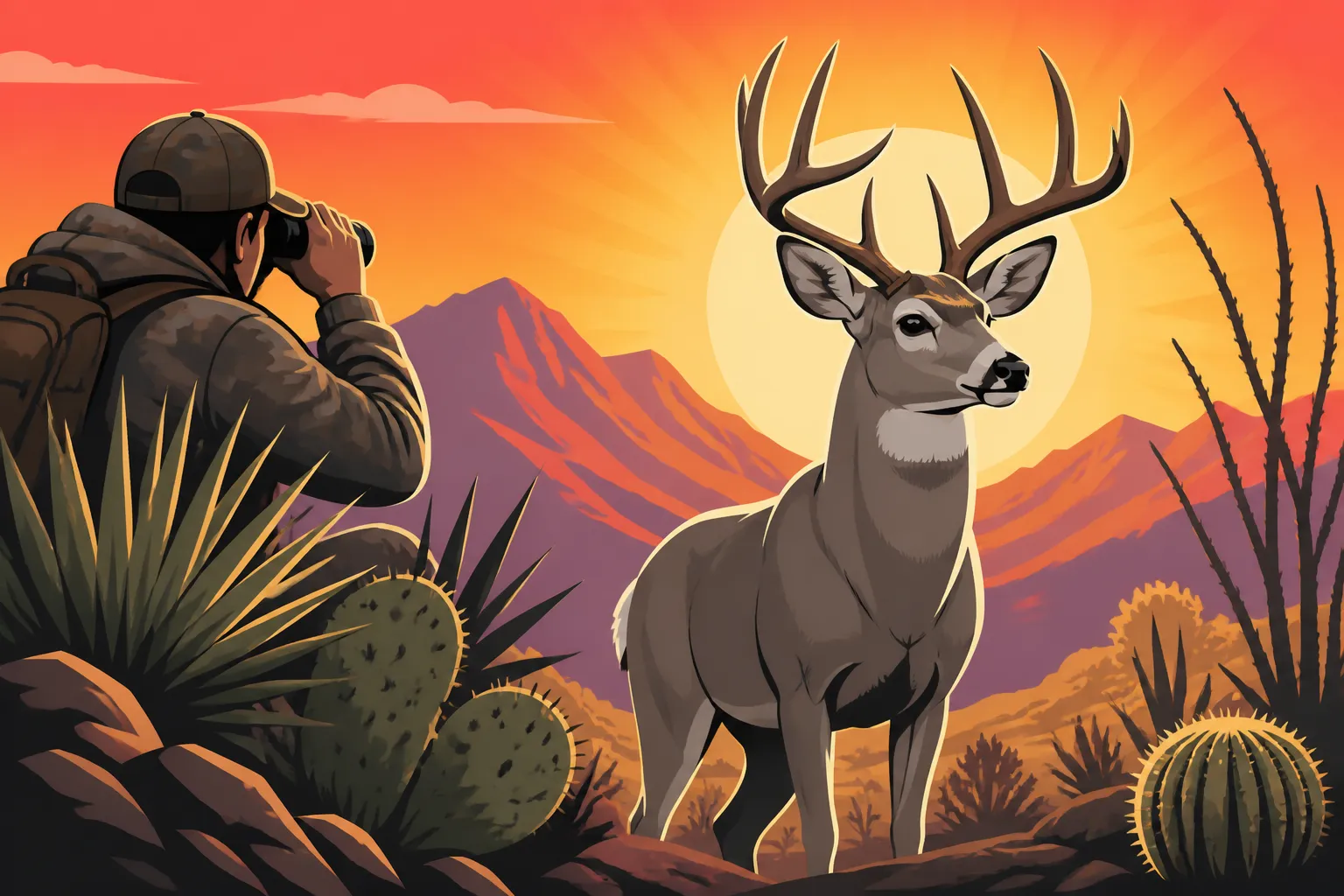
This is what every Coues hunter dreams of: late December through mid-January, when bucks are fully committed to breeding. During the peak rut, all bets are off when it comes to patterning. Bucks are less concerned with their usual routines and more focused on finding and tending does. They'll often be seen in the open, even during midday, chasing does or sparring with rival bucks. This is prime time for covering ground with your optics, employing the "glassing grids" method to systematically scan vast areas. Why Arizona Coues Hunting Is a Glassing Game becomes incredibly apparent during this time.
Calling can be incredibly effective during the peak rut. Aggressive grunts, estrus bleats, and even rattling can challenge a dominant buck or attract a curious satellite buck. Set up in areas with good visibility and be prepared for quick shots, as bucks can appear and disappear rapidly. Focus your efforts on known doe bedding and feeding areas, as bucks will inevitably be drawn to them. Think about those south-facing slopes getting early morning sun, or sheltered pockets that does prefer. This is when long hours behind the glass, patiently dissecting every shadow and movement, really pay off. Platforms like GoHunt can help you find historical data on buck harvest numbers in specific units during this prime window, giving you a statistical edge in unit selection.
| Rut Phase | General Timing | Buck Behavior | Recommended Tactics |
|---|---|---|---|
| Pre-Rut | Early to Mid-December | Increased rubbing/scraping, sparring, shadowing does | Long-range glassing, focusing on food/bedding, subtle calling, look for fresh sign. |
| Peak Rut | Late December to Mid-January | Active chasing, breeding, territorial fights, less cautious | Intensive glassing, aggressive calling (grunts, bleats, rattling), focus on doe groups. |
| Post-Rut | Late January into February | Exhausted, reclusive, focusing on recovery/feeding | Glassing remote bedding areas near food, extreme patience, adjust for wary, nocturnal deer. |
Adjusting for the Late Rut
Sometimes, whether due to a mild winter or local herd dynamics, the rut can stretch or even feel delayed, pushing significant activity into late January or early February. While not as intense as the absolute peak, these "late rut" opportunities can still be fantastic, especially if you're holding a tag for a general season that runs a bit longer. Bucks are still interested in any does that haven't been bred, and they might make one last push before truly focusing on recovery.
During this period, bucks are often very wary due to sustained hunting pressure. Your tactics should combine elements of peak rut calling with the stealth and patience required for post-rut hunting. Glassing becomes even more crucial, looking for those lone bucks making their rounds. Pay attention to south-facing slopes where does might be soaking up the last of the winter sun, or areas with persistent green browse. These bucks are tired, so they might not run far, but they'll be on high alert. This is where meticulous scouting, perhaps using e-scouting tools to identify potential hideaways and overlooked pockets, can give you an advantage.
Scouting and Preparation for the Rut
Success in hunting Coues deer during the rut isn't just about showing up when the deer are active; it's about the groundwork you put in long before your boots hit the dirt. Proper scouting and physical preparation can drastically increase your odds of success, transforming a hopeful hunt into a strategic pursuit.
E-Scouting for Rutting Bucks
In today's hunting world, e-scouting has become an indispensable tool, especially for species as elusive as Coues deer. Before you ever leave your house, you can spend hours poring over satellite imagery, topographical maps, and aerial photos. Look for key terrain features that scream "Coues deer country." This includes steep, brushy hillsides, saddles and ridges that connect different drainages, and areas with a mix of thick cover and open feeding grounds. Pay particular attention to areas with good water sources, which are always critical in the desert environment. Many hunters leverage platforms like GoHunt for their comprehensive mapping layers, which can show public/private land boundaries, historical burn areas, and even specific terrain features that might attract rutting bucks.
Identify potential glassing points that offer wide, unobstructed views of several drainages or slopes. Mark these on your maps. Look for natural funnels, pinch points, and transition zones where deer are likely to travel between bedding and feeding areas, especially when bucks are actively seeking does. During the rut, these travel corridors become highways for love-struck bucks. E-scouting can also help you identify areas of less pressure, perhaps remote pockets accessible only by a long hike, where older bucks might feel safer. Remember, Reading an Arizona Unit Boundary Before You Apply is key to staying legal and making the most of your pre-hunt research.
Physical Preparation for a January Hunt
Chasing Coues deer, especially during the rut, is physically demanding. These small deer live in rugged, often steep country, and a successful hunt will likely involve a lot of walking, climbing, and most importantly, hours and hours of glassing. Being in good physical condition is paramount. Start a consistent exercise routine months before your hunt. Focus on cardiovascular fitness, strength training (especially for your legs and core), and carrying weight. Practice hiking with your pack, boots, and optics to simulate real hunting conditions.
A January hunt in Arizona can bring a wide range of weather, from mild, sunny days to freezing temperatures with snow and wind. You need to be prepared for it all. Layering your clothing is crucial. Invest in quality optics—good binoculars, a spotting scope, and a sturdy tripod are non-negotiable for Coues hunting. You'll spend a significant portion of your day behind the glass, and quality gear will save your eyes and your sanity. Don't forget ample water, high-energy snacks, and emergency supplies. A Coues deer hunt during the rut is an incredible experience, but it's one that rewards the prepared and the persistent.
Disclaimer
This article is for general informational purposes only and does not constitute professional advice. Laws, prices and regulations vary by location and change over time. Consult a qualified professional for guidance on your specific situation.