Judging a Coues Buck in the Field
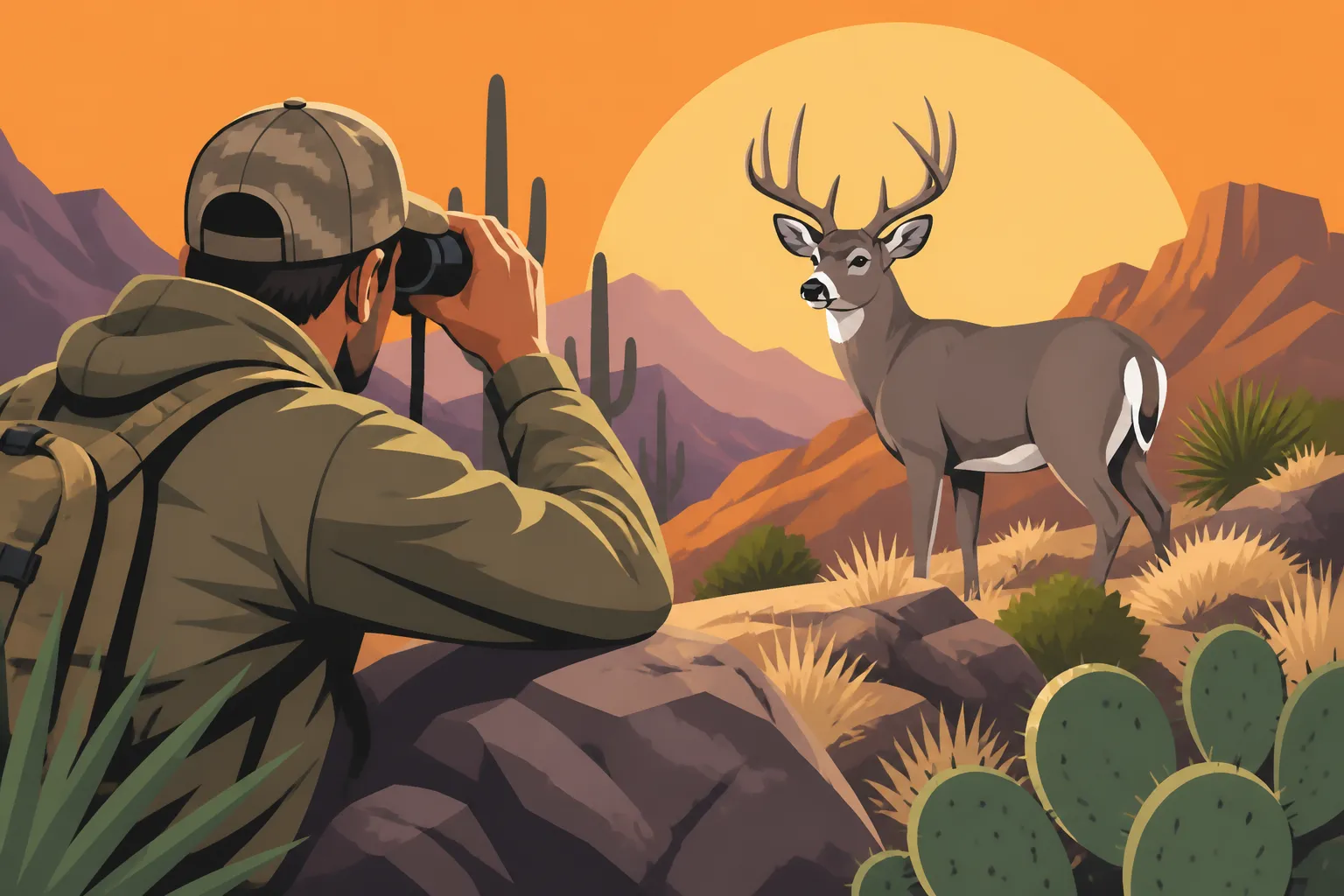
Hunting Coues deer in Arizona is often described as trying to find a needle in a haystack, and once you do, the real challenge begins: judging if that "gray ghost" is truly a buck worth pursuing. Their small stature and the vast, broken terrain of Arizona's sky islands make field judging an art form, causing countless hunters to question their decisions or worse, pass up a great deer or chase a small one. This comprehensive guide will walk you through the nuances of judging a Coues buck in the field, helping you make confident decisions when it matters most.
The "Gray Ghost" Challenge: Why Coues Deer Are So Tricky to Judge
It's a common lament among hunters who first encounter Coues deer: "They're so small!" And it's true. These diminutive whitetails, often no larger than a big dog, disappear into their rugged, brushy habitat with an almost supernatural ease. This inherent smallness, combined with the vast distances often involved in spotting them, creates a unique set of judging challenges. You're not just looking for a deer; you're looking for a trophy deer, and that often means scrutinizing antlers that would barely register on a larger whitetail.
Their Diminutive Size and Elusive Nature
Unlike their larger cousins, the Mule deer, or even Eastern whitetails, Coues deer are compact, with slender bodies and a light, agile build. This makes their antlers, even impressive ones, appear less massive than they might on a bigger animal. A 90-inch Coues buck is a phenomenal trophy, but that same antler size on a typical whitetail would be considered average at best. This size differential constantly plays tricks on your mind, especially if you're accustomed to judging larger game. The sheer distance at which they are often spotted—sometimes hundreds or even thousands of yards away—compounds the issue. A deer that looks decent through binoculars might shrink dramatically when you finally get a closer look. They're called Why Coues Deer Are Called Gray Ghosts for a reason, blending into the sparse desert and mountain landscape with incredible efficiency, making that initial spot a victory in itself, let alone the detailed judgment.
The Sky Island Habitat's Deception
Arizona's "sky island" mountain ranges, where Coues deer thrive, are a visual feast but a judging nightmare. Steep canyons, thick oak brush, scattered pines, and dramatic shadows conspire to make accurate assessment incredibly difficult. A buck standing in deep shadow can look significantly larger and darker-antlered than it truly is. Conversely, a buck backlit by the sun can appear washed out and smaller. The broken terrain constantly plays with your depth perception. What looks like a massive spread across a canyon might just be an optical illusion created by the distance and surrounding vegetation. The constantly shifting light throughout the day, especially during the crucial morning and evening hours when deer are most active, can dramatically alter how a buck's rack appears. You might think you're looking at a heavy main beam, only to realize the light angle was simply highlighting a certain curve. Hunters dedicated to the Coues often spend more time simply glassing, like when Glassing Arizona's Sky Islands for Coues Deer, than actually moving.
Decoding the Rack: Key Antler Characteristics to Look For
When you finally spot a buck that catches your eye, it’s time to slow down and systematically break down its antler characteristics. Don't let excitement cloud your judgment. Focus on specific features rather than a general "big" impression. What you're looking for isn't just bone, but the specific qualities that contribute to overall score and trophy status.
Mass, Tine Length, and G2s
Mass is often the first thing hunters notice, but with Coues deer, it can be deceiving. A buck might have decent mass near the bases, but if it quickly tapers, the overall impression of heft is lost. Look for mass that carries out along the main beams. Imagine if the main beam retains its thickness all the way to the end, rather than becoming spindly. Tine length is a much more reliable indicator of a trophy Coues. The G2s, in particular, are the second tines up from the base (the first being the brow tines or G1s). Long, well-defined G2s can add significant inches to a score. A Coues buck with G2s that exceed 6 or 7 inches is often a great deer. Pay close attention to the length of all the tines; short, stubby tines, even on a buck with decent mass, will limit its potential. When you're trying to figure out How Big a Trophy Coues Buck Scores, it's those long tines that really make a difference.
Spread and Eyeguards
The width of a buck's antlers, or its spread, is another key component. A good rule of thumb for Coues deer is to use their ears as a reference point. A mature Coues buck's ears are typically about 14-15 inches wide from tip to tip when alert. A buck whose main beams extend significantly outside its ear tips will have a respectable spread. If the spread is inside the ears, it's likely a younger or less mature buck. However, be cautious: a wide spread without good tine length or mass won't necessarily make a high-scoring deer. It just means it's wide. Eyeguards, or G1s, are the small tines originating near the base of the antlers. While often smaller and sometimes even absent on Coues deer, well-developed G1s can add valuable inches. Don't expect them to be long; even 2-3 inch G1s are a bonus on a Coues. It's about having them and them adding to the symmetry and overall impression of a mature animal.
Here’s a quick reference for typical Coues buck antler characteristics:
| Antler Characteristic | Average Mature Buck (3.5+ years) | Trophy Class Buck (4.5+ years) |
|---|---|---|
| Main Beam Length | 15-18 inches | 18-22+ inches |
| G2 Length | 4-6 inches | 6-8+ inches |
| Inside Spread | 12-16 inches | 16-20+ inches |
| Mass | Moderate, tapers quickly | Carries well to tips |
| Brow Tines (G1s) | Often short or absent | Present, 2-4 inches |
| Tine Count | 3×3 or 4×4 typical | Strong 4×4 or larger |
Remember, these are general guidelines. Every buck is unique, and sometimes a non-typical point or unique character can make a deer a trophy in its own right, regardless of score.
Your Optics Are Your Best Friend: Maximizing Field Judging Tools
In Coues country, your optics are arguably more important than your rifle or bow. Without quality glass and the knowledge of how to use it effectively, you simply won't find, let alone judge, these elusive deer. This isn't just about seeing something; it's about seeing detail at extreme distances.
Binoculars vs. Spotting Scopes
Your primary tool for initial spotting will be a good pair of 10x or 12x binoculars. They offer a wider field of view and are easier to freehand, making them ideal for quickly scanning vast landscapes. However, for detailed judging, a spotting scope is non-negotiable. A 60-80mm spotting scope, ideally with a variable power from 20x up to 60x or even higher, will allow you to pick apart antler details that are invisible with binoculars. This is where you can truly assess mass, tine length, and antler texture. Many experienced Coues hunters, like those contributing to resources on platforms like GoHunt, swear by the power and clarity of premium spotting scopes. They understand that to truly discern the subtle differences that make a trophy Coues, you need to be able to resolve individual points and even the texture of the bone. For more on this, check out Optics Power for Arizona's Long Desert Sightlines.
Tripods and Steady Views
No matter how good your glass is, it's useless if you can't hold it steady. A solid, lightweight tripod is an absolute necessity for Coues hunting. Trying to hold binoculars steady at 12x magnification for extended periods, let alone a spotting scope at 40x or 60x, is a recipe for eye strain and missed details. A tripod allows you to lock in on a distant hillside, methodically pick it apart, and then precisely center your scope on a deer for careful judging. When choosing a tripod, consider one that is tall enough for comfortable standing and sitting glassing positions, yet compact enough to pack easily. Carbon fiber models are often preferred for their weight savings. Learning a proper Tripod Setup for Glassing From a Ridge can make all the difference in reducing fatigue and improving your ability to spot and judge game.
Glassing Grids and Patience
Coues deer hunting is a patience game. You don't just walk and expect to jump deer. You pick a vantage point, set up your optics, and you glass. This involves systematically breaking down the landscape into small, manageable sections, often using a grid pattern, moving your optics slowly from one side to the other, then dropping down and repeating. Don't rush. Spend 15-20 minutes or more on a single grid, even if it looks barren. It's amazing what materializes out of the brush when you give your eyes time to adjust and pick out anomalies. This methodical approach, often referred to as The Grid Glassing Method, Step by Step, is key to finding deer. Furthermore, once you find a deer, don't immediately judge it and move on. Observe it for a while. Let it move, stand up, turn its head. Different angles will reveal different aspects of its rack. This patience is exactly Why Coues Deer Reward Patience Over Movement in this rugged terrain.
Real-Time Decisions: Estimating Distance and Making the Call
Even with the best optics and a systematic approach, the moment of truth often comes down to a quick, decisive call in the field. You've spotted a buck, you've assessed its antlers, now you need to estimate the distance and decide if it's the one.
Rangefinders and Terrain
A high-quality rangefinder is another critical piece of equipment. Visually estimating distance in Coues country is notoriously difficult due to the vast expanses and lack of familiar reference points. A deer that looks like it's 300 yards away could easily be 500, or even 700 yards. Always range known objects around your glassing position – a prominent rock, a lone tree, a distant ridge line – so you have mental benchmarks. When you spot a deer, range it multiple times if possible, especially if the terrain is broken. Be aware that dense brush or even mirage can sometimes interfere with accurate rangefinder readings. For a bowhunter, understanding How Close a Bowhunter Needs to Get on Coues makes the rangefinder absolutely essential for that ethical shot.
Practice Makes Perfect
The ability to quickly and accurately judge a Coues buck is a skill that improves with practice. The best way to practice isn't just on your hunting trip. Spend time in the off-season, or even on hunting trips where you don't have a tag, simply finding and judging deer. Bring your binoculars and spotting scope, set up on a good vantage point, and try to score every buck you see. Compare your estimates with others in your hunting party or with photos if possible. The more you train your eye to pick out mass, length, and spread on these smaller animals, the more confident you'll be when a tag is on the line. It's about developing an internal database of what a 90-inch or 100-inch Coues actually looks like at varying distances and light conditions. This preparation will hone your ability to Judging an Arizona Coues Buck at Distance.
The "Go-No Go" Moment
After all the glassing, ranging, and deliberation, there comes a point where you have to make a decision. Is this the buck you want to put your tag on? Sometimes, a buck will leave no doubt, presenting an obvious trophy. More often, it's a borderline call, and you'll have to weigh the odds. Trust your gut, but also trust the systematic process you've employed. If you've methodically checked mass, tine length, spread, and you're within your effective shooting range, then make the call. Don't second-guess yourself too much in the moment of truth. If you're confident in your judgment, take the shot. If there's persistent doubt, it's often better to pass and keep looking. The beauty of Arizona hunting is that opportunities can often surprise you, even after you've been working hard. Knowing when The Crossbow Draw Weight Floor in Arizona or The Minimum Bow Draw Weight Arizona Requires is just one part of the preparation; knowing your target is the other.
Disclaimer
This article is for general informational purposes only and does not constitute professional advice. Laws, prices and regulations vary by location and change over time. Consult a qualified professional for guidance on your specific situation.