Hunting Bison on House Rock Wildlife Area
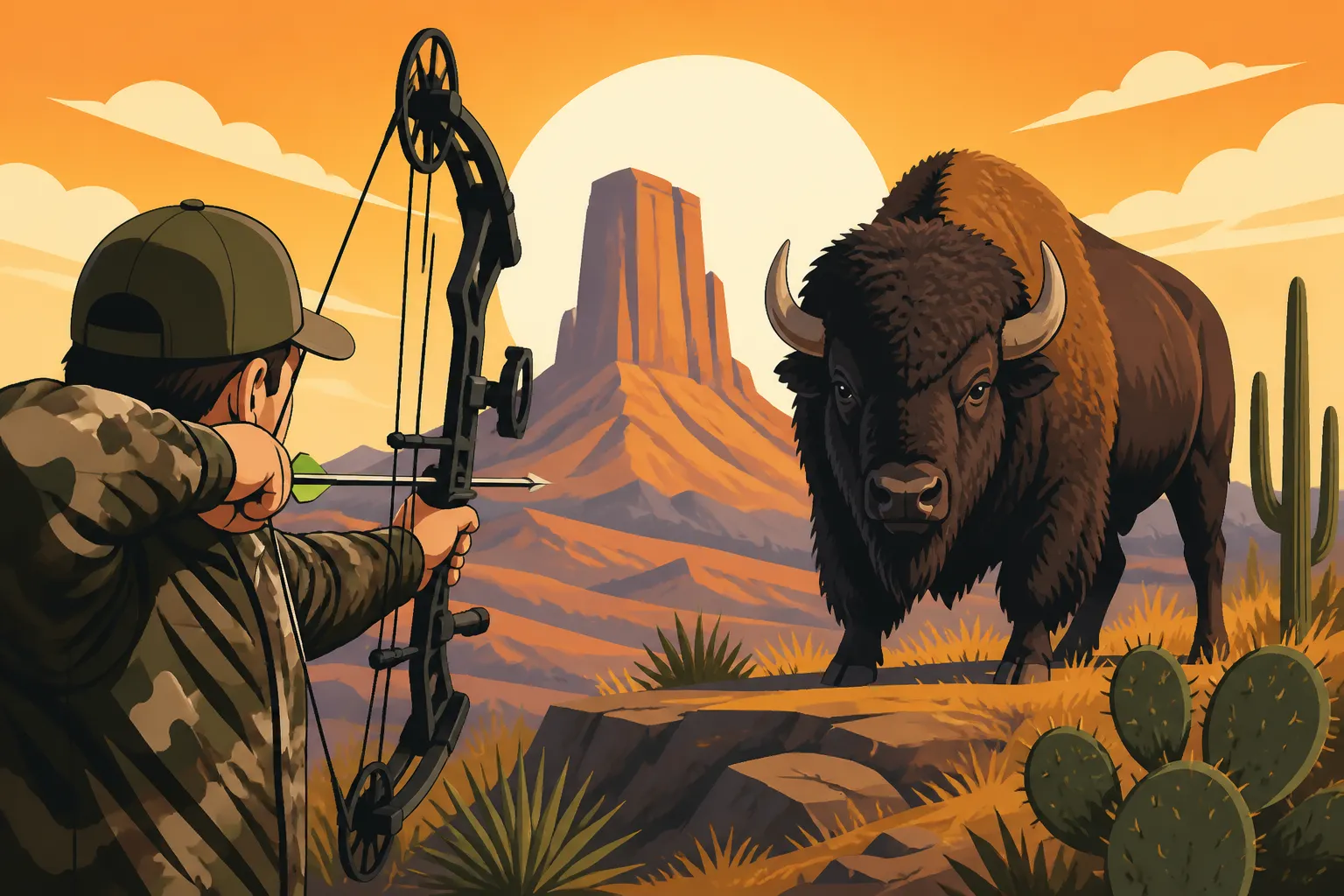
Hunting bison in Arizona isn't just a hunt; it's an adventure into the past, a true test of grit and planning that many hunters dream of but few ever experience. For most, the thought immediately conjures images of the legendary House Rock Wildlife Area, a place where these magnificent animals roam free, much like they once did across the vast plains. However, securing one of these incredibly coveted tags, let alone successfully filling it, feels like a monumental challenge. This guide aims to demystify what makes a House Rock bison hunt such a singular experience, how to navigate the complex application process, and what you can truly expect when you're finally holding that once-in-a-lifetime tag.
The Unmatched Allure of Arizona Bison Hunting
There's something profoundly primal about hunting bison. Unlike deer or elk, which are generally more wary and elusive, bison possess a raw power and herd dynamic that demands respect and a different approach. In Arizona, specifically, the free-ranging herds offer a hunting experience that is deeply rooted in wilderness, far from the fenced preserves some might associate with bison. This isn't just about harvesting an animal; it's about connecting with a piece of American history and a truly wild landscape.
A Legacy Roaming Free
The bison herd that calls the House Rock Wildlife Area home is a testament to conservation and a glimpse into a bygone era. These aren't domesticated cattle; they're descendants of a herd established over a century ago, thriving in a harsh, beautiful environment. Their existence in northern Arizona, particularly near the Grand Canyon's North Rim, is unique. They forage on vast expanses of grasslands, junipers, and scattered ponderosa pines, moving with the seasons and the availability of water.
This historical presence means that when you're hunting at House Rock, you're stepping into a tradition. The sheer scale of the animals themselves is intimidating. A mature bull can stand over six feet tall at the shoulder and weigh well over a ton. Their dense bone structure and thick hides make them incredibly robust animals, requiring precise shot placement and powerful calibers. It's not just about their size; it's their demeanor. They can appear docile one moment and then, with surprising speed, cover ground or turn on a dime if they feel threatened. Understanding this combination of size, strength, and wild instinct is paramount to a successful and ethical hunt.
The Challenge of a Lifetime Tag
For many hunters, drawing an Arizona bison tag is the pinnacle of their hunting career. It's often referred to as a "once-in-a-lifetime" opportunity, not just because of its rarity, but because of the physical and mental demands it places on the hunter. The tags are so incredibly scarce that most hunters spend decades accumulating bonus points, applying year after year, just for a slim chance. Arizona Bison Draw Odds are notoriously low, making success in the draw feel like winning the lottery.
When you finally get that notification that you've drawn, the real work begins. This isn't a walk-in-the-park hunt. The terrain can be rugged, the weather unpredictable, and the animals can be scattered across huge tracts of land. It requires meticulous planning, intense physical conditioning, and a deep understanding of bison behavior and the specific unit. This level of dedication is why those who succeed often speak of it as their most memorable hunting experience, a true wilderness immersion that pushes the limits of their skill and endurance.
House Rock Wildlife Area: Bison Country Unveiled
The House Rock Wildlife Area itself is a spectacular and diverse landscape, forming a crucial part of the Kaibab Plateau ecosystem. It's a vast expanse of public land, primarily managed by the Arizona Game and Fish Department, dedicated to sustaining this incredible bison herd and providing unique hunting opportunities. Understanding the terrain, access, and how bison utilize the area is key to any aspiring House Rock hunter.
Geography and Terrain Challenges
Located in northern Arizona, often associated with Game Management Unit 12B, the House Rock Wildlife Area is nestled between the Vermilion Cliffs to the north and the Grand Canyon to the south. It's a high-desert environment, characterized by expansive grasslands interspersed with pinyon-juniper woodlands, ponderosa pine pockets at higher elevations, and dramatic rimrock canyons that carve through the landscape. The elevation varies significantly, contributing to diverse vegetation and habitat preferences for the bison throughout the year.
The sheer scale of the area means that physically covering ground can be incredibly demanding. Expect long hikes, often over uneven and rocky terrain. The open grasslands can make stalks challenging, requiring hunters to utilize every fold in the ground, every juniper bush, for cover. Navigation can also be tricky; while there are established roads, many are unimproved dirt tracks that can become impassable with rain or snow. Reading an Arizona Unit Boundary Before You Apply and carrying reliable navigation tools like a GPS or a detailed mapping app are not just recommendations; they are necessities. Knowing where you are in relation to boundaries, potential escape routes for bison, and crucial water sources is paramount.
Bison Movement and Hotspots
Bison are grazers, and their movements are largely dictated by forage availability and water. During periods of abundant green-up, they might be more widely dispersed across the grasslands. However, as conditions dry out, they'll often concentrate around reliable water sources – stock tanks, natural seeps, or guzzlers developed for wildlife. These water points become critical during the hotter, drier parts of the year and during the late fall/early winter hunts when standing water can become scarce.
They also show preferences for certain types of cover. While they spend a lot of time in the open, they'll use the pinyon-juniper thickets for bedding down, especially during midday or in adverse weather. The rimrock formations and broken country can also offer refuge, making it tougher to spot and approach them. Scouting, both pre-season and during the hunt, is vital. Tools like GoHunt can provide satellite imagery and historical data, helping you identify potential travel corridors, bedding areas, and water features even before you set foot on the ground. Where the Free-Ranging Bison Herds Live within this area can fluctuate, so current information and diligent scouting are paramount.
Accessing the Remote Wilderness
Reaching the House Rock Wildlife Area typically involves traveling north from Flagstaff or east from Kanab, Utah. The main access points are often via well-maintained highways, but once you turn onto the Bureau of Land Management (BLM) and Forest Service roads, conditions can quickly deteriorate. It's not uncommon to encounter washboard roads, deep sand, or mud depending on recent weather. A high-clearance, four-wheel-drive vehicle is highly recommended, if not essential, especially if you plan to venture off the main arteries.
Remember that while much of House Rock is public land, it's always critical to respect boundaries and private property. Always verify land ownership using reliable maps before venturing into an area. Cell service is notoriously spotty or nonexistent in much of this remote country, so don't rely on your phone for navigation or emergencies. A satellite communication device is a smart investment for safety. Proper preparation for a remote hunt, including carrying extra water, fuel, and emergency supplies, is non-negotiable here.
The Application Process: Earning a House Rock Tag
Drawing a House Rock bison tag is a dream for many, but it's a dream that requires persistence, strategic planning, and a deep understanding of Arizona's draw system. These tags are among the most difficult to acquire in the entire state, making the application process itself a journey of hope and patience.
Understanding the Arizona Draw for Bison
Arizona manages its big game tags, including bison, through a lottery draw system. For species like bison, which are considered "once-in-a-lifetime," the competition is incredibly fierce. Unlike species where you might draw a tag every few years, a bison tag is designed to be a unique experience. This means that if you are fortunate enough to draw, you generally won't be eligible to draw another bison tag in Arizona.
The draw system heavily favors applicants with accumulated bonus points. You earn a bonus point by applying for a species and not drawing a tag. Each point increases your odds in subsequent draws, but for a hunt as rare as House Rock bison, it can take many years – often a decade or more – to accumulate enough points to have a statistically significant chance. How Arizona's Bonus Point Pass Awards the First Twenty Percent is a key component, where a percentage of tags are allocated based on points, before moving to a random draw. Even with maximum points, drawing a House Rock bison tag is never a guarantee, highlighting the incredible demand for this hunt.
Strategic Application and Research
Given the extreme rarity, a strategic approach to your application is crucial. This means doing your homework long before the application period opens. You'll want to review past draw statistics, which show the minimum and maximum points required to draw tags in previous years. While these numbers are historical and don't guarantee future results, they provide the best indication of what it takes. Resources like GoHunt are invaluable for accessing this kind of data, allowing you to analyze draw trends and assess your realistic odds based on your accumulated points.
Consider the different types of bison tags available. While the House Rock area is famous, Arizona also offers bison tags for areas around the Grand Canyon National Park (often managed under separate agreements with the National Park Service), and sometimes through special auction or conservation tags. While these also have their own application processes and levels of rarity, it's worth understanding all available options. Arizona Fall Bison Against Spring Bison Hunts might also offer slightly different draw odds depending on the season, so researching these nuances is important. Always double-check the Arizona Game and Fish Department's current regulations booklet for exact application dates, fees, and unit-specific information.
The Waiting Game and Beyond
Once you've submitted your application, the waiting game begins. This can be one of the most agonizing parts for any hunter, but especially so for a hunt of this magnitude. If you are one of the incredibly fortunate few to draw a House Rock bison tag, the next phase is intensive preparation. This isn't a hunt you can wing. It demands physical conditioning, a thorough understanding of the unit, and preparation for everything from extreme weather to specialized gear.
| Aspect | Description | Key Considerations |
|---|---|---|
| Location | House Rock Wildlife Area, Northern Arizona, Unit 12B | Remote, high-desert, near Grand Canyon's North Rim. |
| Species | American Bison (North Kaibab Herd) | Large, powerful, herd animals. |
| Tag Allocation | Lottery Draw (Once-in-a-Lifetime) | Extremely low odds, bonus points are crucial. |
| Typical Season | Primarily late fall/early winter (check regulations yearly) | Expect variable weather, potentially snow and extreme cold. |
| Terrain | Grasslands, juniper/pinyon woodlands, ponderosa, rimrock, canyons | Requires excellent physical fitness, navigation skills. |
| Weapon | Rifle (heavy caliber recommended); sometimes archery tags available | .30 cal minimum, .338 Win Mag, .375 H&H, or larger preferred. |
| Physical Demands | Very High: long hikes, challenging stalks, heavy meat packing. | Train vigorously, be prepared for self-extraction. |
| Access | High-clearance 4WD vehicle essential on unimproved dirt roads. | Carry extra fuel, water, emergency supplies; no cell service. |
| Scouting | Crucial: pre-season e-scouting (e.g., GoHunt) and in-person scouting. | Focus on water sources, bedding areas, travel corridors. |
| Meat Care | Immediate and efficient field dressing; rapid cooling is vital. | Bring large game bags, knowledge of caping/quartering. |
If you don't draw, it's simply another year to accumulate a point and refine your strategy. Many use the off-season to learn more about the units, e-scout extensively, and stay physically fit, knowing that "the call" could come any year. E-Scouting an Arizona Unit Before the Season can be done from anywhere, keeping the dream alive.
On the Ground: Hunting House Rock Bison
Once you've drawn that coveted tag, the true adventure begins. Hunting bison at House Rock is a physically and mentally demanding experience that requires thorough preparation, smart tactics, and an unwavering commitment to ethical hunting. This is where all those years of anticipation and all that planning coalesce into action.
Pre-Hunt Preparation and Scouting
Your preparation for a House Rock bison hunt should be comprehensive, starting months in advance. Physical conditioning is paramount; you'll be covering significant distances on foot, often at elevation and in potentially challenging weather. Focus on exercises that build endurance, leg strength, and core stability. Remember, you won't just be walking in, you'll be walking out with hundreds of pounds of meat and hide.
Scouting the unit, if at all possible, is highly recommended. Visiting the area during the off-season allows you to familiarize yourself with the terrain, locate water sources, identify potential bedding areas, and understand bison movement patterns. If an in-person scout isn't feasible, leverage mapping tools and satellite imagery extensively. GoHunt, for example, allows you to digitally explore the unit, mark waypoints for water, cover, and potential access routes. Look for open country where bison might graze and thicker cover where they might bed. Remember that bison are large animals, but they can be surprisingly elusive in broken terrain.
The Hunt: Strategy and Approach
When the season finally opens, your strategy will likely involve a combination of glassing and still-hunting. Bison often graze in herds, making them visible from a distance. High-quality optics are essential. Start by glassing expansive areas from high vantage points, systematically scanning for dark shapes against the lighter landscape. Pay close attention to areas around water sources or where different habitat types converge.
Once you spot a herd or an individual animal, the real work of the stalk begins. Bison have excellent senses, especially smell, so playing the wind is critical. Their hearing is also good, so move slowly and deliberately, minimizing noise. Unlike deer, bison aren't necessarily looking for movement in the same way, but they are incredibly tuned into their environment. Because of their size, approaching within a few hundred yards can still feel like a long shot. Utilize terrain features—washes, draws, juniper thickets, rimrock—to conceal your approach. Be prepared for a long stalk that might take hours or even a full day.
Shot Placement and Post-Harvest Logistics
When you finally get into position, shot placement is absolutely critical. Bison are incredibly tough animals, and a poorly placed shot can lead to a long, difficult, and potentially dangerous tracking job. Their vitals are lower and further forward than an elk or deer, protected by a massive shoulder and hump. Aim for the crease behind the shoulder, slightly lower than you might aim on an elk, to hit the lungs and heart. A heavy, well-constructed bullet from a powerful caliber (.300 magnum minimum, with .338, .375, or even larger being common recommendations) is highly advised. Always wait for a broadside or slightly quartering-away shot, and be prepared to put follow-up shots into the animal if necessary.
Once the bison is down, the work is far from over. This is where the physical conditioning truly pays off. You'll need to field dress the animal immediately to begin cooling the meat, which can be challenging given the sheer volume and weight. Field Dressing in Desert Heat requires efficiency and a plan. Bring plenty of large game bags to protect the meat from dirt, flies, and debris. Unless you have a specific plan for vehicle access directly to the carcass, you will likely be quartering the animal and packing it out. This will be an incredibly heavy load, often requiring multiple trips or a team of strong helpers. Getting Meat Cooled on an Early Season Hunt is crucial, and having large coolers, ice, and a nearby processing facility lined up ahead of time is vital for preserving this valuable meat. Remember that Mandatory Reporting After an Arizona Harvest is required for big game, so understand the process for your bison tag.
Hunting bison on House Rock is a monumental undertaking, but for those who commit to the challenge, it offers an unparalleled connection to the wild heart of Arizona.
Disclaimer
This article is for general informational purposes only and does not constitute professional advice. Laws, prices and regulations vary by location and change over time. Consult a qualified professional for guidance on your specific situation.