Mourning Against White-Winged Dove
It's early morning, the desert air is still cool, and the first doves are starting to zip past. You raise your shotgun, but then hesitate. Was that a Mourning Dove or a White-winged Dove? For many Arizona hunters, distinguishing between these two popular game birds on the fly can be a real challenge. Understanding their unique characteristics, habitats, and behaviors isn't just academic; it's essential for a successful, enjoyable, and legal hunt. This guide will help you confidently tell them apart and use that knowledge to your advantage in the field.
Identifying the Key Differences Between Mourning and White-Winged Doves
Often, hunters rely on a quick flash of white or a general size impression, but that's not always enough, especially with birds moving at high speed. Really understanding the distinct features of each species makes all the difference. You'll become a more skilled observer, and ultimately, a more effective hunter.
Plumage and Markings: Beyond the Wing
When you're trying to identify doves, it's easy to focus solely on the wings, but both species have tell-tale markings across their bodies that can help you differentiate them. The Mourning Dove is characterized by its slender body, small head, and long, pointed tail. Its overall plumage is a soft, muted grayish-tan to olive-brown. Look for small, distinct black spots on the wing coverts, which are more pronounced when the bird is at rest. Perhaps the most characteristic marking is a small, black spot just below and behind the eye. This subtle yet consistent feature is often overlooked but can be a definitive identifier once you train your eye to spot it. Their tail feathers, particularly the outer ones, have a white tip that is very noticeable in flight, especially when they flare their tail to land.
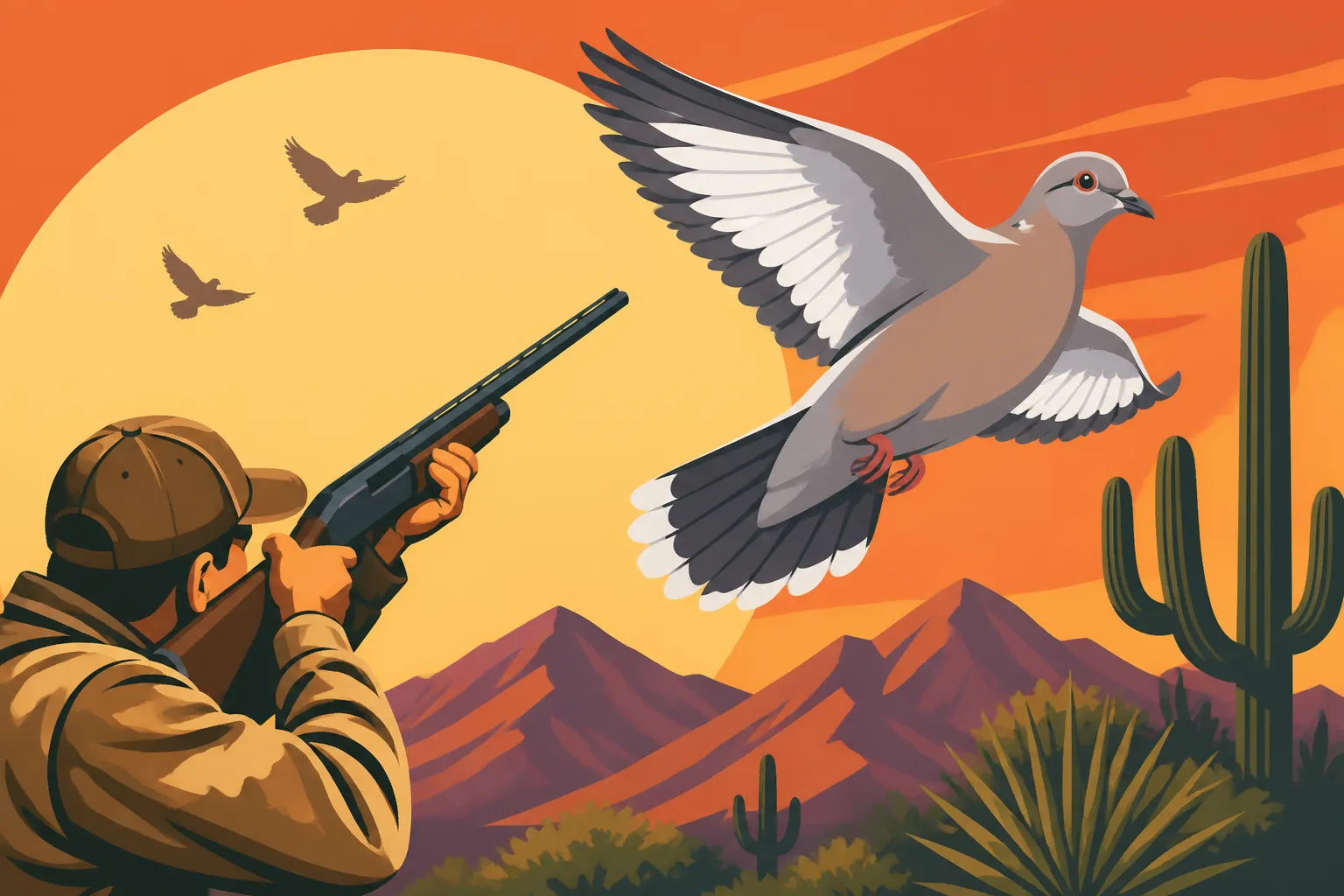
The White-winged Dove, on the other hand, presents a more robust appearance. It's generally a bit larger and plumper than the Mourning Dove, with a shorter, more rounded tail. The defining feature, as its name suggests, is a broad, crescent-shaped white patch on the leading edge of its wing. This white band is incredibly prominent, especially in flight, and is often what hunters first notice. Beyond the wing, White-winged Doves have a slightly richer, browner overall body color, and often display a distinct iridescent blue patch on their neck. Another key, though often harder to see at a distance, is a thin, bright blue ring of bare skin around their eyes, which the Mourning Dove lacks. When perched, their tail is usually square or slightly rounded, without the pronounced white tips of the Mourning Dove.
Size, Shape, and Flight Pattern
While their markings are important, how these birds carry themselves and move through the air offers crucial clues. The Mourning Dove is the epitome of grace in flight. Their flight path is generally fast, direct, and often described as "darting" or "weaving." They have a habit of flying erratically, especially when startled, making them a challenging target. Their pointed tail is highly visible as they bank and turn, acting like a rudder. When they take off, you'll often hear a distinctive whistling sound from their wings, a sound that has become synonymous with dove hunting in many areas. Their slender body and streamlined shape contribute to this agile flight.
The White-winged Dove tends to have a slightly heavier, less erratic flight. While still fast, their wingbeats might appear a bit slower and more deliberate than a Mourning Dove's. Their broader wings and slightly stockier build give them a more powerful, almost "pigeon-like" flight profile. The broad white wing patch is, of course, their most obvious flight identifier. You won't typically hear the same whistling wing noise on takeoff that you get from a Mourning Dove. They often fly in straighter lines, especially when traveling between feeding areas and water, or to their evening roosts. This can make them seem a bit more predictable, though certainly no less challenging to hit when they're really moving.
Distinctive Calls and Sounds
The sounds of the desert are rich with the calls of doves, and learning to distinguish them can not only enhance your enjoyment of being afield but also aid in identifying birds you might not be able to see clearly. The Mourning Dove is famous for its mournful, cooing call, which is where it gets its name. It's a soft, drawn-out "coo-OO-woo-woo-woo," often heard from a high perch or during quiet moments in the field. This gentle sound is instantly recognizable and is a comforting part of the early morning and late evening soundscape across Arizona. They also make a sharper, more urgent "coo-OH!" when startled or agitated. Beyond their vocalizations, remember that distinctive whistling sound their wings make upon takeoff. It's a unique auditory cue that, once you learn it, can often alert you to a Mourning Dove before you even see it.
The White-winged Dove has a different vocal repertoire. While still a cooing sound, it's often described as a more robust, "hoot-coo-coo-coo" or "who cooks for you?" sound. It's generally louder and has a more rhythmic, almost guttural quality compared to the soft lament of the Mourning Dove. During the early morning and late evening, especially around their roosting and feeding areas, White-wings can be quite vocal, with many birds calling simultaneously, creating a bustling chorus. They don't produce the same whistling wing sound as Mourning Doves. Being able to differentiate these calls can sometimes give you a heads-up on which species is moving through a particular area, allowing you to anticipate shots more effectively.
Habitat and Behavior: Where You'll Find Each Species
Understanding where each dove prefers to live, feed, and roost is perhaps the most crucial element in patterning them for a successful hunt. While there's overlap, each species has its preferred niches.
Mourning Dove Adaptability Across Arizona
Mourning Doves are incredibly adaptable birds, which is why you can find them in virtually every corner of Arizona, from urban parks to vast, arid deserts. They thrive in a wide variety of habitats, including agricultural fields, open grasslands, desert scrub, riparian corridors, and even suburban environments. This adaptability means that wherever you choose to hunt in Arizona, you're likely to encounter Mourning Doves.
They are less dependent on specific agricultural crops than White-winged Doves, feeding on a diverse diet of seeds from native grasses, weeds, and cultivated plants. You'll often find them foraging in freshly cut grain fields, along dirt roads, or simply picking seeds off the ground in open areas. Their ability to survive on a broader range of seed sources contributes to their widespread distribution. When scouting for Mourning Doves, look for areas with sparse cover near open fields, especially those with plenty of native seed-producing plants. They're excellent at blending into their surroundings, so quiet observation, perhaps with the aid of a good pair of binoculars, is key. Keep an eye out for their distinctive flight patterns as they travel to and from water sources. Water Sources and Ethics in Arizona Desert Hunting is a great resource for understanding how these critical spots factor into their daily routines.
White-Winged Doves: The Desert's Agricultural Specialist
White-winged Doves, while also found across much of Arizona, exhibit a stronger preference for specific habitats, particularly those associated with agriculture and the Sonoran Desert. They are very much "birds of the desert," often found in mesquite bosques, riparian areas with larger trees, and crucially, near cultivated fields. They have a particular fondness for grains like wheat, milo, and sunflower, and will congregate in huge numbers in agricultural areas once crops mature and are harvested. Their reliance on these predictable food sources makes them somewhat easier to pattern if you have access to such areas.
In the more natural desert, they utilize saguaro cactus forests, especially when saguaro fruits are ripe, as well as palo verde and mesquite trees for food and roosting. These trees provide not only food but also dense cover from predators and the intense Arizona sun. During the season, you'll often find immense concentrations of White-wings flying between these specific feeding grounds and their communal roosts. This behavior leads to some truly epic flights along established travel corridors. If you're hunting early in the season, particularly when the temperatures are still soaring, understanding their need for water and shade will be crucial. Remember, Heat Management on an Arizona Early Season Hunt is vital for hunter safety and success.
Feeding and Roosting Habits
Both species are primarily ground feeders, though White-winged Doves are also adept at plucking seeds and fruits directly from plants, especially saguaro and mesquite. They swallow seeds whole, which are then ground up in their gizzard. Water is a critical daily requirement for both, especially in the arid Arizona environment. They will make daily flights to water sources, often in large groups, usually in the early morning after feeding and again in the late afternoon before roosting for the night. Identifying these water points, whether they are stock tanks, agricultural irrigation ponds, or natural springs, can be a major factor in locating birds. Hunting a Stock Tank During Early Archery offers more insights into hunting around these vital water sources.
Roosting habits also differ slightly. Mourning Doves tend to roost more individually or in smaller groups in scattered trees, shrubs, or even on power lines. They are not as prone to the massive communal roosts seen with White-wings. White-winged Doves, especially during migration and prior to the season's start, are known to form immense communal roosts, sometimes numbering thousands of birds, in dense groves of trees or even in urban areas. These roosts can be incredible to witness and often serve as starting points for their morning flights to feeding grounds. Understanding these patterns is fundamental; you won't be setting up your spread in the middle of a dense mesquite thicket for Mourning Doves, but it might be exactly where White-wings are streaming out from.
Hunting Strategies and Regulations: Tailoring Your Approach
Knowing the differences between Mourning and White-winged Doves isn't just for ornithologists; it's a critical piece of information for ethical, legal, and successful dove hunting. The way you approach a hunt, the locations you choose, and even your setup will be influenced by which species you primarily target.
Targeting Mourning Doves in Open Country
Because of their widespread distribution and preference for open areas with native seeds, hunting Mourning Doves often involves covering more ground or setting up in diverse environments. You might find success walking washes and field edges, looking for birds flushing from cover, or setting up ambush points near smaller water sources or isolated feeding areas. Decoys, especially spinning-wing varieties, can be highly effective in drawing their attention in open fields. Many hunters will set up along flight paths that connect feeding areas to water, or near patches of native weeds and grasses where they know birds are foraging.
Mourning Doves can be quite wary, so good camouflage and minimal movement are important. Their erratic flight makes for challenging shooting, so focus on smooth swings and leading the bird appropriately. Consider using shotshells with a bit more spread to account for their agility. When setting up, think about where they might be coming from and where they want to go. A slight rise, a tree line, or a fenceline can serve as a natural funnel. E-scouting tools, such as those offered by GoHunt, can be invaluable for identifying potential flight paths, water sources, and open feeding grounds before you ever step foot in the field. This preparation is key to positioning yourself for success.
Hunting White-Winged Doves Near Farmlands
Hunting White-winged Doves often revolves around agricultural lands. If you can gain access to fields of harvested grains like wheat, milo, or sunflowers, you're in prime White-wing territory. These birds will fly long distances to reach these abundant food sources, often in large, consistent flights. Setting up on the edges of these fields, particularly near prominent landmarks like lone trees, power lines, or fencelines where birds might pause before committing to a field, can be very productive. They often use the same flight corridors day after day, making them somewhat more predictable than Mourning Doves.
Decoys are also effective for White-wings, but consider placing them strategically to simulate a feeding flock rather than just random birds. Think about "pass shooting" along these established flight paths. This can mean positioning yourself between a major roost and a feeding field, or between a field and a major water source. White-wings tend to fly a bit higher and more steadily than Mourning Doves, which can make for some fantastic long-range shots. However, their numbers can be overwhelming, and it's easy to get target fixation. Remember to pick individual birds, follow through, and maintain good shooting form. Always be mindful of property boundaries; Retrieving Game From Private Land in Arizona is an important read to ensure you respect private property rights.
Bag Limits and Species-Specific Rules
This is where the rubber meets the road, and why accurate identification is paramount. Arizona has specific bag limits for doves, and sometimes those limits can differentiate between Mourning Doves and White-winged Doves, especially during certain seasons or in particular areas. While combined limits are common, specific rules can apply, so it's absolutely crucial to consult the most current Arizona Game and Fish Department regulations before heading afield. A common scenario might be a combined daily bag limit, but with a sub-limit on White-winged Doves during a portion of the season.
The season dates themselves are also critical. While there's a general dove season opener, often in early September, the specific dates and durations can vary slightly year to year. Make sure you know When the Arizona Dove Opener Falls for your specific hunting area. Furthermore, rules regarding Baiting Rules That Apply in Arizona are extremely strict and apply equally to both species. Hunting over baited fields is illegal and carries severe penalties, so always ensure your hunting location is free of any bait. Being able to correctly identify each bird ensures you can comply with these regulations, fill your bag legally, and avoid accidental violations. For example, if you've already filled your White-winged Dove sub-limit, you need to be able to positively identify any approaching bird as a Mourning Dove before taking a shot.
Why This Distinction Matters: Ethical Hunting and Conservation
Beyond the practical aspects of hunting, understanding the differences between these two dove species contributes to responsible hunting practices and broader conservation efforts. It speaks to the core principles of being a knowledgeable and ethical hunter.
Ensuring Legal Compliance and Avoiding Fines
Let's face it, nobody wants a run-in with a game warden, especially over something preventable. The Arizona Game and Fish Department sets regulations, including bag limits, to manage wildlife populations sustainably. If different limits are in place for Mourning and White-winged Doves, as they sometimes are, then knowing which is which isn't just helpful; it's a legal requirement. Imagine having a phenomenal morning, only to realize you've accidentally exceeded the limit on White-wings because you couldn't tell them apart from Mourning Doves. This can result in citations, fines, and even forfeiture of your harvest.
It’s your responsibility as a hunter to know the rules. Tools like GoHunt can help you research unit-specific regulations, but always cross-reference with the official Arizona Game and Fish Department regulations booklet or website. Being able to confidently identify your quarry not only demonstrates respect for the law but also for the resource itself. It's part of being a true sportsman. Arizona Dove Bag Limits by Species is a must-read to ensure you stay legal.
Maximizing Your Hunting Opportunity
When you can accurately identify both species, your hunting strategy becomes more refined and effective. If you know that a certain field attracts a high number of White-winged Doves, you can tailor your decoys, calls, and setup to that specific behavior. Conversely, if you're in an area with more scattered Mourning Doves, you might adopt a more mobile, walk-and-stalk approach or target smaller, more isolated water holes. This targeted approach allows you to make the most of your time afield and increase your chances of success.
You can also adapt in real-time. If the Mourning Dove flight is slow, but you start seeing White-wings streaming in a different direction, you might be able to quickly reposition to intercept them, knowing their preferred flight lines. This tactical flexibility is a huge advantage. Understanding their different peak activity times – perhaps Mourning Doves are more active earlier, while White-wings dominate the late afternoon flights – also allows you to adjust your schedule for optimal results. Don't forget that Legal Shooting Hours and Blaze Orange in Arizona also dictate when you can be out there, so knowing how to maximize those windows for each species is smart.
Contributing to Conservation Through Understanding
Responsible hunting is deeply intertwined with conservation. When hunters understand the biology, ecology, and population dynamics of the species they pursue, they become better stewards of that resource. By knowing the differences between Mourning and White-winged Doves, you're not just identifying a target; you're recognizing two distinct components of Arizona's rich avian ecosystem. This awareness helps you appreciate the subtle nuances that biologists track to ensure healthy populations for future generations.
Accurate harvest data, which relies on hunters correctly reporting their takes by species, helps game and fish departments make informed management decisions. Your ability to distinguish between these doves in the field directly contributes to the quality of that data. It's a small but significant way that individual hunters support the broader scientific efforts to manage and conserve Arizona's wildlife. This deep understanding also fosters a greater appreciation for the animals themselves, moving beyond just a "target" to a living, breathing part of the landscape. It's this connection that truly makes hunting a passion and a vital part of conservation.
A Quick Reference Guide: Mourning Dove vs. White-Winged Dove
To help you keep these distinctions straight, here's a quick comparison of the key characteristics of these two popular Arizona game birds.
| Feature | Mourning Dove | White-Winged Dove |
|---|---|---|
| Size & Build | Slender, smaller, long pointed tail | Plumper, larger, shorter rounded tail |
| Primary Color | Soft grayish-tan to olive-brown | Richer brownish-gray |
| Wing Markings | Small black spots on wing coverts | Broad, crescent-shaped white patch on leading edge |
| Other Markings | Small black spot behind eye, white-tipped tail | Blue ring around eye, iridescent neck patch |
| Flight Pattern | Fast, erratic, darting, whistling wings | Powerful, steady, broad white wing stripe visible |
| Call / Sound | "Coo-OO-woo-woo-woo" (mournful) | "Hoot-coo-coo-coo" (louder, rhythmic) |
| Preferred Habitat | Adaptable: open fields, deserts, urban fringe | Agricultural fields, mesquite bosques, saguaro flats |
| Primary Food | Diverse native seeds, some cultivated grains | Cultivated grains (wheat, milo), saguaro fruit |
| Roosting Habit | Scattered, smaller groups | Large communal roosts, especially in dense trees |
Hopefully, this table and the detailed breakdown will equip you with the knowledge to better identify and understand the Mourning and White-winged Doves you encounter in Arizona. Happy hunting!
Disclaimer
This article is for general informational purposes only and does not constitute professional advice. Laws, prices and regulations vary by location and change over time. Consult a qualified professional for guidance on your specific situation.