How Monsoon Rain Affects Antler Growth
We’ve all stood there, glassing a distant ridge under a scorching Arizona summer sun, wondering if the meager winter rains and the late spring have taken their toll on the deer and elk. It's a common worry for hunters across the state: how much do those critical summer monsoon rains really impact antler growth? This guide is here to unravel the direct, often surprising, connections between those dramatic afternoon downpours and the racks you're hoping to find come hunting season.
The Critical Link Between Monsoon Rains and Forage Quality
When you think about antler growth, your mind probably jumps to genetics, age, and overall herd health – and you’d be right. But a huge, often underestimated, factor that ties directly into "herd health" and "genetics" expressing themselves is nutrition. And in Arizona, particularly the lower desert and transition zones, monsoon rains are the primary driver of summer and fall forage quality.
Imagine a typical late spring in Arizona. Things are drying out, grasses are turning brown, and many forbs have already gone to seed. The desert can look pretty desolate, and deer and elk are relying on remaining browse or seeking higher, cooler elevations where feed might be slightly better. This is a critical period leading up to and during much of the active antler growth phase. If the animals are already stressed for high-quality food and water, their bodies are simply not going to prioritize putting energy into growing bone on their heads. They're focused on survival.
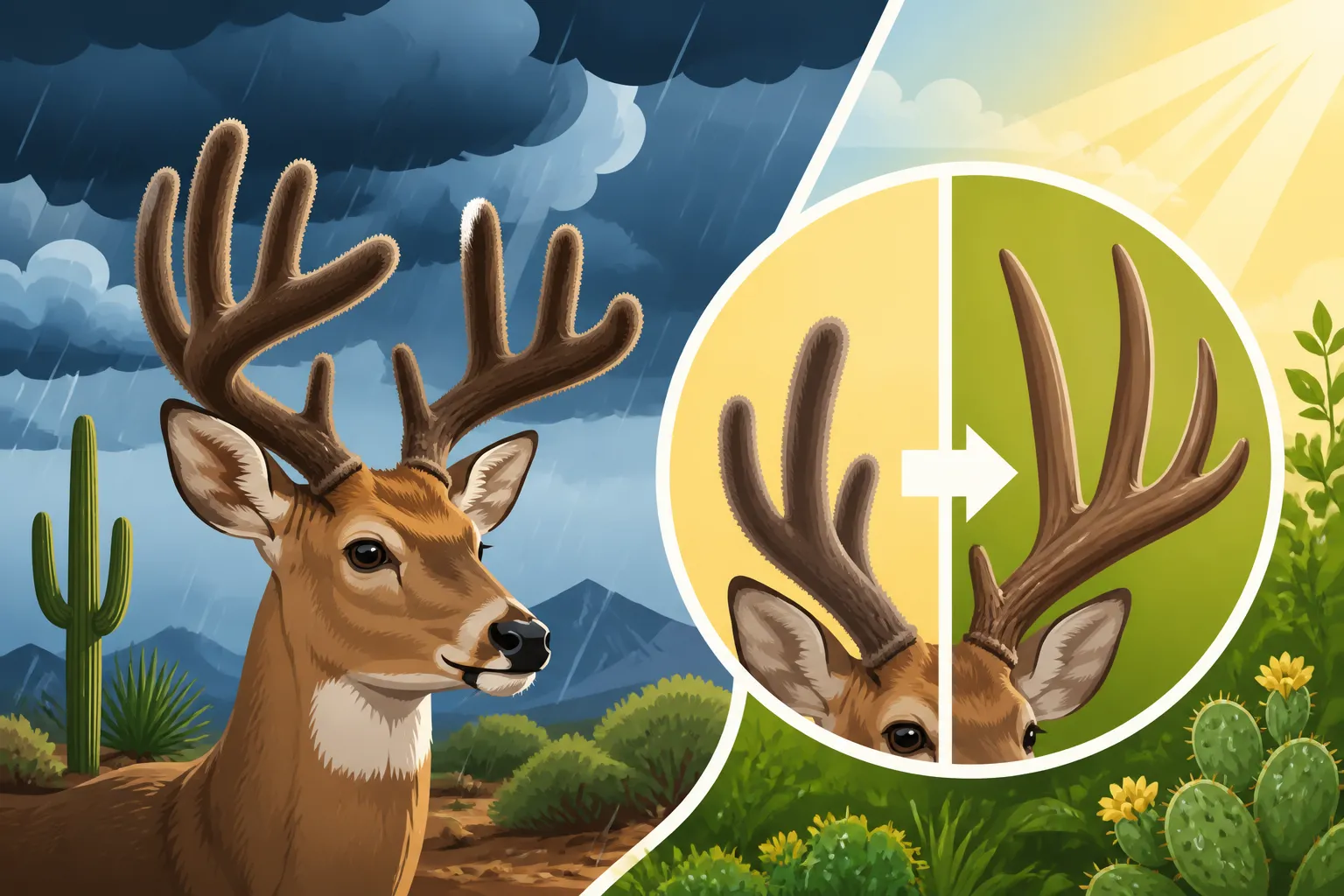
Then, usually by early to mid-July, the monsoons kick in. These aren’t just any rains; they’re often intense, localized thunderstorms that can dump significant moisture in a short period. The effect on the landscape is almost immediate and magical. Within days, dormant annuals sprout, perennial grasses green up, and a wide array of forbs explode from the parched earth. This sudden flush of new, nutrient-rich vegetation provides a vital boost of protein, minerals, and moisture that deer and elk desperately need. This is especially true for Coues deer in the sky islands, where a lush monsoon season can make a noticeable difference. Coues Deer in the Southeastern Sky Islands discusses their habitat, and these rains are a key part of it.
Without these monsoons, the available forage remains sparse and low in nutritional value. Animals have to expend more energy just to find enough to eat and drink, leading to a net deficit in calories and nutrients. This isn't just about growing a bigger rack; it’s about ensuring the does are healthy for breeding and fawning, and that all animals can maintain their body condition through the stressful summer months. A robust monsoon season literally fuels the ecosystem, providing the building blocks for impressive antler growth later in the year.
Timing is Everything: Antler Growth Cycles and Monsoon Season
It’s not just that it rains, but when it rains that makes all the difference for antler development. Deer and elk, like most cervids, follow a fairly predictable annual cycle of antler growth and shedding. For most Arizona deer and elk species, this growth phase begins in the late winter or early spring, shortly after shedding their old antlers. From March through August, velvet-covered antlers are rapidly growing, requiring an immense amount of energy, calcium, phosphorus, and other minerals. This period perfectly overlaps with the arrival of the monsoon season.
The initial phase of antler growth in early spring relies heavily on the nutrition gained during the previous fall and winter. If a deer goes into spring with poor body condition due to a tough, dry winter, it's already behind the eight ball. However, the consistent, rapid growth of antlers in the summer months—especially from June through August—is directly fueled by the current nutritional intake. This is precisely when Arizona’s monsoons typically arrive.
Think of it like building a house. The foundation is laid with winter nutrition, but the framing, walls, and roof (the bulk of the antler mass) are built during the summer. If the monsoon rains fail to materialize or are sporadic, that crucial summer nutrition is missing. The animals might still grow antlers, but they will likely be smaller, thinner, and less complex, simply because their bodies can't divert enough resources to bone production. Their priority shifts from "trophy" to "survival." Conversely, a strong monsoon season providing abundant, succulent forage during this critical period allows bucks and bulls to maximize their genetic potential. This timing is so critical that understanding How Drought Affects Desert Deer Numbers becomes essential for any serious hunter.
From Rainfall to Rack: How Better Nutrition Builds Bone
The process of antler growth is a marvel of nature, driven by hormones and fueled by nutrients. When monsoon rains bring a flush of new growth, it provides deer and elk with a significant intake of digestible protein, carbohydrates, and essential minerals like calcium and phosphorus. These are the primary building blocks of bone.
Here’s how it works on a biological level:
- Increased Forage Availability: More rain means more plants. Not just any plants, but often young, tender shoots that are packed with easily digestible nutrients. This means animals spend less time searching and more time consuming high-quality feed.
- Higher Water Content in Plants: Freshly grown plants, especially after monsoons, are rich in water. This helps hydrate the animals, reducing the stress on their systems and allowing their bodies to focus energy on growth rather than just maintaining basic bodily functions in arid conditions. Water is particularly vital for cell production and nutrient transport, both crucial for antler development.
- Mineral Uptake: As plants absorb water from the soil, they also pull up dissolved minerals. When deer and elk consume these plants, they get a fresh infusion of calcium, phosphorus, magnesium, and other trace minerals essential for robust bone development. A lack of these during the rapid growth phase can severely limit antler size and density.
- Overall Body Condition: Beyond antlers, good nutrition from monsoon rains leads to better overall body condition. This means healthier immune systems, stronger muscles, and more energy reserves. A healthier animal is one that can more effectively allocate resources to secondary functions like antler growth, particularly when the rut approaches.
Consider a bull elk in the White Mountains. If the spring was dry, he might be thin and struggling to put on weight. When the monsoons hit, the sudden abundance of lush grasses and forbs allows him to rapidly gain weight and pack on the necessary bone for his rack. This is why when hunters are checking Reading a Herd Unit Management Plan or looking at Why Fawn Ratios Predict Next Season, the previous year's rainfall patterns are always a silent but powerful data point. You can even use tools like GoHunt to research historical precipitation data for specific units, helping you connect the dots between past weather and current herd health.
Predicting Antler Potential and Scouting Strategies
Understanding the connection between monsoon rains and antler growth isn't just academic; it's a practical tool for hunters planning their seasons. While you can't control the weather, you can certainly factor its impact into your scouting and hunt preparation.
Interpreting Rainfall Data for Hunt Planning
One of the most effective ways to gauge potential antler quality for an upcoming season is to look back at the previous year's and current year's monsoon season. Was it a strong, wet monsoon? Or was it sparse and localized? This information, combined with other data like winter moisture, can offer clues about the general condition of the herd and the likelihood of better-than-average antler growth. Websites and apps like GoHunt often provide historical weather data and analysis that can be invaluable for this kind of research.
Here’s a simple comparison:
| Monsoon Strength | Likely Forage Condition | Expected Antler Impact |
|---|---|---|
| Strong/Heavy | Abundant, nutrient-rich grasses & forbs | Larger, denser antlers; better overall herd health |
| Average | Decent, but localized forage pockets | Typical antler development; regional variations |
| Weak/Sparse | Limited, dry forage; water stress | Smaller, less developed antlers; lower herd health |
This table shows a general trend, but remember that microclimates and specific unit conditions can vary widely. For instance, a unit that received good winter moisture might fare better during a weak monsoon than one that was dry all year.
Adjusting Your Scouting Efforts
Armed with this knowledge, you can tailor your scouting. If the monsoons were robust, you might expect deer and elk to be more spread out, finding good feed and water more easily. This means they might not be as concentrated around traditional water sources, giving you more ground to cover when Glassing Grids for Arizona Coues Deer or looking for a mule deer buck. Best Units to Draw for a Mature Mule Deer often have a history of consistent forage, aided by reliable monsoon patterns.
If, however, the monsoons were weak, animals will likely be more concentrated around reliable, perennial water sources and areas with remaining green forage. Your scouting efforts should focus heavily on these critical locations, as deer and elk will be pushed to them. Using tools like GoHunt can help you identify these hotspots and review historical data to refine your strategy. You'll need to work harder to find pockets of healthier animals that might still be expressing decent antler growth, even in a tougher year. This knowledge can influence how close a bowhunter needs to get on Coues, as stressed animals might be warier or less predictable. Reading an Arizona Hunt Success Report can also offer clues about the impact of previous weather patterns on harvest numbers and quality.
Ultimately, monsoon rains are a profound force in Arizona's hunting landscape. They dictate the bounty of the land, which in turn dictates the health of the herds and the size of the antlers we all dream of. Paying attention to these natural cycles is just another layer of becoming a more informed and successful Arizona hunter.
Disclaimer
This article is for general informational purposes only and does not constitute professional advice. Laws, prices and regulations vary by location and change over time. Consult a qualified professional for guidance on your specific situation.