Are Tags Included in Outfitter Prices?
It's a question every hunter asks when they start looking into booking a guided trip: "What exactly am I paying for?" The price tag for a guided hunt can look pretty steep, and it's easy to assume everything is bundled into that one big number. But when it comes to Arizona hunting, especially for big game, one of the most common misunderstandings revolves around whether the actual hunting tag is included in your outfitter's fee. Let's clear up that confusion right now, because getting this wrong can lead to some really frustrating and expensive surprises down the road. This guide is going to walk you through the realities of outfitter pricing in Arizona and explain why your tag is almost always a separate cost.
Understanding the Components of an Arizona Guided Hunt Price
When you look at the price for a guided hunt in Arizona, it can feel like a lot of money, and rightly so. Outfitters provide a tremendous service, but it's crucial to understand what those costs cover. It’s not just about finding the animal; it’s about a complex logistical operation.
The Core Services: What an Outfitter Provides and Pays For
A reputable Arizona outfitter is offering far more than just "showing you where the deer are." They're providing a comprehensive service that allows you to focus on the hunt itself, rather than the dozens of other details. This includes significant upfront investment in scouting, equipment, and personnel.
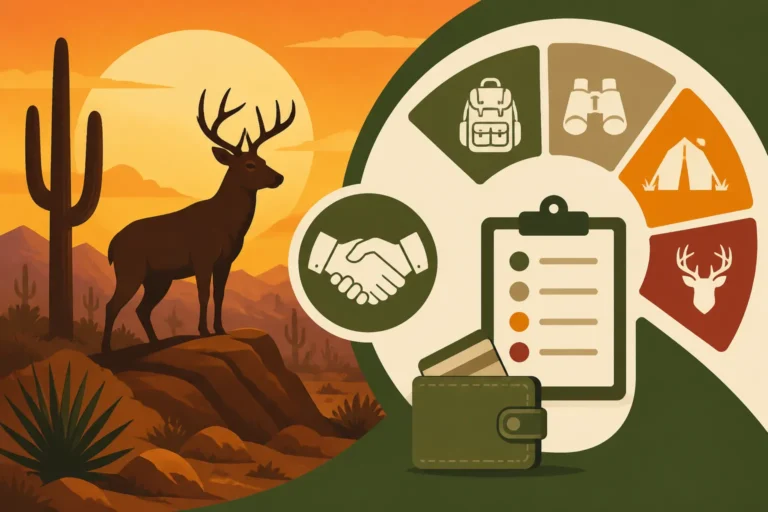
Typically, an outfitter's fee covers the guiding service itself—that's their expertise in the field, their knowledge of the unit, and their ability to locate and stalk game. This is the cornerstone of what you're paying for. Beyond that, many outfits will include things like meals in camp, comfortable lodging (whether it's a wall tent, an RV, or a rustic cabin), and transportation within the hunting area. They often provide specialized gear that would be impractical for you to haul, like spotting scopes, high-end binoculars, and potentially even pack animals if you're deep in the backcountry. All of this comes with considerable overhead for the outfitter, from insurance and permits to vehicle maintenance and wages for their guides.
The Hunter's Financial Responsibilities: Beyond the Outfitter's Fee
Even with a comprehensive guided package, there are almost always additional costs that fall squarely on the hunter. Understanding these from the outset is vital for budgeting your Arizona hunting adventure accurately. Many hunters get caught off guard because they didn't factor in these separate, but essential, expenses.
First and foremost, you'll need an Arizona hunting license. This is a baseline requirement for any hunting activity in the state, regardless of whether you're guided or not. For non-residents, this can be a significant cost. Then, of course, there's the actual big game tag itself, which is what allows you to harvest a specific animal. These two items—the license and the tag—are almost universally not included in your outfitter's fee. Beyond these, you'll need to budget for your travel to Arizona, your personal hunting gear, ammunition, and often, an expectation to tip your guide and camp staff for their hard work. Don't forget potential costs for meat processing, taxidermy, and shipping your trophies or game meat home. Each of these can add hundreds, if not thousands, of dollars to your total trip cost.
Why Tags Are Almost Always Separate from Outfitter Fees in Arizona
It might seem logical to just bundle the tag into the outfitter's price, but the reality of Arizona's hunting regulations and draw system makes this largely impractical and, in most cases, impossible. The state controls tag issuance, not private businesses.
The Legal and Administrative Reality of Tag Acquisition
Arizona operates on a draw system for most big game species, like elk, mule deer, and bighorn sheep. This means hunters must apply to a lottery system well in advance of the season, and tags are then allocated by the Arizona Game and Fish Department (AZGFD). Outfitters have no special access to these tags, nor can they purchase them on behalf of their clients directly. They don't have a private stash of elk tags waiting for whoever books a hunt.
You, as the hunter, are required to apply for your own license and tags through the AZGFD portal. You'll need to pay for your The Nonresident Arizona Hunting License Price and Arizona Application Fees Per Species directly to the state. The outfitter’s role is to guide you once you've successfully drawn a tag. It’s a very clear separation: the state issues the permit to hunt, and the outfitter provides the services that help you maximize your chances of success once you have that permit in hand. This system ensures fairness and compliance with state wildlife management goals. Understanding the process of applying and waiting for draw results is a fundamental part of planning your Arizona hunt. You can always consult the Reading the Arizona Hunt Regulations Booklet for the most current rules.
Risk and Responsibility: Why Outfitters Don't Guarantee Tags
Imagine an outfitter including a tag in their upfront price. What happens if you don't draw that tag? They'd be on the hook to refund a significant portion of their fee, or worse, have a hunter with a paid-for hunt but no legal way to harvest an animal. This is simply not a viable business model for them. Because the draw system is a lottery, there's no guarantee any individual applicant will receive a tag, especially for highly sought-after species and units in Arizona.
This is why outfitters universally structure their contracts to clearly state that tags are the hunter's responsibility. They typically won't even book a hunt with you for a specific animal or unit until you've confirmed you've drawn the necessary tag. Many outfitters have provisions in their contracts for what happens Refunds When You Fail to Draw, which often means rolling your deposit over to the next year's application cycle or moving to an over-the-counter (OTC) hunt if one is available and desired. The financial risk of drawing a tag rests entirely with the hunter, and the outfitter cannot absorb that uncertainty into their standard pricing.
Navigating the Application Process with Your Outfitter
While your outfitter won't buy your tag for you, they can be an invaluable resource in helping you navigate the complex Arizona draw system. Their experience and knowledge of different units can significantly improve your application strategy.
Outfitter Assistance: Guidance, Not Purchase
A good outfitter will offer guidance on which units to apply for, based on your desired species, trophy quality expectations, and point level. They often have deep insights into specific areas, draw odds, and historical success rates that aren't always obvious to an outside hunter. Companies like GoHunt specialize in providing data and analysis to help hunters make informed application decisions, and many outfitters leverage or recommend such resources. Your guide can advise you on the best hunt codes to list as your choices on your application, and explain the nuances between early archery, muzzleloader, or rifle seasons for a particular species.
They might even walk you through the steps on the AZGFD portal to ensure your application is filled out correctly. However, it's critical to understand that this is assistance and advice, not them taking over the actual application process or purchasing the tag for you. You'll still need to create your own account, fill in your personal details, and submit your choices and payment information directly to the state. You need to be proactive in managing your own application and Setting Up an Arizona Portal Account.
Group Applications and Point Averaging
Arizona does allow for group applications, where multiple hunters can apply together for the same hunt code. This can be appealing for friends or family wanting to hunt together, and your outfitter might even suggest it as a strategy. However, even in a group application, each hunter must still apply individually for their own license and tag. The system averages the bonus points of everyone in the group, which can sometimes increase or decrease your collective chances depending on the point levels of the individuals involved. You can read more about Group Application Rules in the Arizona Draw.
Crucially, drawing a tag as part of a group application still means each individual in that group pays for their own license and tag separately. The outfitter's fee would then apply to each individual hunter in the group who ultimately secures a tag. The outfitter cannot simply offer a "group rate that includes tags" because the state's system of individual tag allocation and payment remains unchanged, regardless of how you apply. Earning a bonus point each year by applying, even if you don't draw, is often a strategy outfitters recommend to build up points for future hunts. Earning an Arizona Point by Applying is a fundamental part of the Arizona draw system.
Special Cases and Exceptions (Rare but Possible)
While the rule of "tags are separate" holds true for the vast majority of guided hunts in Arizona, there are a few niche scenarios where the financial structure might differ, although these are far from typical.
Tribal Land Hunts and Unique Tag Structures
Arizona is home to several Native American tribes, and many of these tribes manage their own hunting programs on their sovereign lands. These tribal hunts operate under a completely different set of regulations than those set by the Arizona Game and Fish Department. For instance, the White Mountain Apache Tribe or the San Carlos Apache Tribe offer high-quality hunts, particularly for elk, and their tags are often sold directly by the tribe or through specific authorized outfitters.
In some of these cases, especially for higher-end, all-inclusive tribal hunts, the cost of the tribal permit might indeed be bundled into a single, comprehensive price package offered by an outfitter authorized to guide on that reservation. This is because Why Tribal Tags Bypass the Arizona Draw and are not part of the state's lottery system. However, even here, it’s absolutely essential to clarify every single detail with the outfitter. Always ask explicitly if the tribal hunting permit is included in the stated price. You can learn more about Hunting Arizona Tribal Land Through an Operator to understand the nuances.
Conservation Tags and Special Big Game Licenses
Arizona also has a program for Special Big Game License Tags, often referred to as "Governor's Tags" or "Conservation Tags." These are highly coveted tags for trophy animals that are typically auctioned off to the highest bidder by conservation organizations, with the proceeds going back to wildlife management. The winning bid for one of these tags can be astronomical, easily reaching tens or even hundreds of thousands of dollars.
When an individual purchases one of these tags, they then typically hire a top-tier outfitter to guide them. In these extremely high-value scenarios, the outfitter's fee might be structured in a way that seems to include everything, but the colossal cost of the tag itself is the primary driver of the overall expense. The "inclusion" would be more a function of how the specific conservation organization or individual arranged the hunt, rather than a standard outfitter practice. But even then, the core principle is that the tag has been acquired separately at an incredible cost. How Arizona Auctions Conservation Tags details this unique program.
Key Differences in Hunt Costs
To summarize, here's a quick look at what's typically included and what you're usually responsible for:
| Category | Typically Included in Outfitter Price | Typically Hunter's Responsibility |
|---|---|---|
| Guiding Services | Yes (Scouting, field guidance, animal retrieval) | No |
| Accommodation | Often (Camp lodging, wall tents, rustic cabins) | No (unless specifically excluded from package) |
| Meals | Often (During the hunt, in camp) | No (Travel meals, snacks not provided) |
| Transportation | Within hunting unit (4x4s, ATVs, horses/mules) | To/from Arizona, and to/from initial rendezvous point |
| Equipment | Specialized gear (Optics, game bags, some camp gear) | Personal hunting gear (Weapon, ammo, boots, clothing) |
| Hunting License | No | Yes (Purchased directly from AZGFD) |
| Big Game Tag/Permit | No (Except rare tribal or conservation tag instances, always confirm) | Yes (Applied for and purchased directly from AZGFD or tribal authority) |
| Meat Processing | No (Outfitter may assist with field dressing, but not processing) | Yes (Butcher fees, cutting, wrapping) |
| Taxidermy | No | Yes (Mounting fees, shipping) |
| Gratuities | No | Yes (Tips for guide, camp staff) |
So, while booking a guided hunt through platforms like BookYourHunt can provide options and streamline finding an outfitter, always read the fine print and clarify exactly what their prices cover.
When you're planning an Arizona hunt, especially if you're looking at a guided experience, it's really important to get a crystal-clear picture of your total financial commitment. While it might feel like a lot to juggle, knowing upfront what's included and what's not will save you from frustrating surprises later on. For the vast majority of guided hunts in Arizona, the simple answer is no: your hunting license and big game tag are almost never included in the outfitter's price. These are separate, state-issued permits that you, the hunter, are responsible for acquiring directly from the Arizona Game and Fish Department, usually through a lottery draw system.
Outfitters provide an invaluable service by lending their expertise, logistical support, and often a comfortable camp experience, but they cannot legally or practically provide you with a tag. They are partners in your hunting success, but they don't control the draw. So, as you plan your dream Arizona adventure, budget carefully for your license, tags, and all the other associated costs beyond your guide's fee. Always ask prospective outfitters for a detailed breakdown of their services and what exactly is included in their price—don't leave anything to assumption.
Disclaimer
This article is for general informational purposes only and does not constitute professional advice. Laws, prices and regulations vary by location and change over time. Consult a qualified professional for guidance on your specific situation.