Can You Hunt Arizona Wilderness Unguided?
The idea of slipping into Arizona's vast wilderness areas, far from roads and crowds, with nothing but your rifle or bow and your wits, is a powerful draw for many hunters. It conjures images of true self-reliance and raw adventure. But you might be wondering if it's even allowed, and more importantly, if it's truly feasible to hunt these remote areas without professional guidance. This guide is here to break down exactly what an unguided wilderness hunt in Arizona entails, exploring both the incredible freedom and the significant challenges you'll face.
Understanding Arizona Wilderness Areas and Regulations
Arizona is home to some truly magnificent, untamed landscapes, many of which are designated as Wilderness Areas. These are special places, protected by federal law, specifically set aside to preserve their primitive character and offer opportunities for solitude and unconfined recreation. But what does that really mean for a hunter?
What Defines a Wilderness Area in Arizona?
When we talk about a Wilderness Area in Arizona, we're discussing lands managed by agencies like the U.S. Forest Service or the Bureau of Land Management (BLM) that have been formally designated by Congress. The defining characteristic is their "primitive character." This means no motorized vehicles are allowed — not even ATVs or e-bikes. Forget about accessing these spots with a truck or even a dirt bike; you're traveling on foot or horseback, and that's it. You also won't find mechanized equipment like chainsaws or mountain bikes being used here. The whole point is to keep these areas wild, quiet, and largely untouched by modern machinery. Think vast expanses, rugged mountains, deep canyons, and a profound sense of isolation.
The goal is to provide an experience where you feel truly immersed in nature, facing challenges on its terms. Arizona boasts numerous such areas, from the towering Pinaleno Mountains in the southeast to the remote Mazatzal Wilderness, and the sprawling Superstition Wilderness near Phoenix. Each offers its unique brand of beauty and difficulty. While the presence of wildlife is a key part of their allure, the preservation of the wild experience itself is paramount.
Key Rules for Hunting in Arizona Wilderness
Hunting is, in fact, generally permitted within most Arizona Wilderness Areas, but always check the specific regulations for your chosen unit and area, as exceptions can exist. The critical distinction lies in how you hunt and operate within these boundaries. The non-mechanized access rule is the big one: your feet or hooves are your only engines. This means scouting, packing in your camp, retrieving game, and packing out your harvest must all be done under your own power, or with the aid of horses or mules. It’s a full commitment to self-sufficiency.
Beyond access, you'll need to strictly adhere to "Leave No Trace" principles. This isn't just a suggestion in wilderness; it's a fundamental expectation. Everything you pack in, you must pack out – including all trash, spent casings, and even human waste in some areas (using wag bags). Building rock cairns, cutting live vegetation, or otherwise altering the landscape is generally prohibited. Fire restrictions are common, especially during dry seasons, so always check local conditions before planning to build a campfire. Camping regulations can vary, too; some areas have specific zones or distance requirements from water sources or trails. It’s vital to know before you go. Remember, the goal is to leave the area as if you were never there. Understanding Wilderness Rules Inside Arizona Forests is crucial for ensuring you're compliant and respectful of these pristine environments.
The Practicalities of an Unguided Wilderness Hunt
Deciding to embark on an unguided wilderness hunt in Arizona is a significant undertaking that requires meticulous planning, serious physical preparation, and an unwavering commitment to self-reliance. This isn't your casual weekend hunt; it's an expedition.
Gear and Logistics for a DIY Wilderness Trip
The success and safety of a DIY wilderness hunt hinge entirely on your preparation and the gear you choose. Since there's no vehicle to run back to, and help can be hours or even days away, every item in your pack needs to serve a purpose. First and foremost, a robust navigation system is non-negotiable. This means not just a GPS device or a smartphone with mapping apps, but also a physical map and compass, and the knowledge to use them. Batteries die, screens crack, and signals vanish in deep canyons. Reliable water filtration or purification is also critical, especially in arid Arizona, where water sources can be few and far between, or unreliable. You absolutely must understand Water You Must Carry on a Day Hunt and plan accordingly, often packing in gallons for multi-day trips.
Shelter needs to be lightweight but durable, capable of handling sudden monsoon storms or unexpected cold fronts at higher elevations. A comprehensive first-aid kit, along with wilderness first-aid training, could literally be a lifesaver. And then there's game retrieval. If you're fortunate enough to harvest an animal deep in the backcountry, you need a plan and the right equipment to get it out. This means a sturdy pack frame, sharp knives, plenty of game bags, and perhaps a small saw. Choosing Boots for Rocky Desert Ground is another critical gear consideration, as your feet will be taking you through incredibly demanding terrain. This isn't a walk in the park; it’s a physically demanding endeavor that requires you to be in peak physical condition. Think beyond just "being in shape" and consider intense, uphill backpacking with weight. Physical Conditioning for a Sky Island Hunt should be part of your pre-hunt regimen, mimicking the exact demands of traversing rugged mountains with a heavy pack.
Scouting and Planning for Remote Success
Scouting for a remote wilderness hunt is a multi-layered process that begins long before you ever set foot in the field. E-scouting is your best friend here, and tools like GoHunt can be invaluable. You'll spend countless hours pouring over topographical maps, satellite imagery, and public land overlays to identify potential water sources, bedding areas, travel corridors, and escape routes. You're looking for terrain features that might concentrate animals, or hidden pockets that offer cover and forage. E-Scouting an Arizona Unit Before the Season can give you a massive head start, allowing you to identify primary and secondary access points, potential campsites, and escape routes in case of an emergency.
Once you have a few promising spots identified virtually, in-person scouting, if possible, is ideal. However, since many wilderness areas are quite remote, this isn't always feasible for every hunter, especially non-residents. Without a guide's intimate knowledge of the area, you're relying entirely on your own research and ability to "read" the landscape. This means understanding subtle clues in the terrain, knowing how animals will react to weather changes, and anticipating their movements in relation to food, water, and cover. Reading a Unit Before You Ever Walk It means understanding its elevation changes, its predominant vegetation, and where historical water sources exist. You’ll be looking for signs of other hunters, too, to try and find low-pressure zones. It's a game of informed guesswork, deduction, and an acute understanding of animal behavior in truly wild settings.
Advantages and Disadvantages of Going Unguided
The choice to hunt unguided in Arizona's wilderness comes with a unique set of trade-offs. On one hand, it offers an unparalleled sense of achievement and freedom. On the other, it demands a significant investment of time, effort, and carries inherent risks.
The Rewards of a DIY Wilderness Hunt
There's an undeniable allure to an unguided wilderness hunt – it’s often touted as the purest form of hunting. The sense of accomplishment you gain from successfully navigating, scouting, and harvesting an animal entirely on your own terms, deep in the backcountry, is immense. It's a testament to your skills, resilience, and connection with the wild. This pursuit often fosters a profound sense of solitude, allowing you to disconnect from the modern world and truly immerse yourself in the rhythms of nature. You become intimately familiar with the land, observing details that might be missed in a faster-paced, guided hunt.
Furthermore, a DIY hunt typically comes with a significantly lower financial cost, as you're not paying substantial outfitter fees. While you invest in quality gear, that gear lasts for many hunts. This makes it a more accessible dream for many hunters who value the experience over a guaranteed trophy. Planning a DIY Public Land Hunt in Arizona means embracing the challenge, the learning curve, and the personal growth that comes from relying solely on yourself. It's an opportunity to test your limits, sharpen your outdoor skills, and forge unforgettable memories in places few others tread. The quiet moments, the expansive views, and the raw beauty of Arizona's remote wilderness are often the greatest trophies.
The Challenges and Risks You'll Face
However, the flip side of this freedom is a heightened level of challenge and risk. The physical demands are extreme. Hauling a heavy pack for miles over steep, unforgiving terrain, often at high altitude, pushes even the most conditioned individuals. If you do harvest an animal, the task of Packing an Elk Out of Rim Country Alone can be brutal, requiring multiple trips and immense stamina. The potential for injury – a twisted ankle, a snake bite, or a fall – is real, and help is often hours, if not days, away. Snake Awareness on an August Archery Hunt is crucial, as venomous snakes are common in many wilderness areas.
Beyond physical strain, there's the mental game. Getting lost in vast, featureless terrain or dense timber can disorient even experienced navigators. The emotional toll of striking out after days of grueling effort, or facing unexpected weather, can be significant. Then there's the hunting aspect itself. Without a guide's years of local knowledge, understanding animal patterns, seasonal movements, and precise bedding areas becomes a monumental scouting effort on your part. You might spend days in an area only to find the game has moved. Your chances of finding a trophy animal might be lower simply because you lack the specific, nuanced knowledge of those who spend hundreds of days a year in the field. It’s a steep learning curve, and it’s important to enter it with realistic expectations about what you can achieve on your first few attempts.
When a Guide Might Still Be Wise, Even for Wilderness
While the spirit of an unguided wilderness hunt is compelling, there are many scenarios where a guide, or at least some form of professional assistance, can dramatically improve your experience and success, even in the backcountry.
When to Consider Professional Assistance
For many hunters, especially those new to Arizona's unique wilderness or those pursuing highly coveted tags like bighorn sheep or trophy elk, a guide's expertise can be invaluable. Guides spend hundreds of days a year in specific units, intimately understanding game movements, water sources, and hidden pockets that would take a DIY hunter years to discover. Their knowledge of terrain and animal behavior, particularly in dense timber or vast desert expanses, can save you precious days of scouting and greatly increase your odds of success. For a species like desert bighorn sheep, where finding a legal ram with specific curl requirements is paramount, a seasoned guide's eye and relentless glassing can be the difference between a successful hunt and going home empty-handed.
Even if you prefer the self-reliance of a wilderness hunt, there are different levels of assistance that can bridge the gap. A drop camp outfitter, for instance, can pack you and your gear into a remote area by horseback, set up a basic camp, and then leave you to hunt unguided for the duration of your trip, returning only for retrieval. This significantly reduces the physical burden of packing in and out, allowing you to focus your energy on hunting. You can find outfitters offering these kinds of services through platforms like BookYourHunt, which allows you to explore different options and compare what various guides provide. What a Drop Camp Actually Includes can range from just packing services to a fully equipped camp, giving you flexibility. It's not about sacrificing independence entirely, but rather about leveraging expertise for a safer, more efficient, and potentially more successful wilderness adventure.
Finding the Right Balance for Your Adventure
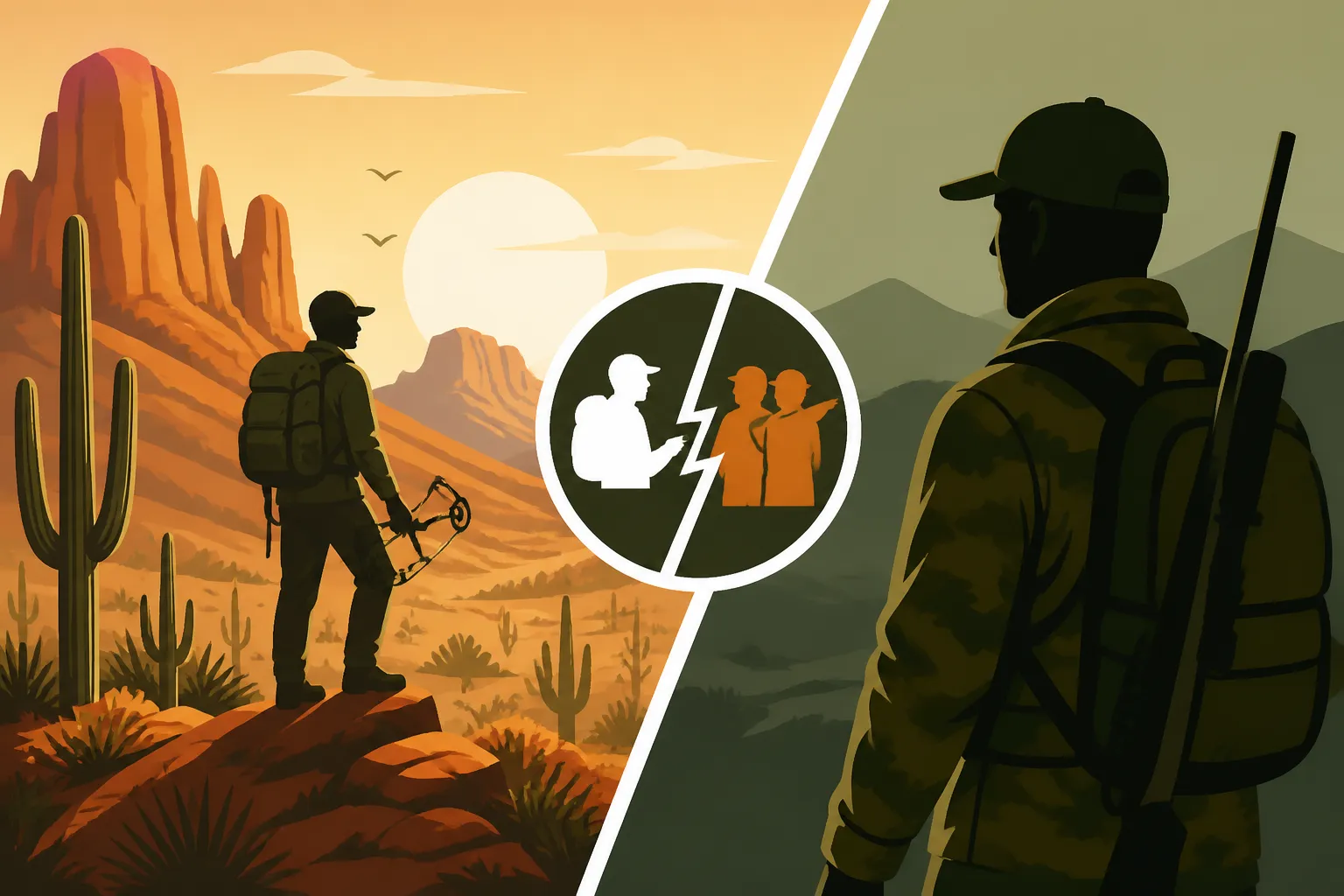
The decision to go fully DIY, opt for a drop camp, or hire a full-service guide ultimately comes down to your personal experience level, physical condition, budget, and hunting goals. If you're a seasoned backcountry hunter with years of DIY experience in similar environments, a completely unguided wilderness hunt might be your ideal challenge. You thrive on the self-sufficiency and the profound connection to the land that comes with it.
However, if you're newer to Arizona, have a limited amount of time to scout, or are hunting a truly once-in-a-lifetime tag, a guide or a drop camp can be a wise investment. They can significantly increase your comfort, safety, and chances of success, allowing you to focus on the hunt itself rather than the logistics of survival. Many hunters, for example, choose to go fully guided for a challenging elk hunt, and then leverage the lessons learned to tackle an unguided deer or javelina hunt in a less remote wilderness area later. Hunting Solo Against Hiring a Guide isn't an either/or proposition for every hunt; it can be a progression. The goal is to choose the path that maximizes your enjoyment and opportunity while minimizing unnecessary risk, making your Arizona wilderness adventure truly unforgettable.
Here’s a quick overview of the key differences:
| Feature | Unguided Wilderness Hunt | Guided Wilderness Hunt (Full Service) | Drop Camp Wilderness Hunt |
|---|---|---|---|
| Access | 100% self-powered (foot, horseback) | Provided by outfitter (horseback, sometimes ATV to wilderness edge) | Provided by outfitter (horseback/mule pack-in, pack-out) |
| Navigation/Scouting | Entirely hunter's responsibility | Outfitter handles all | Hunter's responsibility (post drop-off) |
| Gear/Camp | Entirely hunter's responsibility | Outfitter provides most camp gear, food | Hunter provides all personal gear, food; outfitter may provide basic camp |
| Game Retrieval | Entirely hunter's responsibility, extremely physical | Outfitter handles | Hunter's responsibility to get game to pre-arranged pick-up spot |
| Local Knowledge | Acquired through extensive personal scouting/research | Provided by experienced outfitter | Limited or no outfitter guidance during hunt |
| Physical Demands | Extremely high, for all aspects | Moderate to high (focused on hunting) | High (focused on hunting and daily camp life) |
| Cost | Lowest (gear investment only) | Highest | Mid-range |
| Independence/Solitude | Highest | Moderate (with guide) | High (after drop-off) |
| Risk | Highest (injury, lost, unprepared) | Lower (experienced guide for safety) | Moderate (still self-sufficient after drop-off) |
| Success Rate | Varies wildly by experience/prep | Generally higher with good outfitter | Varies by hunter's skill/prep, but easier logistics |
Disclaimer
This article is for general informational purposes only and does not constitute professional advice. Laws, prices and regulations vary by location and change over time. Consult a qualified professional for guidance on your specific situation.