Which Arizona Hunts Are Worth Guiding
Facing the vast and diverse hunting landscape of Arizona, many hunters grapple with a crucial question: when is hiring a guide a truly worthwhile investment versus when is a do-it-yourself (DIY) approach sufficient and even preferred? It's a significant financial and personal decision, and no one wants to spend hard-earned money on a service they didn't truly need, or worse, miss an opportunity because they underestimated the challenge. This guide will cut through the uncertainty, helping you understand which Arizona hunts genuinely benefit from professional guidance, maximizing your chances and experience for specific species and scenarios.
High-Stakes, Low-Odds Hunts That Often Benefit from a Guide
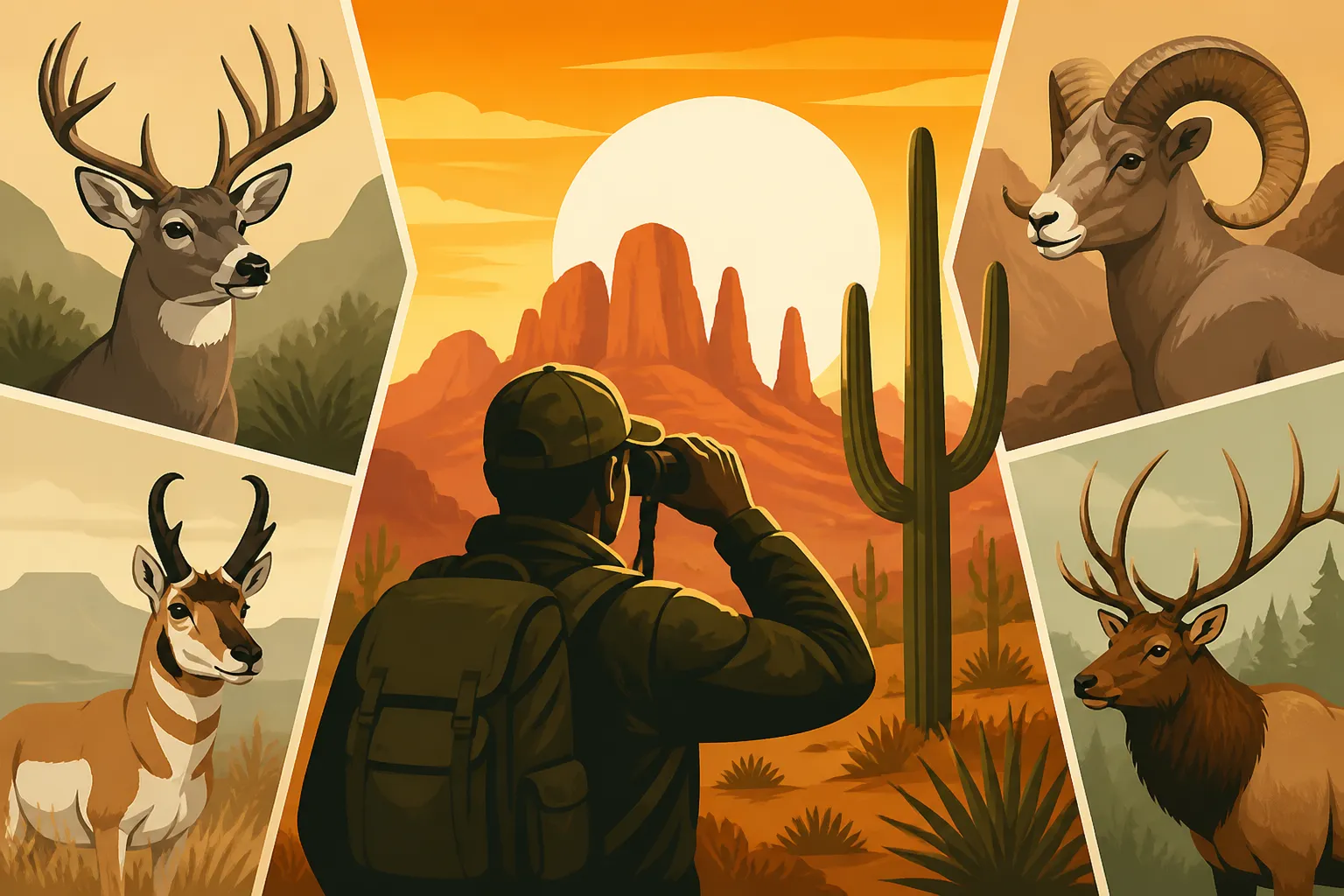
Arizona is famous for its world-class big game, particularly trophy elk, bighorn sheep, and bison. These aren't just any hunts; they often represent years, if not decades, of accumulated bonus points, significant financial investment, and a "once-in-a-lifetime" opportunity for certain species. For these high-stakes hunts, the argument for hiring a guide becomes incredibly compelling. You've put so much into just drawing the tag; investing in maximizing your success rate once you have it makes a lot of sense.
Trophy Elk Hunts in Arizona
Drawing a coveted Arizona elk tag, especially for a prime unit on the Mogollon Rim or the White Mountains, is often the culmination of years of patience and a pile of bonus points. For many, this tag represents a significant investment, both in application fees over time and in the tag itself. When you finally punch that ticket, the pressure to make the most of it is immense. This isn't just a hunt; it's an experience that most hunters get only a few times, if ever, in their lives.
A reputable Arizona elk guide brings an unparalleled level of specialized knowledge to the table. They spend months, if not years, Scouting an Arizona Unit Before the February Deadline tracking specific bull movements, understanding patterns, and learning the nuances of vast public land units. They know where the elk water during early archery season, where they rut hard, and where they retreat during periods of pressure. This intimate understanding of the terrain, combined with expert calling abilities, can make the difference between a frustrating week and a legitimate shot at a monster bull. The physical demands of an elk hunt in Arizona can be extreme, often involving hiking at high elevations, navigating steep canyons, and packing heavy loads out of remote areas. Guides not only know the most efficient routes but also handle much of the logistical heavy lifting, allowing you to focus on the hunt itself.
Desert Bighorn and Rocky Mountain Bighorn Sheep
Arizona offers hunts for both Desert Bighorn Sheep and Rocky Mountain Bighorn Sheep, both of which are considered "once-in-a-lifetime" opportunities for hunters. These tags are exceptionally difficult to draw, often requiring a lifetime of applying to even get a sniff. When that draw notification finally hits your inbox, you've essentially won the lottery. Given the rarity and magnitude of these tags, the idea of going it alone, unless you are exceptionally experienced in bighorn terrain, is often seen as a significant gamble.
Bighorn sheep live in some of Arizona's most rugged, unforgiving terrain – towering desert mountains for the Desert Bighorn and steep canyons along rivers for the Rocky Mountain variety. Spotting a ram in this vastness requires specialized glassing techniques, high-quality optics, and an intimate knowledge of where these animals feed, bed, and travel. Guides who specialize in bighorn sheep hunts dedicate countless hours to preseason scouting, using top-tier spotting scopes and binoculars to locate and pattern rams. They understand the intricacies of Ram Curl Requirements Arizona Enforces and can accurately field-judge an animal, ensuring you pursue a legal and desirable ram. Furthermore, the physical exertion required to navigate this steep, rocky country is immense, and a guide can help plan your approach to conserve energy and maximize your chances.
Arizona Bison Hunts
Arizona is one of the few places you can hunt free-ranging bison, specifically on the Kaibab Plateau and the House Rock Wildlife Area. Like bighorn sheep, these tags are incredibly rare and highly sought after, often taking many years to draw. Bison are immense animals, posing unique challenges not just in finding them, but in the logistics of the harvest itself. This is not a hunt to underestimate, especially given the limited opportunities.
A guide specializing in Arizona bison understands the animals' movements, habitat preferences, and the specific terrain of the Kaibab or House Rock areas. They are invaluable for locating these nomadic herds, which can cover vast distances, and for orchestrating a safe, ethical shot. Beyond the hunt itself, the most significant advantage a bison guide offers is logistical support for game recovery. Taking down an animal that can weigh over a ton is just the first step. Quartering, packing, and cooling that much meat in the field, often far from roads, is a monumental task that requires specialized equipment, manpower, and experience. A guide typically comes prepared with a team, ATVs, or horses, and the knowledge of how to handle such a massive animal efficiently, ensuring the meat is cared for properly. This allows the hunter to focus on the shot and the experience, rather than being overwhelmed by the aftermath.
Specialized Skills and Challenging Terrain
Beyond the rare, high-stakes draws, there are several Arizona hunts where the specific nature of the animal, the demanding terrain, or the required hunting technique makes a guide an extremely valuable asset. These hunts aren't necessarily "once-in-a-lifetime" for everyone, but they demand a particular set of skills and local knowledge that many hunters simply don't possess, or don't have the time to develop to a high proficiency. This is where the nuanced expertise of an Arizona outfitter truly comes into its own.
Coues Deer in the Sky Islands
Arizona's Coues deer, often affectionately called the "gray ghost," are arguably the most challenging deer species to hunt in North America. They inhabit the rugged, steep, and brushy "sky island" mountain ranges of southern Arizona, such as the Chiricahua or Huachuca Mountains. These deer are incredibly small, blend seamlessly into their environment, and are masters of evasion. Spotting them, let alone stalking them, demands an extraordinary level of patience, meticulous glassing skills, and an intimate understanding of their behavior. Why Coues Deer Are Called Gray Ghosts isn't just a nickname; it's a testament to their elusiveness.
This is precisely where a Coues deer guide shines. These outfitters don't just "guide" in the traditional sense; they effectively sell you their eyes, their optics, and their knowledge of the terrain. They spend countless hours behind high-powered spotting scopes and binoculars, meticulously grid-glassing vast expanses of the mountainside, searching for the flick of an ear or the twitch of a tail. A good guide knows the preferred bedding areas, the feeding patterns, and the subtle movements of these deer. They can help you develop your own glassing skills, coach you through an often miles-long stalk in steep country, and aid in field-judging a buck, which is notoriously difficult on Coues at distance. For anyone wanting to experience a true Coues hunt and maximize their chances of success, especially if they're new to this specialized style of hunting, a guide is an unparalleled asset.
Mountain Lion with Hounds
Hunting mountain lions in Arizona is a highly specialized pursuit, and for most hunters, doing it without a guide and a trained hound pack is virtually impossible. While it's technically legal to hunt lions without hounds in certain areas, the success rates are astronomically low. Mountain lions are incredibly elusive, cover vast territories, and are masters of stealth. Finding one through traditional still-hunting or spot-and-stalk methods is akin to finding a needle in a haystack.
This is why nearly all successful mountain lion hunts involve a guide with a seasoned pack of tracking hounds. The dogs are specifically bred and trained to pick up a lion's scent trail, often many hours old, and follow it relentlessly until the cat is treed or bayed up. This requires immense physical stamina from both the dogs and the hunters, often traversing extremely rugged terrain, thick brush, and steep canyons. The guide's expertise lies in reading dog behavior, understanding lion habits, and navigating the vastness of Arizona's lion country. Without their dogs and their years of experience, a mountain lion tag is little more than a challenging, often fruitless, backcountry hike. When looking for such a specialized hunt, resources like BookYourHunt can connect you with outfitters who specialize in hound hunting.
Remote Mule Deer on the Arizona Strip
While mule deer are found throughout Arizona, the legendary "Arizona Strip" north of the Grand Canyon is famous for producing some of the largest bucks in the world. Tags for this area are incredibly hard to draw, similar to trophy elk. However, even if you draw one of these coveted tags, the Arizona Strip presents a unique set of challenges that can make a guide extremely valuable. This isn't your typical mule deer hunt; it's a vast, remote, and often roadless wilderness where access is limited, and deer densities can be low.
Hunting the Strip requires extensive preseason scouting, often spanning weeks or even months, to locate mature bucks and understand their patterns in such a massive landscape. Guides who operate on the Strip have invested years in learning the intricate network of two-track roads, the often-ephemeral water sources, and the specific hideouts where these giant bucks live. They come equipped with specialized vehicles for navigating rough terrain, high-end optics for long-range glassing, and the experience to plan a multi-day hunt in a true backcountry setting. The sheer scale and remoteness of the Arizona Strip, combined with the difficulty of simply finding deer, often justifies the investment in a guide for hunters pursuing one of these once-in-a-lifetime mule deer. For insights into The Arizona Strip Mule Deer Reputation and current draw data, prospective hunters often consult platforms like GoHunt.
When a DIY Approach is Often Rewarding
Not every hunt in Arizona necessitates a guide. In fact, a significant portion of the hunting opportunities in the state are perfectly suited for a do-it-yourself approach, especially for experienced hunters who enjoy the challenge of self-reliance and the satisfaction of earning their harvest. Understanding these scenarios can help you save money and gain valuable experience.
Over-the-Counter Archery Deer
Arizona is unique in offering a very generous over-the-counter (OTC) archery deer season, which runs for several months, typically in both the early fall and late winter. This non-permit tag covers both Coues and mule deer, offering incredible flexibility and accessibility for hunters. While there are guides who cater to OTC archery deer, particularly for those seeking a trophy Coues, for many hunters, this is the quintessential DIY hunt. How to Hunt Arizona's Five-Month OTC Archery Deer Season is a popular topic for a reason – it's an attainable goal for many.
The lengthy season provides ample opportunity to scout, learn a unit, and adapt to deer behavior. While challenging, the beauty of the OTC archery hunt is that it's often more about the experience, the adventure, and the development of personal hunting skills than it is about securing a guaranteed trophy. Many public lands across Arizona offer excellent access for these hunts, and with solid boots-on-the-ground scouting, e-scouting tools, and a willingness to put in the miles, a successful DIY archery deer hunt is well within reach. It’s an ideal opportunity to hone your stalking skills, practice reading terrain, and enjoy the solitude of the Arizona wilderness on your own terms.
Javelina Hunts
Javelina, also known as collared peccary, are a highly accessible big game species in Arizona, often referred to as the "poor man's pig." Tags for javelina are relatively inexpensive and widely available, often over-the-counter or through easy-to-draw permit hunts. They are abundant across much of the desert and semi-desert regions of the state, making them an excellent target for DIY hunters, especially those new to Arizona or big game hunting in general. Arizona Javelina Tags Are Available All Year in some form, making them very flexible.
Javelina typically travel in herds, often creating distinct scent trails and leaving obvious sign. While they can be elusive in thick brush, they are generally vocal and can be located by sight or sound. The hunting methods for javelina usually involve spotting and stalking, or occasionally calling them in. These techniques are easily learned and practiced by most hunters. A guide might streamline the process, but the challenge and reward of a DIY javelina hunt—finding a herd, making a careful stalk, and harvesting an animal—is highly satisfying and very achievable. It’s a fantastic way to learn the desert landscape, practice your hunting skills, and fill your freezer without the significant expense of a guided hunt.
Small Game and Predators
For the vast majority of small game and predator hunting in Arizona, a guide is rarely a necessity. Species like Gambel's quail, Mourning dove, cottontail rabbits, and various predators such as coyotes and bobcats offer abundant opportunities for DIY hunters. These hunts are often about covering ground, understanding basic animal behavior, and having good shooting skills.
Whether you're chasing coveys of quail through the saguaros, sitting a waterhole for doves, or calling coyotes in the desert, these experiences are traditionally self-guided. While some specialized guides might offer predator calling instruction or upland bird dog services, the core pursuit of these animals is well within the capabilities of most hunters. The accessibility of tags, the widespread distribution of these species, and the relatively straightforward hunting techniques mean that going DIY is not only feasible but often the preferred method, allowing for maximum flexibility and a true connection to the land.
Weighing the Factors: Is a Guide Worth It For You?
Deciding whether to hire a guide really comes down to a few key factors: the species you're pursuing, your own experience level, your available time for scouting, and your budget. For those once-in-a-lifetime tags like bighorn sheep or bison, or highly specialized hunts like mountain lion with hounds, a guide often transitions from a luxury to a near-essential investment to maximize success and ensure ethical recovery. For incredibly challenging hunts like Coues deer, a guide's eyes and knowledge can dramatically increase your odds and improve your experience.
However, for more accessible hunts like Arizona's OTC archery deer or javelina, many hunters find immense satisfaction and success through a DIY approach. It's a fantastic way to learn the landscape, develop new skills, and immerse yourself in the Arizona hunting tradition. If you’re unsure about finding a reputable guide, it’s always wise to research their success rates, ask for references, and understand what Questions Worth Asking Before You Book to ensure their services align with your expectations for the specific hunt you have in mind.
Consider this table for a quick overview:
| Species / Hunt Type | Difficulty (Draw/Hunt) | Guide Benefit | Common DIY Viability |
|---|---|---|---|
| Trophy Elk | High / Very High | Pre-scouting, calling, glassing, physical demands, recovery logistics | Low |
| Desert/Rocky Mtn. Bighorn | Extremely High / Extreme | Location, field-judging, extreme terrain navigation, recovery | Very Low |
| Arizona Bison | Extremely High / High | Location, safety, massive recovery logistics, specialized equipment | Very Low |
| Coues Deer | Medium / Very High | Advanced glassing, long-range stalking, field-judging, local knowledge | Medium (challenging) |
| Mountain Lion (Hounds) | Medium / High | Trained hounds, tracking, specialized skills, physical demands | Very Low |
| Remote Mule Deer (e.g., Strip) | High / High | Extensive scouting, remote access, terrain knowledge, finding specific bucks | Low |
| OTC Archery Deer | Low / Medium-High | Can streamline, but often for experience/trophy focus | High |
| Javelina | Low / Medium | Can expedite finding herds, but basic skills are sufficient for DIY | High |
| Small Game / Predators | Low / Low | Rarely needed, unless seeking specific instruction/advanced techniques | Very High |
Ultimately, the choice is personal. But by honestly assessing the demands of the hunt and your own capabilities and goals, you can make an informed decision that leads to a memorable and rewarding Arizona hunting adventure.
Disclaimer
This article is for general informational purposes only and does not constitute professional advice. Laws, prices and regulations vary by location and change over time. Consult a qualified professional for guidance on your specific situation.