Planning a DIY Public Land Hunt in Arizona
The dream of a do-it-yourself public land hunt in Arizona can quickly turn into a desert nightmare if you're not prepared. Many hunters, especially those new to the Grand Canyon State, underestimate the sheer scale, ruggedness, and unique challenges this incredible landscape throws at you. This guide will walk you through the essential steps and considerations for planning a successful and safe unguided hunt across Arizona's vast and diverse public lands, helping you navigate the complexities and embrace the adventure.
The Allure and Reality of DIY Public Land Hunting in Arizona
There's something deeply satisfying about earning your hunt through pure grit, preparation, and self-reliance. Arizona offers an unparalleled opportunity for this, with millions of acres of public land teeming with diverse game. But make no mistake, it’s not a cakewalk.
Why Go DIY in the Grand Canyon State?
For many, the appeal of a do-it-yourself hunt in Arizona is multifaceted, blending the thrill of the chase with profound personal accomplishment. First and foremost, there's the undeniable sense of freedom. When you're not bound by an outfitter's schedule or a guide's chosen routes, you dictate your own adventure. You can spend an extra hour glassing a distant ridge, follow a fresh track for miles, or decide to move camp based on an unexpected tip or new sign. This autonomy allows for a much more intimate connection with the land and the hunt itself.
Then there's the cost. Let's be honest, guided hunts, while incredibly valuable for their expertise and logistical support, often come with a hefty price tag that simply isn't feasible for everyone. Opting for a DIY approach significantly reduces expenses, making big game hunting in a premium state like Arizona more accessible. You're trading dollars for sweat equity, and for many hunters, that's a trade they're more than happy to make. It's about proving to yourself that you can navigate the challenges, make the right decisions, and ultimately, be a self-sufficient hunter in some of the most demanding landscapes out there. The satisfaction of a hard-earned harvest on your own terms is truly unmatched, a story that resonates far deeper than one where success was primarily facilitated by others.
The Steep Learning Curve You'll Face
While the allure of DIY is strong, it's crucial to enter with eyes wide open to the learning curve. Arizona is not for the faint of heart or the underprepared. One of the biggest hurdles is simply understanding the sheer volume and complexity of the regulations. From species-specific rules to unit boundaries, legal weapons, and even how you can retrieve game, it's a labyrinth that requires diligent study. Missing a single detail could turn a successful hunt into a costly mistake.
Beyond the regulations, the terrain itself is a formidable teacher. You might envision desert hunting as flat, sandy stretches, but Arizona's public lands encompass everything from unforgiving Sonoran desert floors to towering "sky island" mountains and vast pine forests on the Mogollon Rim. Each environment demands different skills, gear, and physical conditioning. Water sources are often scarce and critical, especially in the early seasons when temperatures can easily soar. You'll quickly learn the importance of efficient movement, reading subtle sign, and adapting to rapidly changing conditions. Many hunters face the frustration of getting into a unit only to realize their fitness wasn't quite up to snuff for the steep climbs or long distances needed to find unpressured game. It's a humbling experience, but one that ultimately forges more capable hunters.
Essential Pre-Hunt Preparation for Arizona Public Land
Success in Arizona's public lands isn't found by chance; it's meticulously planned. Long before you ever set foot in your chosen unit, there's a mountain of work to do. This foundational preparation is what separates a hopeful outing from a truly strategic hunt.
Decoding Arizona's Regulations and Unit Maps
The very first step, and arguably the most crucial, is to become an expert on Arizona's hunting regulations. It's not enough to simply skim the online synopsis; you need to pore over the official Arizona Game and Fish Department (AZGFD) regulations booklet. This document is your bible, detailing everything from license requirements and application deadlines to specific weapon rules, harvest limits, and tagging procedures. For instance, understanding The Minimum Bow Draw Weight Arizona Requires or Why Broadheads Must Exceed Seven-Eighths of an Inch is non-negotiable for archery season. Many hunters get caught up in the excitement of a new unit only to realize they overlooked a critical rule for their chosen weapon or species.
Beyond the general regulations, you must deeply understand the specific rules for your chosen hunt unit and season. Arizona's hunt codes are incredibly specific, outlining dates, weapons, and species for each small area. Learning How to Read an Arizona Hunt Code is paramount. Then comes the mapping. Knowing where your unit starts and ends is fundamental. You can download digital boundary layers from the AZGFD website for your mapping apps, or invest in good old-fashioned paper maps. These maps will also highlight critical land ownership boundaries, which brings us to our next point. Always keep a copy of the regulations, even a digital one on your phone, to reference in the field. Reading the Arizona Hunt Regulations Booklet from cover to cover before the season starts can prevent a lot of headaches.
Navigating Arizona's Diverse Public Lands
Arizona boasts a vast amount of public land, but it's not all managed the same way, and understanding these distinctions is vital for a DIY hunter. You'll primarily encounter Bureau of Land Management (BLM) land and National Forest (NF) land, both of which generally allow hunting without additional permits beyond your state hunting license and tag. However, Arizona also has extensive State Trust Land. Many hunters are surprised to learn that while a hunting license does act as your general permit for Arizona State Trust Land Needs a Permit, and Your License Counts, specific rules apply. You can't just drive anywhere; respect for existing leases and authorized access points is key. This is distinctly different from BLM and Forest Ground Across Arizona Needs No Permit, where dispersed camping and more open travel might be permitted, albeit with its own set of rules, often detailed in Motor Vehicle Use Maps (MVUMs).
The real challenge lies in identifying these different land statuses in the field. This is where modern mapping applications become invaluable. Services like GoHunt often integrate detailed public and private land ownership layers directly onto their maps, allowing you to clearly see what ground you’re on. This is crucial for avoiding trespass onto private land, which can often be intermingled with public parcels. Reading a Land Ownership Layer Correctly is a skill every Arizona DIY hunter needs to master. There are also designated wilderness areas within National Forests, where motorized access is strictly prohibited, and even pack stock rules apply. Knowing these boundaries before you go will save you from potential fines and ruined hunting days.
| Land Type | General Access | Additional Permit | Key Considerations |
|---|---|---|---|
| Bureau of Land Mgmt (BLM) | Open | None | Vast, often remote, watch for private inholdings. |
| National Forest (NF) | Open | None | Forests, mountains, varied terrain, check MVUMs for roads. |
| State Trust Land | Open for hunters | Hunting License | Respect leases, check for specific recreational permit needs. |
| Tribal Lands | Restricted | Tribal permit | Requires specific tribal permits, separate from state rules. |
| National Parks/Monuments | Closed to hunting | N/A | Absolutely no hunting, understand boundaries. |
Strategic E-Scouting and Physical Reconnaissance
In Arizona, e-scouting is no longer a luxury; it’s an absolute necessity. Before you even think about driving to your unit, spend hours, even days, on your computer or tablet, utilizing tools like Google Earth, GoHunt's mapping platform, or similar services. Start by identifying large blocks of public land within your chosen unit. Then, dive into the details. Look for terrain features that game might utilize: north-facing slopes for bedding in the heat, steep canyons for escape routes, benches and saddles for travel corridors, and crucially, water sources. Pin every seep, spring, stock tank, and river stretch you can find, as Water Sources That Concentrate Arizona Desert Game are goldmines.
After identifying potential hunting areas virtually, cross-reference them with historical data, if available, for success rates or typical game movement. Tools like GoHunt can provide valuable insights into draw odds and harvest data by unit, indirectly informing your scouting efforts. Once you've narrowed down a few promising areas, then it's time for boots-on-the-ground scouting, ideally well before the season opens. Scouting an Arizona Unit Before the February Deadline is smart practice, allowing you to identify current game sign, check water levels, understand access roads, and visualize how game will move through the landscape. Pay attention to how the wind and thermals typically behave in those canyons. This physical reconnaissance confirms your e-scouting hypotheses and gives you an invaluable advantage when the season finally arrives. Don't forget to use the resources available to you for E-Scouting an Arizona Unit Before the Season, as it will save you countless hours of wandering aimlessly later on.
Logistics and Survival in Arizona's Backcountry
Arizona's backcountry is beautiful but unforgiving. A DIY hunt here means you are entirely responsible for your own safety, comfort, and the successful extraction of your game. This requires meticulous planning, the right gear, and a deep respect for the environment.
Gear Up for the Desert and Mountains
Your gear list for an Arizona DIY hunt will vary significantly depending on the season and specific terrain, but some staples are non-negotiable. First, water. This cannot be overstated. Even in cooler temperatures, dehydration is a constant threat. Plan to carry at least a gallon of water per person per day, plus purification methods for any additional sources you find. Water You Must Carry on a Day Hunt is a good baseline, but always err on the side of more. Clothing needs to be layered for extreme temperature swings; a warm desert morning can quickly turn into a frigid night, especially at higher elevations. Breathable, quick-drying fabrics are your friend. Sturdy hiking boots that can handle rocky, uneven terrain are essential.
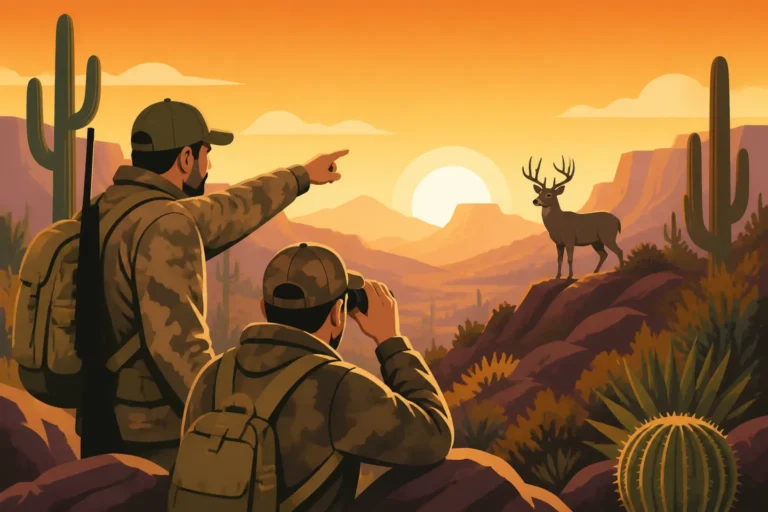
For navigation, a reliable GPS device or a robust mapping app on your phone (with downloaded offline maps!) is critical. A physical compass and paper map should always be your backup. Communication in remote areas is spotty at best, so consider a satellite messenger or satellite phone for emergencies. First aid kits need to be comprehensive, including snakebite kits if you're hunting in warmer months. Shelter, whether a tent for spike camping or a bivy for a quick overnight, should be lightweight but robust enough for potential storms. Finally, don't forget quality optics. Arizona is a glassing state, especially for species like Coues deer. A good spotting scope and binoculars are worth their weight in gold for covering vast distances.
Water, Heat, and Critters: Mitigating Risks
The Sonoran Desert and Arizona's mountains present a unique set of hazards that DIY hunters must actively mitigate. Heatstroke and dehydration are perhaps the biggest threats, especially during early seasons like August archery deer. Always start your days with a full hydration pack, drink regularly, and learn to recognize the symptoms of heat exhaustion. Seek shade during the hottest parts of the day. Monsoon storms, while bringing welcome moisture, can create flash floods in washes and make dirt roads impassable; always check weather forecasts diligently.
Wildlife encounters are another consideration. Rattlesnakes are common, particularly in warmer months. Always watch where you step, where you put your hands, and use trekking poles to probe ahead. Knowing basic first aid for snakebites is critical; the Snake Awareness on an August Archery Hunt link offers valuable insights. Mountain lions and bears are present, especially in timbered country. Carrying bear spray and knowing how to respond to an encounter is prudent. Always keep a clean camp to avoid attracting unwanted visitors. The key to mitigating these risks is proactive planning, knowledge, and never underestimating the power of the Arizona landscape.
Field Care and Extraction of Your Harvest
So, you've put in the work, made the shot, and now you have an animal down in the Arizona backcountry. This is where the real work often begins, especially for DIY hunters. In warm climates, proper meat care is paramount to prevent spoilage. You need to be prepared to field dress and quarter your animal quickly and efficiently. Having sharp knives, game bags, and a plan for cooling the meat is non-negotiable. If temperatures are high, you'll need to get that meat cooled down rapidly, perhaps by hanging it in the shade, placing it in cold water (if available), or even packing it on ice as quickly as possible. Getting Meat Cooled on an Early Season Hunt is a skill you'll want to master.
Extraction is the next challenge. If you're deep in the wilderness, packing out an entire deer or elk on your back can be an arduous, multi-day affair. Have a robust pack frame, strong game bags, and mentally prepare for multiple trips. Consider hunting with a partner to share the load. Know your physical limits and plan your route out carefully, perhaps marking it on your GPS as you go in. Finally, always be aware of your legal requirements. Immediately after harvesting, you must notch and attach your tag to the animal. There are also specific rules about evidence of sex that must remain on the carcass during transport. Understand these regulations to ensure your hard-earned harvest is handled legally and ethically from field to freezer.
Common Pitfalls and How to Avoid Them
Even the most experienced hunters can stumble in Arizona's unique environment. Being aware of common mistakes can help you sidestep frustrations and ensure a more successful and enjoyable DIY hunt.
Underestimating the Terrain and Weather
A common misconception among new Arizona hunters is the sheer physicality required. The desert isn't flat, and the mountains are steeper and rockier than you might expect. Underestimating the amount of vertical gain, the sharp, volcanic rock, or the thick, thorny vegetation can lead to exhaustion, injury, and ultimately, a failed hunt. Units like those in the "sky islands" of Southern Arizona, for example, involve constant uphill and downhill trekking. Being in excellent physical condition, with strong ankles and knees, is absolutely vital.
The weather is another frequent pitfall. Arizona experiences drastic temperature swings, often within a single day. A pleasant 40-degree morning can quickly turn into a scorching 90-degree afternoon, only to drop back down to freezing overnight. Monsoon storms in late summer bring sudden, torrential downpours that can create flash floods and turn dirt roads into impassable quagmires. Conversely, winter hunts in northern Arizona can mean heavy snow and ice, leading to Seasonal Road Closures Across Arizona and difficult access. Always check multiple weather forecasts for your specific hunting area, not just the nearest city, and pack for all extremes. Your gear list must accommodate these rapid shifts; layering is your best friend here.
Overlooking Legalities and Access Issues
It’s easy to get caught up in the excitement of hunting and inadvertently cross a line, both literally and figuratively. One of the biggest mistakes DIY hunters make is failing to fully understand land ownership boundaries. Public land is often intermingled with private property, ranches, and even tribal lands. Trespassing, even accidentally, can lead to severe fines, confiscation of your harvest, and a permanent loss of hunting privileges. Always have reliable maps (digital and physical) with land ownership layers clearly displayed. When in doubt, stay out.
Another critical oversight is ignoring motorized vehicle rules. Arizona has very specific regulations regarding where you can and cannot drive on public lands. Motorized Travel Rules on Arizona Public Land are enforced to protect sensitive habitats and prevent erosion. Many forest service and BLM roads are closed seasonally or permanently to vehicles. Checking Motor Vehicle Use Maps (MVUMs) for National Forests is non-negotiable. Don't assume a two-track path is a legal road; verify it. Also, be mindful of specific unit rules regarding baiting, trail cameras, or even retrieving downed game from certain areas. A quick glance at the regulations can save you a world of trouble.
The Importance of a Realistic Mindset
Perhaps the most crucial, yet often overlooked, aspect of a DIY Arizona public land hunt is cultivating a realistic mindset. Arizona is not a state where you simply show up and expect to fill your tag. Draw odds for many premier big game species are extremely low, and even with an over-the-counter tag, success is hard-won. Understand that you might hunt for several days, or even an entire season, without seeing a legal animal or getting a shot opportunity. This is particularly true for elusive species like Coues deer or heavily pressured elk.
Patience and persistence are virtues that will serve you well. Don't get discouraged if you're not seeing game on day one. Game animals in Arizona are often spread out, savvy, and masters of their environment. Be prepared to adapt your strategy, hike farther, glass longer, and change locations if your initial plan isn't working. Managing your expectations, enjoying the challenge, and appreciating the incredible landscapes will contribute far more to a positive experience than solely focusing on the kill. Remember, the journey and the skills you gain are often as rewarding as the harvest itself.
Public Land Types and Key Access Rules in Arizona
Understanding the different types of public land you might encounter in Arizona is vital for a smooth and legal hunt. Each has its own nuances, and respecting them is fundamental.
| Land Type | Managing Agency | Primary Purpose | Hunting Access Rules | Key Considerations for Hunters |
|---|---|---|---|---|
| State Trust Land | Arizona State Land Dept. (ASLD) | Generate revenue for beneficiaries | Hunting license acts as a permit for most hunting. | Respect existing leases (ranching, mining), check for specific permit needs for other recreational activities. |
| Bureau of Land Management (BLM) | Bureau of Land Management | Multiple use (recreation, grazing, energy) | Generally open to hunting, no extra permit beyond state license/tag. | Vast, often remote, check for vehicle restrictions (MVUMs), avoid private inholdings. |
| National Forests (NF) | U.S. Forest Service | Forest management, recreation, conservation | Generally open to hunting, no extra permit beyond state license/tag. | Check Motor Vehicle Use Maps (MVUMs) for road access, seasonal closures, wilderness rules. |
| State Wildlife Areas | AZ Game & Fish Dept. | Wildlife habitat, public recreation | Specific rules vary, generally open to hunting with state license/tag unless posted otherwise. | Check individual area regulations, some might have special restrictions or closures. |
| Wilderness Areas | BLM / US Forest Service | Preserve primitive character | Foot or horseback access only, no motorized vehicles, chainsaws, or mechanical transport. | No vehicles, bikes, drones. Pack out everything you pack in. |
Disclaimer
This article is for general informational purposes only and does not constitute professional advice. Laws, prices and regulations vary by location and change over time. Consult a qualified professional for guidance on your specific situation.