Hunting a Stock Tank During Early Archery
The scorching Arizona sun can be a real challenge for early archery hunters, making the pursuit of game feel less like a hunt and more like a test of endurance. One of the biggest frustrations is knowing where to find animals when natural water sources are scarce, and everything feels dry as a bone. This guide will walk you through the essential strategies for effectively hunting stock tanks during Arizona's early archery season, helping you understand animal behavior, master scouting techniques, and set yourself up for success.
Understanding Early Archery in Arizona
Arizona's early archery season, often kicking off in August or September, is a beast of its own. It's not just about drawing a tag; it's about navigating extreme heat, parched landscapes, and game animals that are acutely aware of the limited water available. If you've ever spent a summer day in the Arizona desert, you know how quickly temperatures can soar, pushing both hunters and wildlife to their limits. This intense environment profoundly dictates animal movement and behavior, making water sources absolute magnets.
Why Early Archery is a Game of Thirst
During these sweltering months, reliable water is the lifeblood of the desert. Unlike the lush, humid environments found elsewhere, Arizona's early season offers precious little in the way of free-standing water. Natural springs can dry up, and ephemeral washes only hold water for a short time after rare monsoon downpours. This scarcity means that any consistent water source, like a stock tank, becomes a critical hub for deer, javelina, and even other desert creatures. Animals will often travel significant distances, sometimes several miles, just for a drink.
Understanding this dynamic is paramount. Your entire hunting strategy for this period should revolve around water. Forget chasing game through endless miles of dry brush; your efforts are far better spent finding and patiently waiting at these vital watering holes. It's a game of thirst, and the animals are playing it, too. This focus on water is what often makes or breaks an early archery hunt. You can learn more about managing the physical demands of this season by checking out tips for Heat Management on an Arizona Early Season Hunt.
Target Species and Their Water Needs
While various animals will visit a stock tank, early archery season often targets species like Coues deer, mule deer, and javelina. Each has slightly different patterns and water requirements that can inform your approach. Coues deer, those elusive "gray ghosts" of the sky islands, are notoriously wary and will approach water with extreme caution. Mule deer on the plateaus also need regular water, often moving in larger groups. Javelina, on the other hand, are often seen in herds and can be less cautious once they commit to a water source.
Generally, most big game animals in Arizona will need to drink at least once every 24-48 hours during hot, dry conditions. This frequency can increase dramatically if temperatures are exceptionally high or if they're exerting themselves, like during early season foraging. Recognizing the tracks and sign around a tank – from fresh prints to droppings – will tell you not only what animals are using it but also how recently. Knowing these patterns helps you anticipate when and where to set up.
Scouting for Productive Stock Tanks
You can't just pick any puddle and expect to find game. Productive stock tanks are those that are consistently used, ideally with good cover nearby, and not over-pressured by human activity. This requires thorough scouting, both from your computer screen and with boots on the ground. The more information you gather beforehand, the better your chances.
Using Maps and Technology to Find Water
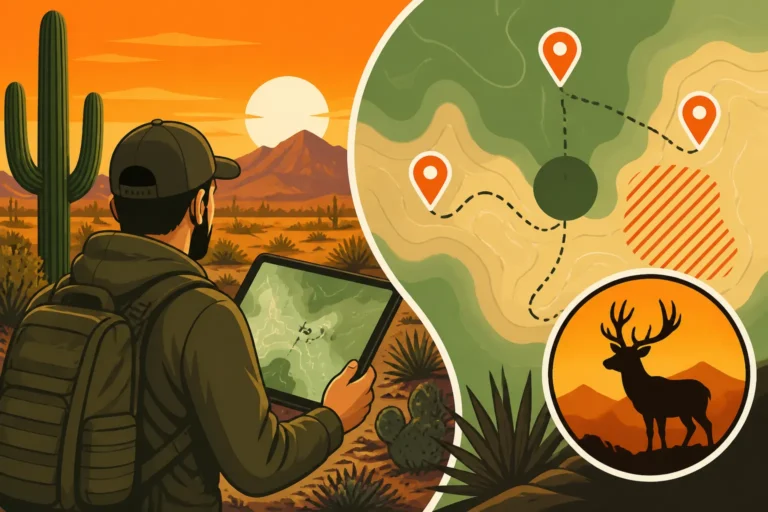
Before you ever set foot in the unit, start with digital scouting. Online mapping tools like Google Earth, Gaia GPS, or specialized hunting apps like GoHunt are invaluable. Look for blue dots and symbols indicating water sources on topographical maps. You’ll want to identify stock tanks, guzzlers, and even natural seeps. Pay attention to terrain; tanks nestled in saddles or at the bottom of draws often funnel game right to them. Cross-reference satellite imagery to get a better idea of surrounding vegetation and potential cover.
When you're looking at a map, consider the access points. Are there roads nearby, or will you need to hike a significant distance? Tanks that are harder to get to often see less human pressure, which can be a huge advantage. Remember that not all blue dots are created equal; some might be seasonal or completely dry. Utilize resources like E-Scouting an Arizona Unit Before the Season to refine your digital scouting methods. The Arizona Game and Fish Department also publishes Where Arizona Publishes Unit Access Maps, which can be a valuable resource for identifying public land and potential water sources within your chosen unit.
Ground Scouting and Reading the Sign
Once you've identified potential tanks on your map, it's time for real-world reconnaissance. Visit these locations weeks or even months before the season opens, if possible. Look for fresh tracks, scat, and well-worn game trails leading to and from the water. Are there distinct entry and exit points? Is there good cover nearby for animals to stage before drinking, and for you to conceal yourself? Check the water level – a full tank is obviously more reliable than one that's nearly dry.
Pay attention to any signs of human activity, too. Discarded water bottles, footprints, or makeshift blinds might indicate a tank is already being heavily hunted. Your goal is to find a tank that shows consistent animal use and minimal disturbance. This on-the-ground intel is critical for understanding the tank's real potential and for deciding if it's worth investing your hunting time in. When scouting, remember to look for other natural water sources in Arizona's dry country as well, not just stock tanks. You can find more information on Finding Water in Arizona's Dry Country.
Setting Up for Success Near a Stock Tank
Finding a good stock tank is only half the battle. The other half is setting up in a way that maximizes your chances of a shot while minimizing your impact and remaining undetected. This involves careful consideration of concealment, wind, and the delicate balance of not pressuring the animals away.
Concealment and Wind Direction are Key
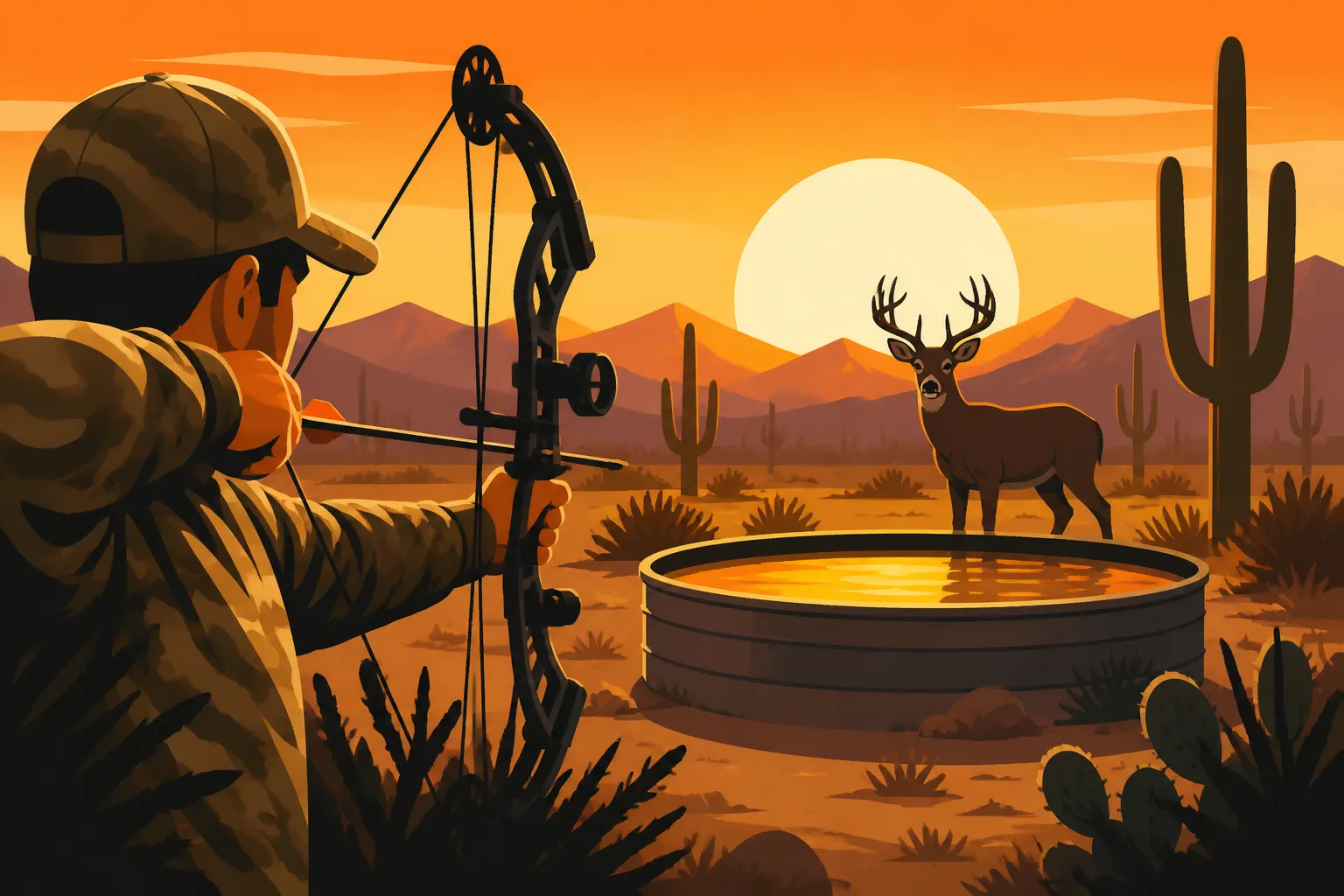
When hunting water, concealment is paramount. These animals are naturally on high alert when they approach a water source, as it's a vulnerable moment for them. You'll need a blind, either natural or manufactured, that allows you to see the tank clearly without being seen. Natural brush, rock formations, or even a well-placed juniper tree can offer excellent cover. If you opt for a pop-up ground blind, set it up well in advance of your hunt, if permitted, to allow animals to get accustomed to its presence. Place your blind far enough away from the tank that you don't spook approaching animals, but close enough for an ethical archery shot – usually 20-40 yards for most archers.
The wind is your most critical factor. Scent control is vital, but nothing beats hunting with a consistent wind in your favor. Animals will typically approach water from downwind, circling to test the air for danger. Position your blind so that the prevailing wind carries your scent away from the approach paths and the tank itself. Check the wind constantly with a puff bottle or powder. Remember that thermals play a huge role in the desert; in the mornings, air often flows downhill, and in the evenings, it rises. Understanding these air currents can make or break your setup. General principles for Reading Wind on a Sky Island Stalk apply here.
Ethical Considerations and Pressure Management
Hunting over water in a desert environment comes with a significant ethical responsibility. These tanks are lifelines, and our presence can easily disrupt sensitive animal patterns. Avoid setting up directly on the tank dam or in a way that blocks access for animals. When you set up a blind, ensure it's removed cleanly after your hunt, leaving no trace. If you're using a pop-up blind, check the local land management rules; sometimes, blinds can be left for extended periods, but often they need to be removed daily. Be aware of Tree Stand Rules That Apply on Public Land if you consider elevated positions, though ground blinds are typically more practical for tanks.
Manage your pressure carefully. If you hunt a tank hard every day, animals will quickly become nocturnal or abandon it entirely. Consider hunting a tank for a few days, then giving it a break. If you arrive and another hunter is already there, move on. The desert is vast, and there are other opportunities. It's about respecting the animals, the land, and your fellow hunters. The goal is a successful hunt, not just any hunt, and ethical behavior ensures these resources remain viable for everyone.
Patience and Persistence: The Early Archery Ethos
Hunting stock tanks in early archery season is a masterclass in patience. The desert environment, coupled with the wary nature of the game, demands a calm and persistent approach. You're not just waiting; you're observing, learning, and adapting.
The Best Times to Hunt Water
Animal activity at stock tanks peaks during the coolest parts of the day: dawn and dusk. Many animals, especially mature bucks and bulls, will move in low light to avoid the heat and reduce their exposure to predators (including human ones). Aim to be in your blind well before first light, giving everything time to settle down. Stay until after legal shooting hours end in the evening. During the middle of the day, activity often slows, but it's not unheard of for javelina or even younger deer to sneak in for a quick drink, especially if the tank is secluded.
The hottest days are often the best days for water hole hunting because the animals are simply more driven by thirst. While it might be miserable for you, those are the days when game is most likely to make a mid-day trip to water. Be prepared to sit for long hours, bring plenty of water yourself, and stay vigilant. Remember to adhere strictly to Arizona Legal Shooting Hours for Big Game to ensure your hunt is lawful.
What to Do When the Tank is Dry or Crowded
Despite all your careful scouting, you might arrive to find a tank completely dry, or worse, full of other hunters. It’s a frustrating reality of hunting shared public lands. When this happens, it’s crucial to have a backup plan. This is where extensive e-scouting pays off, giving you a list of alternative water sources you can quickly move to. Tools like GoHunt can help you identify several options within a reasonable distance, so you're not left scrambling.
If the tank is dry, it's a dead end for that sitting. If it's crowded, quietly pack up and move to your next spot. Over-pressuring a tank with multiple hunters only makes it less productive for everyone involved. Sometimes, it's not about finding the perfect tank, but about finding a tank that's currently unpressured and has fresh sign. Be flexible, be willing to hike a bit further to a less accessible tank, and don't be afraid to change your plans based on what you encounter. Always Preparing Physically for a Desert Hunt will ensure you can adapt to these on-the-fly changes.
Essential Water Habits of Arizona Big Game
Understanding the general water consumption habits of different species can significantly refine your hunting strategy, helping you predict when and where you'll find animals at stock tanks.
| Species | Typical Watering Frequency (Hot, Dry Conditions) | Peak Activity Times at Water | Common Behavioral Notes at Tanks |
|---|---|---|---|
| Coues Deer | Every 24-36 hours | Early morning, late evening | Highly cautious, often approach slowly from thick cover, usually solo or in small family groups. |
| Mule Deer | Every 24-48 hours | Early morning, late evening | Can be slightly less wary than Coues, but still alert; may linger longer after drinking. Often in small groups. |
| Javelina | Every 12-24 hours | Anytime, but often mid-morning/late afternoon | Travel in herds, can be noisy and less cautious once committed to drinking. Often wallow or roll in mud if available. |
| Black Bear | Daily | Early morning, late evening, nocturnal | Solitary, can be unpredictable. May use tanks for drinking and cooling. |
| Elk | Daily | Early morning, late evening, nocturnal | While less common at smaller stock tanks, they will utilize them if other sources are scarce. Typically prefer larger water bodies or seeps. |
| Pronghorn | Every 24-72 hours | Mid-morning, late afternoon | Known for being able to go longer without water, but will visit tanks regularly. Very open country animals, so approach paths are key. |
Disclaimer
Please remember that hunting regulations and conditions can change. Always consult the latest Arizona Game and Fish Department regulations booklet before planning any hunt. This guide offers general advice and personal insights, but it is not a substitute for official rules and careful personal planning.