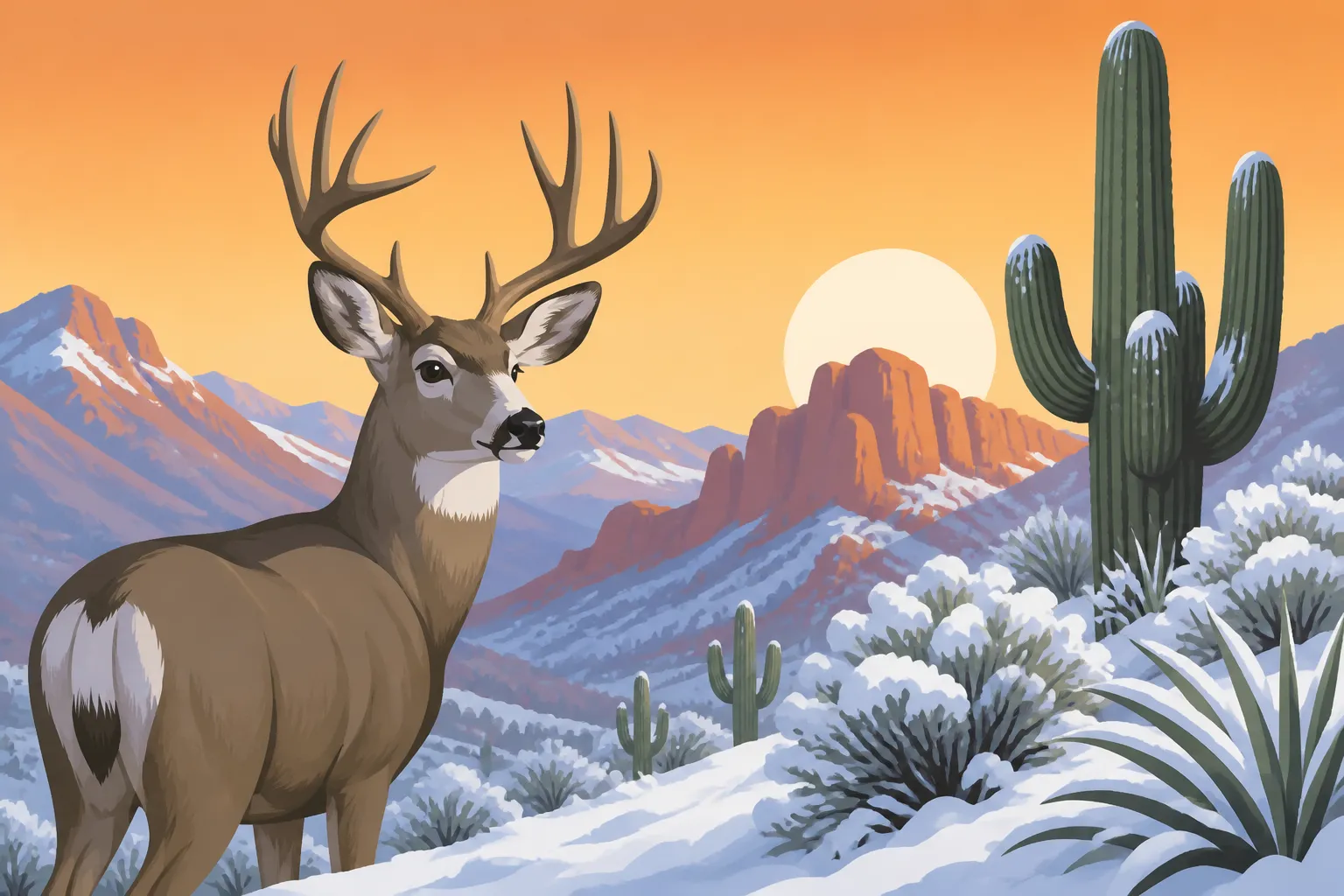
Where Arizona Mule Deer Winter
The transition from crisp autumn days to the biting chill of winter can be a real head-scratcher for Arizona hunters, especially when it comes to locating mule deer. These incredible animals don't just disappear; they shift their entire lives to areas that offer the best chance of survival. This comprehensive guide will walk you through the fascinating world of Arizona mule deer winter ranges, helping you understand where they go, why they go there, and how you can use this knowledge to become a more successful and ethical hunter.
The Seasonal Dance: Why Mule Deer Move to Winter Ranges
Mule deer in Arizona, particularly those residing in the higher elevations and northern plateaus, are masters of seasonal adaptation. As the temperatures drop and snow begins to blanket their summer feeding grounds, their priorities shift dramatically from abundant forage to sheer survival. It's not just a casual stroll; it's a strategic relocation driven by instinct and necessity, often covering significant distances.
Understanding the Annual Cycle of Migration
The annual cycle of a mule deer is essentially a pilgrimage between high-elevation summer ranges and lower-elevation wintering grounds. In spring, as the snow melts and green shoots emerge, deer begin their ascent, following the flush of new growth to higher altitudes where forage is rich and predators might be less concentrated. This is where bucks build their impressive antlers and does raise their fawns. But once late fall arrives, usually around October or November, and certainly by the time the first significant snowfalls hit, the reverse migration begins. They descend to find areas with less snow, more accessible food, and often, more thermal protection from the elements. This is a critical period, dictating their health for the coming year.
The timing and distance of these migrations are highly dependent on factors like snowfall, temperature, and the specific geographic features of a given unit. A mild winter might see less dramatic movement, while an early, heavy snow year will push deer down rapidly and further. Understanding this ebb and flow is key to predicting their whereabouts. It’s a dynamic system, and deer are constantly making decisions based on immediate conditions and historical memory of their ancestors.
Survival Strategies in Harsh Winter Conditions
Winter is a time of immense hardship for mule deer. Their survival hinges on conserving energy and finding enough sustenance to make it through until spring. Winter ranges are chosen precisely because they offer a combination of accessible forage, thermal cover, and often, reduced predator pressure compared to deep snow country. They'll seek out south-facing slopes, which catch more sunlight and melt snow faster, exposing vital browse. Dense stands of juniper, pinyon pine, or oak can provide crucial thermal cover, shielding them from bitter winds and insulating them from extreme cold.
Their bodies also adapt to these harsh conditions. Their coats thicken, becoming excellent insulators. Their metabolism slows, and they often become less active, moving only as much as necessary to feed or escape danger. They rely heavily on fat reserves built up during the more plentiful summer and fall months. A harsh winter can deplete these reserves quickly, leading to increased mortality, especially among fawns and older animals. This is why the selection of a good winter range is literally a matter of life and death for these animals.
Distinguishing Between Migration and Local Movement
It's important to understand that not all mule deer undertake epic migrations. Some populations, particularly those in more arid, lower-elevation areas of Arizona, might exhibit more localized movements rather than a distinct migration pattern. These deer still have winter ranges, but their "migration" might only be a few miles, or simply shifting from exposed ridges to sheltered canyons. They're still seeking areas of better forage and protection, but the driving force might be drought conditions impacting water and green-up, rather than heavy snow.
Conversely, the majestic bucks and does found on the high plateaus, like parts of the Kaibab or the Mogollon Rim, will often make substantial journeys, sometimes 20 miles or more, to reach their traditional wintering grounds. Knowing the difference for the area you're hunting is crucial. You can gain valuable insights by exploring resources like the Arizona Game and Fish Department's unit-specific data, or by checking out platforms like GoHunt that consolidate this kind of intelligence, which can illuminate whether the deer in your chosen unit are long-distance travelers or local homebodies. These patterns are generally consistent year over year, though environmental conditions can cause slight variations.
Arizona's Premier Mule Deer Wintering Grounds
When we talk about where mule deer winter in Arizona, we're largely discussing the vast, rugged landscapes of the northern and central parts of the state. These areas feature the dramatic elevation changes and diverse vegetation necessary to support seasonal movements. These aren't just random spots; they are critical, often designated habitats that have sustained generations of deer. Many of the state's most iconic trophy units are defined by these crucial wintering areas.
The Vastness of the Arizona Strip Lowlands
The Arizona Strip, that incredibly vast and remote country north of the Grand Canyon, is renowned for its trophy mule deer. While the summer range might include higher mesas and plateaus, the true heart of the winter range lies in its lower elevation areas. We're talking about the expansive sagebrush flats, the blackbrush-dotted hills, and the lower pinyon-juniper breaks that characterize this unforgiving landscape. These are the areas that remain relatively free of deep snow, making browse accessible.
Deer from higher elevations, particularly those from units like 13A and 13B, will filter down into these lower, often warmer, stretches. The vegetation here, while appearing sparse to the untrained eye, provides crucial sustenance—plants like sagebrush, winterfat, and various browse species are vital. This migration onto the Strip's lowlands is why hunters often target units in this region during late-season hunts, when the deer have consolidated and are more vulnerable. The reputation of mule deer across Northern Arizona often stems from these incredible Strip animals.
Kaibab Plateau's Transition Zones
Just south of the Arizona Strip, the legendary Kaibab Plateau is another prime example of dramatic seasonal movement. The Kaibab Plateau mule deer quality is world-renowned, drawing hunters from all over. During the warmer months, deer thrive in the high-elevation ponderosa pine and mixed conifer forests of the North Kaibab, utilizing its lush undergrowth. However, as winter approaches, these areas become impassable due to deep snow, and the deer must descend.
Their wintering grounds are primarily found in the lower, south-facing slopes and transition zones along the edges of the plateau. This includes areas dropping into the Grand Canyon itself, or the vast pinyon-juniper woodlands that spread out to the west and east. Here, the snow cover is much shallower, allowing access to essential browse like cliffrose, mountain mahogany, and various bitterbrush species. These transition zones become critical holding areas, acting as a natural funnel for thousands of deer each year. Understanding these specific elevation bands is essential for successful late-season hunting.
Central Arizona's Lower Elevation Basins
While northern Arizona gets most of the attention for mule deer migration, central Arizona also has significant mule deer populations that undergo seasonal shifts, albeit often less dramatic. Units along the Mogollon Rim and the higher parts of the Tonto National Forest see deer moving into lower elevation basins and canyons as winter sets in. Areas like the juniper-covered hills around Payson, or the sprawling rangelands northeast of Phoenix, become vital wintering areas.
Deer in these regions might move from the higher ponderosa forests of the Rim into the saguaro-studded deserts or lower chaparral zones. They seek out pockets of perennial grasses, palatable shrubs, and often rely on natural water sources or man-made stock tanks. These winter ranges are characterized by diverse vegetation types, offering a mix of browse and cover. Understanding how Arizona numbers its hunting units and correlating those units with these geographical features is a crucial part of preseason scouting, helping you pinpoint these seasonal movements.
Key Factors Defining Ideal Winter Habitat
It's not enough for a winter range to simply be free of deep snow. Mule deer require a very specific combination of resources to survive the leanest months of the year. Their choices are driven by an innate understanding of their environment and what provides the best chance for survival and health into the next year. These factors collectively create the perfect winter haven.
Forage Abundance and Nutritional Value
The most critical factor for a winter range is accessible and nutritious forage. Deer are browsers, meaning they primarily feed on leaves, twigs, and bark of shrubs and trees, rather than grasses. In winter, they seek out woody browse species that retain their leaves or have high nutritional value even when dormant. Examples include cliffrose, mountain mahogany, bitterbrush, serviceberry, and various species of oak and juniper. These plants provide the energy and nutrients necessary to maintain body condition.
A good winter range will have a high density of these preferred browse species, particularly on south-facing slopes where snow melts quickly, exposing the plants. The overall health of the herd can be directly linked to the quality and quantity of available winter forage. How drought affects desert deer numbers is a clear example of how environmental changes to forage directly impact deer populations. If the forage isn't there, or if it's buried under too much snow, deer will struggle, leading to weaker animals and potentially lower fawn survival rates in the spring.
Crucial Thermal and Security Cover
Beyond food, mule deer need protection from the elements and predators. Thermal cover, typically dense stands of conifers like pinyon pine, juniper, or even thick oak brush, acts like a natural blanket, shielding deer from cold winds and snow. These dense thickets help them conserve crucial body heat, reducing the energy expenditure needed to stay warm. On brutally cold, windy days, deer will often bed down in these areas, minimizing their exposure.
Security cover is equally important. Winter makes deer more vulnerable. With less vegetation to hide behind and consolidated populations, they become easier targets for predators like mountain lions and coyotes. Dense cover provides a safe haven, allowing them to escape detection or evade pursuit. This often means finding areas with a mix of dense vegetation and broken topography, offering numerous escape routes and hiding spots. When you're glassing a hillside in winter, don't just look for open areas; scrutinize those dense pockets of vegetation where deer feel safe.
Water Availability, Even in Frozen Landscapes
Even in winter, water is essential. While deer can derive some moisture from snow and the plants they eat, accessible liquid water sources are still important, especially during periods of low humidity or for nursing does that might be on the range later in the season. Natural springs, seeps, and even small, unfrozen pockets in washes or rivers become critical focal points. In many parts of Arizona, man-made stock tanks and wildlife waters maintained by organizations like Arizona Game and Fish become lifelines.
In colder climates, water sources can freeze over, forcing deer to travel further or rely solely on snowmelt. Understanding which water sources are reliable and accessible during specific winter conditions is a skill that comes with experience and thorough scouting. It's often a good idea to check for areas known to hold water year-round when you're looking for where mule deer winter. Even if it's just a small trickle, it can make all the difference.
Strategies for Locating Wintering Mule Deer
Finding mule deer during the winter months, especially in Arizona's vast and varied terrain, requires a combination of modern technology, boots-on-the-ground effort, and good old-fashioned hunting wisdom. The consolidated nature of wintering herds can make them easier to locate, but their cautious behavior demands a thoughtful approach.
E-Scouting for Winter Patterns and Travel Corridors
Before you ever set foot in the field, serious e-scouting can save you countless hours and put you on the right track. Start by studying topographic maps and satellite imagery, paying close attention to elevation changes and vegetation types. Look for the transition zones: where higher elevation forests give way to pinyon-juniper, sagebrush flats, or oak thickets. Identify south-facing slopes, which will receive more sun and hold less snow, making them prime feeding areas. Tools like GoHunt's Insider platform, or onX maps, are invaluable for this. They allow you to overlay private and public land boundaries, analyze terrain features, and even look at past unit data.
Focus on potential travel corridors—ridges, draws, and washes that connect summer range to winter range, or connect different pockets within the winter range itself. Deer will often follow the path of least resistance, especially when navigating snow. By virtually "walking" these corridors on your computer, you can identify natural pinch points or preferred routes they might use. Use these platforms to analyze public land percentage by unit, ensuring you have ample accessible ground to hunt, and consider how to effectively use onX layers for Arizona public land. This detailed digital reconnaissance is your first step to narrowing down vast landscapes into manageable search areas.
On-the-Ground Scouting in the Colder Months
While e-scouting provides the blueprint, nothing replaces time spent in the field. Ideally, you want to scout the proposed winter range before or during the season you plan to hunt. Look for fresh tracks in snow or soft dirt, indicating recent deer movement. Pay attention to rub lines on small trees or shrubs, and look for fresh droppings—these tell you deer are not just passing through, but actively utilizing the area. Fresh browse marks on preferred plants are also a strong indicator of current feeding activity.
When scouting, make sure you understand the rules for motorized travel on Arizona public land. Many forest roads may be seasonally closed, especially in winter. Always consult Motor Vehicle Use Maps for Forest Ground to avoid trespassing or damaging sensitive habitats. Focus your efforts on glassing south-facing slopes from a vantage point, especially during the early morning and late afternoon when deer are most active. Patient glassing, systematically picking apart hillsides with quality optics, is often the most effective way to locate wintering deer. You might also want to read an Arizona Forest Service road map to plan your access points.
Leveraging Hunt Data and Local Knowledge
Don't overlook the power of historical hunt data and connecting with local hunters or wildlife biologists. Arizona Game and Fish Department publishes hunt success reports and harvest statistics by unit, which can give you an idea of where deer are concentrated during specific seasons. While these reports don't explicitly detail wintering locations, they can point you towards units with high mule deer populations that inherently have good winter ranges. This is another area where platforms like GoHunt can provide curated data and insights, helping you interpret complex information.
Local knowledge, whether from established hunters you know or through respectful conversations with folks at a local sporting goods store, can be invaluable. People who live and work in these areas often have generations of experience observing deer movements. They might know about a specific canyon that always holds deer during a cold snap or a particular juniper flat that fills up with does and fawns after the first snow. Always approach these conversations with respect, offer to share your own observations, and be prepared to put in your own work. No one is going to hand you a trophy buck, but collective knowledge can certainly shorten your learning curve.
Conservation and the Future of Arizona's Winter Ranges
The long-term health of Arizona's mule deer populations is inextricably linked to the protection and management of their crucial winter ranges. These areas are vital bottlenecks for survival, and any degradation or loss can have cascading effects on the entire herd. Conservation efforts are continuous and require the participation of various stakeholders, including hunters.
Protecting Critical Habitat for Future Generations
Maintaining the integrity of mule deer winter ranges is a top priority for wildlife managers. This involves preventing habitat fragmentation from development, mitigating impacts from wildfire, and ensuring adequate forage through sustainable land management practices. Protecting these lands means working with private landowners, federal agencies like the Bureau of Land Management and the U.S. Forest Service, and state land departments to secure access and preserve critical areas.
Efforts often focus on reducing invasive species that outcompete native browse, promoting native plant communities, and ensuring that development, where it occurs, minimizes disruption to deer movement patterns. Investing in wildlife crossings over major highways and maintaining traditional migration corridors are also important aspects of securing these critical habitats. The goal is to ensure that future generations of deer have the same, if not better, opportunities to thrive through the challenging winter months.
The Role of Hunters in Winter Range Stewardship
Hunters play an absolutely critical role in the stewardship of Arizona's winter ranges. Through license and tag fees, hunters contribute directly to conservation funding that supports habitat improvement projects, research, and law enforcement. But beyond financial contributions, ethical hunters are often the eyes and ears on the ground. Reporting poaching, adhering to regulations, and practicing Leave No Trace principles are all fundamental responsibilities.
Many hunters also volunteer their time for habitat projects, such as building fences to protect sensitive plant communities, participating in water-hauling efforts for guzzlers, or helping with prescribed burns that improve browse diversity. Understanding and respecting seasonal closures, particularly in sensitive winter range areas, is also paramount. When you're out scouting or hunting, you're not just pursuing an animal; you're interacting with a vital ecosystem, and your actions have a direct impact on its health and the future of the species.
Current Research and Management Efforts
Arizona Game and Fish Department, in collaboration with universities and conservation groups, continuously conducts research to better understand mule deer populations, migration patterns, and habitat needs. This includes tracking deer with GPS collars to map exact migration routes and wintering locations, assessing herd health through fawn recruitment and survival studies, and analyzing vegetation communities. Platforms like GoHunt often incorporate data derived from such studies to provide insights for hunters, helping them make more informed decisions.
This research informs management decisions, such as setting hunt quotas, adjusting season dates, and developing targeted habitat improvement projects. For example, understanding Mule Deer Population Trends Across the Southwest helps biologists identify areas needing intervention or where specific management strategies are proving successful. These efforts are dynamic, adapting to changing environmental conditions, climate patterns, and population dynamics, all with the goal of ensuring robust and healthy mule deer populations for the enjoyment of all Arizonans.
Disclaimer
Always consult the official Arizona Game and Fish Department hunting regulations for the most current and accurate information before planning any hunting trip. Regulations are subject to change, and it is the hunter's responsibility to know and follow all applicable laws.